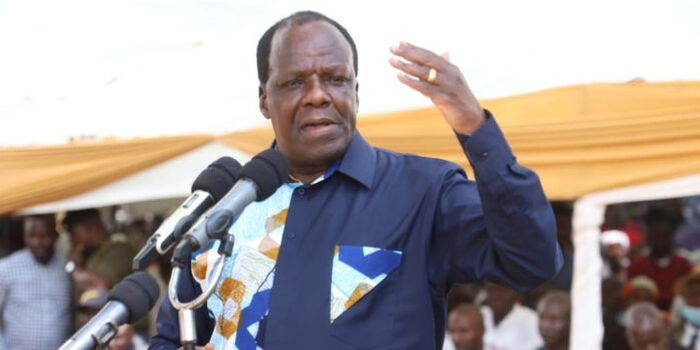
Kimilili political history is one of the most important stories in Bungoma County politics. The constituency’s roots are linked to earlier electoral identities, including Elgon East and later Bungoma East, before the Kimilili name became established in the 1988 electoral period.
This history matters because Kimilili has produced some of the most influential political names in Western Kenya. Its leadership timeline includes Mark Barasa, Elijah Wasike Mwangale, Mukhisa Kituyi, Dr David Eseli Simiyu, Suleiman Murunga and Didmus Wekesa Barasa.
Kimilili has also played a major role in Bukusu politics, Ford-Kenya politics, national reform debates, agricultural representation and the wider political identity of Bungoma County. Its leaders have served not only as MPs but also as Cabinet ministers, party strategists, international officials and influential grassroots figures.
In 2013, Tongaren Constituency was created out of the larger Kimilili Constituency, changing the political map and giving another part of the region its own parliamentary voice. Tongaren’s first MP was Dr Eseli Simiyu, who had earlier represented Kimilili, while John Murumba Chikati is the current MP.
Together, Kimilili and Tongaren tell a story of boundary changes, national leadership, political rivalry and the continuing search for strong local representation.
Quick Facts About Kimilili Political History
| Category | Details |
|---|---|
| Earlier name | Elgon East |
| Later name | Bungoma East |
| Current name | Kimilili Constituency |
| County | Bungoma County |
| Region | Western Kenya |
| Year Kimilili name became prominent | 1988 electoral period |
| First listed leader | Mark Barasa |
| Long-serving early leader | Elijah Wasike Mwangale |
| Notable national figure | Mukhisa Kituyi |
| Current Kimilili MP | Didmus Wekesa Barasa |
| Constituency created from Kimilili | Tongaren Constituency |
| First Tongaren MP | Dr David Eseli Simiyu |
| Current Tongaren MP | John Murumba Chikati |
| Key political themes | Bukusu identity, agriculture, education, roads, party politics and devolution |
From Elgon East to Bungoma East and Kimilili
Before the modern Kimilili name became prominent, the constituency was associated with earlier political identities. It was formerly known as Elgon East and later Bungoma East.
These older names are important because they explain why early leaders in Kimilili’s political memory may appear in records under predecessor constituency names. The modern constituency identity developed later, especially around the 1988 electoral period.
This transition from Elgon East to Bungoma East and then Kimilili reflects the changing nature of electoral boundaries in Kenya. As populations grew and political representation expanded, constituencies were renamed, divided or reorganised to create more direct representation.
Kimilili therefore has to be understood in two broad phases: the predecessor constituency period and the modern Kimilili period.
Kimilili Members of Parliament
The following timeline captures the leadership associated with Kimilili and its predecessor political identities.
| Period | Member of Parliament |
| 1963–1969 | Mark Barasa |
| 1969–1988 | Elijah Wasike Mwangale |
| 1988–1992 | Elijah Wasike Mwangale |
| 1992–2007 | Mukhisa Kituyi |
| 2007–2013 | Dr David Eseli Simiyu |
| 2013–2017 | Suleiman Murunga |
| 2017–Present | Didmus Wekesa Barasa |
Mark Barasa and the Early Political Foundation
Mark Barasa is listed as the earliest leader in Kimilili political history, serving from 1963 to 1969 under the constituency’s earlier political identity.
His leadership came during Kenya’s first years of independence. This was a formative period when parliamentary representation was still being defined and communities expected their MPs to connect them to the new national government.
At the time, politics was closely tied to development, local administration, education, roads, land matters and access to public services. MPs were expected to act as both national lawmakers and community representatives.
Mark Barasa’s place in this history is important because he represents the first generation of elected leaders linked to the area that later became Kimilili.
Elijah Wasike Mwangale and the Long KANU Era
Elijah Wasike Mwangale is one of the most important figures in Kimilili political history. He served from 1969 to 1988 and continued under the Kimilili name from 1988 to 1992.
Mwangale belonged to the powerful KANU-era political establishment. He was a major national figure, Cabinet minister and one of the most recognisable politicians from Bungoma during his time.
His long service made him the dominant figure in the constituency for more than two decades. During his leadership, Kenya moved through the late Kenyatta era, the early Moi years and the height of one-party politics.
Mwangale’s politics reflected the era in which he served. National influence, access to government, party loyalty and local networks played a major role in political survival. For constituents, representation often meant having a leader with access to state power and the ability to attract development.
His eventual defeat in 1992 marked a turning point in Kimilili politics. It signalled the rise of multiparty democracy and the arrival of a new reform-minded political generation.
Mukhisa Kituyi and the Multiparty Reform Era
Mukhisa Kituyi served as Kimilili MP from 1992 to 2007. His election in 1992 came during one of the most important political moments in Kenya’s history: the return of multiparty democracy.
Kituyi defeated the long-serving Elijah Mwangale and became part of the new opposition wave associated with Ford-Kenya and democratic reform. His rise represented a major generational and ideological shift in Kimilili.
He brought an intellectual, policy-driven and reformist style to politics. Over time, he became one of Kenya’s most respected public thinkers and later served as Minister for Trade and Industry under President Mwai Kibaki.
Kituyi’s career later moved beyond Kenya when he served as Secretary-General of the United Nations Conference on Trade and Development. That international role gave Kimilili global visibility.
Locally, his period as MP is remembered as a time when Kimilili politics became deeply linked to opposition politics, Bukusu political identity, national policy debates and the wider reform movement.
He is also locally associated with the wider Wamalwa political network in Western Kenya, although family relationship claims should be treated carefully unless confirmed through reliable public records.
Dr David Eseli Simiyu and the Transition to Tongaren
Dr David Eseli Simiyu served as Kimilili MP from 2007 to 2013. His election came after Mukhisa Kituyi’s long tenure and introduced another major leader into the constituency’s modern political story.
Eseli is known for his professional background, parliamentary experience and strong role in Ford-Kenya politics. His leadership came during a turbulent national period after the 2007 General Election, the post-election crisis, the Grand Coalition Government and the constitutional reform process that produced the 2010 Constitution.
The 2010 Constitution later reshaped Kenya’s electoral map. In the 2013 electoral cycle, Tongaren Constituency came into existence after being carved out of the larger Kimilili Constituency.
This boundary change altered Kimilili’s political geography. Eseli moved to Tongaren, where he became the first MP of the new constituency and served from 2013 to 2022.
His career therefore links both Kimilili and Tongaren political history.
Suleiman Murunga and the 2013 Devolution Era
Suleiman Murunga served as Kimilili MP from 2013 to 2017. His election came during Kenya’s first General Election under the fully devolved system created by the 2010 Constitution.
This was a major political shift. Voters were now electing MPs alongside governors, senators, women representatives and MCAs. Constituency politics had to adjust to a new environment where county governments also became central to development.
Murunga’s tenure represented Kimilili’s first phase after the creation of Tongaren. The constituency had a new shape, new political balance and new development expectations.
Local political memory also connects the Murunga name to older traditional leadership narratives in the region. Such historical and clan-linked claims are best handled as part of local memory unless supported by firm public records.
Murunga’s term remains important because it carried Kimilili through the early years of devolution and the immediate post-Tongaren split period.
Didmus Wekesa Barasa and the Current Kimilili Era
Didmus Wekesa Barasa became Kimilili MP in 2017 and continues to represent the constituency in the current parliamentary era.
His rise marked another shift in Kimilili politics. He entered Parliament during a period of strong national party competition and later became associated with the United Democratic Alliance wave that shaped the 2022 General Election.
Barasa’s leadership belongs to the modern era of highly visible constituency politics. Today, MPs are judged by a combination of local development, public communication, party loyalty, parliamentary participation, school support, road projects and personal accessibility.
As current MP, Barasa represents Kimilili at a time when voters expect practical development and strong engagement with national issues. His political career has also attracted national media attention, making him one of the more visible MPs from Bungoma County.
His continued service since 2017 places him firmly within Kimilili’s modern political timeline.
Tongaren Constituency and the 2013 Political Split
Tongaren Constituency was created out of the larger Kimilili Constituency before the 2013 General Election. This was one of the most important boundary changes in Kimilili’s political history.
The creation of Tongaren gave residents in that area direct parliamentary representation. It also changed the political calculations in Kimilili because the former larger constituency was divided into more localised electoral units.
Tongaren’s political identity began with Dr David Eseli Simiyu, who had previously served as Kimilili MP. He became the first MP for Tongaren and served from 2013 to 2022.
In 2022, John Murumba Chikati won the Tongaren parliamentary seat, opening a new phase in the constituency’s history.
Tongaren Members of Parliament
| Period | Member of Parliament |
| 2013–2022 | Dr David Eseli Simiyu |
| 2022–Present | John Murumba Chikati |
Dr Eseli Simiyu as First Tongaren MP
Dr Eseli Simiyu’s move from Kimilili to Tongaren made him the bridge between the two constituencies.
As the first MP for Tongaren, he had the responsibility of helping shape the new constituency’s parliamentary identity. First MPs often play an important role in setting development priorities, building NG-CDF structures and creating a sense of political direction.
His experience from Kimilili gave Tongaren a seasoned leader at the beginning of its parliamentary life.
John Murumba Chikati and the Current Tongaren Era
John Murumba Chikati became Tongaren MP after the 2022 General Election. His victory marked the second phase of Tongaren’s political history.
As current MP, Chikati leads a constituency that is still relatively young but politically important in Bungoma County. His leadership is being judged through modern expectations such as school infrastructure, bursaries, roads, youth empowerment, security, public participation and local economic development.
Tongaren’s creation also means that the old Kimilili political story now has two branches: modern Kimilili and modern Tongaren.
Kimilili and Bukusu Political Identity
Kimilili is strongly connected to Bukusu political identity. The constituency sits within Bungoma County, one of the major centres of Bukusu leadership, culture and electoral politics.
Bukusu politics has often been shaped by education, land, agriculture, churches, clan networks, professional groups, party movements and strong individual leaders.
Kimilili’s political history reflects these realities. The constituency has produced leaders who were rooted in local identity but active in national politics.
Elijah Mwangale represented the old KANU establishment. Mukhisa Kituyi represented intellectual opposition politics and reform. Eseli Simiyu represented professional parliamentary politics. Didmus Barasa represents the current era of populist, media-visible and development-focused leadership.
Agriculture, Education and Roads in Kimilili Politics
Like many constituencies in Bungoma County, Kimilili politics is shaped by practical development needs.
Agriculture is central to household life. Farmers care about maize prices, fertiliser costs, access to markets, roads, storage and extension services. These issues often influence political debate.
Education is another major concern. Voters expect MPs to support schools through NG-CDF, bursaries, classrooms, laboratories and infrastructure.
Roads also remain a key political issue. Good roads connect farmers to markets, students to schools, patients to health facilities and traders to customers.
For any Kimilili MP, success depends not only on national visibility but also on visible local development.
Party Politics in Kimilili
Kimilili has experienced several major party phases.
During the Mwangale period, KANU dominated national and local politics. In 1992, multiparty democracy changed the political landscape, and Ford-Kenya became a powerful force in Bungoma and Western Kenya.
Mukhisa Kituyi’s rise was tied to the Ford-Kenya and reform movement. Later, NARC politics, Ford-Kenya politics, Jubilee politics and UDA politics all shaped the constituency’s electoral contests.
This shows that Kimilili voters respond to both party waves and candidate strength. A strong party can help a candidate, but local credibility, development record and personal connection remain important.
Why Kimilili Political History Matters
Kimilili political history matters because it reflects the wider political evolution of Western Kenya.
The constituency has moved from the early post-independence period to one-party rule, multiparty democracy, constitutional reform, devolution and the current era of competitive party coalitions.
Its leaders have included Cabinet ministers, intellectual reformers, party officials, local organisers and nationally visible MPs.
The creation of Tongaren also shows how boundary changes reshape political identity. What was once one larger constituency became two distinct parliamentary units, each with its own leadership and development priorities.
For voters, students and researchers, Kimilili offers a valuable example of how constituency politics changes across generations.
Key Takeaways
- Kimilili was formerly associated with Elgon East and later Bungoma East.
- The Kimilili name became prominent around the 1988 electoral period.
- Mark Barasa is listed as the earliest leader in Kimilili’s political timeline.
- Elijah Wasike Mwangale dominated the constituency during the KANU era.
- Mukhisa Kituyi defeated Mwangale in 1992 and served until 2007.
- Kituyi later became Minister for Trade and Industry and UNCTAD Secretary-General.
- Dr David Eseli Simiyu served as Kimilili MP from 2007 to 2013.
- Suleiman Murunga served during the first devolved Parliament from 2013 to 2017.
- Didmus Wekesa Barasa has served as Kimilili MP since 2017.
- Tongaren Constituency was created out of the larger Kimilili before the 2013 election.
- Dr Eseli Simiyu became the first MP for Tongaren.
- John Murumba Chikati is the current MP for Tongaren.
- Kimilili remains central to Bungoma and Bukusu political history.
Frequently Asked Questions
What is Kimilili political history?
Kimilili political history refers to the constituency’s leadership journey from its earlier identities as Elgon East and Bungoma East to modern Kimilili Constituency in Bungoma County.
What was Kimilili called before?
Kimilili was formerly associated with Elgon East and later Bungoma East before becoming known as Kimilili.
Who was the first listed leader in Kimilili political history?
Mark Barasa is listed as the earliest leader in the constituency’s political timeline, serving from 1963 to 1969.
Who was Elijah Wasike Mwangale?
Elijah Wasike Mwangale was a long-serving MP and Cabinet minister who dominated the constituency’s politics before the multiparty era.
When did Mukhisa Kituyi serve as Kimilili MP?
Mukhisa Kituyi served as Kimilili MP from 1992 to 2007.
What national role did Mukhisa Kituyi later hold?
Mukhisa Kituyi later served as Kenya’s Minister for Trade and Industry and as Secretary-General of the United Nations Conference on Trade and Development.
Who served as Kimilili MP from 2007 to 2013?
Dr David Eseli Simiyu served as Kimilili MP from 2007 to 2013.
Who is the current MP for Kimilili?
Didmus Wekesa Barasa is the current Member of Parliament for Kimilili Constituency.
When was Tongaren Constituency created?
Tongaren Constituency came into existence before the 2013 General Election after being carved from the larger Kimilili Constituency.
Who is the current MP for Tongaren?
John Murumba Chikati is the current Member of Parliament for Tongaren Constituency.
Conclusion
Kimilili political history is a story of changing boundaries, strong personalities and national influence. From its earlier identities as Elgon East and Bungoma East to the modern Kimilili Constituency, the area has remained central to Bungoma County politics. Kimilili Constituency is an electoral constituency in Kenya. It is one of nine constituencies in Bungoma County. The constituency was established for the 1988 elections. It is currently represented in parliament by Hon. Didmus Wekesa Barasa, MP.
Mark Barasa represents the early post-independence foundation. Elijah Wasike Mwangale reflects the powerful KANU era. Mukhisa Kituyi represents multiparty reform, intellectual politics and international recognition. Dr Eseli Simiyu connects Kimilili to the creation of Tongaren. Suleiman Murunga represents the first devolution-era phase, while Didmus Wekesa Barasa leads the constituency in the current political period.
The creation of Tongaren in 2013 gave the region another political voice and expanded representation in Bungoma County.
For voters, researchers and students, Kimilili political history offers more than a list of MPs. It tells the story of Bukusu leadership, constituency boundaries, national politics, development expectations and the changing nature of representation in Western Kenya.
Read Also: Museveni Declared Winner in Uganda’s 2026 Elections as Military Seals Off Opposition Leader’s Home