Butere political history is one of the most important stories in Kakamega County and Western Kenya politics. The constituency has produced reformers, national leaders, county executives, technocrats and youthful politicians who shaped both local and national public life.
The constituency’s political journey begins with Martin Olukhanya Oyondi Shikuku, widely known as Joseph Martin Shikuku, one of Kenya’s most famous opposition voices and parliamentary firebrands. It continues through leaders such as Richard Litunya, Jesse Opembe, John Okwara, Fredrick Amukowa Anangwe, Wycliffe Ambetsa Oparanya, Andrew Anyanga Toboso and Nicholas Scott Tindi Mwale.
Butere’s history is especially important because it reflects Kenya’s wider democratic journey: independence politics, one-party rule, detention without trial, the return of multiparty democracy, the rise of devolution, and the modern era of youthful representation.
The constituency is also closely tied to Marama identity, education, agriculture, roads, markets, churches, youth empowerment and the wider political development of Kakamega County.
Quick Facts About Butere Political History
| Category | Details |
|---|---|
| Constituency | Butere Constituency |
| County | Kakamega County |
| Region | Western Kenya |
| Established | 1963 elections |
| First listed MP | Martin Olukhanya Oyondi Shikuku |
| Current MP | Nicholas Scott Tindi Mwale |
| Current MP’s party | ODM |
| Notable reform figure | Martin Shikuku |
| Notable former MP | Wycliffe Ambetsa Oparanya |
| Former Kakamega Governor from Butere politics | Wycliffe Ambetsa Oparanya |
| Current wards | Marama Central, Marama North, Marama South, Marama West, Shianda/Marengo |
| Key political themes | Reform politics, education, agriculture, roads, youth, devolution and representation |
Butere Members of Parliament
The following timeline captures the parliamentary leadership of Butere Constituency.
| Period | Member of Parliament |
| 1963–1975 | Martin Olukhanya Oyondi Shikuku |
| 1975–1979 | Richard Litunya |
| 1979–1988 | Martin Olukhanya Oyondi Shikuku |
| 1988–1990 | Jesse Opembe |
| 1990–1992 | John Okwara |
| 1992–1997 | Martin Olukhanya Oyondi Shikuku |
| 1997–2002 | Fredrick Amukowa Anangwe |
| 2002–2013 | Wycliffe Ambetsa Oparanya |
| 2013–2017 | Andrew Anyanga Toboso |
| 2017–Present | Nicholas Scott Tindi Mwale |
Martin Shikuku and the Birth of Butere Politics
Martin Olukhanya Oyondi Shikuku is the foundational figure in Butere political history. He served as the first listed MP for Butere from 1963 to 1975.
Shikuku entered Parliament during the first years of Kenya’s independence. This was a time when the country was building its institutions and communities expected MPs to carry local concerns into the new national government.
He was not an ordinary constituency politician. Shikuku became one of Kenya’s most recognisable voices for accountability, parliamentary independence and democratic space.
His early politics was shaped by national debates around party alignment, government power and the role of Parliament in checking the executive. He developed a reputation as a fearless speaker who did not easily bend to political pressure.
For Butere, Shikuku gave the constituency a strong national identity from the very beginning. The constituency became associated with courage, debate and reform-minded leadership.
Shikuku’s Detention and the 1975 Turning Point
Martin Shikuku’s first long term ended in 1975 after he was detained during the Kenyatta era.
His detention became one of the most remembered moments in Kenyan parliamentary history. It reflected the difficult political climate of the time, when outspoken leaders who challenged the government could face serious consequences.
For Butere, Shikuku’s detention was more than a personal event. It changed the constituency’s political direction and created space for another leader to enter Parliament.
This moment also became part of Kenya’s wider story of political repression, state power and the struggle for democratic freedoms.
Shikuku’s later return showed his resilience and the strong connection he maintained with Butere voters.
Richard Litunya and the 1975–1979 Period
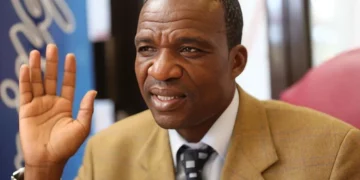
Richard Litunya served as Butere MP from 1975 to 1979.
His term came after Shikuku’s detention, making it one of the most sensitive transitions in the constituency’s political history.
The period was shaped by the final years of President Jomo Kenyatta’s rule and the transition to President Daniel arap Moi after 1978. Kenya’s political environment remained highly centralised, and MPs had to operate carefully within the ruling party system.
For Butere, Litunya’s leadership represented continuity during a period of disruption. Voters still expected development, schools, roads, agriculture support, health services and local representation.
His time in Parliament forms an important bridge between Shikuku’s first era and Shikuku’s later return.
Martin Shikuku’s Return: 1979 to 1988
Martin Shikuku returned as Butere MP in 1979 and served until 1988.
His comeback showed the depth of his political roots in Butere. After detention and political exclusion, he still had enough local support to reclaim the seat.
This second period came during the early and middle years of the Moi era. Kenya was moving deeper into one-party politics, and the political environment remained restrictive.
Shikuku’s return mattered because it restored Butere’s association with fearless representation. His political voice continued to stand out in national debate.
He retained the seat in 1983 but lost in 1988, a year remembered nationally for the controversial queue-voting political environment.
His second era remains central to Butere’s identity as a constituency that repeatedly returned a bold and nationally known leader to Parliament.
Jesse Opembe and the 1988–1990 Era
Jesse Opembe served as Butere MP from 1988 to 1990.
His election came during the late one-party period, when KANU dominated national politics and political competition operated within narrow limits.
The 1988 election period was politically controversial across Kenya because of the mlolongo voting system. Many constituencies experienced intense local contests and disputes.
Opembe’s term was short because he died in office. His death created another transition in Butere politics and led to John Okwara’s entry into the constituency’s parliamentary timeline.
Although his time in Parliament was brief, Opembe remains part of Butere’s political memory because he represented the constituency during one of Kenya’s most sensitive electoral periods.
John Okwara and the 1990–1992 Transition
John Okwara served as Butere MP from 1990 to 1992.
His leadership came at the end of Kenya’s one-party era. By this time, national pressure for democratic reform was rising. Opposition voices, civil society, churches and reform-minded politicians were demanding the return of multiparty politics.
For Butere, Okwara’s term was a bridge between the late KANU era and the 1992 multiparty election.
The constituency was preparing for a major political shift. Voters would soon have more party choices, and older reform leaders such as Martin Shikuku would find new space in national politics.
Okwara’s place in Butere history is therefore tied to transition.
Shikuku’s Final Parliamentary Comeback
Martin Shikuku returned once again in 1992, serving Butere until 1997.
The 1992 General Election was historic because Kenya had returned to multiparty democracy. For Shikuku, it was a natural political moment. He had long been associated with reform, dissent and democratic struggle.
His return under the multiparty system gave Butere another major national profile. Shikuku became part of the opposition politics that reshaped Kenya after decades of one-party rule.
This final term completed one of the most remarkable parliamentary careers in Western Kenya. Few leaders in Kenya’s history have served across such different political periods: independence, one-party rule, detention, return, and multiparty democracy.
For Butere, Shikuku remains a symbol of courage, resilience and public accountability.
Fredrick Amukowa Anangwe and the 1997–2002 Period
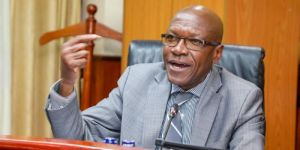
Fredrick Amukowa Anangwe served as Butere MP from 1997 to 2002.
His election marked the end of Shikuku’s final parliamentary period and the rise of a new political phase in Butere.
Anangwe was a scholar and political figure with a strong intellectual profile. His leadership came during the late Moi era, when opposition politics was becoming more organised and national pressure for change was growing.
The 1997–2002 period was politically important because it led to the historic 2002 election, when KANU’s long rule ended.
Anangwe’s term therefore sits at the end of the Moi era and just before the major national transition brought by the National Rainbow Coalition.
His place in Butere political history reflects the shift from old reform icons to a new generation of professionals and national political actors.
Wycliffe Ambetsa Oparanya and Butere’s Development Era
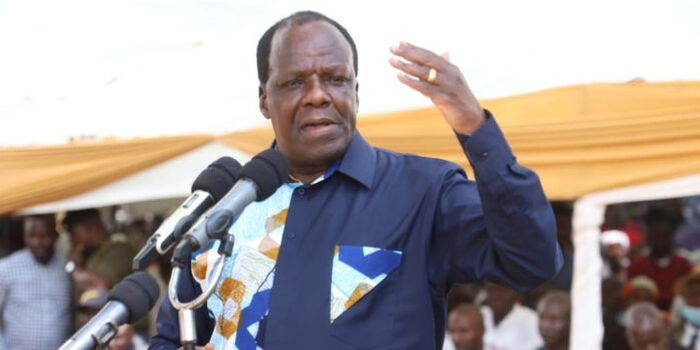
Wycliffe Ambetsa Oparanya served as Butere MP from 2002 to 2013.
His election came during the 2002 national transition, when the National Rainbow Coalition defeated KANU and promised reform, economic recovery and stronger public institutions.
Oparanya brought a technocratic profile to Butere politics. As an accountant and public finance professional, he became associated with planning, development and governance.
During his time as MP, he later served as Minister of State for Planning, National Development and Vision 2030. This gave Butere national visibility and connected the constituency to major planning and development conversations.
In 2013, Oparanya became the first Governor of Kakamega County under the new devolved system created by the 2010 Constitution. He served two terms as governor and became one of the most influential county leaders in Kenya.
His rise from Butere MP to governor and later national Cabinet leadership makes him one of the most important figures in Butere political history.
Andrew Anyanga Toboso and the First Devolution Era
Andrew Anyanga Toboso served as Butere MP from 2013 to 2017.
His election came during Kenya’s first General Election under the 2010 Constitution. This was a major political shift because voters were now electing MPs alongside governors, senators, women representatives and MCAs.
The role of MPs changed after devolution. Before 2013, many voters viewed MPs as the main route to local development. After 2013, county governments took over many local functions, including health, county roads, markets and early childhood education.
Toboso’s term therefore represented Butere’s first parliamentary phase under devolution.
His leadership also followed Oparanya’s move to the governorship, meaning Butere had to adjust to a new MP while one of its former MPs became the county’s first governor.
Toboso’s period remains important because it helped define how Butere would operate in the devolved political system.
Nicholas Scott Tindi Mwale and the Current Butere Era
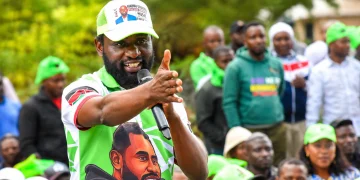
Nicholas Scott Tindi Mwale became Butere MP in 2017 and has continued to serve in the current parliamentary era.
His election marked a generational shift in Butere politics. He entered Parliament as a young leader and later retained the seat in 2022, strengthening his position as the constituency’s current political voice.
Mwale’s background in business, aviation and public policy gives him a modern professional profile. His leadership belongs to an era where MPs are judged through parliamentary performance, development delivery, public communication, school support, youth empowerment, bursaries, roads, water, security and accessibility.
As current MP, he represents Butere in the 13th Parliament under ODM. His role is important because Butere has a strong history of vocal and visible representation, from Shikuku to Oparanya.
Mwale’s political legacy will be judged by how well he balances local development with national oversight and parliamentary responsibility.
Butere and Marama Political Identity
Butere is closely associated with the Marama community, one of the Luhya sub-groups in Kakamega County.
This identity gives the constituency a strong cultural and political character. Local politics is shaped by clans, churches, schools, professional networks, youth groups, women’s groups and community elders.
The current wards in Butere include Marama Central, Marama North, Marama South, Marama West and Shianda/Marengo. These wards form the local political and development structure of the constituency.
Marama identity is important because it influences local priorities, leadership expectations and community mobilisation. However, Butere politics is also part of the wider Kakamega and Western Kenya political space.
This means leaders must balance local identity with county and national politics.
Butere and Kakamega County Politics
Butere has always been important in Kakamega County politics because it has produced leaders with influence beyond the constituency.
Martin Shikuku became a national reform icon. Wycliffe Oparanya became the first Governor of Kakamega County and later a Cabinet Secretary. Nicholas Tindi Mwale represents the current generation of parliamentary leadership.
The constituency’s political choices often attract attention because Butere has a history of electing strong personalities.
In county politics, Butere remains important because of its development needs, voting strength, historical leaders and role in the wider Luhya political landscape.
Education and Public Service in Butere
Education is one of the most important themes in Butere political history.
The constituency has long valued schools, professional development and public service. Parents expect MPs to support education through NG-CDF, bursaries, classrooms, laboratories, libraries, desks and sanitation facilities.
Butere’s leaders have often been judged by how well they support young people through education and training.
Public service also matters. Leaders such as Shikuku, Oparanya and Mwale show different models of service: reform politics, planning and governance, and modern parliamentary oversight.
Education remains central because many families see it as the strongest path to opportunity.
Agriculture, Roads and Local Development
Butere is largely rural and agricultural. Many households depend on farming, livestock keeping, small businesses and local trade.
Key development issues include farm inputs, roads, markets, water, electricity, health facilities, security and access to public services.
Roads are especially important because they connect villages to schools, hospitals, churches, markets and neighbouring constituencies.
Voters often judge MPs by visible development: classrooms built, bursaries issued, roads improved, water projects supported and public institutions strengthened.
This means Butere politics is not only about party loyalty. It is also about practical service delivery.
Devolution and the Changing Role of Butere MPs
The 2010 Constitution changed political leadership in Butere.
Before devolution, MPs were often seen as the main drivers of local development. After devolution, county governments became responsible for many local services, including health, county roads, markets and early childhood education.
This changed voter expectations. MPs still matter through Parliament, national oversight and NG-CDF, but development now requires coordination with the governor, senator, MCAs and national government agencies.
Andrew Toboso and Nicholas Tindi Mwale have both served under this devolved system.
Modern Butere voters expect their MP to be active in Parliament, visible at home and effective in development coordination.
Party Politics in Butere
Butere political history reflects Kenya’s changing party landscape.
Shikuku began in the early independence era and later became a major opposition figure. The constituency moved through KANU dominance, Ford-Asili politics, NARC, ODM and other coalition formations.
Oparanya’s ODM connection helped make Butere part of the party’s strong Western Kenya base. Tindi Mwale’s current ODM affiliation continues that link.
However, Butere voters have also shown that personality matters. The constituency has elected reformers, technocrats, professionals and youthful leaders based on both party strength and personal appeal.
This makes Butere a politically active and historically aware constituency.
Why Butere Political History Matters
Butere political history matters because it reflects Kenya’s wider democratic journey.
The constituency has experienced independence politics, detention without trial, one-party rule, multiparty democracy, the 2002 transition, the 2010 Constitution, devolution and modern youth-led politics.
Its leaders represent different political eras.
Martin Shikuku represents courage and democratic struggle. Richard Litunya, Jesse Opembe and John Okwara represent transition periods. Fred Anangwe represents intellectual politics. Wycliffe Oparanya represents development planning and county leadership. Andrew Toboso represents the first devolution era. Nicholas Tindi Mwale represents the current generation.
For voters, students and researchers, Butere offers one of the strongest constituency case studies in Western Kenya political history.
Key Takeaways
- Butere Constituency was established for the 1963 elections.
- Martin Olukhanya Oyondi Shikuku was the first listed MP for Butere.
- Shikuku served in three separate parliamentary periods.
- Shikuku was detained during the Kenyatta era, making his political career part of Kenya’s reform history.
- Richard Litunya served after Shikuku’s detention.
- Jesse Opembe served from 1988 to 1990 and died in office.
- John Okwara served during the transition to multiparty democracy.
- Fredrick Amukowa Anangwe served from 1997 to 2002.
- Wycliffe Ambetsa Oparanya served from 2002 to 2013 and later became Kakamega’s first governor.
- Andrew Anyanga Toboso served during the first devolution parliamentary term.
- Nicholas Scott Tindi Mwale has served as Butere MP since 2017.
- Butere politics is shaped by Marama identity, education, agriculture, roads, youth and reform legacy.
Frequently Asked Questions
What is Butere political history?
Butere political history refers to the leadership journey of Butere Constituency in Kakamega County from the 1963 elections to the current Nicholas Tindi Mwale era.
Who was the first MP for Butere?
Martin Olukhanya Oyondi Shikuku was the first listed Member of Parliament for Butere Constituency.
Why is Martin Shikuku important in Butere history?
Martin Shikuku is important because he was a fearless reform politician, longtime Butere MP and national voice for democracy and parliamentary accountability.
Why was Martin Shikuku detained?
Shikuku was detained during the Kenyatta era after making remarks that were viewed as politically sensitive by the government.
Who served Butere after Shikuku’s detention?
Richard Litunya served as Butere MP from 1975 to 1979.
Which Butere MP died in office?
Jesse Opembe served from 1988 to 1990 and died in office.
When did Wycliffe Oparanya serve as Butere MP?
Wycliffe Ambetsa Oparanya served as Butere MP from 2002 to 2013.
What position did Wycliffe Oparanya later hold?
Wycliffe Oparanya became the first Governor of Kakamega County and later Cabinet Secretary for Cooperatives and MSMEs Development.
Who served as Butere MP from 2013 to 2017?
Andrew Anyanga Toboso served as Butere MP from 2013 to 2017.
Who is the current MP for Butere?
Nicholas Scott Tindi Mwale is the current Member of Parliament for Butere Constituency.
Conclusion
Butere political history is a story of courage, transition and leadership. From Martin Shikuku’s fearless reform politics to Nicholas Tindi Mwale’s current parliamentary era, the constituency has remained one of Kakamega County’s most politically significant areas.
Shikuku gave Butere a national identity as a home of bold representation. Richard Litunya, Jesse Opembe and John Okwara carried the constituency through difficult transition periods. Fredrick Anangwe represented the late multiparty era. Wycliffe Oparanya transformed Butere’s profile through development planning and later became Kakamega’s first governor. Andrew Toboso represented the first devolution parliamentary term, while Tindi Mwale now leads the constituency in the modern political era.
Beyond the list of MPs, Butere’s political story is shaped by Marama identity, education, farming, roads, youth, public service and the continuing demand for accountable leadership.
For voters, students and researchers, Butere political history offers more than names and dates. It explains how one constituency became a powerful symbol of reform, resilience and political influence in Western Kenya.
Butere Constituency is an electoral constituency in Kenya. It is one of twelve constituencies in Kakamega County and one of four in the former Butere/Mumias District. The constituency has six wards, all electing councillors to the Butere/Mumias County Council. The constituency was established for the 1963 elections.
Read Also:Ruto Used Moses Kuria to Scatter Mbeere North Votes – Gachagua Claims