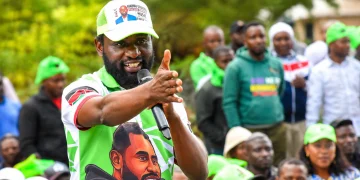
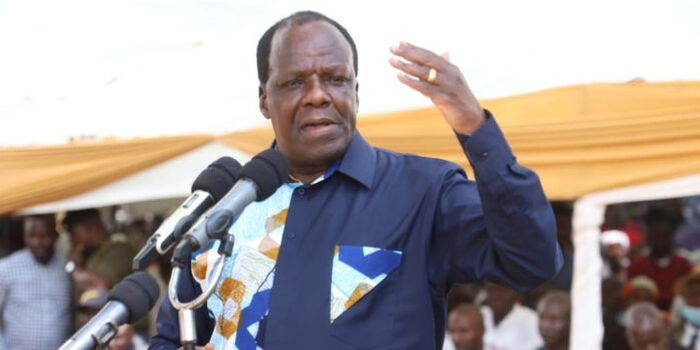
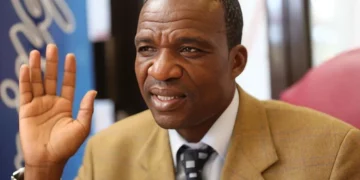
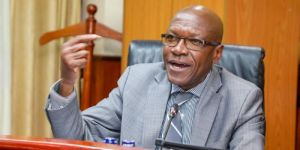
Lugari political history is one of the most important stories in Kakamega County politics. The constituency has produced veteran politicians, diplomats, national figures, strong parliamentary personalities and leaders who have shaped politics in Western Kenya.
Created for the 1988 elections, Lugari became a major political centre in the larger Mulembe region. Its political identity has been shaped by agriculture, land, settlement, roads, education, party competition, family legacy and regional development.
The constituency has been represented by Burudi Nabwera, Apili Wawire Sifuna, Cyrus Jirongo, Enock Wamalwa Kibunguchy, Ayub Savula Angatia and Nabwera Daraja Nabii. Each leader represents a different phase of Lugari’s political journey, from the late KANU era to multiparty democracy, devolution and modern county politics.
Lugari’s story is also closely connected to Likuyani Constituency, which was created in 2013 after being hived from the larger Lugari Constituency. Likuyani has since produced Enock Wamalwa Kibunguchy and Innocent Maino Mugabe as its MPs.
Together, Lugari and Likuyani reflect the changing political map of Kakamega County and the wider Western Kenya region.
Quick Facts About Lugari Political History
| Category | Details |
|---|---|
| Constituency | Lugari Constituency |
| County | Kakamega County |
| Region | Western Kenya |
| Established | 1988 elections |
| First MP | Burudi Nabwera |
| Current MP | Nabwera Daraja Nabii |
| Current MP’s party | ODM |
| Constituency created from Lugari | Likuyani Constituency |
| Year Likuyani was created | 2013 electoral cycle |
| First Likuyani MP | Enock Wamalwa Kibunguchy |
| Current Likuyani MP | Innocent Maino Mugabe |
| Lugari wards | Lumakanda, Lugari, Mautuma, Lwandeti, Chekalini, Chevaywa |
| Key political themes | Agriculture, settlement, roads, education, land, devolution and regional representation |
Lugari Members of Parliament
The following timeline captures the parliamentary leadership of Lugari Constituency since its creation.
| Period | Member of Parliament |
| 1988–1992 | Burudi Nabwera |
| 1992–1997 | Apili Wawire Sifuna |
| 1997–2002 | Cyrus Jirongo |
| 2002–2007 | Enock Wamalwa Kibunguchy |
| 2007–2013 | Cyrus Jirongo |
| 2013–2022 | Ayub Savula Angatia |
| 2022–Present | Nabwera Daraja Nabii |
Creation of Lugari Constituency
Lugari Constituency was created for the 1988 elections. Its creation gave residents of the area a direct parliamentary voice and helped define a political identity separate from the older administrative and electoral arrangements in the wider Western Kenya region.
From the beginning, Lugari was shaped by its agricultural character. The area is known for farming, settlement schemes and a cosmopolitan population. Unlike some constituencies that are strongly urban or strongly rural, Lugari carries a broad mix of communities, farming interests and local development priorities.
The constituency’s political concerns have remained practical over the years. Voters have often focused on roads, schools, land, farming, health services, security, electricity, water, markets and youth opportunities.
This practical development focus has shaped how Lugari voters judge their MPs.
Burudi Nabwera: Diplomat, Elder and First Lugari MP
Burudi Nabwera became the first MP for Lugari after the constituency was created in 1988.
His political profile was already strong before he entered parliamentary politics. He was a veteran public servant and diplomat who had served Kenya in major international roles during the early years of independence.
Burudi Nabwera’s diplomatic career gave him a national and international profile. He represented Kenya abroad at a time when the newly independent country was building its place in global affairs. This background made him one of the most distinguished first MPs of any newly created constituency in Western Kenya.
His time as Lugari MP came during the late one-party era under KANU. The 1988 election period was politically sensitive across Kenya, and MPs had to operate within a highly controlled national political system.
For Lugari, Burudi Nabwera’s election gave the new constituency an experienced and nationally connected leader. His role helped establish Lugari’s first parliamentary identity.
Apili Wawire Sifuna and the Multiparty Opening
Apili Wawire Sifuna served as Lugari MP from 1992 to 1997.
His election came during one of Kenya’s biggest political turning points: the return of multiparty democracy. The 1992 General Election changed the country’s political landscape by opening space for opposition parties, stronger voter choice and more competitive constituency politics.
For Lugari, this was the first election after the constituency’s founding election in 1988. Voters were no longer operating under the same one-party political environment. They were now part of a national democratic transition.
Sifuna’s term therefore belongs to the early multiparty era. During this period, politics in Western Kenya was strongly shaped by party realignments, reform movements and local power shifts.
His leadership helped carry Lugari from the late KANU system into a more competitive political age.
Cyrus Jirongo and the Rise of National Political Visibility
Cyrus Jirongo served as Lugari MP from 1997 to 2002 and later returned from 2007 to 2013.
Jirongo is one of the most nationally recognisable political figures associated with Lugari. His political career began at a national level during the KANU era, where he became known as a powerful youth and party mobiliser.
His election as Lugari MP in 1997 brought national attention to the constituency. Jirongo was not an ordinary backbench figure. He was a politician with influence, name recognition and deep involvement in national political networks.
His first term from 1997 to 2002 came during the final years of President Daniel arap Moi’s administration. This was a period of strong political competition as the opposition grew stronger and KANU’s long hold on power began weakening.
Jirongo lost the seat in 2002 but returned in 2007. His comeback showed his continued influence in Lugari and his ability to remain relevant across different political cycles.
His second term from 2007 to 2013 came during the Grand Coalition Government era and the period that produced the 2010 Constitution. This made him part of one of Kenya’s most important constitutional transitions.
Enock Wamalwa Kibunguchy and the 2002 Transition
Enock Wamalwa Kibunguchy served as Lugari MP from 2002 to 2007.
His election came during the historic 2002 General Election, when the National Rainbow Coalition defeated KANU and ended decades of one-party dominance. Across Kenya, voters were calling for change, reform and a new political direction.
Kibunguchy’s victory placed Lugari within that national wave. His leadership represented the constituency’s shift into the post-KANU era.
His time as Lugari MP covered the early years of President Mwai Kibaki’s administration. This was a period associated with economic recovery, education reforms, infrastructure expansion and new political expectations.
Kibunguchy later became closely associated with Likuyani after the constituency was created from the larger Lugari. He became the first MP for Likuyani in 2013, showing how his political influence continued even after leaving the Lugari seat.
Cyrus Jirongo’s Return in 2007
Cyrus Jirongo returned as Lugari MP in 2007.
His comeback was significant because it showed the constituency’s openness to returning former leaders when voters believed they still had political strength or development value.
The 2007 election was one of the most consequential in Kenya’s history. It led to a disputed presidential result, post-election violence and later the formation of the Grand Coalition Government.
Jirongo’s second term unfolded during this difficult national period. It also covered the constitutional reform process that resulted in the 2010 Constitution.
For Lugari, this period was important because the new Constitution later reshaped representation, introduced devolution and eventually led to the creation of Likuyani Constituency.
Ayub Savula Angatia and the Devolution Era
Ayub Savula Angatia served as Lugari MP from 2013 to 2022.
His election came during Kenya’s first General Election under the 2010 Constitution. This election introduced the fully devolved structure, with governors, senators, women representatives and MCAs becoming central players in local development.
Savula’s tenure therefore belongs to the first decade of devolution. During this period, the role of MPs changed. Before devolution, MPs were often seen as the main drivers of local development. After devolution, county governments took over many functions, including health, county roads, markets, early childhood education and local planning.
As Lugari MP, Savula served during a period of intense party realignment and coalition politics. He later became Deputy Governor of Kakamega County, showing how Lugari leaders can move from parliamentary representation to county executive leadership.
His two terms gave him a strong place in Lugari political history and Kakamega County politics.
Nabwera Daraja Nabii and the Return of the Nabwera Name
Nabwera Daraja Nabii became Lugari MP after the 2022 General Election.
His victory marked a major symbolic moment in Lugari political history because the Nabwera name returned to the parliamentary seat first held by Burudi Nabwera in 1988.
Nabii Nabwera is widely associated with the Nabwera political family and is presented in local political memory as the son of Burudi Nabwera. This family connection gives his leadership a strong historical meaning in Lugari politics.
He was elected on an ODM ticket, reflecting the continuing influence of opposition and reform-oriented politics in parts of Western Kenya.
Before becoming MP, Nabii Nabwera had experience in public administration, county government and organisational leadership. This background placed him within the modern technocratic style of politics, where voters expect leaders to understand both grassroots needs and institutional governance.
As current MP, his leadership is being judged through development delivery, parliamentary visibility, public engagement, education support, roads, water, agriculture, youth empowerment and coordination with Kakamega County leadership.
The Nabwera Family and Lugari Political Memory
The Nabwera family holds a special place in Lugari political history.
Burudi Nabwera represented the first generation of Lugari leadership. He was a diplomat, public servant, politician and elder whose career connected the constituency to Kenya’s early international history.
Nabii Nabwera’s election in 2022 gave the family name renewed political visibility. For many voters, this created a sense of continuity between Lugari’s founding parliamentary era and its current leadership.
Political families are common in Kenya, but their influence depends on more than name recognition. Voters also look at performance, accessibility, party position, development record and personal connection.
In Lugari, the return of the Nabwera name shows how political memory can remain powerful across generations.
Likuyani Constituency and the 2013 Boundary Change
Likuyani Constituency was created in the 2013 electoral cycle after being hived from the larger Lugari Constituency.
This was one of the most important political changes in the area’s recent history. Before Likuyani became a separate constituency, its residents were part of the larger Lugari parliamentary structure.
The creation of Likuyani gave the area its own MP, its own NG-CDF structure and a more direct platform for local development needs.
It also changed Lugari’s political geography. The old larger Lugari was reduced, while Likuyani developed its own identity, leadership and electoral contests.
Likuyani Members of Parliament
| Period | Member of Parliament |
| 2013–2022 | Enock Wamalwa Kibunguchy |
| 2022–Present | Innocent Maino Mugabe |
Enock Wamalwa Kibunguchy: First MP for Likuyani
Enock Wamalwa Kibunguchy became the first MP for Likuyani after the constituency was created.
His role was important because first MPs help define how a new constituency understands itself. They set the tone for development priorities, public expectations, political culture and the use of constituency resources.
Kibunguchy had already served as Lugari MP from 2002 to 2007, giving him parliamentary experience before taking up the new Likuyani seat.
His two terms in Likuyani from 2013 to 2022 gave the constituency its first decade of parliamentary representation.
Innocent Maino Mugabe and the Current Likuyani Era
Innocent Maino Mugabe became Likuyani MP after the 2022 General Election.
His victory marked Likuyani’s first major leadership change since its creation. He defeated Enock Wamalwa Kibunguchy, ending the founding MP’s two-term hold on the seat.
Mugabe’s leadership represents the second phase of Likuyani politics. As current MP, he leads a constituency that is still relatively young but already politically important within Kakamega County.
Likuyani voters now expect visible development, school support, roads, youth empowerment, security, water projects, agriculture support and stronger public engagement.
His tenure will help shape Likuyani’s post-founding political identity.
Lugari and Kakamega County Politics
Lugari is one of the key constituencies in Kakamega County. It sits in a region that is politically diverse, agriculturally important and socially cosmopolitan.
Unlike some constituencies dominated by one identity, Lugari hosts many communities. This makes its politics broad, competitive and sometimes unpredictable.
Leaders in Lugari must appeal to farmers, workers, youth, women’s groups, teachers, religious leaders, businesspeople, settlement communities and professionals.
The constituency’s location also gives it links to neighbouring areas such as Uasin Gishu, Bungoma, Malava, Likuyani and Turbo. This makes Lugari politically and economically connected to both Western Kenya and the North Rift.
Agriculture and Settlement in Lugari Politics
Agriculture is central to Lugari political history.
The constituency is known for farming, especially maize, beans, sugarcane, sweet potatoes and other food crops. Many households depend on agriculture for income and food security.
This makes farm inputs, maize prices, fertiliser costs, markets, rural roads, storage, land ownership and extension services major political issues.
Settlement is another major theme. Lugari has a cosmopolitan population and a history shaped by settlement patterns, land ownership and migration.
Leaders in the constituency must therefore understand land questions, farmer needs and the social balance among different communities.
Roads, Education and Local Development
Roads remain one of the most important development issues in Lugari. Good roads connect farmers to markets, students to schools, patients to health facilities and traders to customers.
Education is also central. Voters expect MPs to support schools through NG-CDF, bursaries, classrooms, laboratories, desks, libraries and sanitation facilities.
Youth empowerment is another major concern. Young people in Lugari need jobs, skills training, sports support, business opportunities and access to national and county programmes.
Water, electricity, health facilities, security and public services also shape voter expectations.
This means Lugari politics is not only about party loyalty. It is also about practical development.
Party Politics in Lugari
Lugari political history reflects the changing party landscape of Kenya.
Burudi Nabwera served during the KANU era. Apili Wawire Sifuna came in during the return of multiparty politics. Cyrus Jirongo’s career was linked to KANU, KADDU and national coalition politics. Enock Kibunguchy represented the post-2002 transition. Ayub Savula served through the devolution era and party realignments. Nabii Nabwera was elected under ODM in 2022.
This shows that Lugari voters have moved across different party waves over time.
Party identity matters, but it does not work alone. Voters also judge candidates by development promises, personal networks, family reputation, accessibility, public speaking, community service and ability to attract resources.
Devolution and the Changing Role of MPs
The 2010 Constitution changed how Lugari voters judge leadership.
Before devolution, MPs were often viewed as the main route to development. After devolution, county governments became responsible for many local services, including health, county roads, markets and local planning.
This means MPs now work in a shared leadership environment. They must coordinate with governors, senators, MCAs, national government officers and development agencies.
Ayub Savula’s tenure and Nabii Nabwera’s current leadership both belong to this devolved era.
Modern voters expect MPs to represent them in Parliament, support schools through NG-CDF, speak on national issues and work with county government to bring development closer to the people.
Why Lugari Political History Matters
Lugari political history matters because it reflects the wider political evolution of Western Kenya.
The constituency has experienced one-party politics, multiparty democracy, national coalition politics, devolution, boundary changes and family legacy.
Its leaders have included diplomats, national political mobilisers, experienced parliamentarians, county executives and modern grassroots politicians.
The creation of Likuyani also shows how boundary reforms can reshape representation. What was once one larger Lugari political space became two constituencies with separate leadership identities.
For voters, students and researchers, Lugari offers a strong example of how constituency politics changes across generations while remaining tied to land, farming, development and local identity.
Key Takeaways
- Lugari Constituency was created for the 1988 elections.
- Burudi Nabwera was the first MP for Lugari.
- Burudi Nabwera had a major diplomatic background before entering constituency politics.
- Apili Wawire Sifuna served during the early multiparty era.
- Cyrus Jirongo served Lugari in two separate periods.
- Enock Wamalwa Kibunguchy served as Lugari MP from 2002 to 2007.
- Ayub Savula Angatia served from 2013 to 2022 and later became Deputy Governor of Kakamega County.
- Nabwera Daraja Nabii became Lugari MP after the 2022 General Election.
- The Nabwera family remains important in Lugari political memory.
- Likuyani Constituency was created out of the larger Lugari in the 2013 electoral cycle.
- Enock Kibunguchy became the first MP for Likuyani.
- Innocent Maino Mugabe is the current MP for Likuyani.
- Agriculture, land, roads, education and youth empowerment remain central issues in Lugari politics.
Frequently Asked Questions
What is Lugari political history?
Lugari political history refers to the leadership journey of Lugari Constituency in Kakamega County from its creation in 1988 to the current Nabii Nabwera era.
When was Lugari Constituency created?
Lugari Constituency was created for the 1988 elections.
Who was the first MP for Lugari?
Burudi Nabwera was the first Member of Parliament for Lugari Constituency.
Who served as Lugari MP from 1992 to 1997?
Apili Wawire Sifuna served as Lugari MP from 1992 to 1997.
When did Cyrus Jirongo serve as Lugari MP?
Cyrus Jirongo served as Lugari MP from 1997 to 2002 and again from 2007 to 2013.
Who served as Lugari MP from 2013 to 2022?
Ayub Savula Angatia served as Lugari MP from 2013 to 2022.
Who is the current MP for Lugari?
Nabwera Daraja Nabii is the current Member of Parliament for Lugari Constituency.
Is Nabii Nabwera related to Burudi Nabwera?
Nabii Nabwera is widely associated in local political accounts with the Nabwera family and is presented as the son of veteran politician and diplomat Burudi Nabwera.
When was Likuyani Constituency created?
Likuyani Constituency was created in the 2013 electoral cycle after being hived from the larger Lugari Constituency.
Who is the current MP for Likuyani?
Innocent Maino Mugabe is the current Member of Parliament for Likuyani Constituency.
Conclusion
Lugari political history is a story of leadership, family legacy, boundary change and regional influence. Since its creation in 1988, the constituency has produced politicians who shaped both local and national conversations.
Burudi Nabwera gave Lugari its first parliamentary identity and connected the constituency to Kenya’s early diplomatic history. Apili Wawire Sifuna carried the constituency into the multiparty era. Cyrus Jirongo brought national political visibility. Enock Wamalwa Kibunguchy served during the 2002 transition and later became Likuyani’s first MP. Ayub Savula represented Lugari during the first decade of devolution and later moved into Kakamega County executive leadership. Nabii Nabwera now represents the current era and the return of the Nabwera name to the Lugari seat.
The creation of Likuyani in 2013 added another chapter to this history, giving the former larger Lugari region two parliamentary voices.
For voters, students and researchers, Lugari political history offers more than a list of MPs. It explains how agriculture, land, settlement, family legacy, devolution and party politics have shaped one of Kakamega County’s important constituencies.
Lugari Constituency is an electoral constituency in Kenya. It is one of twelve constituencies in Kakamega County, and the only constituency in the former Lugari District. The entire constituency has eight wards, all of which elect representatives for the Kakamega County Assembly. The constituency was established for the 1988 elections.
Read Also: List of Kalenjins Appointed to Senior Positions by Ruto (2022-2025)