Ikolomani political history is one of the most distinctive stories in Kakamega County politics. The constituency has produced leaders who shaped local representation, national debate, multiparty politics and county leadership.
Created for the 1963 elections, Ikolomani has remained one of the historic constituencies in Western Kenya. Its political identity is closely tied to the Idakho community, gold mining, bullfighting culture, rural development, education, roads, agriculture and the wider politics of Kakamega County.
The constituency has been represented by Jonathan Muruli, Seth Lugonzo, Clement Lubembe, Jeremiah Murila, Benjamin Ashiono, Joseph Mugala, Bonnie Khalwale and Bernard Shinali. Each leader represents a different phase in Ikolomani’s journey, from the early independence period to the modern devolved era.
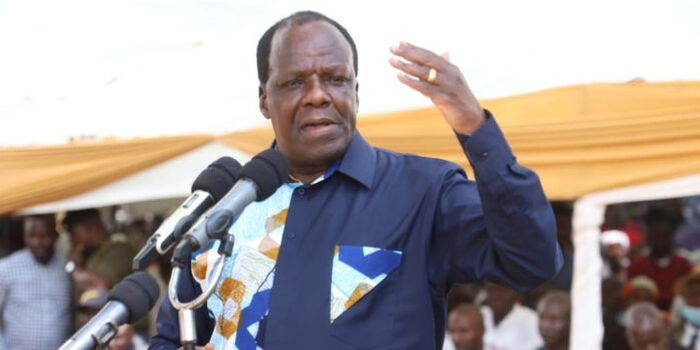
Ikolomani also has a unique political reputation because of Dr Boni Khalwale, the former MP who later became Kakamega Senator and one of Kenya’s most recognisable political personalities.
Quick Facts About Ikolomani Political History
| Category | Details |
|---|---|
| Constituency | Ikolomani Constituency |
| County | Kakamega County |
| Region | Western Kenya |
| Established | 1963 elections |
| Constituency later split | Shinyalu was created from part of Ikolomani in 1988 |
| First listed MP | Jonathan Muruli |
| Current MP | Bernard Masaka Shinali |
| Notable former MP | Dr Boni Khalwale |
| Current wards | Idakho East, Idakho Central, Idakho South, Idakho North |
| Key identity | Gold mining and Idakho cultural heritage |
| Key political themes | Mining, roads, education, agriculture, culture, devolution and representation |
Ikolomani Members of Parliament
The following timeline captures the parliamentary leadership of Ikolomani Constituency.
| Period | Member of Parliament |
| 1963–1969 | Jonathan Muruli |
| 1969–1974 | Seth Lugonzo |
| 1974–1979 | Clement Lubembe |
| 1979–1983 | Jeremiah Murila |
| 1983–1992 | Seth Lugonzo |
| 1992–1997 | Benjamin Ashiono |
| 1997–2002 | Joseph Mugala |
| 2002–2013 | Dr Boni Khalwale |
| 2013–Present | Bernard Masaka Shinali |
Jonathan Muruli and the Early Independence Era
Jonathan Muruli is remembered as the first listed MP in Ikolomani political history, serving from 1963 to 1969.
His leadership came at the birth of Kenya’s independence-era Parliament. This was a time when constituencies were still adjusting to self-rule and local communities expected their MPs to connect them to the new national government.
Muruli’s period belonged to the foundation stage of Ikolomani representation. Voters expected development, schools, roads, administrative recognition and access to government services.
At independence, MPs carried heavy expectations. They were not only lawmakers in Nairobi. They were also local ambassadors for rural communities that wanted to be seen, heard and supported by the new state.
Muruli’s place in Ikolomani history is therefore important because he helped establish the constituency’s first parliamentary identity.
Seth Lugonzo and the Early Post-Independence Period
Seth Lugonzo first served as Ikolomani MP from 1969 to 1974. He later returned and served again from 1983 to 1992.
His two separate periods in Parliament make him one of the most important figures in Ikolomani’s early political story.
Lugonzo’s first term came during the late Jomo Kenyatta era, when national politics was becoming more centralised and the ruling party system was gaining strength. MPs had to balance local development expectations with the national political environment.
His second period came during the Moi era, including the one-party period and the political pressure that eventually led to the return of multiparty democracy.
Because he served across different political climates, Lugonzo represents both continuity and transition in Ikolomani politics.
Clement Lubembe and the 1974–1979 Period
Clement Lubembe served as Ikolomani MP from 1974 to 1979.
His leadership came during a period when Kenya was still under a strong centralised political system. Local politics was shaped by party loyalty, community networks, national administration and the ability of MPs to negotiate for development.
For Ikolomani voters, the practical concerns remained familiar: roads, schools, health facilities, land issues, agriculture and access to government resources.
Lubembe’s period stands between the first Lugonzo era and the leadership of Jeremiah Murila. It forms part of the constituency’s gradual political development after independence.
Jeremiah Murila and the Late 1970s Transition
Jeremiah Murila served from 1979 to 1983.
His term came at an important moment in Kenya’s national politics. President Daniel arap Moi had taken power in 1978 after the death of President Jomo Kenyatta, and the country was entering a new political phase.
For Ikolomani, this was a time of adjustment. The constituency needed leaders who could work within the Moi-era political structure while still addressing local concerns.
Murila’s tenure remains part of the constituency’s leadership transition between the early post-independence figures and the later return of Seth Lugonzo.
Seth Lugonzo’s Return and the 1988 Boundary Period
Seth Lugonzo returned to Parliament in 1983 and served until 1992.
This second phase of his leadership was especially significant because it covered the 1988 electoral period, when Ikolomani’s political geography changed. In 1988, part of the older Ikolomani arrangement was split to create Shinyalu Constituency.
Boundary changes often reshape political identity. They affect voter numbers, development priorities, local alliances and political competition.
After the split, Ikolomani continued as a separate constituency with a more focused territorial identity. Shinyalu also developed its own political journey.
Lugonzo’s return therefore belongs to one of the most important administrative and political transitions in Ikolomani history.
Benjamin Ashiono and the Multiparty Opening
Benjamin Ashiono served as Ikolomani MP from 1992 to 1997.
His election came during one of the most important moments in Kenya’s political history: the return of multiparty democracy.
The 1992 General Election changed politics across the country. Voters had more party choices, opposition parties became stronger, and constituencies became more competitive.
In Ikolomani, Ashiono’s leadership represented the first multiparty phase after years of one-party dominance. Local voters were now participating in a more open and competitive democratic environment.
His term came at a time when national politics was highly charged, especially in Western Kenya, where opposition parties and reformist movements had strong influence.
Joseph Mugala and the Late 1990s Era
Joseph Mugala served as Ikolomani MP from 1997 to 2002.
His tenure came during the second multiparty election cycle. By 1997, Kenyan voters had already experienced the first multiparty election of 1992, and political competition had become more organised.
Mugala’s leadership belonged to the late Moi era, when the opposition was growing stronger and national pressure for political reform was increasing.
For Ikolomani, this period was about development, constituency identity, local political competition and preparation for the major national shift that would come in 2002.
The end of Mugala’s term coincided with the fall of KANU’s long rule and the rise of the National Rainbow Coalition.
Dr Boni Khalwale and Ikolomani’s National Profile
Dr Boni Khalwale served as Ikolomani MP from 2002 to 2013. His time in Parliament gave Ikolomani strong national visibility.
Khalwale entered Parliament in 2002, the year Kenya experienced a major political transition. The National Rainbow Coalition defeated KANU, ending decades of one-party dominance and opening a new reform era.
Khalwale quickly became known as a bold, outspoken and energetic politician. A medical doctor by profession, he built a reputation as a strong debater and parliamentary watchdog.
He became especially visible through his work in Parliament and his public style, which often connected with Ikolomani’s cultural identity. His nickname as the “Bullfighter” linked him to the constituency’s famous bullfighting tradition.
His 2007 election was later nullified, leading to the 2011 Ikolomani by-election. Khalwale won the by-election and completed his parliamentary period before moving to the Senate in 2013.
After leaving the National Assembly, Khalwale became Kakamega Senator, serving from 2013 to 2017 and later returning to the Senate after the 2022 General Election.
His career shows how an Ikolomani MP can rise from constituency politics to county-level and national political influence.
Bernard Masaka Shinali and the Current Ikolomani Era
Bernard Masaka Shinali became Ikolomani MP in 2013 and has continued to serve in the current parliamentary era.
His election came during Kenya’s first General Election under the 2010 Constitution. This was the beginning of the devolved system, where voters elected MPs alongside governors, senators, women representatives and MCAs.
Shinali’s leadership belongs to the modern era of constituency politics. MPs today are judged not only by speeches in Parliament but also by NG-CDF projects, bursaries, school infrastructure, roads, public participation, security, water projects and accessibility.
His continued re-election shows that he has built a strong political base in Ikolomani. He has served across different national political alignments and remains the constituency’s current parliamentary representative.
As MP, his legacy will be measured by how well Ikolomani benefits from education support, infrastructure, mining-related advocacy, youth empowerment and coordination with county and national government.
Ikolomani and the 1988 Split That Created Shinyalu
One of the most important moments in Ikolomani political history was the 1988 split that led to the creation of Shinyalu Constituency.
Before the split, the larger Ikolomani political area covered a wider population and territory. The creation of Shinyalu gave another part of the region its own parliamentary representation.
This change affected Ikolomani’s political identity. It reduced the constituency’s size and made representation more localised. It also allowed Shinyalu to develop its own leadership path.
For Ikolomani, the split meant a sharper focus on Idakho identity, local development and constituency-specific priorities.
Ikolomani and Gold Mining
Ikolomani is widely associated with gold mining. The constituency’s name is often linked to the idea of “gold mines,” reflecting the area’s long relationship with artisanal mining.
Gold mining is not just an economic activity in Ikolomani. It is also part of the constituency’s identity, public debate and development agenda.
Mining affects livelihoods, land use, safety, youth employment, environmental concerns and local income. Residents often expect their leaders to speak about mining rights, regulation, compensation, safety and investment.
This makes mining one of the most important political issues in Ikolomani. Any MP for the constituency must understand the connection between mining, poverty, opportunity and public safety.
Bullfighting and Cultural Identity
Ikolomani is also famous for bullfighting, one of the most recognised cultural traditions in Kakamega County.
Bullfighting is more than entertainment. It is a cultural expression tied to community pride, identity, gatherings, local tourism and social life.
Dr Boni Khalwale’s public political brand drew heavily from this cultural identity, helping connect Ikolomani’s traditions to national political visibility.
For many residents, culture and politics are not separate. Leaders are often expected to respect local traditions, participate in community events and speak in ways that connect with local identity.
Ikolomani and Kakamega County Politics
Ikolomani is one of the constituencies in Kakamega County, a politically important county in Western Kenya.
Kakamega County has long been central to Luhya politics, national party competition, devolution debates and Western Kenya leadership.
Ikolomani contributes to this wider political landscape through its history, cultural identity and leaders. The constituency has produced a current senator in Dr Boni Khalwale and a long-serving MP in Bernard Shinali.
Local politics in Ikolomani is shaped by community identity, party loyalty, development record, clan networks, church influence, youth concerns and the candidate’s personal connection with voters.
Education, Roads and Rural Development
Education remains one of the most important issues in Ikolomani politics. Parents expect MPs to support schools through NG-CDF, bursaries, classrooms, laboratories, libraries, sanitation facilities and school infrastructure.
Roads are also a major political concern. Rural roads affect access to schools, markets, health facilities, mining areas and farms.
Agriculture still supports many households. Residents care about farm inputs, market access, livestock, food security and rural income.
Water, electricity, security, youth employment and health services also shape local political debate.
This means Ikolomani voters judge leaders through practical development needs, not only party identity.
Devolution and the Changing Role of MPs
The 2010 Constitution changed how Ikolomani voters judge leadership.
Before devolution, MPs were often seen as the main route to local development. After devolution, county governments took over many functions, including health, county roads, markets and local planning.
The MP remains important through Parliament, national oversight and NG-CDF. However, development now requires coordination between the MP, governor, senator, MCAs and national government agencies.
Bernard Shinali’s era has unfolded under this devolved system. His performance is therefore judged by both constituency projects and how well Ikolomani connects to county and national development priorities.
Why Ikolomani Political History Matters
Ikolomani political history matters because it reflects Kenya’s wider political journey.
The constituency has experienced independence politics, one-party rule, boundary changes, multiparty democracy, the 2002 transition, disputed elections, by-elections, devolution and modern county politics.
Its leaders also represent different political styles.
Jonathan Muruli represents the independence foundation. Seth Lugonzo represents continuity across early and late one-party politics. Clement Lubembe and Jeremiah Murila represent the transitional post-independence period. Benjamin Ashiono and Joseph Mugala represent the early multiparty era. Boni Khalwale represents national visibility and watchdog politics. Bernard Shinali represents the current devolved constituency era.
For voters, students and researchers, Ikolomani offers a strong example of how a constituency can maintain a distinct identity while participating in national political change.
Key Takeaways
- Ikolomani Constituency was established for the 1963 elections.
- Jonathan Muruli was the first listed MP for Ikolomani.
- Seth Lugonzo served in two separate periods and became one of the constituency’s key early figures.
- Clement Lubembe served from 1974 to 1979.
- Jeremiah Murila served from 1979 to 1983.
- Benjamin Ashiono represented Ikolomani during the first multiparty election period.
- Joseph Mugala served from 1997 to 2002.
- Dr Boni Khalwale served as Ikolomani MP from 2002 to 2013.
- Khalwale later became Kakamega Senator.
- Bernard Masaka Shinali has served as Ikolomani MP since 2013.
- Ikolomani was split in 1988, leading to the creation of Shinyalu Constituency.
- Gold mining and bullfighting are central to Ikolomani’s identity.
- Education, roads, mining, youth empowerment and rural development remain major political issues.
Frequently Asked Questions
What is Ikolomani political history?
Ikolomani political history refers to the leadership journey of Ikolomani Constituency in Kakamega County from the 1963 elections to the current Bernard Shinali era.
When was Ikolomani Constituency created?
Ikolomani Constituency was established for the 1963 elections.
Who was the first MP for Ikolomani?
Jonathan Muruli was the first listed Member of Parliament for Ikolomani, serving from 1963 to 1969.
Who served as Ikolomani MP from 1969 to 1974?
Seth Lugonzo served as Ikolomani MP from 1969 to 1974 and later returned from 1983 to 1992.
Who served as Ikolomani MP from 2002 to 2013?
Dr Boni Khalwale served as Ikolomani MP from 2002 to 2013.
What position did Boni Khalwale hold after leaving Ikolomani parliamentary politics?
Dr Boni Khalwale became Senator of Kakamega County after leaving the National Assembly.
Who is the current MP for Ikolomani?
Bernard Masaka Shinali is the current Member of Parliament for Ikolomani Constituency.
When did Bernard Shinali become Ikolomani MP?
Bernard Shinali became Ikolomani MP in 2013.
Which constituency was created from Ikolomani in 1988?
Shinyalu Constituency was created after Ikolomani was split in 1988.
What is Ikolomani known for?
Ikolomani is widely known for gold mining, bullfighting culture, Idakho identity and its role in Kakamega County politics.
Conclusion
Ikolomani political history is a story of leadership, identity and change. Since the 1963 elections, the constituency has produced leaders who shaped local representation and influenced wider Kakamega politics.
Jonathan Muruli helped establish the constituency’s first parliamentary voice. Seth Lugonzo became one of its most important early figures. Clement Lubembe, Jeremiah Murila, Benjamin Ashiono and Joseph Mugala carried Ikolomani through the post-independence and multiparty transition periods.
Dr Boni Khalwale gave the constituency strong national visibility through his bold parliamentary style and later Senate career. Bernard Masaka Shinali now represents Ikolomani in the devolved era, where voters expect both local development and national representation.
Beyond politics, Ikolomani’s identity is shaped by gold mining, bullfighting, Idakho culture, education, roads and rural development.
For voters, students and researchers, Ikolomani political history offers more than a list of MPs. It explains how a historic Kakamega constituency has moved through independence, one-party rule, multiparty democracy, devolution and modern county politics while maintaining a strong local identity.
Ikolomani Constituency is an electoral constituency in Kenya. It is one of twelve constituencies in Kakamega County. The constituency was established for the 1963 elections. In 1988, it was split into two – Ikolomani and Shinyalu constituencies.
Read Also: Leaders Who Have Criticized Gachagua for Saying 2027 Will Be Like 2007