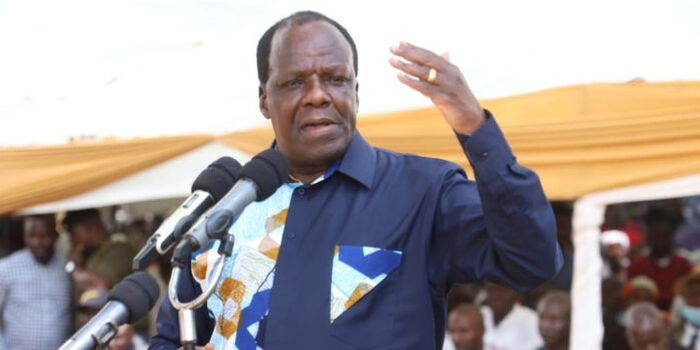
Hamisi political history is one of the most important chapters in Vihiga County politics. The constituency has produced long-serving Members of Parliament, powerful political families, respected local leaders and public figures who shaped representation in the wider Tiriki and Vihiga region.
Located in Vihiga County, Hamisi is one of the county’s five constituencies. It is made up of seven wards: Shamakhokho, Shiru, Muhudu, Banja, Tambua, Jepkoyai and Gisambai. Its politics has been shaped by education, land, agriculture, roads, churches, community identity, local development and the changing national political environment.
From Stanley Godia in the early post-independence period to Charles Gumini Gimose in the current era, Hamisi has experienced leadership continuity, family succession, by-elections, generational change and strong electoral competition.
The constituency is also closely associated with the Khaniri family, whose political influence became central from the 1990s through the early years of devolution.
Quick Facts About Hamisi Political History
| Category | Details |
|---|---|
| Constituency | Hamisi Constituency |
| County | Vihiga County |
| Region | Western Kenya |
| Number of wards | Seven |
| Wards | Shamakhokho, Shiru, Muhudu, Banja, Tambua, Jepkoyai, Gisambai |
| First listed MP | Stanley Godia |
| Long-serving early MP | Harry James Onamu |
| Notable political family | Khaniri family |
| Former MP and Senator | George Munyasa Khaniri |
| Current MP | Charles Gumini Gimose |
| Key political themes | Education, roads, agriculture, religion, youth, land and representation |
Hamisi Members of Parliament
The following timeline captures the parliamentary leadership associated with Hamisi Constituency.
| Period | Member of Parliament |
| 1963–1969 | Stanley Godia |
| 1969–1983 | Harry James Onamu |
| 1983–1988 | Samson Lumbete M’maitsi |
| 1988–1992 | Vincent Sakwa M’maitsi |
| 1992–1996 | Nicodemus Newton Khaniri |
| 1996–2013 | George Munyasa Khaniri |
| 2013–Present | Charles Gumini Gimose |
Stanley Godia and the Early Independence Era
Stanley Godia is remembered as the first listed MP in Hamisi political history, serving from 1963 to 1969.
His leadership came at the beginning of Kenya’s post-independence parliamentary era. At that time, constituencies were still adjusting to the new responsibilities of self-government. MPs were expected to connect rural communities to the national government, push for schools, roads and public services, and help shape the identity of new electoral areas.
Godia’s period belongs to the foundation stage of Hamisi representation. The constituency was still building its political voice, and leadership was closely tied to community trust, access to government and the promise of development.
His place in Hamisi history is important because he represents the first generation of leaders who carried local expectations into independent Kenya’s Parliament.
Harry James Onamu and the Long Post-Independence Period
Harry James Onamu served as Hamisi MP from 1969 to 1983, making him one of the constituency’s most important long-serving early leaders.
His tenure covered a major period in Kenya’s political history. It included the later years of President Jomo Kenyatta’s administration and the early years of President Daniel arap Moi’s leadership.
During this time, politics was heavily influenced by the ruling party system, local networks and the ability of MPs to negotiate development support from the national government.
For Hamisi voters, the major issues were practical: schools, roads, health services, agriculture, employment and access to government offices. Onamu’s long stay in Parliament suggests that he maintained strong local support during a period when political continuity was highly valued.
His leadership helped consolidate Hamisi’s parliamentary identity after the early independence years.
Samson Lumbete M’maitsi and the 1983–1988 Period
Samson Lumbete M’maitsi served as Hamisi MP from 1983 to 1988. His period came during the height of the one-party political era, when KANU dominated national politics.
This was a difficult political environment for many local leaders. MPs had to balance constituency expectations with loyalty to the ruling party system. Political competition existed, but it operated under strict national structures.
M’maitsi’s leadership is also remembered because he died in office. His death created a major political moment for Hamisi and opened the way for a transition within the M’maitsi family.
His tenure remains part of the constituency’s memory of service, loss and political succession.
Vincent Sakwa M’maitsi and the Succession Era
Vincent Sakwa M’maitsi served from 1988 to 1992. His rise followed the death of Samson Lumbete M’maitsi and continued the M’maitsi family’s presence in Hamisi politics.
The 1988–1992 period was one of the most sensitive phases in Kenya’s political history. It included the mlolongo voting era and the growing national pressure for the return of multiparty democracy.
For Hamisi, this period represented both continuity and change. The constituency remained under the one-party political order, but the national mood was shifting. Citizens across Kenya were beginning to demand more political space, stronger accountability and more competitive elections.
Vincent Sakwa M’maitsi’s term therefore stands at the edge of a major national transition.
Nicodemus Newton Khaniri and the Multiparty Opening
Nicodemus Newton Khaniri served as Hamisi MP from 1992 to 1996. His election came during the return of multiparty democracy in Kenya.
The 1992 General Election changed politics across the country. Voters had more party choices, opposition movements gained space, and constituencies became more competitive.
Nicodemus Khaniri’s leadership introduced a new political chapter in Hamisi. He represented the early multiparty moment, when voters were testing new political alignments after decades of one-party dominance.
His death created another major transition in Hamisi politics. It also opened the way for his son, George Munyasa Khaniri, to enter Parliament and begin one of the longest modern political careers associated with the constituency.
George Munyasa Khaniri and the Khaniri Legacy
George Munyasa Khaniri served as Hamisi MP from 1996 to 2013. His rise came after the death of his father, Nicodemus Newton Khaniri, and marked the beginning of a major family legacy in Hamisi politics.
George Khaniri entered Parliament at a young age and went on to retain the seat across several elections. His long service made him one of the most recognisable political figures in Vihiga County.
His time as MP covered several major national transitions. He served during the late Moi era, the 2002 change of government, the Kibaki administration, the 2005 referendum period, the 2007 post-election crisis and the birth of the 2010 Constitution.
Khaniri later became the first Senator of Vihiga County after the start of devolution in 2013. This moved him from constituency politics to county-level representation, where he became responsible for defending county interests in the Senate.
For Hamisi, the Khaniri era remains one of the most important periods in the constituency’s political history. It combined family succession, long service, national visibility and county-level influence.
Charles Gumini Gimose and the Current Hamisi Era
Charles Gumini Gimose became Hamisi MP in 2013 and has continued to serve in the current parliamentary era.
His election marked a major change after George Khaniri’s long tenure. It came during the first General Election under Kenya’s fully devolved system, following the 2010 Constitution.
This was a new political environment. Constituents were no longer looking only to MPs for development. County governments, governors, senators and MCAs had also become important players in local service delivery.
Gimose’s leadership therefore belongs to the modern era of constituency politics. MPs are now judged by their work in Parliament, NG-CDF projects, bursary support, school infrastructure, roads, public engagement and coordination with county and national government.
His continued service shows that he has remained a central political figure in Hamisi and Vihiga County politics.
The Khaniri Family in Hamisi Politics
The Khaniri family occupies a special place in Hamisi political history.
Nicodemus Newton Khaniri served as MP during the early multiparty era. After his death, George Munyasa Khaniri entered politics and became one of the longest-serving leaders from Hamisi.
George Khaniri’s later move to the Senate also expanded the family’s influence beyond the constituency. He became a county-level leader at the start of devolution, helping shape Vihiga’s voice in the Senate.
The Khaniri story reflects a common feature of Kenyan politics: family legacy can become a powerful factor when voters associate a family name with service, continuity and representation.
In Hamisi, the Khaniri name remains strongly associated with the multiparty era, parliamentary experience and Vihiga County politics.
Hamisi and Vihiga County Politics
Hamisi is one of the key constituencies in Vihiga County. It sits alongside Vihiga, Sabatia, Emuhaya and Luanda constituencies.
Its politics is closely tied to the wider political identity of Vihiga County and the Abaluhya community. Local voting patterns are often influenced by party alignments, clan and community networks, education, church influence, development promises and candidate reputation.
Hamisi also carries a strong Tiriki identity. This gives the constituency a distinct cultural character within Vihiga County.
Political leaders in Hamisi must understand local traditions, religious institutions, education networks, youth concerns, women’s groups, farming communities and the expectations of voters across all seven wards.
Education and Religion in Hamisi Politics
Education has always been central to Hamisi’s public life. The constituency is home to important learning institutions, especially around Kaimosi and its surrounding areas.
Kaimosi has long been associated with missionary work, education and religious activity. These institutions have influenced leadership, public debate and the development priorities of the constituency.
Churches and faith-based institutions also play a strong role in local life. They influence education, health, social values and community mobilisation.
Because of this, Hamisi politics often has a strong moral and community-service dimension. Leaders are expected to support schools, bursaries, churches, youth programmes, health centres and social development.
Agriculture, Roads and Local Development
Like many rural constituencies in Western Kenya, Hamisi politics is strongly shaped by everyday development needs.
Agriculture remains important for many households. Residents grow crops such as maize, bananas, tea, vegetables and other subsistence crops. Livestock keeping also contributes to household income.
Roads are another major political issue. Rural roads affect school access, market access, health services, farming and trade. Voters often judge MPs and county leaders by how well roads are maintained and expanded.
Other key development issues include water, electricity, health facilities, youth employment, school infrastructure and support for vulnerable families.
These practical concerns explain why Hamisi voters often focus on both national politics and local service delivery.
Devolution and the Changing Role of the MP
The 2010 Constitution changed the meaning of political leadership in Hamisi.
Before devolution, MPs were often viewed as the main link between the constituency and development resources. After devolution, county governments took over many local functions such as health, county roads, markets, early childhood education and local planning.
This changed voter expectations. The MP still remains important, especially through Parliament and NG-CDF, but development now requires cooperation between the MP, governor, senator, MCAs and national government agencies.
Charles Gimose’s era has unfolded under this new system. His leadership is therefore judged not only by parliamentary representation but also by how effectively Hamisi benefits from constituency and county development structures.
Why Hamisi Political History Matters
Hamisi political history matters because it captures Kenya’s wider political journey.
The constituency has experienced the independence era, one-party politics, deaths in office, family succession, the return of multiparty democracy, the rise of devolution and the modern politics of development accountability.
Its leadership timeline shows continuity and change. Stanley Godia and Harry Onamu represent the early parliamentary foundation. Samson and Vincent M’maitsi represent the late one-party era. Nicodemus and George Khaniri represent the multiparty and family-legacy period. Charles Gimose represents the current devolved era.
For voters, students, researchers and political observers, Hamisi offers a useful example of how local leadership evolves over time.
Key Takeaways
- Hamisi Constituency is one of the five constituencies in Vihiga County.
- The constituency has seven wards: Shamakhokho, Shiru, Muhudu, Banja, Tambua, Jepkoyai and Gisambai.
- Stanley Godia is listed as the first MP in Hamisi political history.
- Harry James Onamu served for a long period from 1969 to 1983.
- Samson Lumbete M’maitsi served from 1983 to 1988 and died in office.
- Vincent Sakwa M’maitsi represented Hamisi from 1988 to 1992.
- Nicodemus Newton Khaniri served during the early multiparty era.
- George Munyasa Khaniri served from 1996 to 2013 and later became Vihiga Senator.
- Charles Gumini Gimose has served as Hamisi MP since 2013.
- The Khaniri family remains central to Hamisi’s modern political memory.
- Education, religion, roads, agriculture and youth issues shape Hamisi politics.
- Hamisi political history reflects Kenya’s transition from independence politics to devolution.
Frequently Asked Questions
What is Hamisi political history?
Hamisi political history refers to the leadership journey of Hamisi Constituency in Vihiga County, from Stanley Godia in the early post-independence period to the current Charles Gimose era.
Who was the first MP for Hamisi Constituency?
Stanley Godia is listed as the first MP for Hamisi Constituency, serving from 1963 to 1969.
Who served Hamisi from 1969 to 1983?
Harry James Onamu served as Hamisi MP from 1969 to 1983.
Which Hamisi MP died in office in the 1980s?
Samson Lumbete M’maitsi is remembered as having died in office after serving from 1983 to 1988.
Who was Nicodemus Newton Khaniri?
Nicodemus Newton Khaniri was Hamisi MP from 1992 to 1996 and was the father of George Munyasa Khaniri.
When did George Khaniri serve as Hamisi MP?
George Munyasa Khaniri served as Hamisi MP from 1996 to 2013.
What position did George Khaniri hold after leaving Hamisi parliamentary politics?
George Khaniri became Senator of Vihiga County after the start of devolution in 2013.
Who is the current MP for Hamisi?
Charles Gumini Gimose is the current Member of Parliament for Hamisi Constituency.
When did Charles Gimose become Hamisi MP?
Charles Gumini Gimose became Hamisi MP in 2013.
Why is Hamisi important in Vihiga politics?
Hamisi is important because it has produced long-serving MPs, a major political family, strong education and religious institutions, and remains a key constituency in Vihiga County politics.
Conclusion
Hamisi political history is a story of leadership, continuity and political change. From Stanley Godia’s early post-independence service to Harry Onamu’s long tenure, the constituency built a strong foundation in Kenya’s parliamentary history. Tiriki or Hamisi is home to the Tiriki subtribe of the Abaluyia. Hamisi Constituency is an electoral constituency in Kenya. It is one of five constituencies in Vihiga County. Hamisi Constituency includes seven electoral wards: Shiru Ward, Gisambai Ward, Shamakhokho Ward, Banja Ward, Muhudu Ward, Tambua ward, and Jepkoyai Ward. It has a population of 159,241 people.
The M’maitsi era reflected the late one-party period, while the Khaniri era carried Hamisi into multiparty democracy and later county politics. George Khaniri’s long service and later role as Vihiga Senator gave the constituency strong visibility beyond its borders.
Charles Gumini Gimose now represents Hamisi in the devolved era, where voters expect stronger development, active representation and coordination between national and county institutions.
For readers, voters and researchers, Hamisi political history offers more than a list of MPs. It tells the story of a Vihiga constituency shaped by education, culture, religion, family legacy, development needs and Kenya’s changing political system.
Read Also: Museveni Nears Victory as Bobi Wine Rejects Uganda Vote