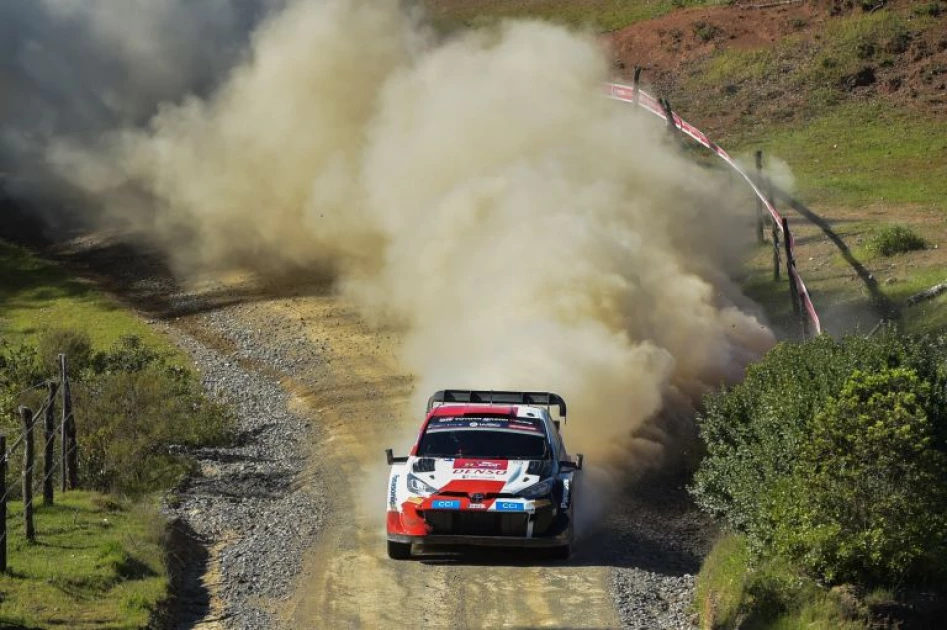
Safari Rally Kenya enters its final day with tension rising across the Naivasha plains. Takamoto Katsuta holds a commanding lead, yet four punishing stages still stand between him and a potential career-defining victory.
The Japanese driver leads by 1 minute 25.5 seconds over Adrien Fourmaux. However, the Safari Rally Kenya rarely rewards complacency. Mechanical failures and brutal terrain have already reshaped the leaderboard.
Safari Rally Kenya Leader Eyes Historic Win
Driving for Toyota Gazoo Racing WRT, Katsuta sits on the brink of his first FIA World Rally Championship victory. If he navigates Sunday cleanly, he could secure a landmark result for both himself and Toyota.
Still, the margin offers no guarantee. Safari Rally Kenya remains one of the toughest events on the WRC calendar. Deep ruts, loose gravel, and unpredictable weather have ended many promising campaigns.
Katsuta acknowledged the stakes while remaining measured. After Saturday’s chaos, he stressed the importance of simply bringing the car home.
Super Sunday Format Raises the Stakes
Sunday features four decisive stages with no midday service break. Consequently, drivers must balance aggression with mechanical care.
The schedule begins with SS17 Oserengoni 1, followed by SS18 Hell’s Gate 1. Later, crews return for SS19 Oserengoni 2 and conclude with SS20 Hell’s Gate 2, the Wolf Power Stage.
Unlike previous years, teams cannot reset their cars between loops. Therefore, tire management and mechanical preservation will likely decide the outcome.
Bonus Points Could Shift Championship Picture
Super Sunday offers additional championship rewards. The five fastest drivers across all Sunday stages earn bonus points. Meanwhile, the top five finishers in the Wolf Power Stage collect further points.
In a tightly contested WRC season, those extra points often shape the championship narrative. Even drivers outside podium contention will push hard for these gains.
Toyota’s Rollercoaster Weekend
Despite Katsuta’s advantage, Toyota endured a punishing Saturday. Oliver Solberg, Sébastien Ogier, and Elfyn Evans all retired during the first pass through Sleeping Warrior.
Ogier’s rally ended due to an alternator failure caused by mud ingestion. The nine-time world champion described the setback as sudden and irreversible despite roadside repair attempts.
Such incidents highlight why Safari Rally Kenya stands apart from European rounds. Mechanical resilience matters as much as outright speed.
Safari Rally Kenya and Africa’s Motorsport Momentum
Safari Rally Kenya has regained global prominence since returning to the WRC calendar. The event boosts Kenya’s tourism profile and showcases African motorsport capability.
Naivasha’s rugged landscapes now attract international audiences and sponsors. As a result, the rally strengthens Kenya’s position within global sporting circuits.
For East African fans, the event symbolizes regional pride. Moreover, corporate investment tied to the rally supports hospitality, logistics, and media sectors.
Pressure Builds Behind Katsuta
Adrien Fourmaux and other challengers remain within striking distance. Although the time gap appears comfortable, one puncture or mechanical issue could erase it quickly.
Historically, Safari Rally Kenya has delivered dramatic final-day reversals. In previous editions, leaders have faltered in the closing kilometres. Therefore, Sunday promises tension until the final checkpoint.
Why This Matters
Safari Rally Kenya carries weight beyond a single weekend. The rally shapes WRC standings and reinforces Africa’s role in global motorsport.
If Katsuta secures victory, it would mark a breakthrough moment in his career. Furthermore, it would underline Toyota’s durability in one of the sport’s harshest tests.
What Happens Next
Drivers now prepare for four unforgiving stages without service support. Strategy, caution, and precision will define the outcome.
By Sunday afternoon, Safari Rally Kenya will crown its winner. Until then, the terrain holds the final say.