Lurambi political history is one of the richest parliamentary stories in Kakamega County. It stretches from the early independence era of Jonathan Welangai Masinde to the modern leadership of Bishop Titus Khamala.
The constituency’s story is not simple because Lurambi went through several political and boundary changes. At different times, the area was associated with the original Lurambi Constituency, Lurambi North, Lurambi South, and later the modern Lurambi seat.
Lugari and Malava constituencies are historically linked to the larger Lurambi political arrangement, while Navakholo Constituency was later created out of Lurambi in the 2013 electoral cycle.
This makes Lurambi one of the important parent constituencies in Kakamega political history. Its political journey touches many areas of the county, including present-day Lurambi, Lugari, Malava and Navakholo.
The constituency has produced leaders such as Jonathan Welangai Masinde, Burudi Nabwera, Joshua Mulanda Angatia, Wycliffe Wasike Ndombi, Newton Wanjala Kulundu, Atanas Keya Manyala, Raphael Otaalo, Bishop Titus Khamala and Emmanuel Wangwe of Navakholo.
Quick Facts About Lurambi Political History
| Category | Details |
|---|---|
| Constituency | Lurambi Constituency |
| County | Kakamega County |
| Region | Western Kenya |
| Original establishment | 1963 elections |
| First listed MP | Jonathan Welangai Masinde |
| Later historical divisions | Lurambi North and Lurambi South |
| Constituencies linked to old Lurambi | Lugari, Malava and Navakholo |
| Current Lurambi MP | Bishop Titus Khamala |
| Current Navakholo MP | Emmanuel Wangwe |
| Key political themes | Urban growth, land, farming, education, roads, markets, devolution and representation |
| Major urban influence | Kakamega town and surrounding areas |
Lurambi Members of Parliament and Historical Phases
Because Lurambi went through several political changes, its history is best understood in phases.
Original Lurambi Constituency
| Period | Member of Parliament |
| 1963–1969 | Jonathan Welangai Masinde |
Lurambi North
| Period | Member of Parliament |
| 1969–1979 | Burudi Nabwera |
| 1979–1988 | Joshua Mulanda Angatia |
Lurambi South
| Period | Member of Parliament |
| 1969–1974 | Brown Tsuma |
| 1974–1979 | Shadrack Okova |
| 1979–1983 | Wycliffe Wasike Ndombi |
| 1983–1988 | Reuben Otutu |
| 1988–1992 | Wycliffe Wasike Ndombi |
| 1992–1997 | Javan Onami |
Modern Lurambi Constituency
| Period | Member of Parliament |
| 1997–2007 | Newton Wanjala Kulundu |
| 2007–2013 | Atanas Keya Manyala |
| 2013–2017 | Raphael Otaalo |
| 2017–Present | Bishop Titus Khamala |
Navakholo Constituency
| Period | Member of Parliament |
| 2013–Present | Emmanuel Wangwe |
Jonathan Welangai Masinde and the Original Lurambi Era
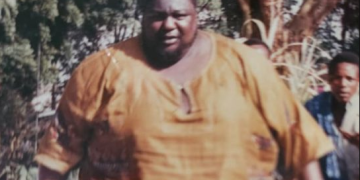
Jonathan Welangai Masinde is remembered as the first listed MP in Lurambi political history, serving from 1963 to 1969.
His leadership came at the birth of Kenya’s independence-era Parliament. This was a period when the country was still building its institutions, and local communities expected MPs to connect them to the new national government.
At that time, Lurambi covered a much wider political area than the modern constituency. The MP had to represent a large and diverse population with different local needs.
Masinde’s term helped establish the early parliamentary identity of Lurambi. He represented the constituency when roads, schools, land issues, public administration and access to government services were major concerns.
His place in Lurambi history is important because he gave the region its first post-independence parliamentary voice.
The Split into Lurambi North and Lurambi South
After the original Lurambi period, the constituency’s political geography changed. The area became associated with Lurambi North and Lurambi South.
This split is central to understanding Lurambi political history. It explains why some leaders are remembered under Lurambi North, others under Lurambi South, and later others under the modern Lurambi Constituency.
Boundary changes often reshape politics. They affect voter numbers, local alliances, development priorities and the identity of constituencies.
For Lurambi, the split created two important political streams. Lurambi North produced leaders such as Burudi Nabwera and Joshua Mulanda Angatia. Lurambi South produced leaders such as Brown Tsuma, Shadrack Okova, Wycliffe Wasike Ndombi, Reuben Otutu and Javan Onami.
Burudi Nabwera and Lurambi North
Burudi Nabwera served as Lurambi North MP from 1969 to 1979.
He was already a major public figure before his parliamentary role. Nabwera had served in diplomatic positions and became one of the respected political elders from Western Kenya.
His leadership came during the late Jomo Kenyatta era and the early years of President Daniel arap Moi’s administration. This was a time when MPs had to work within a strong central government system while still addressing local development concerns.
For Lurambi North, Nabwera’s service brought experience, national exposure and political maturity. He is also remembered in wider Kakamega politics because of his later connection to Lugari political history.
His name remains important in the larger Lurambi story because he represented one of the constituency’s key branches before later boundary changes.
Joshua Mulanda Angatia and the Lurambi North Transition
Joshua Mulanda Angatia served Lurambi North from 1979 to 1988.
His leadership came during the Moi era and covered a politically sensitive period in Kenya. The country moved deeper into one-party politics, and MPs had to operate within KANU’s dominant political structure.
Angatia later became strongly associated with Malava politics after the creation of new constituencies from the older Lurambi arrangement.
His period in Lurambi North is important because it sits just before the 1988 boundary changes that reshaped the area’s parliamentary map.
Angatia represents the bridge between the old Lurambi North identity and the later political direction of Malava.
Brown Tsuma and Early Lurambi South Politics
Brown Tsuma served as Lurambi South MP from 1969 to 1974.
His leadership came after the division of the original Lurambi constituency arrangement. Lurambi South had to develop its own political voice, separate from Lurambi North.
Tsuma’s period belonged to the early years of post-independence consolidation. Voters expected their MP to focus on practical issues such as roads, schools, health services, land, markets and access to government offices.
His term helped establish Lurambi South as an important political unit in Kakamega.
Shadrack Okova and the 1974–1979 Period
Shadrack Okova served as Lurambi South MP from 1974 to 1979.
His tenure came during the later years of President Jomo Kenyatta and the transition to President Daniel arap Moi after 1978.
This was a period of change in national politics. Constituencies across Kenya were adjusting to new power structures, new political alignments and changing development expectations.
Okova’s leadership formed part of the early Lurambi South foundation and helped carry the constituency into the late 1970s.
Wycliffe Wasike Ndombi and Lurambi South Continuity
Wycliffe Wasike Ndombi first served Lurambi South from 1979 to 1983. He later returned from 1988 to 1992.
His two terms place him among the important leaders in Lurambi South political history.
Ndombi’s first term came during the early Moi era, while his second came during the period that led to the return of multiparty democracy. This means his leadership connected two different political climates.
His return in 1988 also came after major electoral and boundary changes in Kenya. That period was remembered nationally for the mlolongo political environment and a tightly controlled one-party system.
Ndombi’s role remains important because he served Lurambi South during two separate political phases.
Reuben Otutu and the 1983–1988 Era
Reuben Otutu served as Lurambi South MP from 1983 to 1988.
His leadership came during the one-party period, when KANU dominated national politics and political competition operated within strict limits.
For Lurambi South, this was a time when local leaders were judged by their ability to attract development, maintain grassroots networks and remain visible within the ruling party system.
Otutu’s term sits between Ndombi’s two periods and remains part of the constituency’s important pre-1992 history.
Javan Onami and the Multiparty Opening
Javan Onami served as Lurambi South MP from 1992 to 1997.
His election came during one of the most important moments in Kenya’s political history: the return of multiparty democracy.
The 1992 General Election changed politics across the country. Voters had more party choices, opposition movements became stronger, and constituencies became more competitive.
For Lurambi South, Onami’s term represented the first multiparty phase after decades of one-party dominance. His leadership came at a time when local politics became more open, more contested and more influenced by party identity.
The end of his term in 1997 marked another phase in the modern Lurambi timeline.
Lugari and Malava: Constituencies Linked to Old Lurambi
Lugari and Malava are historically connected to the larger Lurambi political arrangement. Their creation in the 1988 electoral period changed the political map of Kakamega.
This boundary change gave new areas more direct parliamentary representation. It also reduced the size and scope of the older Lurambi political space.
Lugari developed its own political history through leaders such as Burudi Nabwera, Cyrus Jirongo, Ayub Savula and Nabwera Daraja Nabii. Malava developed its own history through leaders such as Joshua Mulanda Angatia, Soita Shitanda and others.
This shows how influential the old Lurambi structure was in shaping Kakamega County’s later constituency map.
Newton Wanjala Kulundu and Modern Lurambi
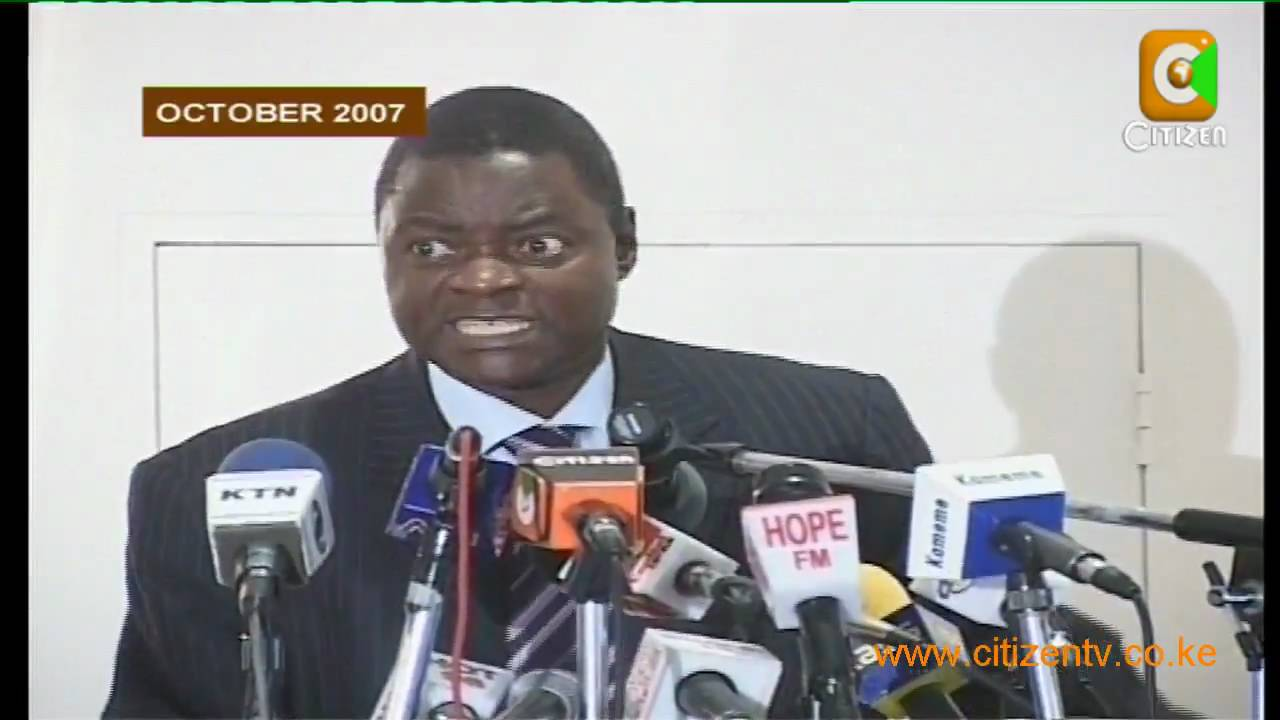
Newton Wanjala Kulundu served as Lurambi MP from 1997 to 2007.
His leadership marked the beginning of the modern Lurambi phase after earlier boundary and naming transitions.
Kulundu was a major political figure in Kakamega County and national politics. He served during the late Moi era and the early years of the Kibaki administration.
His time in Parliament covered the 1997 and 2002 elections. The 2002 election was especially important because it ended KANU’s long rule and brought the National Rainbow Coalition to power.
Kulundu also held national responsibilities, including service as a Cabinet minister. This gave Lurambi a strong voice beyond constituency politics.
His decade in Parliament remains one of the most important periods in modern Lurambi political history.
Atanas Keya Manyala and the 2007–2013 Period
Atanas Keya Manyala served as Lurambi MP from 2007 to 2013.
His election came during the highly charged 2007 General Election, one of the most consequential elections in Kenya’s history. The country experienced a disputed presidential result, post-election violence and later the formation of the Grand Coalition Government.
Manyala’s term unfolded during that difficult national period. It also covered the constitutional reform process that produced the 2010 Constitution.
The 2010 Constitution changed Kenya’s political structure by introducing devolution, county governments, senators, governors, women representatives and MCAs.
Manyala’s leadership therefore stood at the transition between the old centralised system and the new devolved system that began after the 2013 General Election.
Raphael Otaalo and the First Devolution Era
Raphael Otaalo served as Lurambi MP from 2013 to 2017.
His election came during Kenya’s first General Election under the 2010 Constitution. This was a major political shift because voters were now electing MPs alongside governors, senators, women representatives and MCAs.
The role of MPs changed after devolution. Before 2013, many voters looked mainly to MPs for local development. After 2013, county governments took over many functions, including health, county roads, markets, early childhood education and local planning.
Otaalo’s term represented Lurambi’s first phase under devolution. Voters began to judge leaders through both NG-CDF projects and county government service delivery.
His leadership also came immediately after Navakholo was created out of Lurambi, changing the constituency’s size and political focus.
Bishop Titus Khamala and the Current Lurambi Era
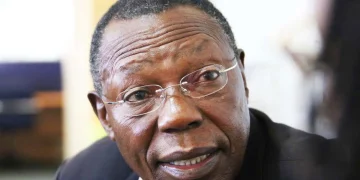
Bishop Titus Khamala became Lurambi MP in 2017 and has continued to represent the constituency in the current parliamentary era.
His election marked a new phase in Lurambi politics. As a religious leader and politician, Khamala brought a distinctive public profile to the constituency.
He retained the seat in 2022, showing that he had built a strong political base among Lurambi voters.
His leadership belongs to the modern era of high public expectations. Voters now judge MPs by education support, bursaries, school infrastructure, roads, public engagement, youth empowerment, water, security, parliamentary visibility and ability to coordinate with county and national government.
Lurambi is also closely connected to Kakamega town, meaning the MP must address both urban and rural concerns. These include business growth, markets, informal settlements, roads, drainage, youth employment, schools, farming areas and public services.
As current MP, Khamala represents Lurambi in one of the most competitive and politically visible parts of Kakamega County.
Navakholo Constituency and the 2013 Split
Navakholo Constituency was created out of Lurambi in the 2013 electoral cycle.
This was a major moment in Lurambi political history because it created a new parliamentary unit from the older constituency. Navakholo residents gained their own MP, their own NG-CDF structure and a more direct platform for local development.
The creation of Navakholo also changed Lurambi’s political geography. Lurambi became smaller and more focused, while Navakholo began its own independent parliamentary journey.
Since its creation, Navakholo has been represented by Emmanuel Wangwe.
Emmanuel Wangwe and Navakholo’s Political Identity
Emmanuel Wangwe became the first MP for Navakholo in 2013 and has continued to represent the constituency.
His long service makes him central to Navakholo political history. As the first MP, he helped establish the constituency’s parliamentary identity and development priorities.
First MPs play a major role in shaping how new constituencies understand representation. They set early expectations around schools, roads, bursaries, markets, water, health facilities, youth programmes and public participation.
Wangwe’s continued re-election shows that he has remained a dominant figure in Navakholo politics.
Navakholo’s creation also shows how the old Lurambi political area continued to shape Kakamega County after boundary reforms.
Lurambi and Kakamega Town Politics
Lurambi is politically important because of its close connection to Kakamega town, the county headquarters.
This gives the constituency a mixed political character. It includes urban, peri-urban and rural concerns.
Urban voters often focus on roads, business, markets, drainage, housing, jobs, security, waste management and public services. Rural voters often focus on farming, roads, schools, water, electricity and local development.
This means Lurambi MPs must balance different expectations. They must speak to traders, farmers, professionals, church leaders, youth groups, women’s groups, boda boda operators, teachers, students and residents of informal settlements.
The constituency’s urban importance gives it a strong voice in Kakamega County politics.
Education, Roads and Local Development
Education is one of the most important political issues in Lurambi.
Parents expect MPs to support schools through NG-CDF, bursaries, classrooms, laboratories, desks, libraries and sanitation facilities. Students and families also expect fair access to education support.
Roads are another major issue. Lurambi’s roads connect homes, schools, markets, churches, health facilities and business areas. Poor roads affect farming, trade, public transport, emergency services and school attendance.
Other development concerns include water, electricity, security, health centres, youth empowerment, women’s groups, sports and public infrastructure.
These practical issues explain why Lurambi voters often judge leaders by visible development and accessibility.
Lurambi and Party Politics
Lurambi political history reflects Kenya’s changing party landscape.
The early period was shaped by independence politics and later KANU dominance. The 1992 election opened the multiparty era. Later elections reflected Ford-Kenya, NARC, ODM and other party movements that shaped Western Kenya.
Newton Kulundu served during the late Moi and early Kibaki periods. Atanas Manyala served during the Grand Coalition era. Raphael Otaalo served during the first devolution period. Bishop Titus Khamala represents the current ODM-linked phase of Lurambi politics.
This history shows that Lurambi voters respond to both party identity and individual candidate strength.
A strong party can help a candidate, but voters also consider development record, personal connection, public speaking, religious networks, community influence and accessibility.
Devolution and the Changing Role of Lurambi MPs
The 2010 Constitution changed the role of MPs in Lurambi and across Kenya.
Before devolution, MPs were often seen as the main drivers of local development. After devolution, county governments became responsible for many local services, including health, county roads, markets, early childhood education and local planning.
This means Lurambi MPs now operate in a shared leadership environment. They must work alongside the governor, senator, woman representative, MCAs, national government agencies and local administrators.
For voters, this means accountability is wider. They expect the MP to perform in Parliament and through NG-CDF, while also coordinating with county structures.
The current era requires more public engagement, transparency and practical development delivery.
Why Lurambi Political History Matters
Lurambi political history matters because it explains how Kakamega’s political map changed over time.
The original Lurambi constituency produced later political branches such as Lurambi North, Lurambi South, Lugari, Malava and Navakholo. This makes Lurambi one of the key parent constituencies in Kakamega County’s political evolution.
Its leaders also represent different eras of Kenyan politics.
Jonathan Masinde represents the independence foundation. Burudi Nabwera and Joshua Angatia represent Lurambi North. Brown Tsuma, Shadrack Okova, Wycliffe Ndombi, Reuben Otutu and Javan Onami represent Lurambi South. Newton Kulundu represents modern Lurambi’s national visibility. Atanas Manyala and Raphael Otaalo represent constitutional transition and early devolution. Bishop Titus Khamala represents the current era. Emmanuel Wangwe represents Navakholo’s new constituency identity.
For voters, students and researchers, Lurambi political history offers a useful record of leadership, boundaries and development politics in Kakamega County.
Key Takeaways
- Lurambi Constituency was established for the 1963 elections.
- Jonathan Welangai Masinde was the first listed MP for the original Lurambi Constituency.
- Lurambi later developed into Lurambi North and Lurambi South political streams.
- Burudi Nabwera and Joshua Mulanda Angatia served under Lurambi North.
- Brown Tsuma, Shadrack Okova, Wycliffe Ndombi, Reuben Otutu and Javan Onami served under Lurambi South.
- Lugari and Malava are historically linked to the larger Lurambi political arrangement.
- Newton Wanjala Kulundu served modern Lurambi from 1997 to 2007.
- Atanas Keya Manyala served from 2007 to 2013.
- Raphael Otaalo served from 2013 to 2017.
- Bishop Titus Khamala has served as Lurambi MP since 2017.
- Navakholo Constituency was created out of Lurambi in the 2013 electoral cycle.
- Emmanuel Wangwe has represented Navakholo since 2013.
- Lurambi politics is shaped by Kakamega town, education, roads, markets, urban growth and rural development.
Frequently Asked Questions
What is Lurambi political history?
Lurambi political history refers to the leadership journey of Lurambi Constituency from the original 1963 seat through Lurambi North, Lurambi South, modern Lurambi and the creation of Navakholo.
Who was the first MP for Lurambi?
Jonathan Welangai Masinde was the first listed MP for the original Lurambi Constituency, serving from 1963 to 1969.
What were Lurambi North and Lurambi South?
Lurambi North and Lurambi South were historical political divisions that emerged after the original Lurambi constituency arrangement changed.
Who represented Lurambi North?
Burudi Nabwera represented Lurambi North from 1969 to 1979, followed by Joshua Mulanda Angatia from 1979 to 1988.
Who represented Lurambi South?
Lurambi South was represented by Brown Tsuma, Shadrack Okova, Wycliffe Wasike Ndombi, Reuben Otutu and Javan Onami across different periods.
Which constituencies were created from the old Lurambi arrangement?
Lugari, Malava and Navakholo are historically linked to the wider Lurambi political arrangement.
Who served as Lurambi MP from 1997 to 2007?
Newton Wanjala Kulundu served as Lurambi MP from 1997 to 2007.
Who is the current MP for Lurambi?
Bishop Titus Khamala is the current Member of Parliament for Lurambi Constituency.
When was Navakholo Constituency created?
Navakholo Constituency was created out of Lurambi in the 2013 electoral cycle.
Who is the current MP for Navakholo?
Emmanuel Wangwe is the current Member of Parliament for Navakholo Constituency.
Conclusion
Lurambi political history is a story of boundaries, leadership and transformation. From Jonathan Welangai Masinde’s early post-independence service to Bishop Titus Khamala’s current leadership, the constituency has remained central to Kakamega County politics.
Its history is especially important because Lurambi was not just one constituency. It became a political root for several later identities, including Lurambi North, Lurambi South, Lugari, Malava and Navakholo.
Leaders such as Burudi Nabwera, Joshua Mulanda Angatia, Wycliffe Wasike Ndombi, Newton Wanjala Kulundu, Atanas Keya Manyala, Raphael Otaalo, Bishop Titus Khamala and Emmanuel Wangwe all form part of this wider story.
Today, Lurambi continues to matter because of its connection to Kakamega town, its mix of urban and rural voters, and its role in county politics.
For voters, students and researchers, Lurambi political history offers more than a list of MPs. It explains how constituency boundaries, local identity, urban growth, party politics and devolution shaped one of Kakamega County’s most important political regions.
Lurambi Constituency is an electoral constituency in Kenya. It is one of twelve constituencies in Kakamega County. The constituency was established for the 1963 elections.
Read Also: From Fubara to Adeleke: List of PDP Governors Who Have Dumped Party Since 2023