Samsung Browser AI upgrades are reportedly coming with the upcoming One UI 9 update. If confirmed, the changes could reshape how millions of Galaxy users browse the web.
While Google Chrome still dominates the global mobile browser market, Samsung appears ready to narrow the gap. By adding multitasking windows, AI integration, and cross-device continuity, the company signals a strategic shift in its software ecosystem.
Samsung Browser AI Expands Beyond Basic Browsing
Samsung Internet already ships preinstalled on Galaxy smartphones and tablets. However, its new direction moves beyond standard browsing tools.
The most significant addition may be Ask AI, an assistant reportedly powered by Perplexity AI. Unlike standalone chatbot overlays, this tool appears embedded directly into the browser interface.
Samsung Browser AI would analyze the webpage a user is viewing and provide contextual explanations or summaries. It could also suggest related information based on browsing activity.
Importantly, Samsung is expected to include privacy controls. Users may choose how long browsing data remains stored, addressing concerns over AI data access.
Multi-Window Browsing Brings Desktop Feel to Mobile
Another anticipated feature is multi-window browsing. Instead of switching between tabs, users could view multiple pages simultaneously.
On devices such as the Samsung Galaxy S26 and Samsung Galaxy Z Fold 8, the browser may support up to three active windows. Foldable displays make this feature particularly compelling.
Chrome already offers split-screen browsing. However, Samsung’s tighter integration with One UI could deliver smoother multitasking within the Galaxy ecosystem.
For professionals, students, and traders monitoring multiple data streams, this update could significantly improve productivity.
Cross-Device Resume Strengthens Ecosystem Lock-In
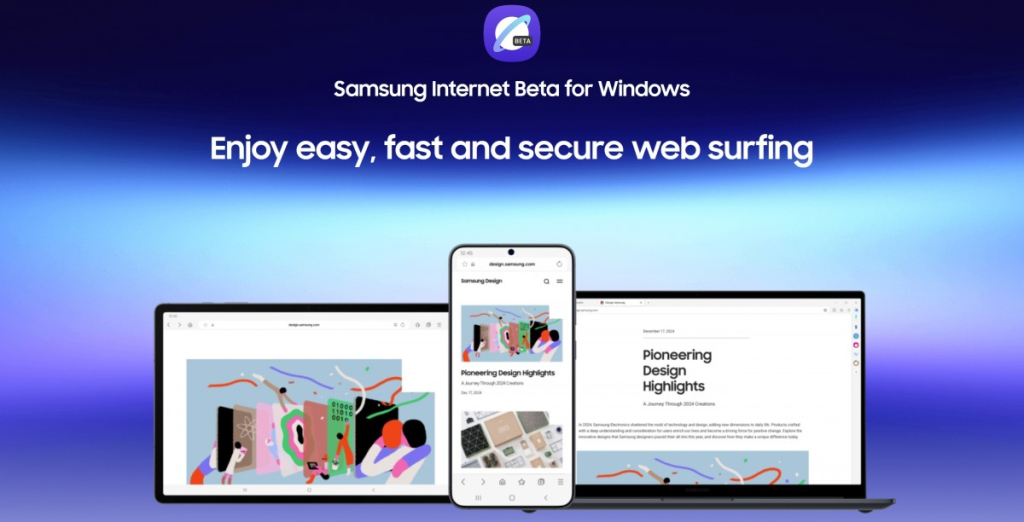
Developers have also identified a setting labeled “Enable Cross Device Resume.” Although not yet active, it suggests seamless browsing continuity across devices.
Users could start reading on a phone and instantly continue on a tablet or laptop. Samsung already offers “Continue on Other Device,” yet Cross Device Resume may operate faster and more intuitively.
This approach mirrors Apple’s Handoff feature within iOS and macOS. Consequently, Samsung appears focused on strengthening ecosystem stickiness rather than relying solely on hardware innovation.
Why Ecosystem Integration Matters
Mobile competition increasingly centers on software cohesion. Hardware upgrades alone no longer guarantee user loyalty. Instead, seamless cross-device experiences influence long-term retention.
Samsung Browser AI fits within that broader strategy.
One UI 9 Beta Timeline and Device Rollout
The One UI 9 Beta program is expected to begin in May, likely starting with the Samsung Galaxy S26 series. Later, the Samsung Galaxy S25 lineup may receive access.
The full release could arrive alongside Samsung’s next foldable devices, including the Samsung Galaxy Z Fold 8 and Samsung Galaxy Z Flip 8.
Historically, Samsung has used foldables to showcase software innovation. Therefore, advanced browser multitasking could debut prominently on those devices.
Can Samsung Challenge Chrome?
Google Chrome commands nearly 70 percent of the mobile browser market, with billions of monthly active users. However, market share alone does not guarantee long-term dominance.
Samsung controls the hardware layer for hundreds of millions of devices globally. That preinstallation advantage gives it direct access to users without requiring downloads.
If Samsung Browser AI delivers meaningful utility, adoption could rise organically across Galaxy ecosystems.
For African markets, where Samsung remains a dominant Android brand, these updates could influence browsing habits significantly. AI-assisted browsing may help users consume information more efficiently, particularly in regions where data costs remain high.
Why This Matters
Samsung Browser AI signals a broader shift toward intelligent, ecosystem-driven browsing. Rather than competing purely on speed, Samsung is competing on integration and intelligence.
As AI tools become embedded within everyday apps, browsers may evolve from passive gateways into proactive digital assistants.
What Happens Next
The upcoming One UI 9 beta will reveal how polished these features are. Early user feedback will likely shape final refinements before public rollout.
If execution matches ambition, Samsung Browser AI could become one of the most advanced browsing platforms on Android.