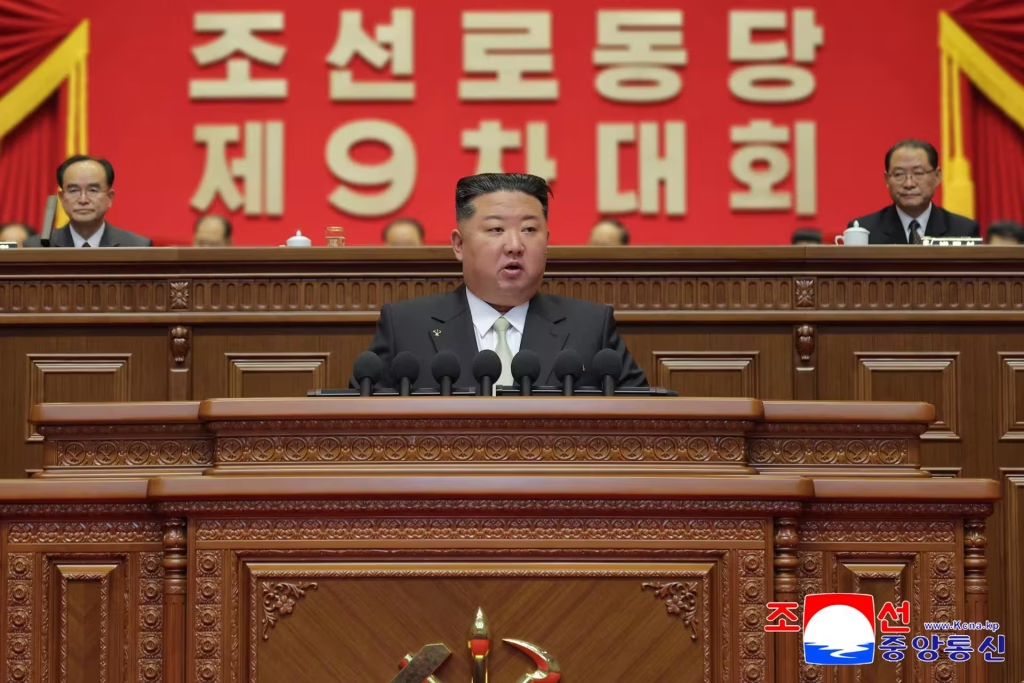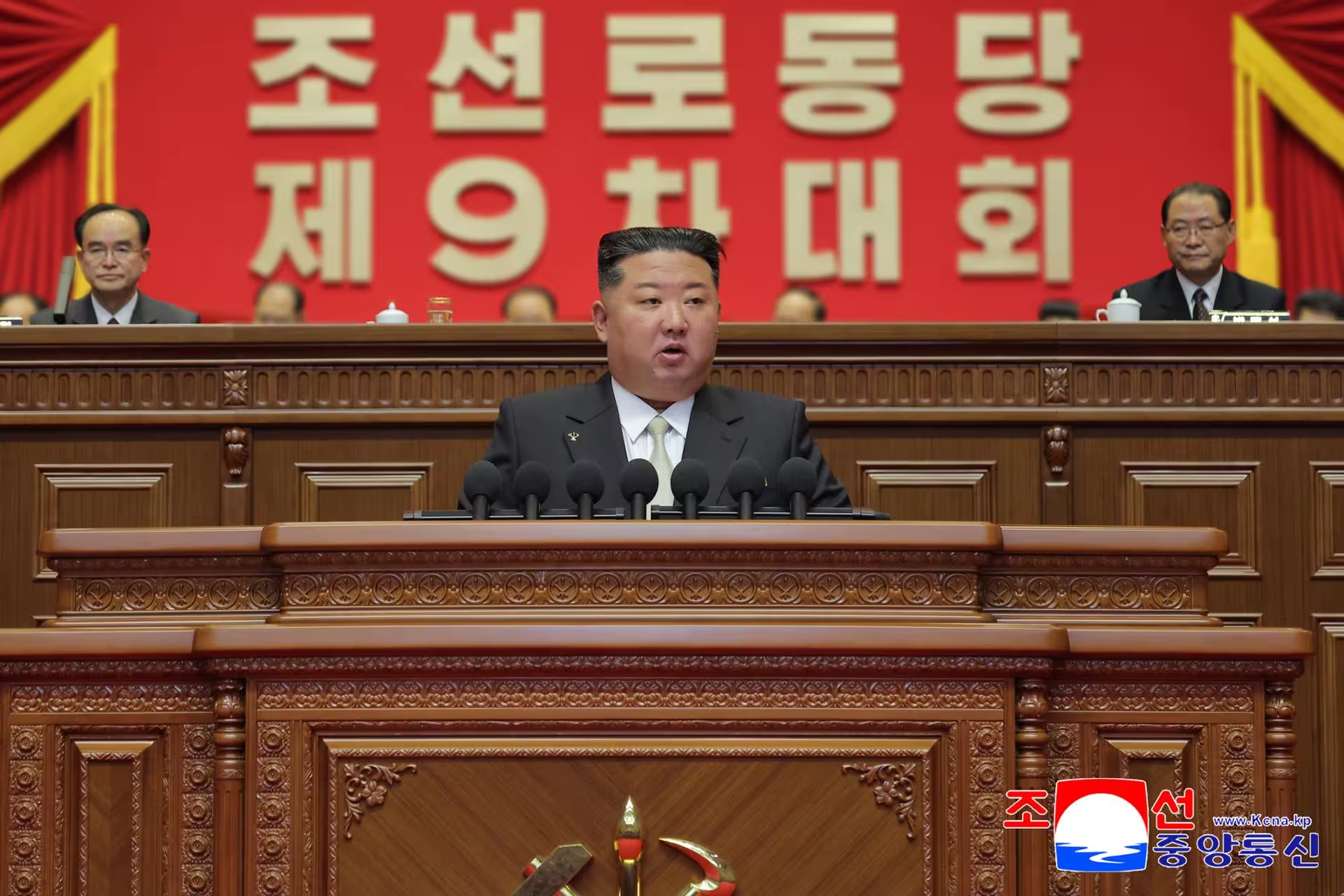
North Korea’s Kim Jong-un used the Kim Jong-un party congress platform to declare what he called a new era of “upsurge” in national development. On the third day of the Workers’ Party congress, Kim claimed unprecedented progress and signaled a forward-looking strategy for the country’s economy and defense.
The Kim Jong-un party congress remarks come at a sensitive moment in regional diplomacy. With both Seoul and Washington signaling openness to renewed dialogue, Pyongyang’s messaging carries weight beyond domestic politics. However, the speech offered broad rhetoric rather than specific policy details.
Kim Jong-un Party Congress Frames “New Era”
According to state media, Kim praised the ruling party’s central committee for ushering in “unprecedented changes” and accelerating development. He framed the party as the vanguard of revolution and credited it with steering the country through hardship.
However, North Korea’s economic data remains opaque. International sanctions continue to restrict trade flows and access to global finance. Therefore, claims of rapid development are difficult to verify independently.
The Ninth Congress of the Workers’ Party marks the first such gathering since 2021. Historically, these congresses serve as major policy reset moments. In past sessions, leadership announced five-year plans and defense modernization goals.
Strategic Messaging at a Diplomatic Crossroads
The Kim Jong-un party congress is unfolding as South Korean President Lee Jae Myung and U.S. President Donald Trump have both expressed openness to dialogue. Therefore, analysts are closely watching for signals on nuclear policy or inter-Korean engagement.
So far, Kim’s report emphasized internal strength and forward momentum. The state-run Korean Central News Agency said the congress clarified a “new fighting strategy.” However, it provided no operational details.
Defense and Economic Goals Remain Central
North Korean party congresses traditionally balance two priorities: military capability and economic resilience. In 2021, Kim admitted economic shortcomings while emphasizing self-reliance.
This time, the tone appears more assertive. The leadership framed the current phase as one of acceleration rather than recovery. That shift suggests Pyongyang wants to project stability and confidence, even under sanctions pressure.
Regional and Global Implications
The Kim Jong-un party congress carries implications for Northeast Asia’s security environment. If North Korea prioritizes defense expansion, regional tensions could rise. Conversely, if economic modernization takes precedence, limited diplomatic openings may emerge.
For emerging markets, particularly in Asia and Africa, geopolitical stability in East Asia matters. Supply chains in electronics, shipping routes, and commodity markets depend heavily on regional security. Therefore, shifts in Pyongyang’s strategy indirectly affect global trade.
Historically, heightened tensions on the Korean Peninsula have influenced currency volatility and investor sentiment across Asia. Markets typically react quickly to missile tests or military drills. Thus, investors will watch post-congress developments closely.
Domestic Consolidation of Authority
The congress unanimously endorsed Kim’s report as a “revolutionary guideline.” That public affirmation reinforces centralized leadership control. In North Korea’s political structure, such endorsements consolidate authority rather than introduce debate.
Moreover, large party congresses serve symbolic purposes. They showcase unity, discipline and continuity. Therefore, beyond policy announcements, the optics of the Kim Jong-un party congress reinforce internal cohesion.
Why This Matters
North Korea’s party congress sets the tone for policy over several years. Although rhetoric often exceeds detail, these gatherings outline strategic direction.
At a time when global trade remains fragile, any shift in North Korea’s posture influences regional stability. Therefore, policymakers in Seoul, Washington and Beijing will interpret even subtle language changes carefully.
What Happens Next
Observers will now look for follow-up announcements, especially regarding economic targets or military programs. Additionally, diplomatic channels may test whether Pyongyang’s messaging leaves room for renewed talks.
If the congress signals a hardened stance, tensions could intensify. However, if economic priorities dominate, limited engagement opportunities may reopen.
For now, the Kim Jong-un party congress underscores continuity in leadership messaging while leaving key strategic questions unanswered.