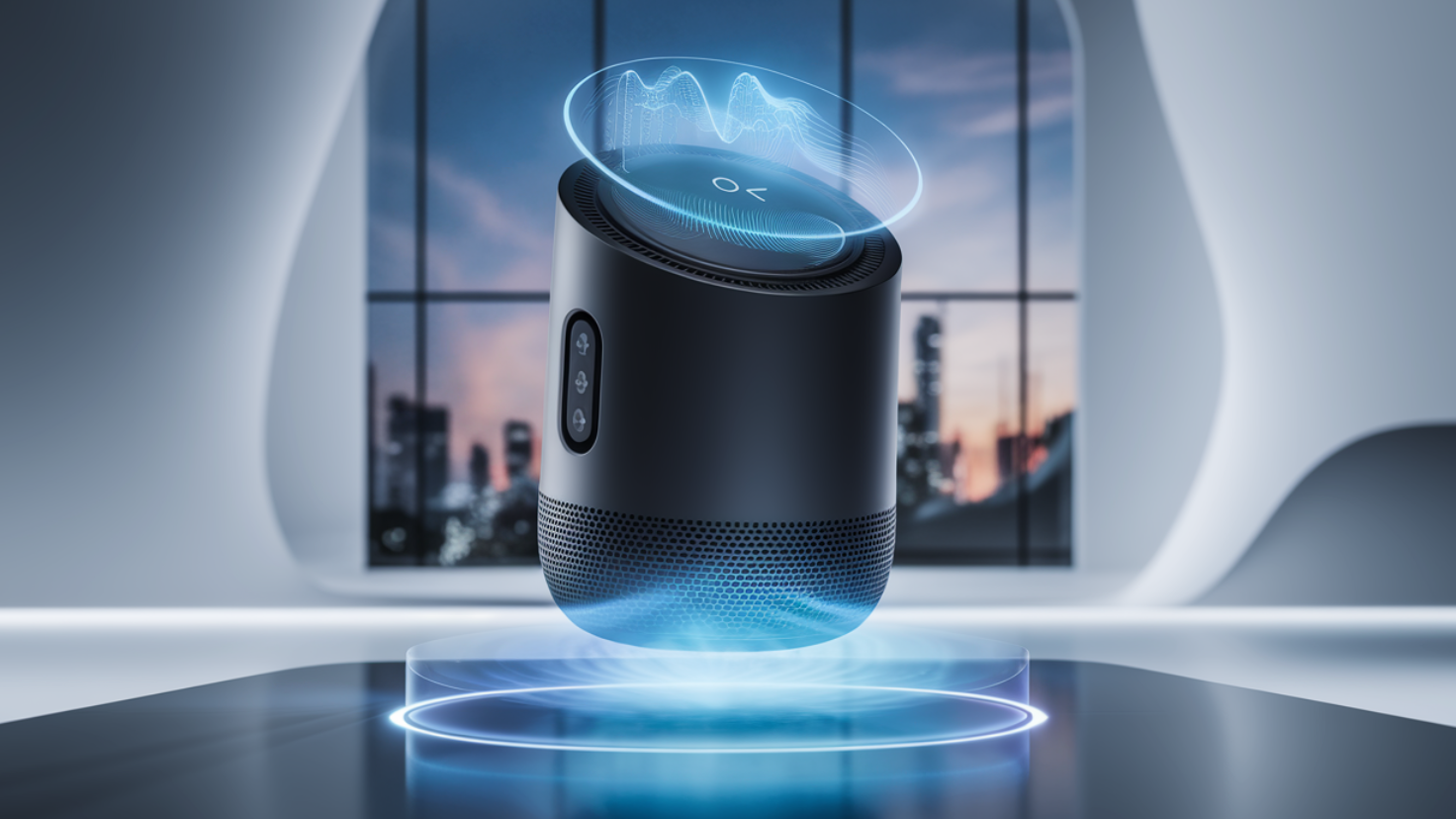
OpenAI Smart Speaker is reportedly set to debut in early 2027, marking the company’s boldest move yet into consumer hardware. According to industry reporting, OpenAI is developing a suite of AI-powered devices, with the smart speaker positioned as the first commercial release.
The OpenAI Smart Speaker would feature an integrated camera and advanced contextual awareness capabilities. If launched as planned, the device would compete directly with Amazon Echo, Google Nest and Apple’s HomePod, but with a significantly stronger AI core built around OpenAI’s models.
OpenAI Smart Speaker and the Shift to AI Hardware
OpenAI has largely dominated software conversations over the past three years. However, the OpenAI Smart Speaker signals a strategic shift toward vertically integrated hardware.
Reports indicate that more than 200 employees are working on hardware development. The speaker is expected to retail between $200 and $300. That pricing would place it within reach of mainstream consumers, yet slightly above entry-level smart speakers.
Unlike traditional voice assistants, the OpenAI Smart Speaker would reportedly use a built-in camera to analyze its surroundings. It could identify objects on nearby surfaces and understand conversations happening in the room. Additionally, facial recognition features similar to Apple’s Face ID may enable purchase authentication.
This level of contextual awareness would push AI assistants beyond voice response into spatial intelligence.
Privacy Concerns Surrounding the OpenAI Smart Speaker
However, the OpenAI Smart Speaker faces immediate scrutiny over privacy.
Consumers already express concern about devices that “always listen.” A device that also watches raises even deeper questions. Therefore, OpenAI must address how data is processed, stored and secured.
Historically, tech giants have struggled in this area. Facebook’s smart home experiments faced pushback, and even Amazon’s Alexa has encountered regulatory pressure in Europe. Consequently, OpenAI’s entry into hardware will require careful transparency.
For African markets, privacy debates may unfold differently. While smart speaker adoption remains lower across much of the continent, urban middle-class households increasingly adopt connected devices. Therefore, trust will shape whether such products gain traction in Nairobi, Lagos or Johannesburg.
Jony Ive’s Role in OpenAI Hardware
OpenAI’s acquisition of Jony Ive’s startup, io Products, for $6.5 billion last year adds a critical dimension. Ive previously shaped Apple’s iconic design era, influencing devices from the iMac to the iPhone.
Now, Ive is expected to lead hardware design strategy at OpenAI. That partnership suggests the OpenAI Smart Speaker will focus heavily on design aesthetics and seamless user experience.
From Software Disruption to Hardware Ambition
OpenAI’s move echoes Apple’s early strategy. Apple combined software and hardware to control the ecosystem. Similarly, OpenAI may seek to embed its AI models directly into physical devices rather than rely solely on third-party integrations.
Yet hardware is capital-intensive. Reports already point to delays caused by computing power requirements and technical complexity. AI models require substantial processing capability, and running them efficiently on consumer devices presents engineering challenges.
Smart Glasses and AI Ecosystem Expansion
Beyond the OpenAI Smart Speaker, the company is reportedly working on smart glasses targeted for 2028. That move would place it in direct competition with Meta, which currently leads in AI-enhanced eyewear.
A smart lamp prototype also exists, though its commercial viability remains uncertain. If OpenAI builds a connected ecosystem of devices, it could mirror how Amazon integrated Echo devices across households.
However, success depends on differentiation. Consumers already own smartphones capable of running AI assistants. Therefore, OpenAI must demonstrate why a dedicated speaker or wearable device offers unique value.
Competitive Landscape and Market Timing
The AI hardware race has intensified. Meta pushes AI into wearables. Apple continues expanding its AI ecosystem. Meanwhile, Google integrates AI deeply into Android devices.
In this crowded environment, the OpenAI Smart Speaker enters as both an opportunity and a risk. On one hand, OpenAI’s brand commands credibility in AI innovation. On the other, hardware failures can damage reputations quickly.
For African tech ecosystems, this shift carries broader implications. If OpenAI embeds AI capabilities into affordable consumer devices, startups across Africa could build services atop those platforms. Conversely, if hardware remains premium-priced, adoption may remain limited to developed markets.
Why This Matters
The OpenAI Smart Speaker represents more than a gadget. It signals OpenAI’s ambition to control the AI experience from cloud to living room.
If successful, OpenAI could transition from a software platform provider to a full-stack consumer technology company. That shift would reshape competitive dynamics across AI, hardware and digital services.
What Happens Next
OpenAI must finalize engineering hurdles and resolve privacy frameworks before commercial release. Additionally, it will need regulatory clarity in key markets.
If the company launches in early 2027 as projected, consumer reception will determine whether OpenAI becomes a serious hardware player or remains primarily a software powerhouse.