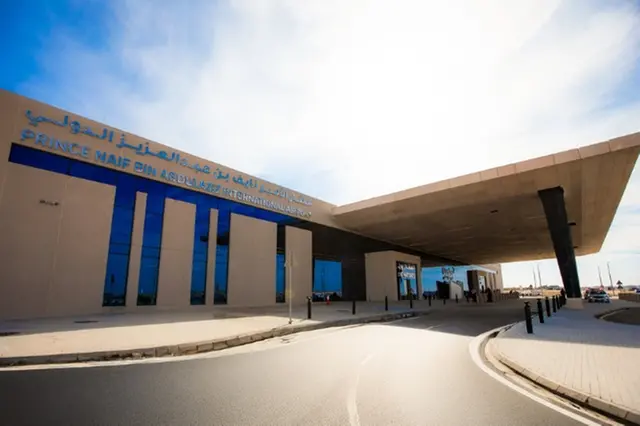
Prince Naif Airport PPP has drawn overwhelming investor interest, with 89 local and international entities submitting expressions of interest for the project. The response highlights Saudi Arabia’s continued ability to attract global infrastructure capital despite heightened regional tensions.
The proposed public-private partnership will cover the development and long-term operation of Prince Naif bin Abdulaziz International Airport in Qassim. Under the model, the winning consortium will design, finance, construct, operate and maintain the airport for 30 years.
Prince Naif Airport PPP Signals Infrastructure Confidence
Saudi Arabia’s MATARAT Holding, working with the National Centre for Privatisation and PPP, issued the EOI in February. By the submission deadline, firms from over 20 countries had expressed interest.
Notably, the list includes 55 Saudi companies and 34 international firms. Developers, EPC contractors, operators, advisors, equity investors and financial institutions all joined the process.
The scale of participation suggests investor confidence in Saudi aviation assets. Even as energy markets face volatility, infrastructure investors appear focused on long-term returns.
Who Is Competing for Prince Naif Airport PPP?
The developer pool features major Saudi groups alongside global players from Turkey, France, Australia and South Korea. Meanwhile, EPC contractors include Chinese state-backed construction firms, Gulf contractors and Western engineering groups.
Operators from India, South Africa, Turkey, Oman and Ireland also expressed interest. Additionally, global design houses such as Foster + Partners and Populous appear among advisors.
Financial Depth Behind the Project
Equity investors and financial institutions have also entered the race. Saudi banks, regional investment groups and international infrastructure funds signaled appetite for participation.
Such diversity strengthens the Prince Naif Airport PPP structure. It allows consortia to blend local knowledge with international operational expertise.
Aviation Privatization Under Vision 2030
The Prince Naif Airport PPP aligns with Saudi Arabia’s broader Vision 2030 agenda. Riyadh aims to privatize and modernize airport infrastructure to support tourism, logistics and regional connectivity.
Qassim’s airport sits about 20 kilometers from Buraidah. Although smaller than Riyadh or Jeddah hubs, it serves a growing regional population and supports domestic travel expansion.
Saudi Arabia has already advanced PPP models in other airport projects, including the New Abha International Airport. Therefore, this initiative forms part of a wider aviation reform strategy.
Regional and Global Implications
The strong turnout for Prince Naif Airport PPP contrasts sharply with risk signals emerging elsewhere in the Gulf. While maritime insurance costs surge and oil infrastructure faces security concerns, infrastructure investors still commit capital to long-term transport assets.
This resilience matters for emerging markets. African governments also pursue airport PPP models to reduce fiscal burdens. Kenya, Nigeria and Ghana have all explored similar frameworks.
Saudi Arabia’s ability to attract 89 firms offers a benchmark. Transparent bidding processes, sovereign backing and long concession periods enhance investor appeal.
Competitive Dynamics and Strategic Value
Airports generate diversified revenue streams from landing fees, retail concessions and cargo services. In addition, secondary city airports can unlock regional economic growth.
If successfully upgraded, Prince Naif Airport could stimulate tourism, agribusiness exports and domestic trade in Qassim. Consequently, the PPP model supports both infrastructure financing and regional development.
However, bidders will weigh geopolitical risk carefully. Although aviation assets typically enjoy sovereign protection, regional instability may influence financing terms.
Why This Matters
The Prince Naif Airport PPP reflects sustained global appetite for Middle East infrastructure assets. Even amid geopolitical tension, investors differentiate between short-term volatility and long-term transport demand.
For emerging economies, the project demonstrates that structured PPP frameworks can attract broad international participation.
What Happens Next
The next phase will involve prequalification and formal request-for-proposal submissions. Shortlisted consortia will refine financial models and operational plans.
Ultimately, Saudi authorities will select a bidder capable of delivering expansion, efficiency and service quality improvements over the 30-year concession.
As the kingdom accelerates privatization across sectors, airport PPPs will remain a key indicator of investor confidence in the region’s long-term growth story.