The Wright Flyer III crash of July 14, 1905, was one of the most important accidents in the Wright brothers’ path from first powered flight to practical aviation. Orville Wright survived the crash at Huffman Prairie Flying Field near Dayton, Ohio, but the impact was serious enough to force both brothers to confront the weaknesses in their aircraft.
The crash happened less than two years after the Wright brothers’ famous first powered flights at Kill Devil Hills on December 17, 1903. By 1905, the brothers were no longer trying to prove that flight was possible. They were trying to make flight useful, repeatable, controllable, and safe enough to become a real machine rather than a fragile experiment.
That goal proved difficult.
The Wright Flyer III, built in 1905, was initially not the practical aircraft it later became. In its early form, it still carried many of the handling problems of the 1903 and 1904 Flyers. It was unstable in pitch, difficult to control, and unforgiving when the pilot made a small mistake.
On July 14, Orville crashed hard at more than 30 miles per hour. The aircraft struck the ground, bounced repeatedly, and threw him from the machine. Wilbur found him dazed but alive. The front elevator was badly damaged, and the accident made one thing clear: if the Wright brothers wanted a dependable airplane, they had to redesign it.
That crash became a turning point.
Basic Accident Details
| Detail | Information |
|---|---|
| Date | Friday, July 14, 1905 |
| Aircraft | Wright Flyer III |
| Owner/operator | Private / Wright brothers |
| Pilot | Orville Wright |
| Occupants | 1 |
| Fatalities | 0 |
| Other fatalities | 0 |
| Aircraft damage | Substantial |
| Location | Huffman Prairie Flying Field, near Dayton, Ohio |
| Nature of flight | Test |
| Phase | Test flight / crash sequence |
| Main result | Serious crash that forced major redesign |
What Was the Wright Flyer III?
The Wright Flyer III was the third powered airplane built by Orville and Wilbur Wright. It followed the 1903 Wright Flyer, which made the first successful powered flights, and the 1904 Wright Flyer II, which the brothers used during a difficult test season at Huffman Prairie.
The Flyer III was built during the winter of 1904–1905. It used lessons from the previous two aircraft but, at first, it still looked and behaved much like them. It had a forward elevator, rear rudder, wing-warping control, skid undercarriage, pusher propellers, and a prone pilot position.
The aircraft was not a modern airplane in layout. The pilot lay flat on the lower wing. The elevator was at the front instead of the tail. The machine was launched from a rail, and the Wrights used a weight-and-derrick launching system at Huffman Prairie to help overcome weak winds.
The Flyer III’s early problem was not that it could not fly at all. It could. The problem was that it was still dangerous, unstable, and hard to control.
Why the Wright Flyer III Crash Matters
The Wright Flyer III crash matters because it changed the direction of the Wright brothers’ work.
Before the accident, the brothers had already achieved several historic milestones. They had flown in 1903. They had continued testing in 1904. They had learned to make circular flights. They had improved their launch system. But they still did not have a truly practical airplane.
A practical airplane needed to do more than lift off.
It needed to:
- Fly for longer periods
- Turn safely
- Remain controllable in changing conditions
- Avoid sudden pitch instability
- Return close to its starting point
- Land without major damage
- Be repeatable, not just experimental
The July 14 crash showed that the Flyer III was not yet there.
Orville survived, but the accident made the danger impossible to ignore. The brothers had to redesign the aircraft so that it gave the pilot more control and more time to correct mistakes.
What Happened on July 14, 1905?
On July 14, 1905, Orville Wright was flying the Flyer III at Huffman Prairie when the aircraft entered a dangerous descent and struck the ground hard.
The crash was severe. The aircraft hit at more than 30 miles per hour, damaging the front elevator. The machine bounced several times, and Orville was thrown from the aircraft.
Wilbur reached him and found him dazed but alive. The accident could easily have been fatal. Instead, it became one of the most important learning moments in the Wright brothers’ development process.
The aircraft sustained substantial damage, especially around the forward elevator. That damage forced a pause in testing and gave the brothers time to reconsider the aircraft’s design.
Why the Flyer III Was Dangerous Before the Redesign
The early Flyer III had serious pitch-control problems.
Pitch refers to the aircraft’s nose-up or nose-down movement. In the Wrights’ early aircraft, pitch was controlled by the forward elevator. The pilot had to manage this carefully because the aircraft could respond sharply.
If the nose rose too much, the aircraft could slow and stall. If the nose dropped too much, the machine could dive. The early Wright aircraft had very little margin for error.
The 1905 crash showed that the elevator and overall control arrangement did not give the pilot enough stability or recovery time. The aircraft could get into trouble quickly, and once it did, the pilot had limited space and time to correct it.
The solution was not simply to repair the broken parts. The solution was to redesign the machine.
The Redesign After the Crash
After the July 14 crash, the Wright brothers made major changes to the Flyer III.
These modifications transformed the aircraft.
They enlarged the front elevator and moved it farther from the wings. They also enlarged the rear rudder and moved it farther back. This increased the distance between the wings and control surfaces, giving the aircraft better stability and smoother control response.
They also separated the rudder control from the wing-warping system. Earlier Wright aircraft had linked roll and yaw control closely together, but the brothers realized that independent rudder control gave the pilot more authority.
The redesigned Flyer III became a much better aircraft.
Major Changes Made to the Wright Flyer III
| Problem Before Crash | Redesign Solution | Result |
| Pitch instability | Larger front elevator moved farther forward | Better pitch control |
| Rudder instability | Larger rear rudder moved farther back | Better directional control |
| Control coupling issues | Rudder separated from wing-warping | More precise pilot control |
| Short flights and hard landings | Improved stability and handling | Longer, safer flights |
| Limited endurance | Fuel and cooling improvements | Longer flight duration |
| Fragile handling margins | Better balance and control geometry | Practical repeatable flight |
These changes were not minor repairs. They changed the Flyer III from another experimental aircraft into the world’s first practical airplane.
Huffman Prairie: The Wright Brothers’ Real Testing Ground
Huffman Prairie Flying Field was where the Wright brothers turned their invention into a practical aircraft.
Kill Devil Hills was where they proved controlled powered flight was possible. Huffman Prairie was where they learned how to fly repeatedly, turn, circle, land, and improve their machine.
The field was located near Dayton, Ohio, close to the Wrights’ home and bicycle business. It was not ideal. The winds were weaker than those at Kitty Hawk, and the field was rough. But it allowed the brothers to test more often without traveling to North Carolina.
The July 14 crash was one of many risks they took there.
Huffman Prairie became their outdoor laboratory.
From Crash to Practical Flight
The most important result of the July 14 crash was what came after it.
When testing resumed after the redesign, the Flyer III performed much better. The aircraft became more stable, easier to control, and capable of longer flights.
By the autumn of 1905, the Wright brothers were making flights that lasted many minutes and covered miles. On October 5, 1905, Wilbur Wright flew 24 1/5 miles in 38 minutes and 3 seconds, circling Huffman Prairie repeatedly.
That flight showed that the Wright brothers had moved beyond short hops. They had built a machine that could remain airborne for a significant period and return safely.
The July crash helped make that possible.
Why the Wright Flyer III Became the First Practical Airplane
The Wright Flyer III is often considered the first practical airplane because it achieved what earlier aircraft could not.
It could fly for a sustained period. It could turn repeatedly. It could be controlled more reliably. It could remain in the air long enough to show that powered flight had moved beyond demonstration.
The 1903 Flyer proved that flight was possible.
The 1905 Flyer III proved that flight could become practical.
That distinction matters. The first powered flight was a breakthrough, but it was still short and fragile. The Flyer III showed that the airplane could become a usable transportation technology.
Orville Wright’s Survival and the Risks of Early Flight
Orville Wright’s survival on July 14 was fortunate.
Early aircraft offered almost no protection to the pilot. There was no enclosed cockpit, no modern restraint system, no crashworthy structure, and no safety equipment comparable to later aviation standards. The pilot lay exposed on the aircraft frame.
If the machine struck the ground hard, the pilot absorbed much of the risk.
The July 14 crash showed how dangerous the Wrights’ work remained even after their historic success in 1903. The brothers were not simply inventors working in a shop. They were also test pilots, risking their lives to understand their machines.
Why Wilbur and Orville Did Not Give Up
The Wright brothers did not treat crashes as reasons to stop. They treated them as evidence.
That mindset was one of their greatest strengths.
When the aircraft failed, they asked why. When the controls were too sensitive, they redesigned them. When flights were too short, they improved endurance. When takeoffs were difficult, they improved launch methods.
The July 14 crash did not end the Flyer III. It forced the brothers to make it better.
That is the central lesson of the accident: the crash was dangerous, but it also revealed the design changes needed to create a practical aircraft.
The Difference Between Flyer I, Flyer II and Flyer III
| Aircraft | Year | Main Role | Result |
| Wright Flyer I | 1903 | Proved controlled powered flight was possible | First successful powered flights |
| Wright Flyer II | 1904 | Continued testing at Huffman Prairie | Difficult season, many short flights |
| Wright Flyer III | 1905 | Developed practical controlled flight | Became the first practical Wright airplane |
The Wright brothers did not solve aviation in a single aircraft. Each Flyer taught them something.
Flyer I proved the concept. Flyer II exposed practical problems. Flyer III, after redesign, became the machine that showed controlled flight could be sustained and repeated.
Why the July 14 Crash Was a Turning Point
The July 14 crash was a turning point because it forced the Wright brothers to stop thinking only in terms of repairs and start thinking in terms of redesign.
A simple repair would have put the aircraft back into its dangerous early form. A redesign addressed the deeper issue: the aircraft needed more stable control.
That difference matters in engineering.
A repair restores what broke. A redesign fixes why it broke or why it became dangerous in the first place.
The Wright brothers chose redesign, and that decision changed aviation history.
Common Errors About the Wright Flyer III Crash
Calling It a Fatal Crash
The crash was serious, but it was not fatal. Orville Wright survived.
Confusing Flyer III With the 1903 Flyer
The accident involved the Wright Flyer III, built in 1905, not the original 1903 Wright Flyer.
Treating the Crash as a Failure of the Wright Brothers’ Work
The crash was part of the process that led to a better aircraft. It did not end their progress.
Ignoring the Redesign
The most important part of the story is not only the crash. It is the redesign that followed.
Assuming the Wrights Had Already Mastered Flight in 1903
The 1903 flights proved powered flight was possible, but the Wrights still needed two more years to make flight practical.
Timeline of the Wright Flyer III Crash and Redesign
| Date / Period | Event |
| December 17, 1903 | Wright Flyer I makes the first successful powered flights |
| 1904 | Wright Flyer II is tested at Huffman Prairie |
| Winter 1904–1905 | Wright brothers build Flyer III |
| June 23, 1905 | Orville makes the first flight of Flyer III |
| July 14, 1905 | Orville crashes heavily at Huffman Prairie |
| After July 14 | Wright brothers redesign the aircraft |
| September 1905 | Testing resumes with improved control and stability |
| October 5, 1905 | Wilbur flies 24 1/5 miles in 38 minutes and 3 seconds |
| Late 1905 | Flyer III proves practical, repeatable powered flight |
Why This Accident Matters for Aviation Safety
The Wright Flyer III crash matters for aviation safety because it shows how crashes can reveal design problems.
Modern aviation safety depends on understanding accidents, not hiding them. Engineers study failures to identify weak structures, unstable behavior, control problems, pilot workload, and operating limits.
The Wright brothers were doing an early version of that.
They did not have modern accident investigators, flight-data recorders, wind tunnels at industrial scale, or computer models. They had observation, mechanical skill, careful notes, and the courage to test again.
Their response to the July 14 crash shows why they succeeded. They learned the right lesson and redesigned the machine.
Legacy of the Wright Flyer III
The Wright Flyer III became one of the most important aircraft ever built.
After its redesign, it could remain airborne for long periods, make repeated turns, and return safely. It became the aircraft that proved the Wright brothers had mastered practical flight.
The original aircraft survives today and is displayed at Carillon Historical Park in Dayton, Ohio. It is recognized as a landmark machine in aviation history because it represents the moment when the airplane became practical, not merely possible.
The July 14 crash is part of that legacy. Without the accident, the redesign may not have happened as quickly or as decisively.
Key Takeaways
- The Wright Flyer III crash happened on July 14, 1905.
- Orville Wright was the pilot and survived.
- The accident occurred at Huffman Prairie Flying Field near Dayton, Ohio.
- The aircraft hit the ground at more than 30 miles per hour.
- The front elevator was badly damaged.
- Orville was thrown from the aircraft but survived.
- The crash forced the Wright brothers to rethink the Flyer III design.
- The brothers enlarged and repositioned the elevator and rudder.
- They improved the aircraft’s stability and control.
- After redesign, Flyer III became far more practical.
- By October 1905, the aircraft could fly for more than 30 minutes.
- The crash became a turning point in the development of the world’s first practical airplane.
Frequently Asked Questions
What was the Wright Flyer III crash?
The Wright Flyer III crash was a July 14, 1905 test accident at Huffman Prairie in which Orville Wright crashed heavily while flying the Wright brothers’ third powered aircraft.
Who was flying the Wright Flyer III during the crash?
Orville Wright was the pilot.
Did Orville Wright survive the crash?
Yes. Orville survived the crash, though he was left dazed by the accident.
Where did the crash happen?
The crash happened at Huffman Prairie Flying Field near Dayton, Ohio.
Was the Wright Flyer III destroyed?
The aircraft was substantially damaged, especially around the front elevator, but it was rebuilt and redesigned.
Why did the crash matter?
The crash forced the Wright brothers to redesign the aircraft, improving its stability and control.
What changes did the Wright brothers make after the crash?
They enlarged and moved the front elevator and rear rudder farther from the wings, separated the rudder control from the wing-warping system, and improved the aircraft’s handling.
Was Flyer III the first practical airplane?
Yes. The redesigned Wright Flyer III is widely regarded as the first practical airplane because it could fly for sustained periods, turn repeatedly, and return safely.
How far did the Wright Flyer III later fly?
On October 5, 1905, Wilbur Wright flew 24 1/5 miles in 38 minutes and 3 seconds.
Why is the July 14 crash important in aviation history?
It showed that the Wright brothers had not yet perfected flight in 1903 and that practical aviation required redesign, stability, safety, and repeatable control.
Conclusion
The Wright Flyer III crash of July 14, 1905, was one of the most important accidents in early aviation history. Orville Wright survived a violent test crash at Huffman Prairie, but the aircraft was badly damaged and the incident forced the Wright brothers to confront the limits of their design.
Instead of simply repairing the Flyer III, they redesigned it. They improved the elevator, rudder, control system, stability, and handling. Those changes transformed the machine from a dangerous experimental aircraft into the first practical airplane.
That is why this crash matters. It was not the end of the Wright brothers’ progress. It was the turning point that helped them conquer controlled, sustained, repeatable flight.
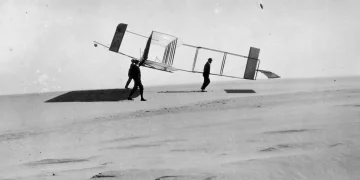
The Wright Flyer III is the third powered aircraft by the Wright Brothers, built during the winter of 1904–05.
read Also: Wright Flyer II Crash: Orville Wright’s 1904 Huffman Prairie Accident