The Wright Flyer II crash of August 24, 1904, was part of the Wright brothers’ difficult second year of powered flight testing. After their historic first flights at Kill Devil Hills in December 1903, Orville and Wilbur Wright returned to Ohio determined to prove that powered flight could become repeatable, controllable, and practical.
That proved harder than the famous first flight made it look.
At Huffman Prairie Flying Field near Dayton, Ohio, the brothers tested their second powered aircraft, the Wright Flyer II. On August 24, 1904, Orville Wright survived a crash during one of those test flights. No one was killed, but the aircraft was substantially damaged.
The incident was not a famous public disaster. It was one of many hard lessons from the Wrights’ 1904 test season, a year marked by short flights, weak winds, control problems, engine issues, repairs, and repeated attempts to understand how powered flight could be improved.
Basic Accident Details
| Detail | Information |
|---|---|
| Date | Wednesday, August 24, 1904 |
| Aircraft | Wright Flyer II |
| Owner/operator | Private / Wright brothers |
| Pilot | Orville Wright |
| Occupants | 1 |
| Fatalities | 0 |
| Other fatalities | 0 |
| Aircraft damage | Substantial |
| Location | Huffman Prairie Flying Field, Ohio |
| Nature of flight | Test |
| Departure | Huffman Prairie Flying Field |
| Destination | Huffman Prairie Flying Field |
What Was the Wright Flyer II?
The Wright Flyer II was the second powered airplane built by Orville and Wilbur Wright. It followed the 1903 Wright Flyer, the aircraft that made the first successful controlled, powered flights at Kill Devil Hills on December 17, 1903.
Flyer II was not a production aircraft. It was another experimental machine, built to continue testing powered flight closer to the Wrights’ home in Dayton.
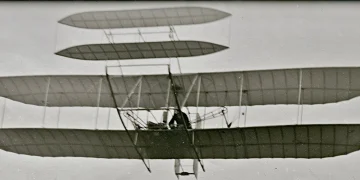
The aircraft kept many features of the 1903 Flyer, including the forward elevator, rear rudder, wing-warping control, prone pilot position, and pusher propellers. But it was also modified during the 1904 season as the brothers tried to improve performance and reliability.
The Wright Brothers Aeroplane Company historical record notes that between May 23 and December 1, 1904, the Wrights attempted to fly or flew 105 times at Huffman Prairie. The same source lists several modifications during that season, including changes to cooling, fuel capacity, propeller shape, and rudder design.
Why the Wright Brothers Moved to Huffman Prairie
After the 1903 success in North Carolina, the Wright brothers wanted a test field closer to home. Traveling to the Outer Banks was expensive and time-consuming. Huffman Prairie, located near Dayton, offered a practical local flying ground.
The field was not perfect. It was a cow pasture, flatter and less windy than Kill Devil Hills. That created new problems.
At Kitty Hawk, steady coastal winds had helped the Flyer gain airspeed. At Huffman Prairie, winds were often lighter and less predictable. This made takeoff harder and forced the brothers to develop better launching methods.
The Wrights later used a derrick-and-weight launching system to help get the aircraft airborne. That system became important in their 1904 and 1905 experiments.
Why the 1904 Test Season Was Difficult
The 1904 season was frustrating because the Wright brothers had already flown successfully, yet they still did not have a practical airplane.
The first successful flights of 1903 proved that powered flight was possible. But those flights were short. The aircraft was fragile. It could not yet take off reliably in ordinary conditions, circle repeatedly, or remain airborne for long periods.
In 1904, the Wrights faced several challenges:
- Lighter winds at Huffman Prairie
- Difficulty launching from level ground
- Short and unstable flights
- Engine overheating
- Control problems
- Repeated hard landings
- Aircraft damage and repairs
- Need for design modifications
This is why the August 24 crash matters. It was one event in a much larger learning process.
What Happened in the August 24, 1904 Wright Flyer II Crash?
The available accident summary is brief: Orville Wright survived a crash of the Wright Flyer II at Huffman Prairie on August 24, 1904. The aircraft sustained substantial damage, and no fatalities were recorded.
The exact technical sequence is not as widely documented as the December 1903 flights, but the accident fits the pattern of the 1904 testing season. The Wrights were still learning how Flyer II behaved in local conditions, and many flights at Huffman Prairie ended quickly or roughly.
The key facts are clear: Orville was the only occupant, he survived, and the aircraft was damaged.
Because this was a test aircraft flown in an experimental campaign, the crash should not be interpreted as a failure of the Wrights’ achievement. It was part of the engineering process that helped them move from first flight to practical flight.
Why Orville Wright Survived
Early Wright aircraft flew low and relatively slowly compared with later airplanes. That reduced some risks, although the danger was still real.
The pilot lay prone on the wing structure, exposed to impact. There was no cockpit, no seat belt system in the modern sense, no helmet standard, and no emergency protection. A crash could easily injure or kill the pilot.
Orville’s survival was partly due to the nature of the test environment. Huffman Prairie was an open field, and many early flights were low-altitude tests. The aircraft was damaged, but the crash did not result in fatal impact forces.
Even so, the incident shows how personally dangerous the Wrights’ work remained. They were not only designers. They were the test pilots.
Why the Wright Flyer II Was Hard to Fly
The Wright Flyer II was a difficult aircraft because powered flight itself was still new.
The Wright brothers had solved the basic control problem better than anyone else, but their early machines were still unstable and demanding. The pilot had to manage pitch, roll, yaw, engine behavior, wind, and launch conditions with very little margin for error.
The forward elevator was especially sensitive. If the pilot raised the nose too much, the aircraft could stall. If the aircraft dipped, recovery required quick correction. The brothers were still refining the relationship between the elevator, rudder, and wing-warping system.
The 1904 tests were therefore as much about pilot skill as aircraft design.
Huffman Prairie: The Wrights’ Real Flight Laboratory
Huffman Prairie was where the Wright brothers began turning invention into aviation practice.
Kill Devil Hills gave them the historic breakthrough. Huffman Prairie gave them repetition. It was where they learned how to fly more often, make turns, improve control, and prepare for longer flights.
The National Museum of the U.S. Air Force notes that during 1904–1905, the Wrights continued researching flight at Huffman Prairie near the Simms Station trolley stop, now part of Wright-Patterson Air Force Base. It also notes that in September 1904 Wilbur Wright reached a major milestone at Huffman Prairie with the first full-circle airplane flight.
That milestone came after many failures, including accidents like Orville’s August 24 crash.
From Crash to Progress
The Wright brothers’ method was built around learning from failure.
When the aircraft crashed, they repaired it. When a flight was too short, they studied why. When the engine overheated, they changed the cooling system. When the aircraft lacked fuel capacity, they increased it. When control surfaces did not behave as needed, they modified them.
This is why the 1904 season was important even though it was not as famous as 1903.
Each accident and failed attempt helped the brothers understand what a practical airplane required. Flyer II was not the final answer, but it gave them the knowledge needed to build Flyer III in 1905.
How Flyer II Led to Flyer III
The Wright Flyer III, built in 1905, became the first truly practical Wright airplane. It could fly longer, turn more reliably, and remain under control for extended periods.
The lessons from Flyer II shaped that improvement.
Flyer II exposed weaknesses in stability, control, launching, and durability. The Wrights used those lessons to redesign and improve their next aircraft. By 1905, they had achieved flights lasting many minutes and covering many miles.
That progress did not come from one clean invention. It came from repeated testing at Huffman Prairie, including crashes, repairs, and modifications.
Why the Wright Flyer II Crash Matters
The Wright Flyer II crash matters because it corrects a common misunderstanding about aviation history.
Many people think the Wright brothers “invented the airplane” on December 17, 1903, and the problem was solved. In reality, the 1903 flights were only the beginning.
The real challenge was making flight practical.
The 1904 crash shows that the Wrights were still struggling. Their aircraft could fly, but not easily. It could lift off, but not reliably. It could be controlled, but only with great skill and constant refinement.
That makes the August 24 accident historically useful. It reminds readers that aviation progress was built through testing, damage, patience, and engineering discipline.
The Difference Between the 1903 Flyer and Flyer II
| Feature | 1903 Wright Flyer | 1904 Wright Flyer II |
| Main test site | Kill Devil Hills, North Carolina | Huffman Prairie, Ohio |
| Historical role | First successful powered flights | Development toward practical flight |
| Flight conditions | Strong coastal winds | Lighter inland winds |
| Launch challenge | Easier wind assistance | Harder level-field takeoff |
| Aircraft status | Flew one historic morning | Used through a long test season |
| Result | Proved controlled powered flight possible | Exposed problems needing refinement |
The 1903 Flyer made history. Flyer II made the Wrights better pilots and engineers.
Common Errors About the Wright Flyer II Crash
Treating It as a Fatal Accident
The August 24, 1904 crash was not fatal. Orville Wright survived.
Confusing Flyer II With the 1903 Flyer
The aircraft was Wright Flyer II, the brothers’ second powered airplane, not the original 1903 Flyer.
Assuming the Wright Brothers Had Already Perfected Flight
They had not. The 1904 season shows that they still had major problems to solve.
Ignoring Huffman Prairie
Huffman Prairie was central to the Wrights’ development. It was where they worked through the practical problems of repeated powered flight.
Calling the Crash a Public Airshow Accident
This was a test flight, not a public airshow. The Wrights were conducting experimental work.
Timeline of the Wright Flyer II Test Program
| Date / Period | Event |
| December 17, 1903 | Wright brothers achieve first successful powered flights at Kill Devil Hills |
| Spring 1904 | Wrights build Flyer II for continued testing |
| May 23, 1904 | Wrights begin Flyer II tests at Huffman Prairie |
| August 24, 1904 | Orville Wright survives a crash of Flyer II |
| September 1904 | Wilbur achieves the first full-circle airplane flight at Huffman Prairie |
| Late 1904 | Wrights continue modifications and testing |
| December 1, 1904 | Flyer II test season ends |
| 1905 | Wrights build Flyer III, the first practical Wright airplane |
Key Takeaways
- The Wright Flyer II crash happened on August 24, 1904.
- Orville Wright was the pilot and survived.
- The accident occurred at Huffman Prairie Flying Field in Ohio.
- No fatalities were recorded.
- The aircraft sustained substantial damage.
- Flyer II was the Wright brothers’ second powered airplane.
- The 1904 test season was difficult and experimental.
- Huffman Prairie had lighter winds than Kitty Hawk, making launches harder.
- The Wrights made many flights and attempts at Huffman Prairie in 1904.
- Crashes and repairs were part of their development process.
- Flyer II helped the brothers learn how to build a more practical airplane.
- The lessons of 1904 helped lead to the improved Wright Flyer III in 1905.
Frequently Asked Questions
What was the Wright Flyer II crash?
The Wright Flyer II crash was an August 24, 1904 test accident at Huffman Prairie Flying Field in Ohio. Orville Wright survived, and no fatalities were recorded.
Who was flying the Wright Flyer II?
Orville Wright was the pilot during the August 24, 1904 crash.
Did Orville Wright die in the crash?
No. Orville Wright survived the crash.
Where did the Wright Flyer II crash happen?
The crash happened at Huffman Prairie Flying Field near Dayton, Ohio.
Was the Wright Flyer II the same aircraft as the 1903 Flyer?
No. Wright Flyer II was the brothers’ second powered aircraft, built after the original 1903 Wright Flyer.
Why were the Wright brothers testing at Huffman Prairie?
They wanted a test field close to home in Dayton, Ohio, instead of returning constantly to the Outer Banks in North Carolina.
Why was the 1904 season difficult?
The brothers faced lighter winds, launch problems, control challenges, engine cooling issues, and repeated hard landings.
How many times did the Wrights test Flyer II?
Historical Wright aircraft records say they attempted to fly or flew 105 times at Huffman Prairie between May 23 and December 1, 1904.
What did the Wrights learn from Flyer II?
They learned how to improve control, launching, cooling, fuel capacity, and flight endurance, which helped them build the more successful Flyer III in 1905.
Why is the Wright Flyer II crash historically important?
It shows that aviation did not become practical immediately after 1903. The Wrights needed another year of difficult testing before they could master repeatable powered flight.
Conclusion
The Wright Flyer II crash of August 24, 1904, was not a famous disaster, but it was an important part of the Wright brothers’ path from first flight to practical aviation. Orville Wright survived, the aircraft was damaged, and the brothers continued testing.
At Huffman Prairie, the Wrights discovered that flying once at Kitty Hawk was only the beginning. They still had to learn how to launch reliably, handle weak winds, control turns, manage the engine, and keep the aircraft in the air longer.
That is why this crash matters. It shows aviation history as it really happened: not as one perfect breakthrough, but as a long sequence of experiments, failures, repairs, and improvements that slowly turned a fragile machine into a practical airplane.
Read Also: Wright Flyer Damage: The Ground Accident After the First Powered Flights