Wright Flyer damage on December 17, 1903, came only minutes after the aircraft had made aviation history. Earlier that morning at Kill Devil Hills, North Carolina, Orville and Wilbur Wright completed four powered flights in their 1903 Flyer, proving that controlled, powered, heavier-than-air flight was possible.
Then the aircraft’s flying career ended almost immediately.
After the fourth and longest flight of the day, the Wright Flyer was standing on the ground when a strong gust of wind struck it. The machine overturned and rolled across the sand, causing substantial damage. No one was killed, and no one was aboard at the time. But the aircraft never flew again.
This ground accident is one of the most important final details in the story of the first airplane. The Wright Flyer did what it was built to do, but it survived as a flying machine for only one morning.
Basic Incident Details
| Detail | Information |
|---|---|
| Date | Thursday, December 17, 1903 |
| Time | Around noon |
| Aircraft | Wright Flyer |
| Owner/operator | Orville and Wilbur Wright |
| Manufacturer serial number | 1 |
| Occupants | 0 |
| Fatalities | 0 |
| Other fatalities | 0 |
| Aircraft damage | Substantial |
| Location | Kill Devil Hills, North Carolina |
| Phase | Standing on ground |
| Nature | Test flight aftermath |
| Main event | Strong gust overturned and damaged the aircraft |
What Happened on December 17, 1903?
December 17, 1903, began as the most important day in early aviation history.
After years of experiments with kites, gliders, wind-tunnel data, propellers, engines, and control systems, the Wright brothers finally flew a powered aircraft under control.
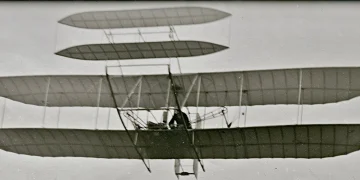
The first successful flight was made by Orville Wright at 10:35 a.m. It lasted 12 seconds and covered 120 feet. The Library of Congress identifies the famous photograph of this flight as the first flight at Kitty Hawk, showing the machine just after takeoff.
The brothers then made three more flights. Each brother flew twice. The final flight, piloted by Wilbur, was the longest of the day, covering 852 feet in 59 seconds.
That fourth flight proved that the first flight had not been a lucky hop. The Flyer could leave the ground, remain under control, and travel farther with practice.
Then came the wind.
The Fourth Flight Before the Damage
The fourth flight was the strongest proof of success.
Wilbur Wright flew the Flyer much farther than the earlier attempts. The aircraft remained airborne for nearly a minute, a remarkable result for the first day of successful powered flight.
But the landing was hard. The Smithsonian notes that photographs of the 1903 Flyer on the ground after its fourth flight show damage to the forward elevator caused by a hard landing.
Even before the gust struck, the aircraft was already fragile and had suffered some landing damage. The Flyer was made of wood, fabric, wire, and light structural components. It was designed to be light enough to fly, not strong enough to withstand rough handling or violent ground winds.
The Gust That Ended the Flyer’s Flying Career
After the fourth flight, the Wrights and their helpers were preparing to move the aircraft when a strong gust of wind caught it.
The Flyer was overturned and rolled across the ground. With no pilot aboard, the aircraft became a fragile structure exposed to the Outer Banks wind. The damage was substantial.
This was not a crash from flight. It was a ground accident.
That distinction matters. The Flyer had already completed its historic flying program. It was not lost because its engine failed, its wings collapsed in flight, or its control system failed. It was damaged after landing, while standing on the ground.
The aircraft was later repaired, but it never flew again.
Why the Wright Flyer Was So Fragile
The Wright Flyer was a pioneering experimental aircraft, not a durable production machine.
Every part of it reflected a compromise between strength and weight. If it was too heavy, it would not fly. If it was too light, it could be damaged easily.
The aircraft used:
- A wooden frame
- Muslin fabric covering
- Wire bracing
- A forward elevator
- Rear rudders
- Wing-warping controls
- A lightweight engine
- Twin propellers
This made the Flyer just strong enough for controlled flight under carefully managed conditions. It was not built to resist being rolled across sand by strong wind.
Early aviation machines were extremely vulnerable on the ground. Even after successful flights, wind could destroy them if they were not secured quickly.
Why the Wright Flyer Never Flew Again
Although the Flyer was later repaired, it never returned to flight.
There were several reasons.
First, it had already completed its historic purpose. The Wright brothers had proved controlled powered flight.
Second, the damage was significant enough that restoring it to flying condition would have required work.
Third, the brothers were already moving forward. They needed better aircraft, not simply another flight in the 1903 machine.
The Wright Flyer was soon packed away. Its later life became a story of storage, restoration, display, controversy, and preservation.
Today, the original 1903 Wright Flyer is preserved at the Smithsonian National Air and Space Museum. The Smithsonian identifies it as the aircraft that made the first successful sustained flight by a piloted, controlled, powered, heavier-than-air machine.
The Four Flights of December 17, 1903
| Flight | Pilot | Time Aloft | Distance | Significance |
| First | Orville Wright | 12 seconds | 120 feet | First successful powered, controlled flight |
| Second | Wilbur Wright | About 12 seconds | 175 feet | Confirmed the machine could fly again |
| Third | Orville Wright | About 15 seconds | 200 feet | Showed improvement with practice |
| Fourth | Wilbur Wright | 59 seconds | 852 feet | Longest and strongest flight of the day |
The fourth flight ended the flying sequence. The ground damage afterward ended the aircraft’s flying life.
Why This Ground Accident Matters
The Wright Flyer damage matters because it shows how narrow the margin was between success and loss in early aviation.
The aircraft had just made history. Yet within a short time, it was too damaged to fly again.
That tells us several important things about early flight:
- The first airplanes were extremely delicate.
- Weather remained dangerous even after landing.
- Ground handling was part of aviation safety.
- A successful test did not guarantee the aircraft would survive the day.
- The Wrights’ achievement was even more remarkable because their machine worked at all.
The incident also reminds us that aviation history was not neat. The first airplane did not retire after years of service. It flew for one morning and was then damaged by wind.
Ground Handling and Early Aviation Safety
Modern aircraft are secured with chocks, tie-downs, brakes, hangars, and trained ground crews. In 1903, none of that aviation infrastructure existed at Kill Devil Hills.
The Wright brothers worked with a few local helpers, simple tools, sand, wind, and a homemade aircraft. They were inventing not only flight but also the practical routines around flight.
The post-flight gust showed that aviation safety begins before takeoff and continues after landing. An aircraft that is safe in the air can still be destroyed on the ground if weather and handling are not controlled.
That lesson became important throughout aviation history.
The Difference Between the December 14 Crash and December 17 Damage
The Wright Flyer had already suffered a failed attempt on December 14, 1903.
On that day, Wilbur took the controls for the first powered attempt. The aircraft lifted briefly from the slope of Big Kill Devil Hill, stalled, and came down into the sand. The damage was minor enough for the brothers to repair it within three days.
The December 17 event was different.
| Date | Event | Pilot / Occupants | Result |
| December 14, 1903 | Failed powered attempt | Wilbur Wright aboard | Flyer stalled and crashed into sand |
| December 17, 1903 | Four successful flights | Orville and Wilbur flew separately | First powered controlled flights achieved |
| December 17, 1903 | Ground wind damage | No one aboard | Flyer overturned and substantially damaged |
The December 14 crash was a failed flight attempt. The December 17 damage was a post-flight ground accident.
What Happened to the Wright Flyer Afterward?
After the aircraft was damaged, the Wright brothers packed it away.
The Flyer did not immediately become a museum treasure. Its later history was complicated. It was stored, damaged by flooding, repaired, displayed, and eventually became part of a long dispute between Orville Wright and the Smithsonian over recognition of the first successful airplane.
The Smithsonian explains that the original Flyer’s post-1903 history included years in storage, damage from flooding, restoration work, and eventual public display.
The aircraft eventually returned to the United States and became one of the most important artifacts in the National Air and Space Museum.
Why the Flyer’s Final Damage Did Not Reduce Its Achievement
The fact that the Flyer was damaged after its fourth flight does not weaken the Wright brothers’ achievement.
The key historical standard was not whether the aircraft became a long-serving airplane. The key was whether it achieved controlled, powered, heavier-than-air flight.
It did.
On December 17, the Flyer completed four flights. It took off under its own power, carried a pilot, remained under control, and landed. The final flight lasted nearly a minute.
The later wind damage was unfortunate, but it happened after the aircraft had already made history.
Common Errors About the December 17 Wright Flyer Damage
Saying the Flyer Crashed During Its First Flight
The first flight was successful. The damage being discussed happened after the fourth flight, while the aircraft was on the ground.
Saying Someone Was Aboard
No one was aboard when the strong gust overturned the aircraft after the fourth flight.
Treating It as a Fatal Accident
There were no fatalities.
Saying the Flyer Was Never Repaired
The aircraft was later repaired for preservation and display, but it never flew again.
Ignoring the Hard Landing Before the Gust
The fourth flight ended with a hard landing that damaged the forward elevator before the later wind gust caused more serious damage.
Timeline of the Wright Flyer’s Final Day
| Time / Sequence | Event |
| Morning, December 17, 1903 | Wright brothers prepare the Flyer at Kill Devil Hills |
| 10:35 a.m. | Orville makes the first successful powered flight |
| Later that morning | Wilbur makes the second flight |
| Later that morning | Orville makes the third flight |
| Late morning | Wilbur makes the fourth and longest flight |
| After fourth flight | Flyer has landing damage to the forward elevator |
| Around noon | Strong gust overturns and rolls the aircraft |
| Afterward | Flyer is substantially damaged |
| Later | Aircraft is repaired for preservation but never flies again |
Key Takeaways
- The Wright Flyer was damaged on December 17, 1903, after its fourth flight.
- The aircraft was standing on the ground when a strong gust overturned it.
- No one was aboard during the ground accident.
- There were no fatalities.
- The Flyer had already completed four historic powered flights that morning.
- The first flight, piloted by Orville, lasted 12 seconds and covered 120 feet.
- The fourth flight, piloted by Wilbur, lasted 59 seconds and covered 852 feet.
- A hard landing after the fourth flight damaged the forward elevator.
- The later gust caused substantial ground damage.
- The Flyer was later repaired but never flew again.
- The incident shows how fragile early aircraft were.
- The original 1903 Flyer is preserved at the Smithsonian National Air and Space Museum.
Frequently Asked Questions
What happened to the Wright Flyer on December 17, 1903?
After completing four successful powered flights, the Wright Flyer was overturned by a strong gust of wind while standing on the ground and was substantially damaged.
Was anyone aboard when the Wright Flyer was damaged?
No. No one was aboard when the aircraft was overturned by wind after the fourth flight.
Did anyone die when the Wright Flyer was damaged?
No. There were no fatalities.
Did the Wright Flyer crash during the first flight?
No. The first flight was successful. The major damage happened later, after the fourth flight.
How many flights did the Wright Flyer make on December 17, 1903?
The Flyer made four flights on December 17, 1903.
Who flew the first successful flight?
Orville Wright flew the first successful flight at 10:35 a.m., covering 120 feet in 12 seconds.
Who flew the final flight of the day?
Wilbur Wright flew the fourth and final flight of the day, which lasted 59 seconds and covered 852 feet.
Why did the Wright Flyer never fly again?
It was substantially damaged after the fourth flight when a gust of wind overturned it. Although later repaired for preservation, it was not returned to flying service.
Where is the original Wright Flyer today?
The original 1903 Wright Flyer is preserved by the Smithsonian National Air and Space Museum.
Why is the ground accident historically important?
It shows how fragile the first aircraft were and how the Flyer’s flying life ended immediately after proving controlled powered flight was possible.
Conclusion
Wright Flyer damage on December 17, 1903, ended the flying career of the world’s first successful powered airplane almost as soon as it began. The aircraft had already completed four historic flights at Kill Devil Hills, proving that controlled, powered, heavier-than-air flight was possible.
Then a strong gust of wind overturned the Flyer while it stood on the ground. No one was aboard, and no one was killed, but the aircraft was substantially damaged and never flew again.
The incident does not diminish the Wright brothers’ achievement. Instead, it adds a human and practical detail to the story. The first airplane was not a polished machine ready for years of service. It was a fragile experimental craft that flew just long enough to change the world.
Read Also: Wright Flyer Crash: The Failed December 14, 1903 Attempt Before First Flight