The Wright Flyer crash of December 14, 1903, was the failed first powered-flight attempt that came just three days before the Wright brothers changed aviation history. At Kill Devil Hills, North Carolina, Wilbur Wright took the controls of the 1903 Flyer after winning a coin toss against his brother Orville. The aircraft left the launching rail, rose briefly, stalled, and came down into the sand.
No one was killed. Wilbur survived. The aircraft was not destroyed, but the failed attempt forced the brothers to make repairs before trying again.
That short, unsuccessful flight is often overshadowed by the famous December 17 flights, especially Orville Wright’s 12-second first successful powered flight. But the December 14 attempt matters because it shows how close the Wright brothers were to success and how quickly failure became part of their final learning process.
The December 14 incident was not an airshow accident in the modern sense. It was a private experimental test by two inventors still learning how their powered machine behaved. The Wrights had solved many problems through years of glider experiments, wind-tunnel testing, and engineering work. Yet their first attempt with the powered Flyer proved that the final step from theory to powered flight remained difficult.
Basic Incident Details
| Detail | Information |
|---|---|
| Date | Monday, December 14, 1903 |
| Time | Around 11:31 |
| Aircraft | Wright Flyer |
| Operator | Wilbur and Orville Wright |
| Pilot | Wilbur Wright |
| Occupants | 1 |
| Fatalities | 0 |
| Other fatalities | 0 |
| Aircraft damage | Minor / repairable |
| Location | Big Kill Devil Hill, Kill Devil Hills, North Carolina |
| Phase | Takeoff |
| Nature of flight | Experimental test |
| Departure | Kill Devil Hills |
| Destination | Kill Devil Hills |
What Was the Wright Flyer?
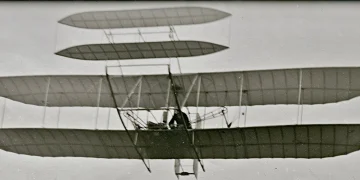
The Wright Flyer, also known as the 1903 Flyer or Flyer I, was the Wright brothers’ first powered aircraft. It was a fragile biplane built from wood, fabric, wire, and a lightweight engine designed for the specific challenge of controlled powered flight.
The aircraft had a canard elevator at the front, twin rudders at the rear, and wing-warping controls for roll. The pilot lay prone on the lower wing rather than sitting upright. This reduced drag and allowed the pilot to shift and control the machine using the Wrights’ system of linked controls.
The Flyer was not a polished aircraft. It was experimental, difficult to fly, and built for testing rather than comfort or public demonstration. But it represented the result of years of work. The Wright brothers had started with kites, moved to gliders, built their own wind tunnel, corrected faulty aerodynamic data, designed their own propellers, and built an engine light enough for flight.
By December 1903, they believed they were ready to test powered flight.
Why the December 14 Attempt Happened
The Wright brothers had returned to the Outer Banks in 1903 to test their powered aircraft after several years of glider experiments. They selected Kill Devil Hills because the area offered strong winds, open sand, and relative privacy.
The first powered attempt did not happen as soon as they arrived. The brothers faced mechanical delays, especially with the propeller shafts. Repairs and adjustments took time. By December 14, they were finally ready to try the Flyer under power.
The wind that day was lighter than they wanted. Because the Flyer needed enough airspeed to lift, the brothers decided to launch from the lower slope of Big Kill Devil Hill. The downhill rail would help the aircraft gain speed using gravity.
This detail is important. The December 14 attempt was not the same setup used on December 17. On the successful day, the brothers launched from level ground into stronger wind. On December 14, the slope gave extra speed, but it also made the takeoff more difficult to control.
Why Wilbur Wright Took the First Turn
Wilbur took the first turn because he won a coin toss.
The brothers had worked together for years, and both had earned the right to try first. Rather than argue, they settled it simply. Wilbur won and became the pilot for the first powered attempt.
This is why Orville, not Wilbur, later became the pilot of the first successful powered flight on December 17. Since Wilbur had taken the first chance on December 14, Orville took the next turn when the aircraft was ready again.
That small coin toss shaped one of the most famous facts in aviation history.
What Happened During the Wright Flyer Crash?
The Flyer began its run down the launching rail from the slope of Big Kill Devil Hill. The engine was running, the aircraft moved forward, and Wilbur tried to guide it into the air.
The machine lifted off, reaching roughly 15 feet above the ground. But Wilbur pulled up too sharply. The aircraft lost speed, stalled, and came down into the sand.
The flight covered only a short distance and lasted only a few seconds. Some accounts give the distance as about 105 feet and the duration as roughly 3 to 3.5 seconds.
The important point is that the aircraft had briefly left the ground under power, but it had not made a controlled, sustained flight. The takeoff was too abrupt, the climb angle was too steep, and the Flyer stalled almost immediately.
Was the December 14 Flight a Success?
The December 14 attempt was not counted as the first successful powered flight.
It was a failed attempt.
The aircraft rose into the air, but the flight was too short, uncontrolled, and ended in a stall and crash into the sand. The Wright brothers themselves did not treat it as the successful solution to powered flight.
However, it was still useful. It showed that the engine produced enough power and that the aircraft could leave the ground. The problem was control, timing, and launch technique.
That meant the Flyer did not need to be abandoned. It needed repair, adjustment, and another attempt under better conditions.
Why the Flyer Stalled
A stall happens when a wing no longer produces enough lift because the angle of attack becomes too high or the aircraft loses too much airspeed.
In simple terms, Wilbur raised the nose too sharply. The aircraft climbed briefly, slowed, and lost lift. Because the Flyer was close to the ground, there was no time or altitude to recover smoothly.
The downhill launch may have made the machine harder to manage. The aircraft moved quickly off the rail, and Wilbur had limited experience controlling the powered Flyer. The Wrights had flown gliders many times, but this powered machine behaved differently.
After the incident, Wilbur recognized that the aircraft had power but that he lacked experience with the new machine and its starting method. That lesson helped the brothers prepare for December 17.
Why the Damage Was Repairable
The December 14 crash did not destroy the Wright Flyer.
The aircraft came down into sand, which helped reduce the severity of the impact. Some parts were damaged, but the brothers were able to repair the machine over the next three days.
This repair period explains why they did not fly again immediately. The Flyer was delicate. Even minor damage mattered because the aircraft needed precise structure, control surfaces, wires, and alignment to fly.
By December 17, the repairs were complete, and the brothers were ready to try again.
The Difference Between December 14 and December 17
The difference between the failed December 14 attempt and the successful December 17 flights came down to wind, launch method, control, and experience.
On December 14, the wind was too light, so the brothers used the slope of Big Kill Devil Hill to help launch the aircraft. That produced a fast and difficult takeoff. Wilbur pulled up too sharply, and the aircraft stalled.
On December 17, the wind was stronger. The brothers placed the launch rail on level ground near their camp and pointed it into the wind. The wind helped provide the airspeed needed for takeoff without needing the downhill slope.
Orville took the controls for the first attempt that day. His flight lasted 12 seconds and covered 120 feet. It became the first successful controlled, powered flight of a heavier-than-air aircraft.
The December 14 failure helped make that success possible.
December 14 Versus December 17
| Feature | December 14, 1903 | December 17, 1903 |
| Pilot | Wilbur Wright | Orville Wright on first successful flight |
| Launch site | Slope of Big Kill Devil Hill | Level ground near camp |
| Wind | Light | Stronger |
| Result | Stalled and crashed into sand | Successful powered flight |
| Duration | About 3 to 3.5 seconds | 12 seconds on first successful flight |
| Distance | About 105 feet | 120 feet on first successful flight |
| Historical status | Failed first attempt | First successful powered flight |
Why the December 14 Crash Matters
The Wright Flyer crash matters because it shows that aviation history was not created in one perfect moment.
The Wright brothers did not simply build a machine, turn on the engine, and fly successfully. Their success came through repeated failure, adjustment, and disciplined learning.
The December 14 incident taught them several things:
- The Flyer had enough power to lift off.
- The downhill launch could make control harder.
- The powered machine responded differently from their gliders.
- Pilot technique mattered as much as aircraft design.
- A stronger headwind and level launch might produce a better result.
- Repairs and patience were still necessary.
This is why the crash should not be seen as a failure of the Wright brothers’ project. It was part of the process that led to success.
The Wright Brothers’ Testing Mindset
Wilbur and Orville Wright approached flight like engineers and experimenters.
They did not rely on guesswork alone. They observed birds, studied existing aeronautical literature, built gliders, questioned published data, created their own wind tunnel, tested wing shapes, and refined their control system.
Their greatest advantage was not money or fame. It was method.
When something went wrong, they studied it. When data proved unreliable, they generated new data. When a machine failed, they repaired it and improved their understanding.
The December 14 crash was another test result. It was disappointing, but it was useful.
How the Crash Fits Into the Wright Brothers’ Journey
The December 14 attempt was the final failure before success.
The brothers had already experienced many setbacks:
- Their early gliders produced less lift than expected.
- Their 1901 results were discouraging.
- They had to build a wind tunnel to correct aerodynamic data.
- They struggled with propeller design.
- They had to build their own engine.
- They faced delays with mechanical parts in 1903.
- Their first powered attempt ended in a stall.
Yet each problem forced a solution.
By December 17, the Wrights had enough knowledge, enough patience, and enough repairs completed to try again. The result was four successful flights in one morning.
Was This a Demonstration or a Test?
The December 14 attempt is best described as a test flight, not a public demonstration or airshow.
There was no large audience. The Wrights were conducting private experimental work at Kill Devil Hills. A few local men from the life-saving station helped move the aircraft and later witnessed the December 17 flights, but the event was not staged as a public show.
Calling it a “demo” can be misleading because the Wrights were not trying to entertain a crowd. They were trying to learn whether their machine could fly.
What Happened After the Crash?
After the December 14 crash, the Wright brothers repaired the aircraft.
They did not give up. They also did not rush into another immediate attempt. They fixed the machine, waited for suitable conditions, and prepared for a better launch.
On December 17, they tried again.
That morning, they made four flights:
- Orville flew 120 feet in 12 seconds.
- Wilbur flew farther on the second attempt.
- Orville flew again on the third attempt.
- Wilbur made the longest flight of the day, covering 852 feet in 59 seconds.
After the fourth flight, a gust of wind damaged the Flyer badly, and it never flew again. But by then, it had already done what it was built to do.
Why Wilbur’s Failed Attempt Should Not Be Forgotten
Wilbur’s failed December 14 attempt deserves attention because it was the bridge between preparation and success.
It was the first time the 1903 Flyer left the rail under power with a pilot aboard. It proved that the aircraft was close to working. It also exposed the practical difficulty of managing takeoff and pitch control in the powered machine.
Without that attempt, the brothers may not have understood as clearly how to approach the December 17 flights.
History often remembers the first success, but the last failure is sometimes just as important.
Common Errors About the December 14 Wright Flyer Crash
Calling It the First Successful Flight
It was not the first successful flight. It was a failed powered attempt that ended in a stall and crash.
Saying Orville Was the Pilot
Wilbur Wright was the pilot on December 14. Orville piloted the first successful flight on December 17.
Calling the Aircraft Destroyed
The Flyer was not destroyed on December 14. It was damaged but repairable.
Treating It as an Airshow Accident
The attempt was an experimental test, not a public airshow or display.
Ignoring the Role of the Slope
The brothers launched from the lower slope of Big Kill Devil Hill because the wind was too light for a level-ground takeoff.
Timeline of the December 1903 Wright Flyer Tests
| Date | Event |
| December 11, 1903 | Orville returns to camp after dealing with mechanical issues |
| December 14, 1903 | Wilbur attempts the first powered flight |
| December 14, 1903 | Flyer lifts briefly, stalls, and crashes into sand |
| December 15–16, 1903 | Wright brothers repair the aircraft |
| December 17, 1903 | Orville makes the first successful powered flight |
| December 17, 1903 | The brothers complete four successful flights |
| December 17, 1903 | The Flyer is later badly damaged by wind after the fourth flight |
Key Takeaways
- The Wright Flyer crash happened on December 14, 1903.
- Wilbur Wright was the pilot.
- He won the first attempt after a coin toss with Orville.
- The aircraft launched from the slope of Big Kill Devil Hill.
- The launch used the slope because the wind was too light.
- The Flyer rose briefly, stalled, and crashed into the sand.
- Wilbur survived without fatal injury.
- The aircraft was damaged but repairable.
- Repairs took about three days.
- The failed attempt helped prepare the Wrights for December 17.
- Orville made the first successful powered flight three days later.
- The incident shows how close failure and success were in early aviation.
Frequently Asked Questions
What was the Wright Flyer crash of December 14, 1903?
It was the Wright brothers’ first powered-flight attempt with the 1903 Flyer. Wilbur Wright piloted the aircraft, which lifted briefly, stalled, and crashed into the sand.
Who flew the Wright Flyer on December 14, 1903?
Wilbur Wright flew the aircraft on December 14 after winning a coin toss against Orville.
Did Wilbur Wright die in the crash?
No. Wilbur Wright survived the incident.
Was the Wright Flyer destroyed on December 14?
No. The aircraft was damaged but repairable. The brothers fixed it before flying again on December 17.
Why did the Flyer crash?
The aircraft stalled after Wilbur pulled up too sharply during takeoff. The machine lost lift and came down into the sand.
Where did the December 14 attempt happen?
It happened at Big Kill Devil Hill, near Kitty Hawk and Kill Devil Hills, North Carolina.
Why did the Wright brothers launch from a hill?
The wind was too light for a level-ground takeoff, so they used the lower slope of Big Kill Devil Hill to help the aircraft gain speed.
Was December 14 the first successful powered flight?
No. The first successful powered flight came on December 17, 1903, with Orville Wright at the controls.
How long did the December 14 attempt last?
It lasted only a few seconds, commonly reported as about 3 to 3.5 seconds.
Why is the December 14 crash important?
It was the final failed attempt before the Wright brothers achieved controlled powered flight. It showed that the Flyer had enough power but still required better launch conditions and pilot handling.
Conclusion
The Wright Flyer crash of December 14, 1903, was not the failure that ended the Wright brothers’ dream. It was the mistake that helped sharpen their final approach to success.
Wilbur Wright lifted off from the slope of Big Kill Devil Hill, climbed too sharply, stalled, and came down into the sand. The aircraft was damaged, but not destroyed. The lesson was clear: the Flyer had power, but the brothers still needed better conditions and more careful control.
Three days later, they proved it. On December 17, 1903, Orville Wright made the first successful controlled, powered flight in a heavier-than-air aircraft. That famous moment was built partly on the failed attempt of December 14.
The crash matters because it reminds us that aviation history was not created by one perfect flight. It was created by careful testing, repair, patience, and the courage to try again after failure.
Read Also: Langley Aerodrome Crash: The 1903 Potomac Failure Before the Wright Brothers Flew