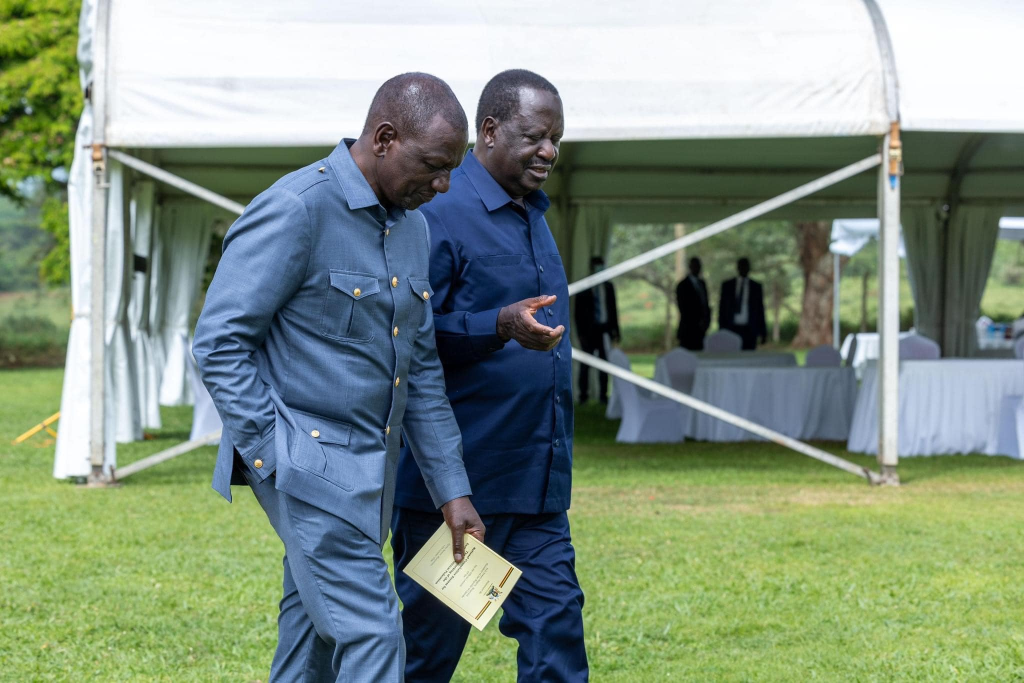
In 2007, Kenya’s political scene witnessed the formation of a potent alliance between William Ruto and Raila Odinga, two of the nation’s most influential figures. Their partnership promised a seismic shift in the political landscape, challenging the then incumbent government, which was perceived to be aligned with Kikuyu interests. The alliance was seen as a beacon of change, threatening to dismantle the established political order.
However, the election that year was marred by controversy, with allegations of manipulation by the government to secure Mwai Kibaki’s victory, despite signs of his defeat. This alleged interference highlighted the lengths to which the established powers were willing to go to maintain their grip on the nation’s political reins.
The unity between Ruto and Raila did not sit well with the ruling elites. Their bond represented a significant threat, prompting the authorities to devise strategies to drive a wedge between them. Notably, the International Criminal Court (ICC) charges against Ruto and the Mau Forest evictions became focal points of contention. Raila Odinga was accused of being behind the ICC’s actions against Ruto, and he was also implicated in leading the contentious Mau Forest evictions, despite these maneuvers being widely viewed as government efforts to foster division.
These calculated actions deepened the rift between Ruto and Raila, leading to an irreparable fracture by 2012. Attempts at reconciliation proved futile, as the seeds of discord had already taken root, altering the political dynamics between them significantly.
As Kibaki’s tenure neared its end, the political elite rallied behind Uhuru Kenyatta, viewing him as the ideal candidate to perpetuate the divide. Under Kenyatta’s leadership, particularly during his first term, Ruto was often at the forefront of attacks against Raila, playing into the narrative scripted by the political establishment.
The Building Bridges Initiative (BBI), introduced during Uhuru’s presidency, was perceived as yet another strategic move by the state to ensure that Ruto and Raila remained adversaries, further entrenching the division within the political sphere.
Now, with William Ruto as the President of Kenya and Raila Odinga advancing in age, the political landscape presents new dynamics. The question of whether these once-allies, turned adversaries, can mend their fractured relationship looms large, especially with the 2027 elections on the horizon. The shifting political loyalties, particularly within the Kikuyu community towards Ruto, add another layer of complexity to the narrative.
As Kenya moves closer to another electoral showdown, speculation is rife about the strategies Ruto will employ to secure a win. Will he seek to reforge alliances with old rivals, or will he carve out a new path, navigating the intricacies of Kenyan politics with a different strategy? The answers to these questions will undoubtedly shape the future of Kenya’s political landscape, marking either a continuation of long-standing rivalries or the beginning of a new era of reconciliation and unity.