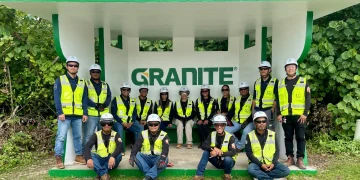
Surveyors in the United States play a critical role in land ownership, construction, engineering, real estate, infrastructure, utilities, transportation, environmental planning, and public records. Before a road is built, a property is sold, a subdivision is approved, a pipeline is routed, or a major construction project begins, surveyors help define boundaries, measure land, map existing conditions, and provide the spatial data needed for sound decisions.
The profession has changed significantly. Traditional boundary and construction staking remain important, but modern surveying now includes aerial mapping, lidar, drones, mobile mapping, hydrographic surveys, utility mapping, GIS, 3D scanning, asset mapping, and digital twins. This shift has expanded the role of surveyors from field measurement specialists into geospatial data partners for infrastructure owners, developers, engineers, contractors, utilities, and public agencies.
Demand for qualified surveyors remains steady. The U.S. Bureau of Labor Statistics projects surveyor employment to grow 4 percent from 2024 to 2034, with about 3,900 openings each year on average. At the same time, licensing remains important because land surveying affects public safety, property rights, legal boundaries, and construction accuracy. The National Society of Professional Surveyors notes that surveying licensure requirements vary by state, with many states requiring formal education and professional qualification pathways.
This guide profiles leading Surveyors in the United States, explains their services, highlights industry trends, and gives buyers practical advice on choosing the right surveying firm for land, construction, infrastructure, utility, and development projects.
Industry Overview: Surveyors in the United States
The U.S. surveying industry includes licensed land surveyors, geospatial firms, engineering consultants, mapping companies, aerial survey providers, hydrographic specialists, construction survey teams, utility mapping firms, and GIS consultants. Some firms operate nationally, while many strong surveyors are local or regional companies with deep knowledge of state laws, county records, land history, plats, easements, and permitting requirements.
Surveying serves several major markets. Real estate buyers need boundary surveys, ALTA/NSPS land title surveys, subdivision plats, and elevation certificates. Developers need topographic surveys, site control, construction staking, utility mapping, and as-built documentation. Contractors need layout, machine-control data, progress surveys, and quality checks. Public agencies need mapping for roads, bridges, airports, rail, water systems, flood control, and asset management. Utilities need corridor surveys, pipeline mapping, transmission-line surveys, and right-of-way support.
Licensing is state-based, so a professional land surveyor must meet the requirements of the state where regulated surveying services are performed. This is especially important for boundary surveys, plats, legal descriptions, and surveys used in public records.
The industry is also being reshaped by technology. Drones, lidar, GPS/GNSS, robotics, cloud mapping, AI-assisted feature extraction, 3D scanning, and mobile mapping allow firms to collect data faster and more safely. However, technology does not replace professional judgment. Accurate survey work still depends on legal research, field control, quality assurance, local knowledge, and licensed review.
Ranking Methodology
This directory evaluates surveying and geospatial firms based on reputation, service range, national or regional presence, technical capability, public visibility, licensing relevance, market specialization, innovation, and buyer usefulness.
The list includes national geospatial specialists, engineering firms with strong survey divisions, and firms known for land surveying, mapping, GIS, remote sensing, infrastructure support, and construction survey services. ENR’s 2026 Top 500 Design Firms list provides useful context for large design and engineering firms, while company sources confirm surveying and mapping capabilities.
Best Surveyors in the United States
SAM Companies
Overview
SAM Companies is one of the most prominent surveying and geospatial firms in the United States. The company describes itself as the nation’s largest Managed Geospatial Services firm, with scale to handle programs from coast to coast. SAM is especially relevant for infrastructure owners, utilities, transportation agencies, developers, and public-sector clients that need surveying and geospatial data across multiple locations.
Services Offered
SAM provides land surveying, aerial mapping, mobile lidar, utility engineering, GIS, subsurface utility engineering, construction services, asset management, and geospatial data solutions.
Industries Served
The company serves transportation, utilities, energy, rail, public works, construction, land development, telecommunications, and infrastructure markets.
Notable Projects
Project details vary by client, but SAM supports large-scale infrastructure and geospatial programs across the United States.
Competitive Advantages
SAM’s advantage is scale and specialization. It is not just a local land survey firm; it is a national geospatial services provider.
Headquarters
Austin, Texas.
Website
sam.biz
Why It Stands Out
SAM stands out for large surveying, mapping, utility, and infrastructure programs requiring nationwide geospatial capacity.
NV5
Overview
NV5 is a major engineering, consulting, surveying, and mapping firm serving infrastructure, real estate, construction, environmental, and public-sector markets. NV5 says it provides high-precision land surveying and mapping for land acquisition, site development, real estate, construction projects, transportation infrastructure, and environmental assessments.
Services Offered
NV5 provides land surveying, aerial mapping, geospatial services, lidar, utility mapping, construction surveys, transportation surveys, environmental mapping, GIS, and engineering support.
Industries Served
The company serves government agencies, municipalities, commercial developers, healthcare institutions, engineering firms, transportation clients, and infrastructure owners.
Notable Projects
NV5 works on land acquisition, transportation, real estate, site development, construction, and environmental projects across the United States.
Competitive Advantages
NV5 combines surveying with engineering, environmental, and technology services, making it useful for complex projects that require more than field measurement.
Headquarters
Hollywood, Florida.
Website
nv5.com
Why It Stands Out
NV5 stands out for high-precision surveying, mapping, and multidisciplinary project support.
Woolpert
Overview
Woolpert is a major architecture, engineering, geospatial, and strategic consulting firm with strong surveying and mapping capabilities. The company says its surveying services provide accurate land surveying data that helps clients make informed decisions, reduce risk, and move projects forward.
Services Offered
Woolpert provides land surveying, geospatial services, aerial mapping, lidar, GIS, photogrammetry, asset management, architecture, engineering, and strategic consulting.
Industries Served
The company serves aviation, transportation, utilities, government, real estate, energy, water, education, and public infrastructure clients.
Notable Projects
Woolpert supports federal, state, local, utility, airport, and private-sector geospatial programs across the United States.
Competitive Advantages
Woolpert’s advantage is the combination of geospatial technology, engineering, architecture, and asset intelligence.
Headquarters
Dayton, Ohio.
Website
woolpert.com
Why It Stands Out
Woolpert stands out for surveying and geospatial projects that require advanced mapping, lidar, GIS, and infrastructure data.
Bowman Consulting
Overview
Bowman Consulting is a national engineering, planning, surveying, construction management, and environmental consulting firm. The company serves real estate, transportation, energy, utility, public-sector, and infrastructure clients across the United States.
Bowman is especially relevant for developers and public-sector clients that need civil engineering and surveying together. Its service model supports projects from due diligence and site planning through design, permitting, construction staking, and closeout.
Services Offered
Bowman provides land surveying, civil engineering, planning, transportation engineering, environmental consulting, construction management, utility engineering, geospatial services, and site development support.
Industries Served
The company serves developers, municipalities, transportation agencies, energy clients, utilities, public agencies, commercial owners, and infrastructure clients.
Notable Projects
Bowman works on residential, commercial, mixed-use, transportation, energy, and public infrastructure projects across the United States.
Competitive Advantages
Its advantage is integrated surveying and engineering. That can simplify delivery for clients that need both site data and design support.
Headquarters
Reston, Virginia.
Website
bowman.com
Why It Stands Out
Bowman stands out for land development, civil engineering, surveying, and infrastructure support under one platform.
AECOM
Overview
AECOM is one of the largest infrastructure consulting and engineering firms in the United States. While best known for engineering, transportation, water, environment, and program management, AECOM also supports major projects with survey, mapping, geospatial, and data services.
Large infrastructure projects often require survey control, topographic mapping, utility coordination, right-of-way data, construction support, and digital asset information. AECOM’s value is its ability to integrate survey-related data into wider engineering and program delivery.
Services Offered
AECOM provides civil engineering, geospatial support, mapping, transportation planning, water engineering, environmental consulting, program management, construction management, and infrastructure advisory.
Industries Served
The company serves transportation agencies, utilities, airports, ports, cities, federal agencies, developers, energy clients, and infrastructure owners.
Notable Projects
AECOM works on major transportation, water, environmental, aviation, and urban infrastructure projects across the United States and globally.
Competitive Advantages
AECOM’s advantage is scale and multidisciplinary delivery. Survey data can be connected directly to design, environmental review, and program management.
Headquarters
Dallas, Texas.
Website
aecom.com
Why It Stands Out
AECOM stands out for large infrastructure programs where surveying must connect with engineering, environmental, and construction management services.
Jacobs
Overview
Jacobs is a leading U.S. engineering and professional services company. In 2026, Jacobs said it returned to the No. 1 position on ENR’s Top 500 Design Firms list, which ranks U.S.-based design firms by design-specific revenue.
Jacobs is relevant for surveying buyers because major infrastructure, utilities, water, transportation, and advanced facility projects require accurate geospatial data. The firm’s strength is not only field surveying, but the ability to connect data with digital engineering, asset management, program delivery, and infrastructure planning.
Services Offered
Jacobs provides engineering, digital solutions, geospatial support, transportation planning, water engineering, environmental services, program management, construction management, and infrastructure advisory.
Industries Served
The company serves public agencies, utilities, transportation authorities, airports, energy firms, manufacturers, cities, and infrastructure owners.
Notable Projects
Jacobs supports major infrastructure, transportation, water, energy, and public-sector programs across the United States and globally.
Competitive Advantages
Jacobs combines engineering scale with digital and geospatial capabilities.
Headquarters
Dallas, Texas.
Website
jacobs.com
Why It Stands Out
Jacobs stands out for major programs where survey data must support planning, design, digital delivery, and asset management.
Timmons Group
Overview
Timmons Group is an engineering, design, technology, and surveying firm with strong land development, infrastructure, GIS, and public-sector capabilities. It is especially relevant in the Mid-Atlantic and Southeast, where developers and municipalities need integrated civil engineering and surveying.
The company is a strong fit for site development, transportation, utilities, public works, parks, stormwater, and infrastructure projects that require topographic surveys, boundary work, construction layout, and digital mapping.
Services Offered
Timmons Group provides land surveying, civil engineering, GIS, geospatial services, environmental services, planning, landscape architecture, transportation engineering, and construction administration.
Industries Served
The company serves developers, municipalities, utilities, transportation agencies, education clients, healthcare clients, and public infrastructure owners.
Notable Projects
Timmons Group works on land development, public infrastructure, utilities, parks, transportation, and municipal projects.
Competitive Advantages
Its advantage is integrated survey, engineering, and technology delivery.
Headquarters
Richmond, Virginia.
Website
timmons.com
Why It Stands Out
Timmons Group stands out for regional surveying, GIS, land development, and civil engineering support.
David Evans and Associates
Overview
David Evans and Associates, commonly known as DEA, is an employee-owned engineering, surveying, planning, and transportation consulting firm. It is especially relevant for transportation, land development, water, energy, and public infrastructure projects in the western United States and beyond.
DEA’s surveying services support design, right-of-way, construction, mapping, and infrastructure delivery. The firm’s combination of surveyors, engineers, planners, and construction professionals makes it useful for public agencies and private clients.
Services Offered
DEA provides land surveying, engineering, transportation, water resources, planning, construction engineering, geomatics, energy services, and environmental support.
Industries Served
The company serves transportation agencies, municipalities, utilities, developers, water agencies, energy clients, and public-sector owners.
Notable Projects
DEA works on transportation corridors, public works, land development, water, energy, and infrastructure projects.
Competitive Advantages
Its advantage is strong transportation and public infrastructure integration.
Headquarters
Portland, Oregon.
Website
deainc.com
Why It Stands Out
DEA stands out for surveying and engineering support on transportation, water, energy, and infrastructure projects.
Psomas
Overview
Psomas is a consulting firm focused on surveying, engineering, construction management, and environmental services. It is particularly relevant in the western United States, where public infrastructure, land development, water, transportation, and environmental projects require strong survey support.
Psomas is a good example of a regional surveying and engineering firm that can compete effectively because of local knowledge, agency relationships, and multidisciplinary services.
Services Offered
Psomas provides land surveying, construction surveying, engineering, mapping, environmental services, water resources, transportation engineering, and construction management.
Industries Served
The company serves public agencies, developers, transportation clients, water districts, utilities, education clients, and infrastructure owners.
Notable Projects
Psomas supports transportation, land development, water, public works, and environmental projects across western markets.
Competitive Advantages
Its advantage is regional expertise combined with surveying, engineering, and construction management.
Headquarters
Los Angeles, California.
Website
psomas.com
Why It Stands Out
Psomas stands out for western U.S. surveying, public works, land development, and infrastructure support.
Local Licensed Land Surveyors
Overview
Many of the most valuable Surveyors in the United States are local licensed professionals rather than national firms. For boundary disputes, residential property purchases, subdivision plats, fence-line questions, easements, mortgage surveys, and small development projects, a local surveyor is often the best choice.
Local surveyors understand county records, historical plats, property monuments, local ordinances, title issues, terrain, and state-specific legal requirements. That local expertise can be more useful than national scale for many property owners.
Services Offered
Local surveyors provide boundary surveys, ALTA/NSPS surveys, topographic surveys, elevation certificates, subdivision plats, construction staking, as-built surveys, legal descriptions, easement surveys, and property line marking.
Industries Served
They serve homeowners, real estate buyers, developers, attorneys, title companies, architects, engineers, contractors, municipalities, and lenders.
Notable Projects
Most local projects are not publicly listed, but nearby references and county experience are often more important.
Competitive Advantages
Their advantage is local legal and land-record knowledge.
Headquarters
Varies by state and county.
Website
Varies by firm.
Why It Stands Out
For property boundary work, a licensed local land surveyor is often the most practical and reliable option.
Industry Trends Affecting Surveyors
Drone Surveying
Drones are widely used for topographic mapping, construction progress, stockpile measurement, corridor surveys, and site documentation. They reduce field time and improve safety on difficult sites.
Lidar and 3D Scanning
Lidar and laser scanning help capture buildings, roads, bridges, utilities, terrain, and industrial sites in high detail. These tools are valuable for design, renovation, asset management, and construction verification.
GIS and Digital Twins
Survey data increasingly feeds GIS platforms and digital twins. Infrastructure owners use this information to manage assets, plan maintenance, and improve decision-making.
Subsurface Utility Mapping
Utility conflicts can delay projects and increase costs. Surveying firms with subsurface utility engineering capabilities help identify underground utilities before construction begins.
Construction Automation
Surveyors support machine control, digital layouts, robotic total stations, and construction verification. Accurate survey control is essential for automated grading, paving, and building layout.
Licensing and Workforce Pressure
The profession faces a need for new licensed surveyors as experienced professionals retire. BLS projects steady openings over the decade, partly because workers leave the field or retire.
Buyer’s Guide: How to Choose Surveyors
Confirm Licensing
For boundary surveys, plats, legal descriptions, and regulated land surveying, confirm that the surveyor is licensed in the state where the property is located.
Match the Survey Type
A residential boundary survey, ALTA survey, construction stakeout, drone map, hydrographic survey, and utility survey require different skills and equipment. Choose a firm with the right specialization.
Ask About Deliverables
Clarify whether you need a stamped survey, CAD file, GIS data, PDF map, 3D model, point cloud, legal description, or construction layout points.
Check Local Experience
For property boundary work, local records and field evidence matter. A surveyor familiar with local plats, monuments, and county procedures can reduce risk.
Understand Pricing
Survey costs depend on property size, terrain, records research, travel, vegetation, legal complexity, required deliverables, technology used, and urgency.
Watch for Red Flags
Red flags include no state license, vague scope, no written proposal, unclear deliverables, poor communication, no insurance, and limited experience with the required survey type.
Why Surveyors Matter in the United States
Surveyors protect property rights, support infrastructure, reduce construction errors, help resolve disputes, and provide trusted spatial data. Their work affects land ownership, public safety, engineering accuracy, real estate transactions, environmental planning, and asset management.
A good survey can prevent boundary disputes, construction mistakes, title problems, drainage issues, utility conflicts, and costly redesigns. A poor survey can create legal problems, project delays, and financial losses.
As the United States invests in infrastructure, housing, utilities, transportation, energy, and digital mapping, surveyors will remain essential to accurate planning and responsible development.
Conclusion
The leading Surveyors in the United States include SAM Companies, NV5, Woolpert, Bowman Consulting, AECOM, Jacobs, Timmons Group, David Evans and Associates, Psomas, and strong local licensed land surveyors. Each serves different needs. SAM, NV5, and Woolpert are strong geospatial and mapping firms. Bowman, Timmons, DEA, and Psomas combine surveying with engineering and development support. AECOM and Jacobs are useful for large infrastructure programs where survey data must connect with design and project delivery. Local licensed surveyors remain essential for property boundaries, plats, easements, and residential work.
The best choice depends on the project. For legal boundary work, hire a licensed surveyor with local experience. For infrastructure, choose a firm with geospatial scale and public-agency experience. For construction, select a survey team that understands layout, machine control, and field coordination.
Frequently Asked Questions
What are the best Surveyors in the United States?
Some of the best-known surveying and geospatial firms in the United States include SAM Companies, NV5, Woolpert, Bowman Consulting, AECOM, Jacobs, Timmons Group, David Evans and Associates, Psomas, and local licensed land surveyors. The best choice depends on the project. A homeowner may need a local boundary surveyor, while an infrastructure owner may need a national geospatial firm.
What does a surveyor do?
A surveyor measures land, identifies boundaries, maps terrain, prepares plats, supports construction layout, documents property features, and creates spatial data for engineering, real estate, infrastructure, and legal use. Modern surveyors may also use drones, lidar, GPS, GIS, 3D scanning, mobile mapping, and utility detection tools.
Do surveyors need a license in the United States?
Yes, professional land surveying is regulated by state licensing boards. Requirements vary by state, especially for boundary surveys, plats, legal descriptions, and surveys used in property records. Buyers should confirm that the surveyor is licensed in the state where the work is performed.
How do I choose a land surveyor?
Choose a land surveyor based on licensing, local experience, relevant survey type, references, insurance, deliverables, and communication. For property boundary work, local knowledge is very important. For infrastructure or construction surveys, equipment, technology, staffing, and schedule capacity also matter.
How much does a land survey cost?
Survey costs vary depending on property size, location, terrain, vegetation, records research, boundary complexity, travel, urgency, and required deliverables. A simple residential survey usually costs far less than an ALTA survey, construction survey, drone mapping project, or large infrastructure survey. Always request a written scope.
What is an ALTA/NSPS survey?
An ALTA/NSPS survey is a detailed land title survey used mainly in commercial real estate transactions. It documents boundaries, easements, improvements, access, encroachments, utilities, and other title-related matters. Lenders, title companies, attorneys, and buyers often require it before closing major property deals.
What is the difference between a boundary survey and a topographic survey?
A boundary survey identifies property lines, corners, easements, and legal limits of a parcel. A topographic survey maps land features such as elevations, contours, buildings, trees, utilities, roads, drainage, and site conditions. Many development projects need both.
Can drones replace land surveyors?
No. Drones are powerful tools, but they do not replace licensed surveyors. Drone data must be controlled, checked, processed, interpreted, and applied correctly. Legal boundary work still requires professional judgment, records research, field evidence, and licensed responsibility.
When do I need a surveyor?
You may need a surveyor when buying land, building a fence, resolving a boundary dispute, subdividing property, designing a project, applying for permits, constructing a building, mapping utilities, developing land, or documenting flood elevation. Surveying early can prevent costly problems later.
What are warning signs of a weak surveyor?
Warning signs include no state license, vague deliverables, no written proposal, poor communication, unclear pricing, limited experience with your survey type, and unwillingness to explain methods. For legal boundary work, avoid anyone who cannot confirm licensure in your state.