The 2002 general election was a watershed moment in Kenya’s political history. After over two decades in power, President Daniel arap Moi stepped down, and the National Rainbow Coalition (NARC) swept into power. Nowhere was this seismic shift more visible than in Kakamega and Vihiga, where the electorate overwhelmingly rejected KANU and embraced a new political future.
The NARC 2002 landslide in Kakamega and Vihiga not only dismantled decades of Moi’s influence but also introduced a new generation of leaders who would shape the region for the next decade.
Moi’s Exit and KANU’s Miscalculation
As Moi prepared to retire, he anointed Uhuru Kenyatta as his successor—a move that triggered dissent both within and outside KANU. Many prominent politicians, including Musalia Mudavadi, remained loyal to Moi and accepted Uhuru’s nomination. Mudavadi was appointed Vice President in a last-ditch effort to shore up Luhya support.
But this move backfired. Voters in Western Kenya viewed it as a political bribe rather than genuine elevation. The region, long starved of development and political inclusion, was ready for change.
The NARC Wave Hits Western Kenya
The formation of NARC, a grand alliance between Mwai Kibaki, Raila Odinga, Kalonzo Musyoka, and Charity Ngilu, created unprecedented momentum. Raila’s “Kibaki Tosha” declaration in Uhuru Park united fragmented opposition forces.
In Kakamega and Vihiga, the NARC message of liberation, constitutional reform, and economic renewal resonated strongly. The result was a political tsunami:
- KANU lost every single parliamentary seat in Kakamega and Vihiga.
- Even Musalia Mudavadi, serving as Vice President, lost his Sabatia seat.
- NARC swept the region, a stunning reversal of fortunes for a party that once controlled every lever of power.
New Faces, New Energy
The NARC landslide brought a new generation of leaders to Parliament from the region:
- Boni Khalwale (Ikolomani) – A rising reformist voice.
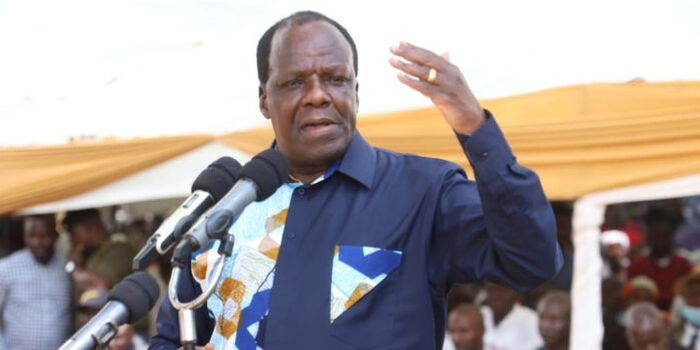
- Wycliffe Oparanya (Butere) – Future Governor of Kakamega.
- Kenneth Marende (Emuhaya) – Later elected Speaker of the National Assembly.
- Epanaitous Akaranga (Sabatia) – The man who defeated Vice President Mudavadi.
These leaders represented a break from the past. Most had no ties to the KANU machinery and were seen as agents of reform, devolution, and justice.
Why Western Kenya Voted NARC
The reasons behind the NARC 2002 landslide in Kakamega and Vihiga were clear:
- Voter fatigue with KANU: After 40 years of broken promises, the electorate was ready for change.
- Rejection of imposition: Moi’s selection of Uhuru Kenyatta alienated even KANU loyalists.
- Effective opposition unity: FORD-Kenya, DP, and LDP leaders agreed on a common goal: ending KANU rule.
Raila Odinga’s strategic campaigning in Luhya areas also helped consolidate the vote behind NARC.
Musalia Mudavadi’s Fall—and Future Resurrection
Perhaps the most symbolic moment of the election was Musalia Mudavadi’s loss. Despite holding the Vice Presidency, he was rejected by voters in his home constituency. It marked a stunning fall for the Mudavadi dynasty.
However, this was not the end of his political career. In the years to follow, Mudavadi would return through UDF and later ANC, adapting to new realities and continuing to shape Luhya politics.
Conclusion
The NARC 2002 landslide in Kakamega and Vihiga was a turning point in Kenya’s democratic journey. It ended decades of KANU dominance, empowered a fresh crop of leaders, and proved that even long-serving political dynasties were not immune to electoral wrath.
With Moi gone and Uhuru defeated, the people of Western Kenya embraced NARC as the promise of a better future—ushering in a new era of accountability, pluralism, and progressive governance.