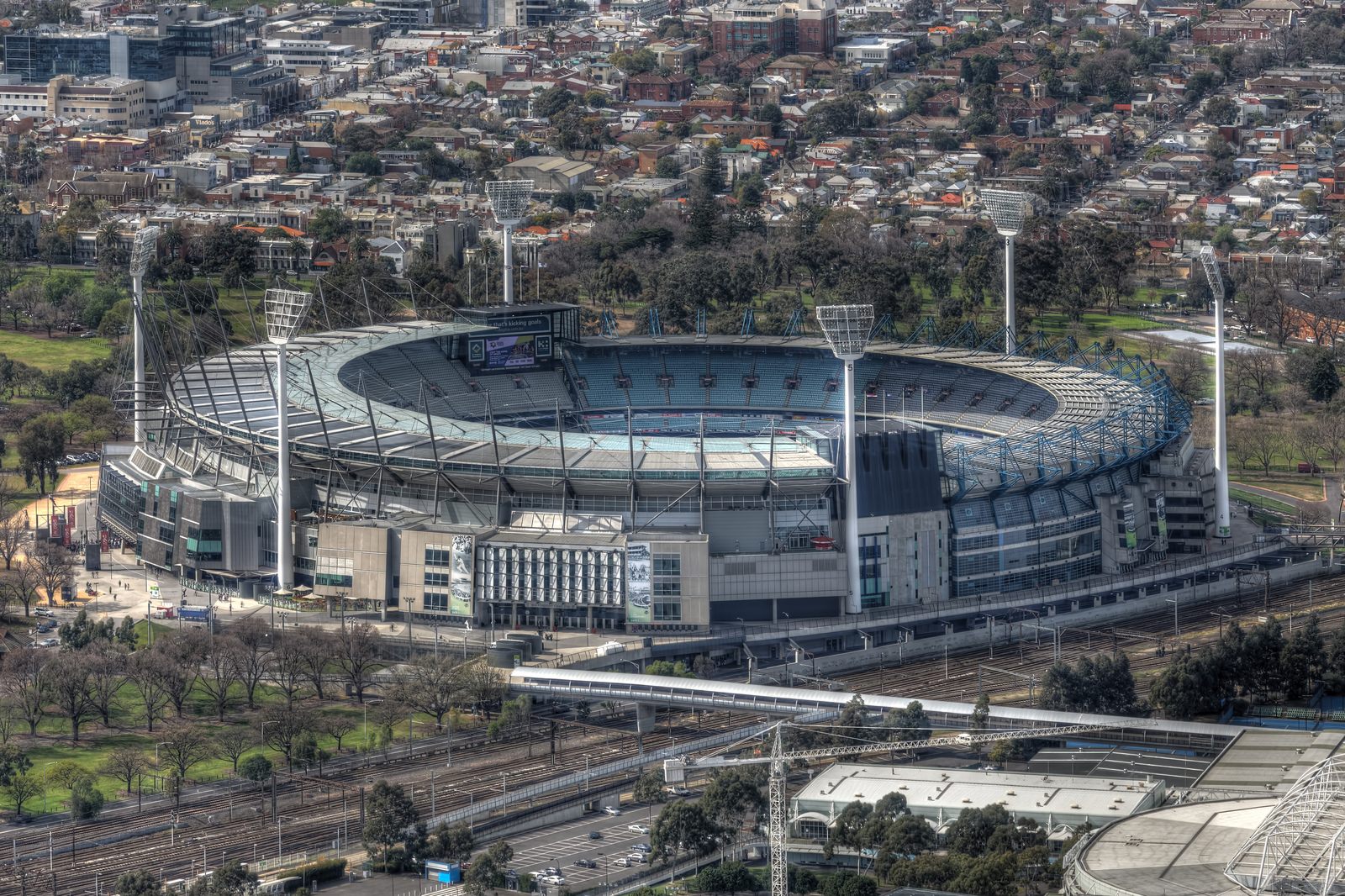
The Melbourne Cricket Ground (MCG) is Australia’s most iconic sports venue, home to some of the country’s most significant cricket and Australian rules football events. With a staggering capacity of 100,024, including 95,024 seats, the MCG is the largest stadium in Australia and a symbol of the country’s rich sporting history. Known as the “spiritual home” of Australian rules football, it has been central to the development of cricket and other sports in Australia.
The History of Melbourne Cricket Ground
The MCG’s history dates back to 1853 when it was originally used for sports in the area east of the Yarra River. The first building on the site, a wooden pavilion, was erected in 1854, marking the birth of what would become the world’s largest cricket stadium. The first grandstand, seating 6,000 people, opened in 1861, shortly after the MCG received its first oval field.
The stadium’s early years saw a series of developments, with significant improvements made in the early 20th century, including the installation of electric lighting in 1900, which was ahead of its time. It also became one of the first stadiums to install telephones (1881) and a scoreboard (1882). Over the years, the MCG has undergone numerous renovations, ensuring it remains at the forefront of global sporting venues.
- Inauguration Date: 1853
- Major Renovations: 1861, 1876, 1881, 1884, 1897, 1900, 1904, 1906, 1912, 1927, 1937, 1956, 1967–1968, 1984, 1992, 1994, 2003–2005, 2011–2013
- Cost of Renovations: AU$150 million (1992), AU$400 million (2005)
- Capacity: 100,024 (95,024 seats)
- Record Attendance: 121,696 (Collingwood vs Carlton, 1970)
Design and Architecture of Melbourne Cricket Ground
The design of the MCG has evolved over time, with significant architectural changes made during its various renovations. One of the most notable developments was the construction of the Great Southern Stand in 1992, which was a massive project costing $150 million more than originally planned. This four-tiered grandstand is one of the stadium’s most impressive features, offering unrivaled views of the pitch and accommodating a large portion of the stadium’s 100,000+ capacity.
In the early 2000s, further upgrades were made to the MCG’s northern side, resulting in another semi-circular grandstand, completing the transformation into a world-class venue capable of hosting major international sporting events.
- Architectural Features: Four-tiered grandstands, semi-circular design, six floodlight masts (85 meters tall)
- Key Renovations: Great Southern Stand (1992), Northern Stand (2003-2005)
- Floodlights: Six 85-meter floodlight masts (tallest in the world since 1984)
The MCG’s Role in Australian Sports
While the Melbourne Cricket Ground is primarily known as the home of cricket in Australia, it is also the spiritual home of Australian rules football. The first match of Australian rules football was played here in 1859, and since then, the MCG has been the venue for the AFL Grand Final every year. It is also the site of many significant cricket matches, including two Cricket World Cups held at the venue.
The MCG’s ability to host a variety of sports events has cemented its place as one of the world’s most versatile stadiums. In addition to hosting cricket and Australian rules football, it has also been a venue for athletics and football (soccer). The stadium has hosted major international football games, including matches involving European clubs during their overseas tours.
- Home to AFL: AFL Grand Final (annually)
- Home to Cricket: Iconic venue for international cricket matches, including two World Cups
- Other Sports Hosted: Athletics (Commonwealth Games 2006), Football (soccer)
Iconic Events at the MCG
The MCG has hosted countless iconic events over the years. In 1970, it set the record for the highest attendance at a sporting event, with 121,696 spectators watching the Collingwood vs Carlton Australian rules football game. The stadium has also hosted significant international events, including the 2006 Commonwealth Games and multiple Cricket World Cup finals.
- Notable Events: AFL Grand Finals, Cricket World Cup Finals, 2006 Commonwealth Games
The Future of Melbourne Cricket Ground
With ongoing upgrades and developments, the Melbourne Cricket Ground continues to evolve as a world-class venue for both local and international sporting events. The stadium’s immense size, impressive history, and ability to accommodate large crowds ensure that it will remain at the forefront of Australian and global sports for years to come.
- Future Developments: Ongoing improvements to facilities and infrastructure to maintain its status as a top-tier venue
Conclusion
The Melbourne Cricket Ground is more than just a stadium; it is a symbol of Australian sport and culture. From its humble beginnings in the 19th century to its current status as the largest cricket stadium in the world, the MCG has a rich history of hosting iconic events in cricket, football, and beyond. With its ongoing renovations and capacity for large crowds, it remains a central hub for Australian sport and a beloved venue for sports fans worldwide.