Wajir County is preparing to host one of the most significant national events in its history as the ultra-modern Wajir Stadium nears completion ahead of the 2026 Madaraka Day celebrations.
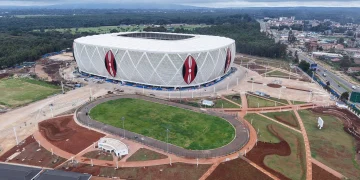
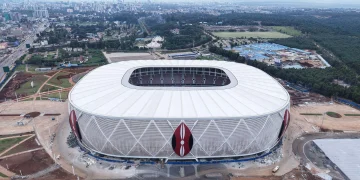
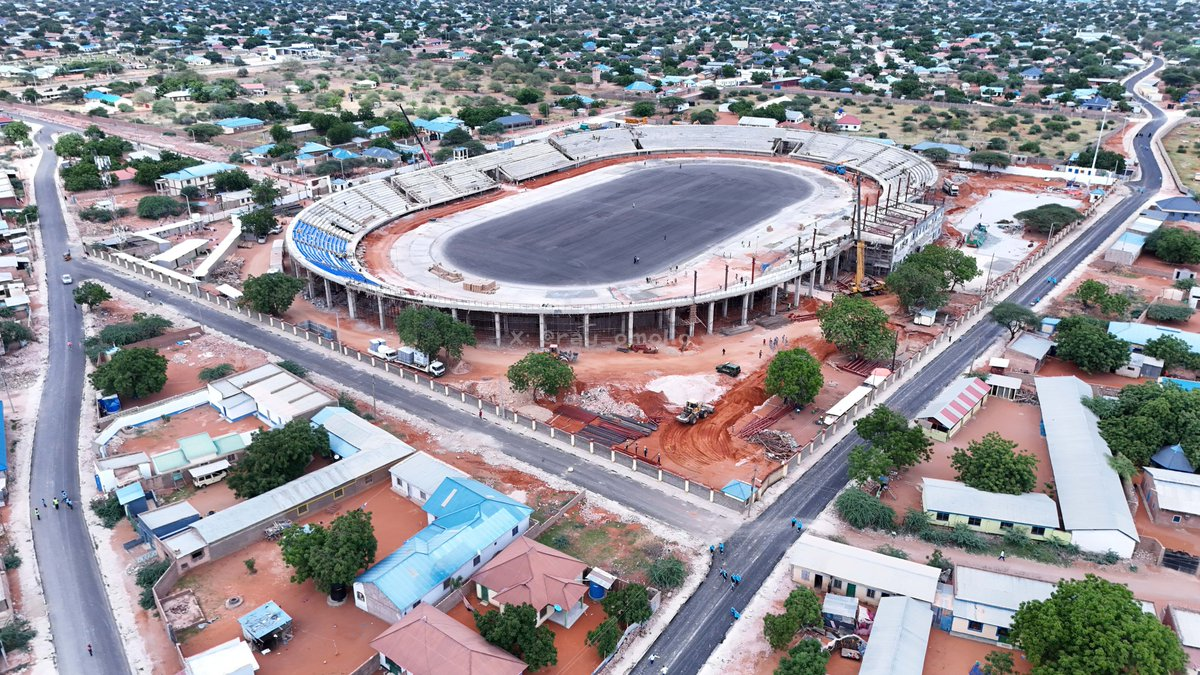
The 10,000-seater Wajir Stadium, currently under construction by the Kenya Defence Forces (KDF) through the Ministry of Defence, has reached approximately 84 per cent completion according to government officials overseeing the project.
The facility is expected to become the first fully-fledged modern stadium in Wajir since Kenya attained independence in 1963, marking a historic transformation for the North Eastern region.
Interior Principal Secretary Dr Raymond Omollo described the development as a milestone project that symbolizes the government’s broader commitment to equitable national development and inclusion of historically marginalized regions.
“Since independence, Wajir has never had a stadium. Sixty-two years later, under the leadership of President William Ruto, the town is witnessing a transformative shift,” Omollo said.
Construction Began in February 2026
Construction of the Wajir Stadium officially commenced in February 2026 after the project site was formally handed over to contractors in early February.
The government accelerated construction works immediately after groundbreaking to ensure the facility would be ready in time for Madaraka Day celebrations scheduled for June 1, 2026.
The national celebrations will be held in Wajir for the first time in Kenya’s history, placing the county under national spotlight as preparations intensify.
According to officials involved in the project, work has continued around the clock with multiple teams deployed to fast-track completion of critical infrastructure including seating sections, terraces, athletics tracks, water systems and security installations.
Modern Sports Facility
Once completed, Wajir Stadium will become one of the most advanced sports and public event facilities in North Eastern Kenya.
The project includes:
- A 10,000-seat spectator capacity
- Full-sized football pitch
- Artificial turf installation
- Standard eight-lane athletics track
- VIP lounges
- Modern changing rooms
- Terrace seating
- Security infrastructure
- Public amenities
- Expanded parking areas
Government officials say seat installation works are currently ongoing while interior finishing and landscaping are entering final stages.
A borehole has also been drilled within the facility to guarantee reliable water supply during events and daily operations.
The stadium is expected to serve not only as a sports venue but also as a regional center for civic activities, youth events, public gatherings and national celebrations.
Madaraka Day Preparations
Kenya’s Madaraka Day celebrations commemorate the country’s attainment of internal self-rule on June 1, 1963.
Hosting the national event in Wajir is widely viewed as a symbolic move aimed at promoting regional inclusivity and highlighting development progress in North Eastern Kenya.
The government is expected to host thousands of guests, dignitaries, security personnel, performers and residents during the celebrations.
Preparations include:
- Stadium completion
- Road upgrades
- Beautification of Wajir town
- Enhanced security operations
- Public sanitation improvements
- Hospitality sector readiness
Multi-agency coordination teams from the State Department for Internal Security and National Administration continue supervising preparations for the event.
Role of Kenya Defence Forces
The Kenya Defence Forces have played a central role in implementing the Wajir Stadium project.
KDF engineering units have increasingly become involved in strategic national infrastructure projects due to their capacity to execute large-scale works within tight timelines.
Officials say military involvement has significantly accelerated construction progress while ensuring adherence to national standards.
The Defence Ministry has also coordinated logistical support, engineering oversight and project supervision during the construction phase.
Economic Impact on Wajir County
Beyond Madaraka Day celebrations, the Wajir Stadium project is expected to generate long-term economic and social benefits for the county and surrounding region.
Local leaders believe the facility could stimulate:
- Sports tourism
- Small business growth
- Youth employment
- Talent development
- Hospitality sector expansion
- Regional investment opportunities
Construction activities have already created temporary jobs for local residents while boosting demand for materials, transport services and accommodation facilities.
Analysts say the project could help reposition Wajir as an emerging regional center for sports and public events.
Sports Development in North Eastern Kenya
For decades, North Eastern Kenya has faced challenges related to limited sports infrastructure compared to other parts of the country.
Residents of Wajir have historically relied on open grounds such as Wajir Baraza Park for sporting activities and public events.
The completion of Wajir Stadium is expected to significantly improve opportunities for:
- Youth athletics
- Football development
- School competitions
- Regional tournaments
- Community recreation
Government officials say the investment aligns with broader national efforts to expand sports infrastructure across Kenya.
Connection to AFCON 2027
The Wajir Stadium project also comes as Kenya intensifies preparations for the 2027 Africa Cup of Nations (AFCON), which the country will co-host alongside Uganda and Tanzania.
Although Wajir Stadium is not among the main AFCON host venues, officials say expanding sports infrastructure nationwide remains essential for grassroots sports development and long-term regional participation in continental competitions.
Kenya has embarked on multiple stadium renovation and construction projects as part of broader sports modernization efforts.
Government’s Infrastructure Agenda
The Wajir Stadium project forms part of President William Ruto’s wider infrastructure and regional development agenda.
The administration has emphasized:
- Equitable development
- Expansion of public infrastructure
- Economic inclusion
- Youth empowerment
- Regional integration
Projects in historically underserved regions such as North Eastern Kenya have increasingly become part of national development planning.
Officials argue that investments in sports infrastructure can contribute to:
- Social cohesion
- Peace-building
- Economic activity
- Community integration
- National identity
Security and Long-Term Maintenance
Following completion, the State Department for Internal Security and National Administration is expected to coordinate security and maintenance operations at the stadium.
Authorities say measures are being implemented to ensure the facility remains operational and sustainable after Madaraka Day celebrations.
Security agencies are also preparing extensive deployment plans ahead of the national event due to the large crowds expected to attend.
Regional Significance
The near completion of Wajir Stadium represents more than just a sports infrastructure project.
For many residents, the facility symbolizes:
- National recognition
- Inclusion in development
- Government investment in marginalized areas
- Expanding opportunities for youth
The project is expected to become one of the most prominent public infrastructure developments in Wajir County in recent decades.
With Madaraka Day celebrations approaching rapidly, construction teams continue racing against time to deliver a venue that could permanently reshape the sporting and civic landscape of North Eastern Kenya.
As final works continue, Wajir prepares to host the nation in what could become a defining moment in the county’s modern history.