The 2026 World Cup absentees list proves that football qualification can be brutal, even for the game’s biggest names.
The expanded FIFA World Cup in the United States, Canada and Mexico gives more nations than ever before a chance to compete on the biggest stage. With 48 teams involved, many fans expected more star players to make it through qualifying.
Yet some major football nations still failed.
Italy missed out again. Nigeria suffered another painful collapse. Poland could not give Robert Lewandowski one final World Cup run. Cameroon, Serbia, Hungary, Slovenia, Chile, Costa Rica, Guinea, Gabon and Georgia also fell short, leaving some of the world’s most recognisable players outside the tournament.
For fans, that means no Gigi Donnarumma, no Victor Osimhen, no Robert Lewandowski, no Khvicha Kvaratskhelia, no Christian Eriksen and no Dominik Szoboszlai at the 2026 World Cup.
Their absence adds another layer of drama to the tournament. The World Cup is not only about who qualifies. It is also about who misses out, why they failed and what those failures mean for the future of their national teams.
Quick Facts About the Biggest 2026 World Cup Absentees
| Player | Country | Main Reason for Absence | Key Storyline |
|---|---|---|---|
| Gigi Donnarumma | Italy | Italy lost in UEFA playoffs | Italy miss a third straight World Cup |
| Robert Lewandowski | Poland | Poland lost to Sweden | Possible end of his World Cup dream |
| Victor Osimhen | Nigeria | Nigeria lost CAF playoff route | Super Eagles waste a golden generation |
| Khvicha Kvaratskhelia | Georgia | Georgia finished behind stronger teams | Euro 2024 momentum did not continue |
| Christian Eriksen | Denmark | Denmark lost playoff on penalties | Another heartbreak for a senior star |
| Pierre-Emerick Aubameyang | Gabon | Gabon lost in CAF playoff race | Likely no World Cup appearance in his career |
| Bryan Mbeumo | Cameroon | Cameroon failed in CAF playoffs | Cameroon miss chance despite attacking talent |
| Dusan Vlahovic | Serbia | Serbia failed in UEFA qualifying | Major setback for Serbia’s new era |
| Dominik Szoboszlai | Hungary | Hungary collapsed late in qualifying | Captain’s dream ended dramatically |
| Alexis Sanchez | Chile | Chile finished bottom in CONMEBOL | End of an era for Chile’s golden generation |
| Benjamin Sesko | Slovenia | Slovenia failed to qualify | Injury and lack of service hurt Slovenia |
| Keylor Navas | Costa Rica | Costa Rica finished behind rivals | Veteran goalkeeper misses fourth World Cup |
| Serhou Guirassy | Guinea | Guinea finished fourth in CAF group | Club form did not translate to qualifying |
Why So Many Big Stars Missed the 2026 World Cup
The expanded format helped many emerging nations reach the tournament, but it did not remove the pressure of qualification.
World Cup qualifying remains difficult because it tests more than individual talent. It demands squad depth, tactical balance, fitness, discipline and consistency over many months.
A superstar can win matches, but one player rarely carries a national team through an entire qualifying campaign.
That is the main lesson from this list.
Osimhen scored regularly for Nigeria, but the Super Eagles still failed to finish the job. Lewandowski remained Poland’s biggest name, but Sweden stopped him in the playoffs. Donnarumma could not save Italy from another national football crisis. Szoboszlai dragged Hungary close, only for late drama to crush their hopes.
For these players, missing the World Cup is not just a personal disappointment. It also raises questions about the direction of their national teams.
Gigi Donnarumma and Italy’s World Cup Nightmare
Italy’s absence is one of the biggest stories of the 2026 World Cup.
For a country with four World Cup titles, missing three consecutive tournaments is a football crisis. The Azzurri last played at a World Cup in 2014, and their latest failure extends one of the most painful chapters in Italian football history.
Gigi Donnarumma is the face of that disappointment.
He is one of the finest goalkeepers of his generation. He became famous as a teenager at AC Milan, grew into Italy’s No. 1 and played a major role in the country’s Euro 2020 success.
Yet he has still never played at a World Cup finals tournament.
That is extraordinary for a goalkeeper of his status.
Italy’s failure should not be placed on Donnarumma alone. Goalkeepers can make saves, but they cannot fix a team’s attacking problems, tactical confusion or lack of consistency. Still, as one of Italy’s biggest stars, his absence will be felt.
The next World Cup cycle will be crucial. By 2030, Donnarumma will still be young enough for a goalkeeper, but Italy must rebuild urgently if he is to finally appear on the global stage.
Robert Lewandowski and Poland’s Painful Exit
Robert Lewandowski missing the 2026 World Cup feels like the closing of a major football chapter.
For more than a decade, Lewandowski has been one of the greatest strikers in world football. His movement, finishing, heading, penalty-box intelligence and professionalism made him a nightmare for defenders across Europe.
But international football has always been more complicated for him.
Poland depended heavily on his goals, leadership and experience. That reliance often made the team predictable, especially against stronger opponents.
Their playoff defeat to Sweden denied Lewandowski what may have been his final World Cup appearance. At 37, he is near the end of his international career, and another four-year wait may be too long.
His World Cup record never fully matched his club greatness, but that says more about Poland’s limitations than his quality.
Lewandowski deserved one more major tournament stage. Instead, his international future now looks uncertain.
Victor Osimhen and Nigeria’s Golden Generation Failure
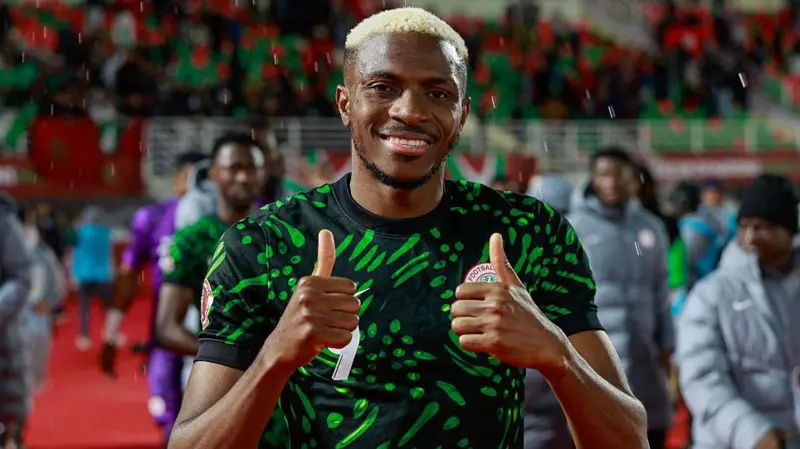
Victor Osimhen is one of the most painful names among the 2026 World Cup absentees.
Nigeria have attacking talent, European experience and a passionate football culture. With players such as Osimhen, Ademola Lookman, Alex Iwobi, Samuel Chukwueze, Calvin Bassey and Wilfred Ndidi, the Super Eagles looked strong enough to return to the World Cup.
But qualifying exposed their weaknesses.
Nigeria failed to convert talent into control. They struggled with consistency, tactical balance and pressure moments. Their playoff defeat to DR Congo underlined a deeper problem: this generation has names, but not enough collective reliability.
Osimhen’s absence is especially frustrating.
He is among the world’s top strikers, known for his pace, power, pressing, aerial strength and ruthless finishing. He scored important goals during qualifying, but Nigeria still leaned too heavily on him.
When he was not fully fit or when opponents limited his influence, Nigeria lacked enough answers.
For African football fans, especially in Kenya and across the continent, Nigeria’s absence removes one of the tournament’s most exciting attacking stories.
Khvicha Kvaratskhelia and Georgia’s Missed Opportunity
Khvicha Kvaratskhelia gave Georgia global visibility.
His performances at Euro 2024 made him one of Europe’s most exciting wide players. He combines dribbling, speed, directness and relentless energy, making him capable of changing matches even when Georgia face stronger opponents.
But Georgia’s World Cup qualifying campaign did not build on that momentum.
The team lacked enough depth around him. Kvaratskhelia could produce moments, but Georgia needed more than individual brilliance to compete across a demanding qualification group.
That is the challenge for smaller football nations.
One elite player can lift expectations, but qualification requires structure. It requires defenders who can survive pressure, midfielders who can control tempo and attackers who can share the scoring burden.
Kvaratskhelia will still have future chances, but 2026 felt like a missed opportunity after Georgia’s rise at Euro 2024.
Christian Eriksen and Denmark’s Heartbreak
Christian Eriksen’s absence carries emotional weight.
He has been one of Denmark’s most gifted players for many years, known for his passing range, set-piece quality, calmness and ability to dictate play from midfield.
Denmark’s failure to qualify through the UEFA playoff route denied him another chance to perform at a World Cup.
For Eriksen, the 2026 cycle may have been his last realistic opportunity. At 34, he still had the technical quality to influence games, but Denmark needed more than experience.
Their campaign showed how fine the margins can be in European qualifying.
One late goal, one penalty shootout, one poor result or one missed chance can change everything.
Denmark have enough football structure to recover, but Eriksen’s personal World Cup story may now be over.
Pierre-Emerick Aubameyang and Gabon’s Long Wait
Pierre-Emerick Aubameyang is one of the best African players never to play at a World Cup.
That fact will hurt.
During his prime, Aubameyang was one of Europe’s most dangerous forwards. His pace, runs behind defenders and finishing made him a star at Borussia Dortmund, Arsenal and beyond.
For Gabon, he carried huge responsibility.
He scored important goals in qualifying and helped push Gabon into contention, but the team could not complete the journey. Their playoff hopes ended, and with Aubameyang now in the late stage of his career, another World Cup chance looks unlikely.
Gabon’s case shows how hard qualification can be for smaller African nations, even when they have one world-class player.
Aubameyang’s career deserves respect, but the missing World Cup appearance will remain one of the few gaps in his football story.
Bryan Mbeumo and Cameroon’s Shock Failure
Cameroon missing the 2026 World Cup is another major African storyline.
The Indomitable Lions have one of the proudest World Cup histories on the continent. They have played at more World Cups than any other African nation and have produced legendary names across generations.
But the current team failed to match that legacy.
Bryan Mbeumo was one of the players expected to help Cameroon return to the tournament. His pace, movement, pressing and Premier League experience gave the team attacking quality.
Yet Cameroon’s qualifying campaign fell short.
They lost ground to Cape Verde in the automatic race, then failed in the playoff path against DR Congo. The result raised questions about squad unity, planning and leadership.
Mbeumo still has time to play at a future World Cup, but 2026 was a missed opportunity for a Cameroon side with enough talent to do better.
Dusan Vlahovic and Serbia’s Striker Problem
Dusan Vlahovic’s absence is another example of a talented forward trapped in a struggling national setup.
Serbia have produced technically gifted players for years, but they often fail to turn talent into tournament consistency.
Vlahovic had a disappointing qualifying campaign by his standards. For a striker with his profile, Serbia needed more goals, more presence in decisive matches and more leadership in the final third.
But Serbia’s problems were not only about him.
The team lacked rhythm. Results against major rivals damaged confidence. Coaching changes and poor performances left the campaign feeling unstable.
Vlahovic remains a powerful striker with strong physical tools, but questions about his consistency at the highest level will continue.
Missing the World Cup adds more pressure to his next career phase.
Dominik Szoboszlai and Hungary’s Late Collapse
Few absences feel as dramatic as Dominik Szoboszlai’s.
Hungary came close to reaching the World Cup, only to suffer late heartbreak. For Szoboszlai, the disappointment was visible because he had done so much to bring his country into contention.
As captain, he carried Hungary’s creative burden.
He scored, assisted, led attacks and delivered in big moments. His passing, ball-striking and leadership made him the team’s central figure.
But football can be cruel.
Hungary’s campaign ended in painful fashion, leaving Szoboszlai outside the World Cup despite an impressive personal qualifying run.
At club level, he remains one of Europe’s most respected midfielders. Internationally, he now faces the challenge of lifting Hungary again after a deeply painful failure.
Alexis Sanchez and the End of Chile’s Golden Era
Alexis Sanchez missing the 2026 World Cup feels like the final chapter of Chile’s golden generation.
For years, Sanchez was the symbol of Chilean football. He shone at Barcelona, Arsenal and Inter, while helping Chile win major international honours during the country’s best modern era.
But time has caught up with Chile.
Their CONMEBOL qualifying campaign was poor. Finishing bottom of the South American table reflected a team in transition, no longer powered by the same intensity, balance or elite-level core that once made Chile dangerous.
Sanchez dealt with injuries and reduced influence. He remains a respected figure, but Chile are clearly moving into a new phase.
The 2026 World Cup would have been one last chance for him to appear on the global stage. Instead, his international legacy will be remembered mainly for Copa America glory and past World Cup performances, not one final tournament run.
Benjamin Sesko and Slovenia’s Frustration
Benjamin Sesko is one of Europe’s most promising young strikers, but Slovenia could not give him a World Cup platform.
Sesko has the physical profile modern clubs love. He is tall, quick, direct and capable of finishing in different ways. However, international football often depends on service, and Slovenia struggled to provide him with enough quality chances.
His injury problems also hurt their campaign.
Without him fully available, Slovenia lacked a reliable attacking outlet. Even when he played, the team did not create enough around him.
Sesko is still young, so his World Cup story is not over. But 2026 would have been a valuable stage for his development and global reputation.
Instead, he must wait for another qualification cycle.
Keylor Navas and Costa Rica’s Missed Chance
Keylor Navas hoped for one more World Cup.
The Costa Rican goalkeeper has already built a remarkable career, winning major honours at club level and becoming one of CONCACAF’s most respected footballers.
His return to the national team gave Costa Rica experience and leadership, but the team could not score enough goals to support him.
That was the real issue.
Navas kept Costa Rica competitive, but defensive strength alone rarely wins qualification. Without reliable attacking production, Costa Rica fell behind their rivals.
At 39, Navas may not get another World Cup chance.
His absence will disappoint fans who remember his brilliant performances in past tournaments, especially when Costa Rica shocked the world in 2014.
Serhou Guirassy and Guinea’s Missed Breakthrough
Serhou Guirassy entered qualifying with strong club form and high expectations.
At club level, he has been one of the most productive strikers in Europe in recent seasons. His movement, composure and finishing made many believe he could help Guinea reach a first World Cup.
But qualifying told a different story.
Guinea finished behind stronger and more consistent teams, and Guirassy did not reproduce his club scoring form in the national shirt.
This is a common challenge in international football.
A striker may thrive in a well-drilled club system, surrounded by elite creators and weekly tactical structure. With a national team, training time is shorter, chemistry can be weaker and service may be limited.
Guirassy remains an excellent forward, but 2026 will not be his World Cup breakthrough.
What These Absences Mean for the 2026 World Cup
The absence of these stars changes the tournament’s feel.
A World Cup without Italy removes one of football’s traditional giants. A World Cup without Nigeria removes one of Africa’s most followed teams. A World Cup without Lewandowski, Osimhen, Donnarumma and Kvaratskhelia takes away several elite individual storylines.
But their absence also creates space for new names.
Expanded tournaments give opportunities to emerging nations, debutants and younger players. While some stars miss out, others will use the 2026 World Cup to become global names.
That is the beauty of the tournament.
It can punish established names and reward rising teams at the same time.
Key Takeaways
- Several major stars failed to qualify for the 2026 FIFA World Cup.
- Gigi Donnarumma will miss out because Italy failed to qualify for a third straight World Cup.
- Robert Lewandowski may have lost his final chance to play at another World Cup.
- Victor Osimhen’s absence is one of the biggest blows for African football fans.
- Nigeria’s failure reflects wider problems beyond one striker.
- Khvicha Kvaratskhelia could not carry Georgia to a historic World Cup place.
- Christian Eriksen and Denmark suffered painful playoff disappointment.
- Pierre-Emerick Aubameyang is likely to end his career without a World Cup appearance.
- Cameroon’s failure means Bryan Mbeumo will also miss the tournament.
- Dominik Szoboszlai came close with Hungary but suffered late heartbreak.
- Alexis Sanchez’s absence signals the end of Chile’s golden generation.
- The 2026 World Cup will still be full of stars, but these missing names leave major storylines behind.
Frequently Asked Questions
Who are the biggest 2026 World Cup absentees?
The biggest 2026 World Cup absentees include Gigi Donnarumma, Robert Lewandowski, Victor Osimhen, Khvicha Kvaratskhelia, Christian Eriksen, Pierre-Emerick Aubameyang, Bryan Mbeumo, Dusan Vlahovic, Dominik Szoboszlai, Alexis Sanchez, Benjamin Sesko, Keylor Navas and Serhou Guirassy.
Why is Gigi Donnarumma missing the 2026 World Cup?
Gigi Donnarumma is missing the 2026 World Cup because Italy failed to qualify after losing in the UEFA playoff route.
Did Italy qualify for the 2026 World Cup?
No. Italy failed to qualify for the 2026 World Cup, extending their painful run of missing the tournament.
Why is Victor Osimhen not at the 2026 World Cup?
Victor Osimhen is not at the 2026 World Cup because Nigeria failed to qualify after falling short in the African playoff route.
Did Nigeria qualify for the 2026 World Cup?
No. Nigeria did not qualify for the 2026 FIFA World Cup.
Is Robert Lewandowski playing at the 2026 World Cup?
No. Robert Lewandowski is not playing at the 2026 World Cup because Poland failed to qualify.
Why is Khvicha Kvaratskhelia missing the World Cup?
Khvicha Kvaratskhelia is missing the tournament because Georgia failed to qualify from Europe.
Did Cameroon qualify for the 2026 World Cup?
No. Cameroon failed to qualify, meaning Bryan Mbeumo and other Cameroon stars will miss the tournament.
Is Keylor Navas playing at the 2026 World Cup?
No. Keylor Navas is not playing at the 2026 World Cup because Costa Rica failed to qualify.
Which African stars are missing the 2026 World Cup?
Major African stars missing the tournament include Victor Osimhen, Pierre-Emerick Aubameyang, Bryan Mbeumo and Serhou Guirassy.
Conclusion
The 2026 World Cup absentees list is a reminder that football does not guarantee fairy-tale endings.
Some of the game’s most respected stars will not appear in North America, despite their quality, reputation and past achievements. Donnarumma misses another World Cup with Italy. Lewandowski may never get a final tournament farewell. Osimhen loses a huge global stage with Nigeria. Aubameyang’s long wait with Gabon looks likely to end without a World Cup appearance.
For fans, these absences are painful. For the players, they may define part of their international legacy.
But the World Cup always moves forward.
New heroes will rise. New countries will surprise. New stories will dominate the tournament.
Still, when the 2026 FIFA World Cup begins, the missing stars will remain part of the story — because sometimes the biggest football drama starts before the tournament even kicks off.