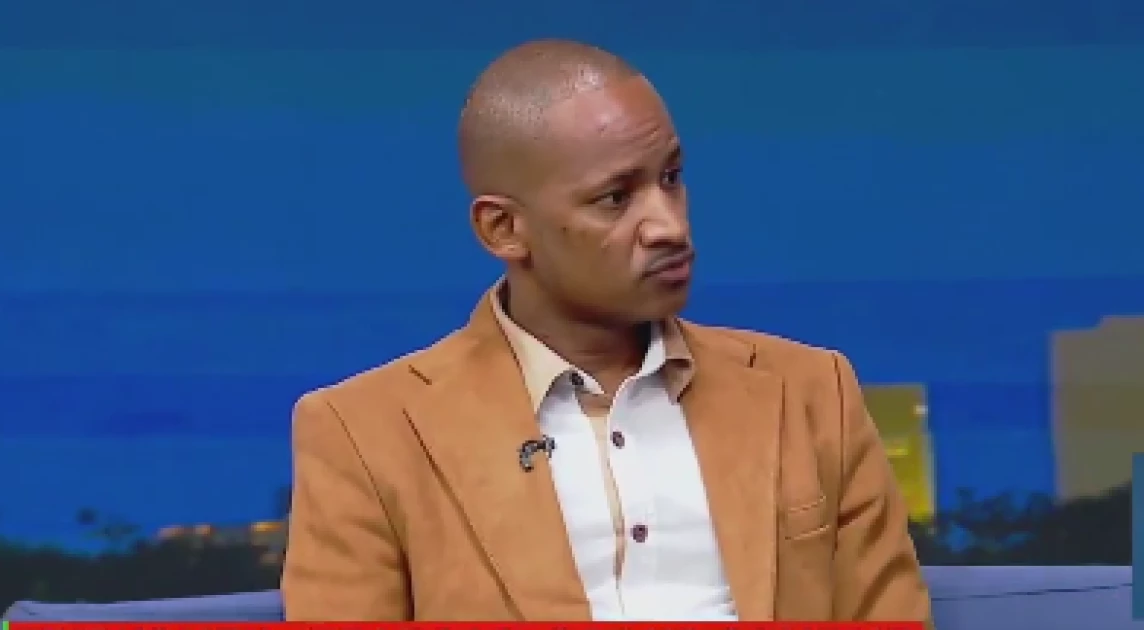
Kisumu airport violence has ignited a fresh political storm after Embakasi East MP Babu Owino accused Interior Principal Secretary Raymond Omollo of sponsoring unrest at Kisumu International Airport. The allegations, made during a televised interview, add to growing tensions within Kenya’s political landscape.
Speaking on Sunday, Owino claimed more than 200 individuals were mobilised to disrupt his travel plans alongside Nairobi Senator Edwin Sifuna. According to Owino, the group allegedly gathered at Kisumu International Airport armed with crude weapons to block their intended journey to Kakamega.
Kisumu Airport Violence and Political Allegations
Owino alleged that the Kisumu airport violence was not spontaneous. Instead, he described it as a coordinated effort aimed at intimidating opposition leaders.
He further claimed that one person died during the chaos. The MP linked the fatality to the alleged attackers and referenced public statements from the family of a man identified as George Olwandi.
At the time of publication, authorities had not publicly confirmed the claims. Additionally, there was no immediate response from PS Raymond Omollo regarding the accusations.
Political confrontations at transport hubs are not new in Kenya. Historically, airports and major highways have occasionally become flashpoints during high-stakes political moments. However, allegations involving senior Interior Ministry officials raise the stakes considerably.
Claims of Police Involvement
Beyond accusing the PS, Owino questioned how civilians allegedly obtained tear gas during the incident. He suggested the possibility of police involvement, asking how members of the public could access controlled security equipment.
Such claims, if substantiated, would signal deeper institutional concerns. However, without official investigations, the allegations remain politically charged statements.
Kenya’s Interior Ministry oversees national security and law enforcement operations. Therefore, accusations directed at a senior official demand clarity, especially in a region already sensitive to political tensions.
Alleged Arrest and Broader Context
Owino also linked the airport incident to the earlier arrest of his brother-in-law. He claimed the relative was later released and dropped in Machakos following public pressure.
While these details remain contested, the narrative suggests a widening political dispute rather than an isolated confrontation.
In recent months, Kenya has witnessed heightened political rhetoric across party lines. Consequently, localized disturbances often acquire broader political symbolism.
Kisumu Airport Violence and Youth Mobilisation Debate
The MP further alleged that unemployed youths are being exploited for political purposes. He argued that young people are allegedly paid to disrupt events or intimidate rivals.
Youth unemployment remains a major socio-economic issue in Kenya. Therefore, political actors frequently reference it when discussing unrest.
However, accusations of organized mobilisation require independent verification. Without transparent investigations, such claims risk deepening polarization rather than clarifying events.
Institutional Silence and Public Trust
As of Sunday evening, no official security briefing had provided detailed confirmation of the Kisumu airport violence claims. In politically sensitive incidents, delayed communication often fuels speculation.
Clear and timely responses from authorities are critical. In previous high-profile disturbances, conflicting narratives complicated public understanding.
Kenya’s security agencies face increasing scrutiny over how they manage politically linked disruptions. Therefore, transparency will shape public confidence in the aftermath of these accusations.
Why This Matters
Kisumu airport violence, whether politically orchestrated or spontaneous, reflects ongoing friction within Kenya’s political environment.
Airports are critical infrastructure. When political disputes spill into such spaces, investor confidence and public safety perceptions may suffer.
Additionally, allegations involving senior state officials underscore the importance of institutional accountability. Without credible investigations, political mistrust deepens.
What Happens Next
Authorities may face pressure to investigate the Kisumu airport violence allegations formally. Opposition leaders are likely to continue raising the issue publicly.
If law enforcement provides evidence-based clarification, tensions may ease. However, if competing narratives persist, the dispute could escalate politically.
For now, the incident adds another layer to Kenya’s evolving political contest ahead of future electoral cycles.