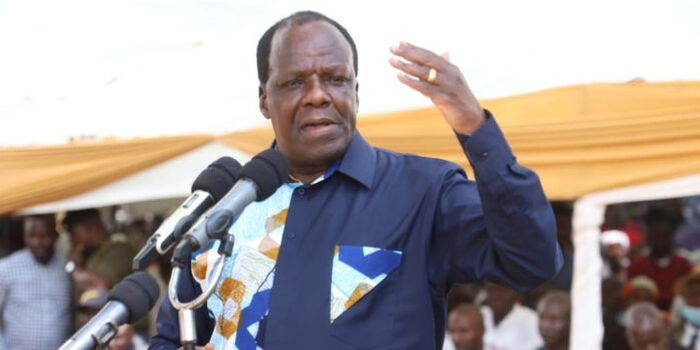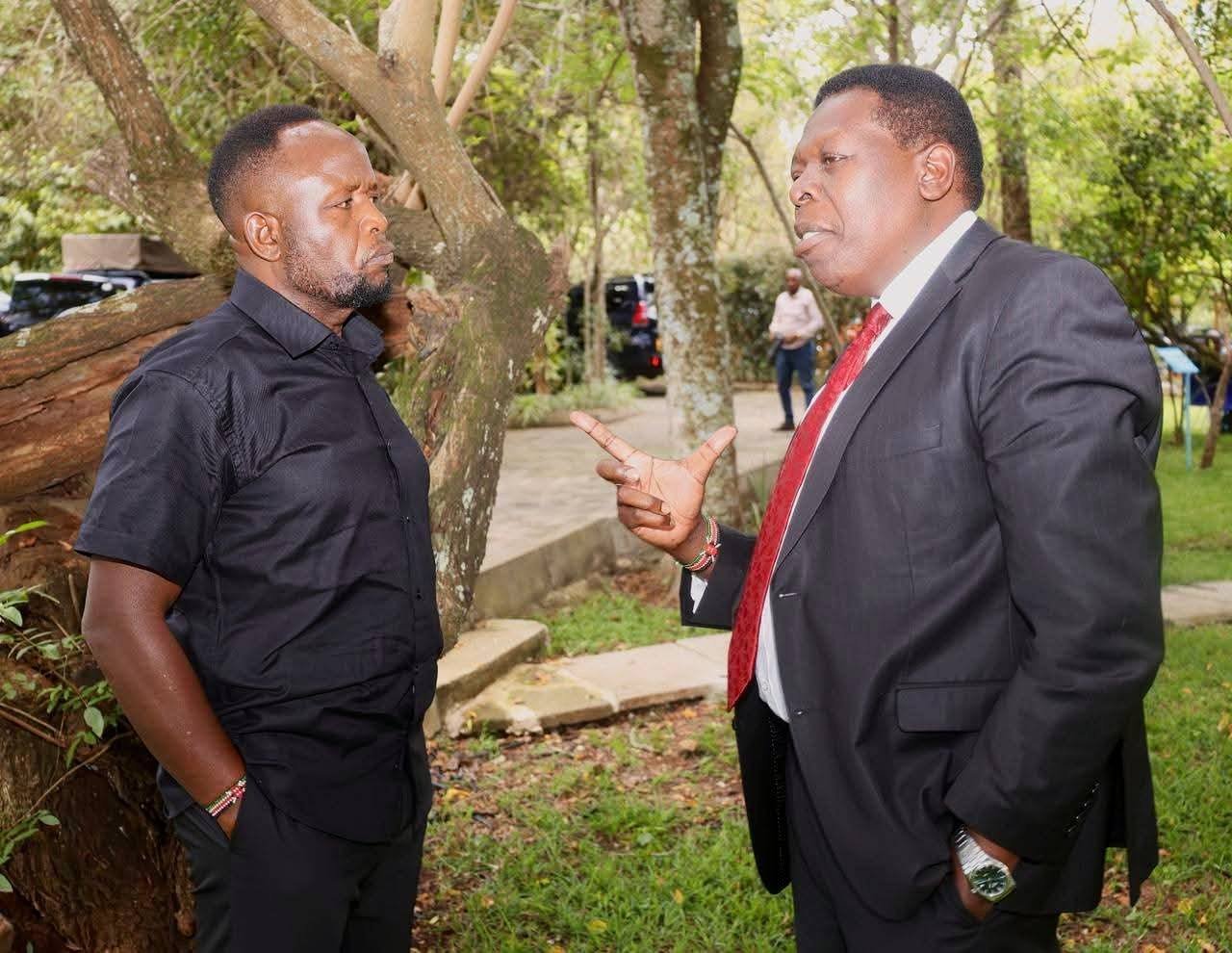
Eugene Wamalwa, once a man with unshakable control over the Democratic Action Party of Kenya (DAP-K), now finds himself under siege within the very party he once led with confidence. The battle within the party is no longer a hidden issue; the cracks in DAP-K’s unity are becoming too large to ignore. At the center of this internal struggle is George Natembeya, whose rising political influence is threatening to eclipse Wamalwa’s leadership. This conflict is not just about party politics; it is about the future of Western Kenya and the strategic ambitions for the 2027 elections.
Rising Tension in DAP-K Leadership Proves Eugene Wamalwa Under Siege
The internal rift within DAP-K is no longer a matter of speculation. Despite official claims of unity, the political storm within the party continues to grow. Natembeya, once a junior figure, is now asserting his dominance, positioning himself as the future of DAP-K. His bold moves and increasing national appeal have cast Wamalwa’s leadership into doubt.
Natembeya’s growing influence is visible in his ability to command attention in political spaces, especially in the Western region. His national ambition has led him to become one of the most vocal opposition leaders in Kenya, with his calls for change resonating with many, while Wamalwa’s leadership style appears more passive and uncertain. This shift is causing serious concerns within DAP-K, as Wamalwa struggles to maintain control over his party.
Natembeya’s Bold Moves Threaten Eugene Wamalwa in DAP-K
One of the most noticeable signs of the power struggle within DAP-K is Natembeya’s open challenges to Wamalwa’s leadership. At the heart of this conflict is Natembeya’s frustration with Wamalwa’s micromanagement from the party’s headquarters. In a public display, Natembeya accused Wamalwa of stifling his efforts in Trans Nzoia, claiming that the interference was blocking him from fully serving the people. This was a significant moment, as it marked the first time that Natembeya openly rebelled against the man who once mentored him.
The rift grew even more apparent during a political event in Malava, where Natembeya took center stage, branding himself as the host while Wamalwa appeared in a much smaller role. This was a clear signal that Natembeya was positioning himself to take over leadership. As Natembeya’s popularity continues to soar, it seems that Wamalwa is losing his grip on the party that he once controlled with ease.
Power Struggles Deepen Rift Between Eugene and Natembeya
The deeper the divisions in DAP-K become, the harder it is to maintain the illusion of unity. Efforts to reconcile the two leaders have been unsuccessful. A nine-member team was established to bridge the gap between Wamalwa and Natembeya, but the team failed after just a few meetings. The situation worsened when Wamalwa’s ally, Kakamega Deputy Governor Ayub Savula, defected to support the UDA candidate in Malava. Savula’s departure highlighted the internal divisions that were increasingly harming the party.
The inability of both leaders to share a platform has made the party’s disunity painfully evident. Wamalwa and Natembeya now refuse to campaign together, further fracturing the party’s support base. This has handed a political advantage to the United Democratic Alliance (UDA) in Western Kenya, and President Ruto stands to benefit from the chaos.
Natembeya’s National Ambitions Put Eugene Wamalwa Under Siege in DAP-K
At the core of the Wamalwa-Natembeya struggle is the battle for control over DAP-K and its future role in Kenyan politics. Natembeya is positioning himself as a force to be reckoned with, not just in Western Kenya but on the national stage as well. His ambitions for a national leadership role in the 2027 elections are becoming more apparent. Natembeya’s rise has created a challenge to Wamalwa’s position, who, despite his political experience, is now fighting to maintain his legacy and leadership within the party.
In a direct challenge to Natembeya’s increasing influence, Wamalwa has publicly invited Natembeya to contest against him in the 2027 presidential nomination race. However, the ground reality shows that Natembeya has already begun to take over the party piece by piece, with rallies that attract large crowds and a national profile that continues to expand.
Lessons from the Wamalwa-Natembeya Power Struggle
The unfolding power struggle within DAP-K provides important lessons for other political parties and leaders in Kenya. Here are some key takeaways from this conflict:
- Leadership Requires Adaptability: Wamalwa’s leadership style, which once worked well for him, has struggled to cope with Natembeya’s aggressive political approach. The rise of Natembeya shows how rapidly political landscapes can change, and leaders must adapt to stay relevant.
- Internal Unity is Crucial for Success: The disunity within DAP-K has severely weakened the party, providing opportunities for rival parties like UDA to capitalize on the chaos. A lack of cohesion among party leaders can lead to disillusionment among supporters and defections.
- National Ambitions Shape Party Dynamics: Natembeya’s ambition to become a national leader has reshaped the political dynamics of DAP-K. Leaders with national aspirations can sometimes undermine the authority of existing party leaders, leading to internal conflict and a struggle for control.
- Take Risks When Necessary: Natembeya’s decision to challenge Wamalwa openly and his willingness to break from the status quo show how political leaders must sometimes take bold risks to assert themselves and drive their vision forward.
A Legacy in the Making for Natembeya
The battle between Eugene Wamalwa and George Natembeya is not just a fight for the future of DAP-K; it is a defining moment in Western Kenya’s political evolution. As Natembeya’s influence continues to rise, the political landscape of the region is shifting. What was once a party dominated by Wamalwa’s leadership is now a battleground for the future of Western Kenya politics. The outcome of this internal struggle will have significant implications for the 2027 elections and the political direction of Kenya’s opposition.