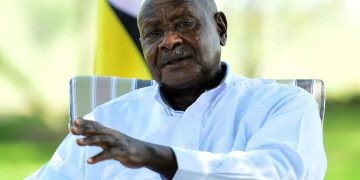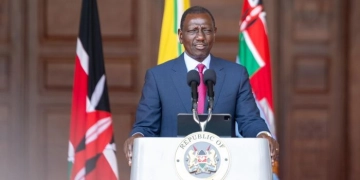
In a move that has calmed escalating tensions between Uganda and Kenya, Ugandan President Yoweri Museveni hosted Kenyan Prime Cabinet Secretary Musalia Mudavadi in Mayuge District, Uganda, just days after provocative remarks about access to the Indian Ocean stirred diplomatic concerns. The high-level meeting between the two leaders marks a crucial step toward de-escalation, signaling both nations’ commitment to peaceful resolution and cooperative dialogue.
The diplomatic friction was ignited by President Museveni’s controversial public statements, where he claimed that landlocked nations like Uganda should have unhindered access to the sea. His assertion that blocking access to the ocean was “madness” and that the Indian Ocean “belongs” to Uganda raised alarms in Nairobi. The rhetoric amplified ongoing trade disputes, including a recent legal challenge against Kenya at the East African Court of Justice (EACJ) over a fuel import dispute.
However, the timely intervention of Musalia Mudavadi, who addressed the Kenyan Parliament with a firm assurance that “we are not going to go to war,” helped steady the course. This diplomatic outreach laid the foundation for a face-to-face meeting aimed at defusing the tensions and re-establishing stable relations between the two East African neighbors.
What Caused the Tension?
The immediate source of the tension was President Museveni’s comments on the Indian Ocean, positioning Uganda as entitled to direct access to maritime routes, which he described as vital for landlocked countries’ economic survival. These statements were seen as provocative, given Uganda’s heavy reliance on Kenya’s ports, especially the Port of Mombasa, for its imports and exports.
Further stoking the fire were historical trade disagreements between the two countries, with the fuel dispute at the EACJ adding a legal dimension to the diplomatic standoff. The tone of the rhetoric and the apparent threat to Uganda’s access to sea routes prompted alarm in Nairobi, with political leaders calling for immediate action to prevent further escalation.
The Focus of the Dialogue: Trade, Access, and Unity
The heart of the meeting between Museveni and Mudavadi, however, was less about maritime boundaries and more about the mutual economic interests that bind Uganda and Kenya. Uganda’s economy is deeply reliant on Kenya’s ports for trade access, making the stability of the Northern Corridor a matter of existential importance for both nations.
The leaders focused their discussion on several key areas:
Reaffirming International Obligations
The conversation began by reaffirming the commitment of both nations to uphold international agreements. Kenya reiterated its adherence to the United Nations Convention on the Law of the Sea (UNCLOS), which guarantees landlocked countries like Uganda “freedom of transit” through neighboring states’ ports. The African Union charter was also highlighted as a key framework for ensuring equitable access to the sea for all landlocked nations.
Trade Facilitation
A significant portion of the discussion was dedicated to improving trade relations between the two countries. Issues such as non-tariff barriers, delays at border points, and the future of joint infrastructure projects were at the forefront. The leaders emphasized the critical role of the Standard Gauge Railway (SGR) extension in facilitating smoother cargo flow, particularly for Ugandan goods.
EAC Integration
The leaders also reaffirmed their commitment to the ideals of the East African Community (EAC), a regional bloc that aims to foster economic integration and collaboration among member states. Despite the rising geopolitical tensions, both Museveni and Mudavadi stressed that the spirit of regional unity should transcend temporary conflicts and that economic cooperation remains the primary goal of the EAC.
A Positive Outcome for Regional Stability
The meeting between President Museveni and Prime Cabinet Secretary Mudavadi has had a calming effect on the region. The fact that one of Kenya’s highest-ranking ministers made the diplomatic journey to Uganda just days after the public dispute demonstrates the commitment of both governments to prioritize dialogue over confrontation.
The diplomatic engagement serves as a reminder that the economic prosperity of East Africa is inextricably linked, and that disruptions in political relations can have far-reaching effects on the broader regional economy. By engaging in open dialogue, Uganda and Kenya have avoided a potential crisis and instead have chosen to strengthen bilateral relations and pursue mutual growth.
The successful resolution of this issue highlights the importance of diplomatic engagement in maintaining peace and stability in East Africa. The leaders’ willingness to work together showcases the potential for continued cooperation in the face of regional challenges.
Conclusion: A Strong Bilateral Example of Conflict Resolution
While tensions over the Indian Ocean dispute may have sparked an initial crisis, the dialogue between Museveni and Mudavadi represents a powerful example of conflict resolution. The immediate response to de-escalate the situation and focus on economic collaboration has not only preserved regional stability but also reinforced the importance of diplomacy in East African politics.
As the two nations continue to collaborate on infrastructure projects, trade facilitation, and regional integration, the constructive outcome of this meeting ensures that the path forward will be one of cooperation, not conflict. Both Uganda and Kenya have proven that even in times of tension, their shared interests outweigh short-term disagreements.