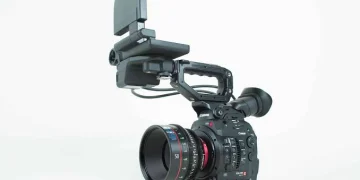
Canon EOS C300 is one of the most important cameras in Canon’s Cinema EOS history because it helped move large-sensor video production beyond DSLR workarounds and into a dedicated professional cinema body.
Announced in the 2011 Cinema EOS launch cycle and marketed from early 2012, the EOS C300 gave filmmakers a compact Super 35 camera with Canon Log, professional audio, built-in ND filters, CF card recording and broadcast-friendly MPEG-2 50Mbps 4:2:2 files.
The camera uses a Super 35mm CMOS sensor measuring about 24.4 x 13.5 mm in the supplied camera database, with Canon’s official Camera Museum listing the sensor as an 8.29MP Super 35mm-equivalent CMOS sensor. It records Full HD at 1920 x 1080 and HD at 1280 x 720.
The EOS C300 does not record 4K internally, and it now feels dated beside newer Cinema EOS bodies. Still, it remains a landmark camera because it gave documentary crews, broadcasters, indie filmmakers and commercial production teams a reliable Super 35 workflow in a smaller body than traditional cinema cameras.
Key Canon EOS C300 Specifications
The Canon EOS C300 was built as a professional video camera, not a hybrid stills body. Its value came from image quality, workflow reliability and production features rather than headline resolution.
| Feature | Canon EOS C300 |
|---|---|
| Camera type | Super 35 Cinema EOS camera |
| Launch cycle | November 2011 announcement period |
| Marketed period | January 2012 for EF, March 2012 for PL |
| Sensor size | About 24.4 x 13.5 mm in the supplied database |
| Canon listed sensor | 8.29MP Super 35mm-equivalent CMOS |
| Lens mount options | EF and PL |
| Base sensitivity | ISO 850 with Canon Log |
| Maximum recording resolution | Full HD, 1920 x 1080 |
| Main codec | MPEG-2 Long GOP |
| Maximum bitrate | 50Mbps |
| Best internal sampling | 4:2:2 |
| Internal bit depth | 8-bit |
| Recording media | Dual CompactFlash card slots |
| Built-in ND filters | Clear, 2 stops, 4 stops and 6 stops |
| Body weight | About 1.4kg class |
| Dynamic range lab result from supplied data | 10.1 stops at SNR=2 |
| Rolling shutter lab result from supplied data | 15.7ms in Full HD 25p |
The EOS C300 was not designed for spec-sheet competition against modern 4K and 6K cameras. It was designed to create dependable, broadcast-ready images in a compact cinema package.
Super 35mm Sensor and Image Quality
The Canon EOS C300 uses a Super 35mm CMOS sensor designed specifically for video capture.
Canon’s design reads Full HD video signals for the red, green and blue channels, helping the camera create detailed 1080p images with reduced moiré compared with many DSLR video cameras of the same era.
The Super 35 format was a major selling point. It gave filmmakers a cinematic field of view, shallow depth of field and compatibility with professional cinema lenses.
Why Super 35 Made the C300 Popular
Super 35 gave the EOS C300 a more cinematic look than small-sensor camcorders.
It also worked well with Canon EF lenses, Canon cinema lenses and PL cinema lenses depending on the camera version. This made the C300 attractive to documentary crews, commercials, broadcasters and independent filmmakers who wanted a cinema look without the complexity of larger systems.
Full HD Recording
The Canon EOS C300 records Full HD video at 1920 x 1080 and HD video at 1280 x 720.
It does not record 4K. That is the biggest limitation today, but it was not unusual when the camera was introduced. At the time, reliable Full HD recording with a Super 35 sensor and professional codec support was a major step forward.
The camera records in MXF using MPEG-2 Long GOP compression. The top-quality internal mode records at 50Mbps with 4:2:2 colour sampling.
Recording Modes and Bitrates
The Canon EOS C300 supports several MPEG-2 recording modes.
| Resolution | Codec | Frame Rates | Bitrate | Sampling | Bit Depth |
| 1920 x 1080 | MPEG-2 Long GOP | 59.94i, 50i, 29.97p, 25p, 24p, 23.98p | 50Mbps | 4:2:2 | 8-bit |
| 1920 x 1080 | MPEG-2 Long GOP | 59.94i, 50i, 29.97p, 25p, 23.98p | 35Mbps | 4:2:0 | 8-bit |
| 1280 x 720 | MPEG-2 Long GOP | Up to 59.94p and 50p | 50Mbps or 35Mbps | 4:2:2 or 4:2:0 | 8-bit |
The 50Mbps 4:2:2 mode is the most important recording option because it helped the C300 meet broadcast expectations in many professional environments.
MPEG-2 MXF Workflow
The Canon EOS C300 records MPEG-2 MXF files to CompactFlash cards.
This workflow was one of the reasons the camera became popular with documentary and television crews. The files were easier to manage than RAW, more robust than DSLR codecs and widely accepted by broadcast and editing systems.
Dual CF card slots also supported relay recording and simultaneous recording. That gave crews more safety during long interviews, events and documentary shoots.
Why 50Mbps 4:2:2 Was Important
A 50Mbps 4:2:2 codec was a major advantage in the early 2010s.
Many DSLR cameras recorded weaker 8-bit 4:2:0 video with lower bitrates. The C300 offered a stronger internal codec that held colour information better, especially for skin tones, broadcast work and light grading.
It was not RAW or 10-bit, but it was reliable and professional for its time.
Canon Log Gamma
Canon Log Gamma was one of the EOS C300’s signature features.
Canon Log gives users a flatter image profile with wider dynamic range for grading. Canon lists Canon Log Gamma with 800% dynamic range at ISO 850 or above.
This made the C300 more flexible than standard camcorders because filmmakers could protect highlights, grade the image and create a more cinematic finish in post-production.
Canon Log in an 8-Bit Camera
The EOS C300 records internally in 8-bit, so Canon Log must be exposed carefully.
The camera can produce attractive graded images, but users should avoid extreme underexposure or heavy colour pushes. When exposed well, Canon Log helped the C300 build a strong reputation for natural colour and pleasing highlight handling.
Dynamic Range Performance
The supplied lab data lists the Canon EOS C300 at 10.1 stops of dynamic range at SNR=2 in Full Sensor mode, 1920 x 1080 MPEG-2, ISO 850 and Canon Log.
At SNR=1, the supplied data lists 11 stops, with an 11.6-stop patch range.
These numbers help place the camera in context. The EOS C300 cannot match newer cinema cameras with 13, 14 or 15-stop lab results, but it still offers useful tonal control for a first-generation compact Cinema EOS body.
For best results, users should expose carefully, preserve highlights and avoid pushing shadows too hard in post.
Rolling Shutter Performance
The supplied lab data lists the Canon EOS C300 at 15.7ms rolling shutter in Full Sensor mode, 1920 x 1080 MPEG-2 at 25fps.
That is a respectable result for a Super 35 camera of its era. It means the C300 can handle interviews, handheld documentary work, corporate videos and controlled camera movement well.
Fast whip pans, quick handheld action and rapid horizontal movement can still show skew, but the result is manageable compared with many DSLR-style video cameras from the same period.
EF and PL Mount Versions
The Canon EOS C300 was offered in EF and PL versions.
The EF version supports Canon EF lenses, EF-S lenses and Canon EF cinema lenses. It also allows electronic iris control and lens metadata with supported lenses.
The PL version is designed for traditional cinema lens workflows. PL lenses are widely used in feature films, commercials, drama production and rental-house packages.
Which Mount Is Better?
The EF mount is better for users who already own Canon EF lenses or want a more affordable lens ecosystem.
The PL mount is better for productions using professional cinema primes, anamorphic lenses and traditional focus-puller workflows.
Both versions helped Canon reach different parts of the filmmaking market.
Autofocus and Lens Control
The original Canon EOS C300 supported One-Shot AF with compatible EF lenses, and Canon later offered a paid Dual Pixel CMOS AF service upgrade in some markets.
This made the camera more flexible for small crews, documentary shooters and operators who needed help with focus in fast-moving situations.
It was not as advanced as modern Dual Pixel systems found in later Cinema EOS cameras, but it helped extend the usefulness of the C300.
Why Focus Support Matters
Cinema cameras often rely on manual focus, but documentary and event work can move quickly.
One-Shot AF, lens metadata, iris control and optional Dual Pixel support made the EF version of the C300 easier to use for solo operators and small teams.
Built-In ND Filters
The Canon EOS C300 includes built-in ND filters.
The internal ND system offers clear, 2-stop, 4-stop and 6-stop positions. This is one of the most important practical features of the camera.
Built-in ND filters allow filmmakers to maintain cinematic shutter speeds and wider apertures in bright conditions without adding external filters to every lens.
Why Built-In ND Is Essential
Built-in ND filters save time and reduce mistakes on set.
For documentaries, outdoor interviews, weddings, events and commercial shoots, light can change quickly. The C300 lets operators adjust exposure from the body while keeping the creative look consistent.
Professional Audio and Monitoring
The Canon EOS C300 includes professional audio support through its monitor unit, including XLR inputs.
It also offers monitoring tools such as waveform monitor, vectorscope, peaking, magnification, zebras and markers. These tools help camera operators manage exposure, focus and framing on professional shoots.
This is one of the major differences between the C300 and DSLR cameras from the same period. The C300 was designed for real video production, not occasional video capture.
Professional Connectivity
The Canon EOS C300 includes production-focused connections such as HD-SDI, HDMI, Genlock and timecode.
These features made the camera suitable for broadcast, multi-camera shoots and professional monitoring setups. Timecode and Genlock were especially important for syncing multiple cameras or audio recorders.
For documentary crews and broadcasters, these connections made the C300 much easier to integrate into professional workflows.
Body Design and Handling
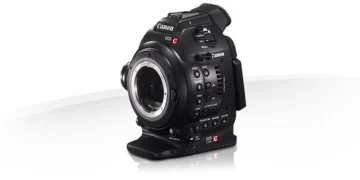
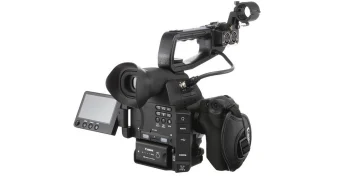
The Canon EOS C300 uses a compact modular cinema body.
Its minimal body weighs about 1.4kg class, while full operating configurations with grip, handle and monitor are larger. The body can be built for tripod, handheld, shoulder, gimbal-style or tight-location shooting depending on accessories.
Canon designed the camera to be smaller and more flexible than traditional cinema cameras while still offering proper controls and professional ports.
Why the C300 Body Worked
The C300 body solved many problems that DSLR filmmakers faced.
It gave operators built-in ND filters, XLR audio, SDI output, waveform tools, proper battery options, long recording support and a video-focused layout.
That made it popular with working professionals who needed speed and reliability.
Canon EOS C300 vs C100
The Canon EOS C300 and C100 share a similar Cinema EOS philosophy, but they target different users.
The C100 is smaller, cheaper and records AVCHD at lower bitrates. It is better for budget HD work, weddings, churches and small crews.
The C300 records stronger 50Mbps 4:2:2 MPEG-2 MXF files and offers better professional connectivity. It is the stronger choice for broadcast, documentary and commercial production.
Canon EOS C300 vs C300 Mark II
The Canon EOS C300 Mark II is the newer and more capable camera.
The Mark II adds 4K recording, XF-AVC, 10-bit 4:2:2, Canon Log 2, improved dynamic range, external RAW output and better overall image flexibility.
The original C300 remains easier and lighter for HD workflows, but the Mark II is much stronger for modern 4K production.
Price and Availability
The Canon EOS C300 is now a legacy Cinema EOS camera.
It is mainly available on the used market. Prices vary by mount, condition, recording hours, included monitor unit, handle, side grip, batteries, charger, CF cards and accessories.
Before buying, users should check the sensor, ND filters, CF card slots, SDI output, HDMI port, XLR inputs, fan, LCD/monitor unit, buttons, grip connection and firmware status.
Who Should Buy the Canon EOS C300?
The Canon EOS C300 is best for users who need an affordable professional HD cinema camera with strong ergonomics and broadcast-style recording.
It makes sense for:
Documentary filmmakers
Broadcast crews using HD workflows
Corporate video producers
Church media teams
Interview shooters
Film schools
Canon EF lens owners
PL lens users on older productions
Event production teams
Used-market buyers needing a reliable cinema body
It may not be the right camera for users who need 4K, 10-bit internal recording, RAW video, high-frame-rate slow motion or the latest autofocus technology.
Key Takeaways
- Canon EOS C300 launched in Canon’s 2011 Cinema EOS cycle.
- Canon Camera Museum lists the EF version as marketed in January 2012 and the PL version in March 2012.
- It uses a Super 35mm CMOS sensor measuring about 24.4 x 13.5 mm in the supplied database.
- Canon lists the sensor as approximately 8.29MP.
- The camera records Full HD at 1920 x 1080 and HD at 1280 x 720.
- The main recording codec is MPEG-2 Long GOP.
- The best internal mode records 50Mbps 4:2:2 8-bit MXF.
- Canon Log Gamma provides 800% dynamic range at ISO 850 or above.
- The supplied lab data lists 10.1 stops at SNR=2.
- The supplied lab data lists 15.7ms rolling shutter.
- EF and PL mount versions were available.
- Built-in ND filters offer clear, 2-stop, 4-stop and 6-stop positions.
- Dual CF card slots support relay and simultaneous recording.
- Professional connections include HD-SDI, HDMI, timecode and Genlock.
- The camera is now mainly a used-market legacy Cinema EOS model.
Frequently Asked Questions
What is the Canon EOS C300?
The Canon EOS C300 is a professional Super 35 Cinema EOS camera designed for Full HD filmmaking, documentaries, broadcast, corporate production and commercial video work.
When was the Canon EOS C300 released?
The EOS C300 was announced in Canon’s November 2011 Cinema EOS launch cycle. Canon Camera Museum lists the EF version as marketed in January 2012 and the PL version in March 2012.
What sensor does the Canon EOS C300 use?
It uses a Super 35mm CMOS sensor. The supplied database lists 24.4 x 13.5 mm, while Canon Camera Museum lists approximately 8.29 million effective pixels.
What lens mounts are available?
The Canon EOS C300 was available in EF and PL mount versions.
Can the Canon EOS C300 record 4K?
No. The original Canon EOS C300 records up to Full HD at 1920 x 1080.
What codec does the Canon EOS C300 use?
The camera records MPEG-2 Long GOP MXF files, including a 50Mbps 4:2:2 8-bit mode.
Does the Canon EOS C300 have Canon Log?
Yes. Canon Log Gamma is one of the camera’s key image features.
What is the dynamic range of the Canon EOS C300?
The supplied lab data lists 10.1 stops at SNR=2 in Full HD MPEG-2 at ISO 850 using Canon Log. Canon’s official specifications also describe Canon Log Gamma as offering 800% dynamic range.
What is the rolling shutter of the Canon EOS C300?
The supplied lab data lists 15.7ms rolling shutter in Full Sensor Full HD mode at 25fps.
Is the Canon EOS C300 still worth buying?
Yes, it can still be worth buying for users who need a low-cost professional HD cinema camera with Canon Log, built-in ND filters, strong audio, SDI output and EF or PL lens options. Users who need 4K should consider newer Cinema EOS models.
Conclusion
The Canon EOS C300 remains a landmark camera in digital cinema history.
It brought Canon’s Super 35 sensor technology, Canon Log, 50Mbps 4:2:2 MPEG-2 MXF recording, built-in ND filters, professional audio, SDI output and EF/PL lens options into a compact Cinema EOS body.
Modern cameras now offer 4K, 6K, RAW, 10-bit codecs and advanced autofocus, but the original C300 still matters. For HD documentary, broadcast, corporate and educational work, it remains a practical used-market camera and a major milestone in Canon’s move from DSLR video into dedicated cinema production.
Read Also: Canon EOS-1D C: Specs, Sensor, 4K Video and Cinema DSLR Features