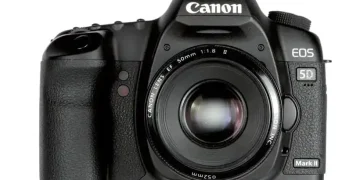
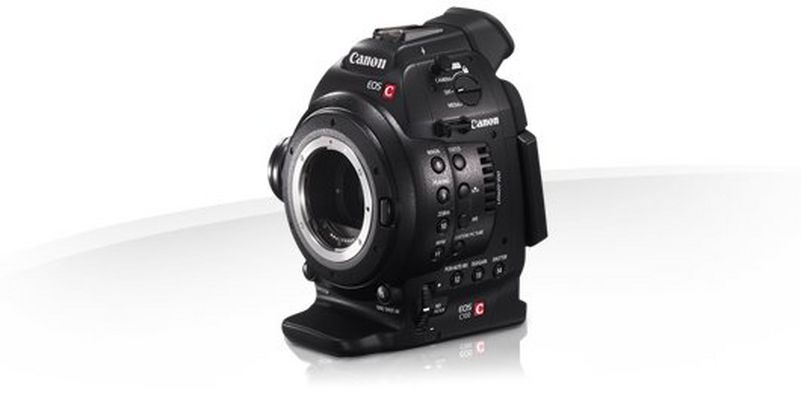
Canon EOS C100 is a compact Super 35 Cinema EOS camera built for filmmakers, documentarians, event videographers and small production teams that need professional video features in a lighter and simpler body.
Announced in August 2012 and marketed later that year, the EOS C100 became Canon’s more affordable entry into the Cinema EOS lineup. It shared the broad design idea of the higher-end EOS C300 but offered a smaller body, simpler recording workflow and lower operating cost.
The camera uses a Super 35mm CMOS sensor measuring about 24.6 x 13.8 mm, an EF lens mount and Full HD AVCHD recording. It does not record 4K, RAW or 10-bit internal video, but it became popular because it offered Canon colour, Canon Log, built-in ND filters, professional audio, dual SD card slots and a practical run-and-gun body.
For documentary work, interviews, weddings, church media, training videos and corporate production, the Canon EOS C100 still has value when Full HD delivery is enough.
Key Canon EOS C100 Specifications
The Canon EOS C100 is a video-first camera, not a hybrid stills camera. Its strength is not headline resolution, but professional video usability.
| Feature | Canon EOS C100 |
|---|---|
| Camera type | Super 35 Cinema EOS camera |
| Announcement period | August 2012 |
| Marketed period | November 2012 |
| Sensor size | About 24.6 x 13.8 mm |
| Effective sensor resolution | About 8.29MP |
| Lens mount | Canon EF |
| Base sensitivity | ISO 850 in Canon Log |
| Main recording format | AVCHD |
| Maximum video resolution | Full HD, 1920 x 1080 |
| Internal sampling | 4:2:0 |
| Internal bit depth | 8-bit |
| Top AVCHD bitrate | 24 Mb/s |
| Recording media | Dual SD, SDHC or SDXC cards |
| Built-in ND filters | Clear, 2 stops, 4 stops and 6 stops |
| Body weight | About 1kg body class |
| Dynamic range lab status | Not tested in the pasted dataset |
| Rolling shutter lab status | Not tested in the pasted dataset |
The EOS C100 is best understood as a practical HD cinema camera for small crews rather than a modern high-resolution production system.
Super 35mm Sensor and Image Quality
The Canon EOS C100 uses a Super 35mm CMOS sensor.
Super 35 is one of the most important formats in digital cinema. It gives filmmakers a familiar field of view, strong lens compatibility and a more cinematic look than small-sensor camcorders.
The sensor reads Full HD video signals and was designed to reduce moiré while delivering a clean 1080p image. This helped the C100 stand out in an era when many DSLR video cameras suffered from aliasing, moiré and poor ergonomics.
Why Super 35 Matters
Super 35 helps create natural subject separation and attractive background blur when paired with fast EF lenses.
That made the EOS C100 appealing to wedding filmmakers, documentary shooters and corporate producers who wanted a cinematic look without the cost or complexity of larger cinema cameras.
The format also works well with many Canon EF, EF-S and EF Cinema lenses, making the camera practical for users already invested in Canon glass.
Full HD Recording
The Canon EOS C100 records up to Full HD at 1920 x 1080.
It supports 59.94i, 50i, 29.97p, 25p and 23.98p depending on region and recording mode. It does not record 1080/60p, which later became one of the improvements of the C100 Mark II.
The camera records using AVCHD with MPEG-4 AVC/H.264 compression. This keeps file sizes small and makes the camera easy to use for long recording sessions.
Recording Modes and Bitrates
The EOS C100 uses AVCHD recording to SD cards.
| Resolution | Codec | Frame Rates | Bitrate | Sampling | Bit Depth |
| 1920 x 1080 | MPEG-4 AVC/H.264 AVCHD | 59.94i, 50i, 29.97p, 25p, 23.98p | 24 Mb/s | 4:2:0 | 8-bit |
| 1920 x 1080 | MPEG-4 AVC/H.264 AVCHD | 59.94i, 50i, 29.97p, 25p, 23.98p | 17 Mb/s | 4:2:0 | 8-bit |
| 1440 x 1080 | AVCHD lower bitrate mode | Selected modes | 7 Mb/s | 4:2:0 | 8-bit |
The 24 Mb/s mode gives the best internal quality. The 17 Mb/s and lower-bitrate options are useful for longer recording times when storage is more important than image quality.
AVCHD Workflow
The Canon EOS C100 records to SD, SDHC and SDXC cards.
This made the camera cheaper to run than higher-end cinema cameras that used expensive media. Dual card slots allow relay recording and simultaneous recording, which is useful for long events and professional backup workflows.
AVCHD files are small compared with modern 4K, RAW or 10-bit codecs. That makes them easy to store, transfer and edit on modest computers.
Why Small Files Still Help
Not every production needs 4K or RAW.
For conferences, church services, school videos, interviews, documentaries and corporate jobs, small Full HD files can be faster and more practical. The C100 was built for this type of real-world video work.
Canon Log and Wide DR
Canon Log is one of the strongest features of the Canon EOS C100.
Canon lists Canon Log with 800% dynamic range at ISO 850 or above. This gives users a flatter image that preserves more highlight and shadow detail for grading.
The camera also includes Wide DR Gamma. Wide DR is easier to use because it gives a more finished-looking image straight from camera while still improving highlight handling.
Canon Log vs Wide DR
Canon Log is better when the footage will be colour graded.
Wide DR is better for fast-turnaround jobs where the editor wants a pleasing image without heavy post-production.
Many event and corporate shooters prefer Wide DR because it saves time. Filmmakers who want more control may prefer Canon Log.
Dynamic Range and Rolling Shutter
The pasted lab dataset lists dynamic range and rolling shutter as not tested for the Canon EOS C100.
That means there is no ranking figure in that specific dataset. However, Canon’s own specifications list Canon Log with 800% dynamic range at ISO 850 or above.
Canon Camera Museum also notes that the sensor was designed to reduce rolling shutter skew compared with common CMOS behaviour of the time.
In real production, the C100 works best with careful exposure. Bright skies, white clothing and high-contrast interiors still need attention because the camera records 8-bit 4:2:0 internally.
EF Lens Mount
The Canon EOS C100 uses the Canon EF mount.
This gives the camera access to a huge range of EF lenses, EF-S lenses and Canon EF Cinema lenses. It also supports many third-party EF lenses from brands such as Sigma, Tamron, Tokina and Zeiss.
This lens flexibility is one of the biggest reasons the camera became popular with DSLR filmmakers moving into professional video.
Best Lens Types for the C100
The EOS C100 works well with:
Canon EF L-series zoom lenses
Canon EF-S zoom lenses for Super 35-style coverage
Canon CN-E cinema lenses
Sigma EF Art lenses
Tokina EF zooms
Tamron EF zooms
Fast EF prime lenses for interviews and low light
Because the camera is Super 35, many EF-S lenses can be useful for wide-angle work.
Autofocus and Auto Iris
The original Canon EOS C100 includes One-Shot AF and Push Auto Iris features.
These tools help solo operators work faster, especially when filming interviews, events and documentary scenes. The camera does not have the same built-in Dual Pixel CMOS AF system as the later C100 Mark II, although Canon offered a paid Dual Pixel CMOS AF upgrade for the original C100 in some markets.
Why One-Shot AF Matters
One-Shot AF is not the same as continuous modern autofocus, but it still helps.
An operator can quickly lock focus before recording or during a controlled setup. For run-and-gun work, this saves time compared with focusing entirely by eye.
Push Auto Iris is also useful when light changes quickly and the operator needs a fast exposure starting point.
Built-In ND Filters
The Canon EOS C100 includes built-in ND filters.
The internal ND system offers clear, 2-stop, 4-stop and 6-stop positions. This is one of the most useful features of the camera because it allows filmmakers to control exposure without changing shutter speed, ISO or aperture unnecessarily.
Why ND Filters Are Important
ND filters reduce the amount of light entering the lens.
This lets filmmakers keep a natural shutter speed and wider aperture in bright conditions. Without ND filters, outdoor video often requires fast shutter speeds or small apertures, which can make footage look less cinematic.
Built-in ND filters are one reason the C100 is more practical for video than a DSLR.
Professional Audio
The Canon EOS C100 includes professional audio support through its handle unit.
It offers XLR inputs, manual audio control and onboard monitoring features. This makes it more useful for interviews, documentaries, corporate videos and event coverage than many DSLR cameras from the same period.
Good audio support is a major reason filmmakers choose Cinema EOS cameras. The C100 allows small crews to capture usable image and sound in one compact setup.
HDMI Output
The Canon EOS C100 supports HDMI output with timecode.
This gives crews the option to use external monitors or recorders. External recording can improve workflow for some users, especially when a project needs a cleaner monitoring setup or a different recording format.
However, many C100 users rely on internal AVCHD because the files are small, reliable and easy to manage.
Body Design and Handling
The Canon EOS C100 was built for one-person operation.
Its body is smaller and lighter than the EOS C300, making it easier to use handheld, on a tripod or in compact rigs. It includes a removable handle, side grip, built-in ND filters, top controls and a video-focused layout.
At around 1kg body class, the C100 is much easier to carry than larger Cinema EOS cameras.
Why the C100 Body Worked
The camera solved many problems that DSLR filmmakers faced.
It offered better ergonomics, longer recording support, professional audio, built-in ND filters and a more video-focused control layout. That made it practical for real jobs, not just short creative clips.
Canon EOS C100 vs C100 Mark II
The Canon EOS C100 Mark II improved on the original model in several ways.
The Mark II added built-in Dual Pixel CMOS AF, Face Detection AF, MP4 recording, 1080/60p support, better monitoring and a more refined body design.
The original C100 remains simpler and cheaper on the used market, but the Mark II is better for users who need smoother autofocus and more flexible HD recording.
Canon EOS C100 vs C300
The Canon EOS C100 was designed as a smaller and more affordable alternative to the C300.
The C300 offered stronger broadcast-style recording, more professional codec options and higher-end production features. The C100 focused on compact operation, lower media costs and simpler AVCHD recording.
For documentaries, weddings and small crews, the C100 was often easier to own and operate. For broadcast and high-end production, the C300 was the stronger camera.
Price and Availability
The Canon EOS C100 is no longer available new from major retailers such as B&H.
It is now mainly a used-market camera. Used prices vary depending on condition, included accessories, recording hours, batteries, charger, handle unit, grip, SD cards and whether the Dual Pixel CMOS AF upgrade was installed.
Before buying a used C100, users should check the sensor, ND filters, SD card slots, HDMI port, XLR inputs, handle unit, side grip, buttons, fan and battery contacts.
Who Should Buy the Canon EOS C100?
The Canon EOS C100 is best for users who need an affordable professional HD camera rather than a modern 4K system.
It makes sense for:
Documentary filmmakers
Wedding videographers
Church media teams
Corporate video teams
Interview shooters
Event videographers
Film students
Canon EF lens owners
Training video producers
Creators delivering in Full HD
It may not be the best choice for users who need 4K, 10-bit internal recording, RAW video, high-frame-rate slow motion or advanced continuous autofocus.
Key Takeaways
- Canon EOS C100 was announced in August 2012 and marketed later that year.
- It uses a Super 35mm CMOS sensor measuring about 24.6 x 13.8 mm.
- The camera uses Canon’s EF lens mount.
- Maximum recording resolution is Full HD at 1920 x 1080.
- Recording uses AVCHD with MPEG-4 AVC/H.264 compression.
- Internal recording is 8-bit 4:2:0.
- The highest internal AVCHD bitrate is 24 Mb/s.
- Canon Log gives 800% dynamic range at ISO 850 or above.
- Wide DR Gamma gives a faster workflow with less grading.
- Built-in ND filters offer clear, 2-stop, 4-stop and 6-stop positions.
- The camera supports One-Shot AF and Push Auto Iris.
- Dual Pixel CMOS AF was available as an optional paid upgrade in some markets.
- The pasted lab dataset lists dynamic range and rolling shutter as not tested.
- The camera is now mainly available used.
Frequently Asked Questions
What is the Canon EOS C100?
The Canon EOS C100 is a compact Super 35 Cinema EOS camera designed for Full HD video production, documentaries, events, interviews and corporate filmmaking.
When was the Canon EOS C100 released?
Canon announced the EOS C100 in August 2012, while Canon Camera Museum lists it as marketed in November 2012.
What sensor does the Canon EOS C100 use?
It uses a Super 35mm CMOS sensor measuring about 24.6 x 13.8 mm.
What lens mount does the Canon EOS C100 use?
The camera uses Canon’s EF mount and supports EF, EF-S and EF Cinema lenses.
Can the Canon EOS C100 record 4K?
No. The Canon EOS C100 records up to Full HD at 1920 x 1080.
What codec does the Canon EOS C100 use?
The camera records AVCHD using MPEG-4 AVC/H.264 compression.
Does the Canon EOS C100 have Canon Log?
Yes. The EOS C100 supports Canon Log Gamma and Wide DR Gamma.
Does the Canon EOS C100 have built-in ND filters?
Yes. It includes built-in ND filters with clear, 2-stop, 4-stop and 6-stop settings.
Does the Canon EOS C100 have Dual Pixel autofocus?
The original C100 did not ship with built-in Dual Pixel CMOS AF as standard. Canon offered an optional paid Dual Pixel CMOS AF upgrade in some markets.
Is the Canon EOS C100 still worth buying?
Yes, it can still be worth buying for users who need a low-cost Super 35 Full HD cinema camera with EF lens support, Canon Log, built-in ND filters and professional audio.
Conclusion
The Canon EOS C100 remains one of Canon’s most practical early Cinema EOS cameras.
It does not offer 4K, RAW or 10-bit internal recording, but it delivers a Super 35 image, Canon Log, EF lens support, AVCHD recording, built-in ND filters and professional audio in a compact body built for small crews.
For creators who still deliver in Full HD, the Canon EOS C100 can be a reliable and affordable used-market tool. It is best suited to interviews, documentaries, events, church media, education and corporate production where dependable operation matters more than modern headline specs.
Read Also: Canon EOS C100 Mark II: Specs, Sensor, Recording Modes and Cinema Features