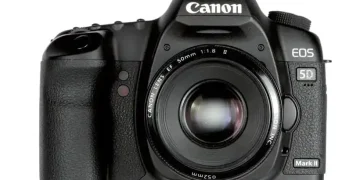
Canon EOS 5D Mark IV is one of Canon’s most respected full-frame DSLR cameras, built for photographers who need strong image quality, dependable autofocus, rugged handling and professional EF lens support.
Released in September 2016, the 5D Mark IV arrived as the successor to the hugely popular EOS 5D Mark III. It improved resolution, autofocus, video capability, live-view focusing, connectivity and overall image performance while keeping the familiar DSLR body design that many professionals already trusted.
The camera uses a 30.4MP full-frame CMOS sensor measuring 36 x 24 mm, Canon’s EF lens mount, the DIGIC 6+ processor and a 61-point autofocus system. It also introduced 4K DCI video recording to the 5D line, making it more useful for hybrid shooters than previous models.
Even in the mirrorless era, the Canon EOS 5D Mark IV remains important because it represents one of the final high-end DSLR workhorses before Canon shifted most professional development toward the EOS R mirrorless system.
Key Canon EOS 5D Mark IV Specifications
The Canon EOS 5D Mark IV was designed as a professional all-rounder. It balances resolution, speed, build quality and video features in a body that works well for weddings, portraits, landscapes, events, journalism and commercial photography.
| Feature | Canon EOS 5D Mark IV |
|---|---|
| Release period | September 2016 |
| Camera type | Full-frame DSLR |
| Sensor size | 36 x 24 mm |
| Effective resolution | About 30.4MP |
| Maximum photo resolution | 6720 x 4480 |
| Lens mount | Canon EF |
| Image processor | DIGIC 6+ |
| Base ISO | ISO 100 |
| Recommended clean ISO pattern | Often best at ISO 160-style increments for video workflows |
| Video formats | 4K DCI, Full HD, HD |
| 4K codec | Motion JPEG |
| Best 4K sampling | 4:2:2 8-bit |
| Continuous shooting | Up to 7fps |
| Body weight | About 800g |
| Dimensions | About 151 x 116 x 76 mm |
| Current body-only price context | Around $1,999 in some US retail listings |
The 5D Mark IV is not the newest camera in Canon’s lineup, but its full-frame sensor, EF lens support and durable body still make it a practical tool for many photographers.
Full-Frame Sensor and Image Quality
The Canon EOS 5D Mark IV uses a 30.4MP full-frame CMOS sensor with a 36 x 24 mm image area.
This sensor gives photographers a strong balance between detail and manageable file sizes. The maximum photo resolution of 6720 x 4480 is useful for portraits, weddings, landscapes, commercial work, editorial images and print production.
The camera produces detailed RAW files with Canon’s familiar colour science. It also gives photographers enough cropping room without creating files as large as newer 45MP or 60MP cameras.
Why 30.4MP Still Works Well
A 30.4MP sensor remains highly usable because it sits in a practical middle ground.
It offers more detail than 20MP cameras while remaining easier to manage than extremely high-resolution bodies. Wedding photographers, studio shooters and travel photographers can capture detailed images without overwhelming storage and editing systems.
For many professionals, this resolution is still enough for client delivery, online publishing, albums, posters and moderate commercial printing.
Canon EF Mount
The Canon EOS 5D Mark IV uses the Canon EF mount.
That gives it access to one of the largest professional lens ecosystems ever made. Canon EF lenses include fast primes, L-series zooms, macro lenses, tilt-shift lenses, super-telephoto lenses and many third-party options from Sigma, Tamron, Tokina and Zeiss.
For photographers who already own EF lenses, the 5D Mark IV remains attractive because it uses those lenses natively without adapters.
Why EF Lenses Still Matter
Canon EF lenses are still widely used by photographers around the world.
Many professionals invested heavily in EF glass before the mirrorless shift. The 5D Mark IV gives those users a rugged full-frame body that works directly with their lenses, flashes and DSLR accessories.
This is one of the biggest reasons the camera still has value in the used and remaining-stock market.
4K DCI Video Recording
The Canon EOS 5D Mark IV records 4K DCI video at 4096 x 2160.
This was a major step for the 5D line because earlier models became famous for video but did not offer 4K recording. The 5D Mark IV records 4K using Motion JPEG at about 496 Mb/s, with 4:2:2 8-bit sampling.
Frame-rate options include 23.98p, 24p, 25p and 29.97p. The camera also records Full HD and HD formats for lighter workflows.
Recording Modes and Bitrates
| Recording Mode | Resolution | Codec | Frame Rates | Bitrate | Sampling | Bit Depth |
| 4K DCI | 4096 x 2160 | Motion JPEG | 23.98p to 29.97p | 496 Mb/s | 4:2:2 | 8-bit |
| Full HD | 1920 x 1080 | H.264 | Multiple frame rates | Varies | 4:2:0 | 8-bit |
| HD | 1280 x 720 | H.264 | High-frame-rate options | Varies | 4:2:0 | 8-bit |
The 4K Motion JPEG files are large compared with modern codecs. This can make storage and editing more demanding. However, the files are also easier for some editing systems to decode because Motion JPEG compresses each frame separately.
4K Crop and Video Limitations
The Canon EOS 5D Mark IV’s 4K mode uses a significant crop.
That means the camera does not use the full width of the full-frame sensor when recording 4K. Wide-angle shooting becomes harder, and lenses appear tighter than they do in still-photo mode.
This is one of the camera’s biggest video limitations. For filmmakers who need full-frame 4K, oversampled 4K, 10-bit internal recording or modern autofocus features, newer Canon EOS R models are stronger.
Still, the 5D Mark IV remains useful for controlled interviews, short clips, documentary B-roll, behind-the-scenes work and hybrid photography jobs where video is secondary.
Canon Log and Video Workflow
Canon later offered a Canon Log option for the EOS 5D Mark IV in supported configurations.
Canon Log gives video shooters a flatter image profile for colour grading. It helps preserve more highlight and shadow detail compared with standard picture styles.
For serious video work, Canon Log can make the 5D Mark IV more flexible. However, users still need to remember that the camera records 8-bit internally, so exposure must be handled carefully to avoid banding, noise or harsh grading artifacts.
Best Uses for 5D Mark IV Video
The Canon EOS 5D Mark IV works best for video when used in controlled situations.
It is useful for:
Interviews
Short documentaries
Wedding highlight clips
Commercial B-roll
Travel videos
Behind-the-scenes content
Hybrid photo and video jobs
It is less ideal for long-form filmmaking, handheld run-and-gun 4K or productions that need modern 10-bit internal recording.
Dynamic Range and Rolling Shutter
The pasted CineD-style dataset lists dynamic range and rolling shutter as not tested for the Canon EOS 5D Mark IV.
That means there is no lab ranking in that dataset for direct comparison with tested cinema cameras or newer mirrorless bodies.
In real-world still photography, the 5D Mark IV produces strong RAW files with good tonal flexibility. For video, users should expose carefully, especially when using Canon Log or high-contrast scenes.
Rolling shutter can appear in video during fast pans or rapid movement, as with many DSLR and mirrorless cameras from its generation. For controlled shots, interviews and slow camera movement, this is usually manageable.
Autofocus Performance
The Canon EOS 5D Mark IV includes a 61-point autofocus system for viewfinder shooting.
This AF system was built for professional still photography and works well for portraits, weddings, events, wildlife and sports when paired with suitable EF lenses.
In Live View and video, the camera uses Dual Pixel CMOS AF. This was one of the biggest improvements over older DSLR video workflows because it allowed smoother and more reliable focusing through the rear screen.
Dual Pixel CMOS AF Advantage
Dual Pixel CMOS AF makes the 5D Mark IV more practical for video and live-view stills.
It helps with face tracking, touch focus, smooth focus transitions and subject tracking. For solo creators or wedding shooters, this can be extremely useful because it reduces the need for constant manual focusing.
The system is not as advanced as Canon’s newer mirrorless subject-detection autofocus, but it remains dependable for many real-world jobs.
Photography Performance
The Canon EOS 5D Mark IV is strongest as a stills camera.
It shoots up to 7fps, which is enough for weddings, events, portraits, travel, documentary work and some action photography. It also has a rugged body, optical viewfinder and strong battery life.
The camera is especially useful for:
Wedding photography
Portrait photography
Landscape photography
Event coverage
Commercial photography
Editorial work
Travel photography
Studio photography
Documentary photography
It is not as fast as Canon’s 1D X series or newer mirrorless action cameras, but it offers a better balance of resolution, durability and image quality for general professional work.
Body Design and Handling
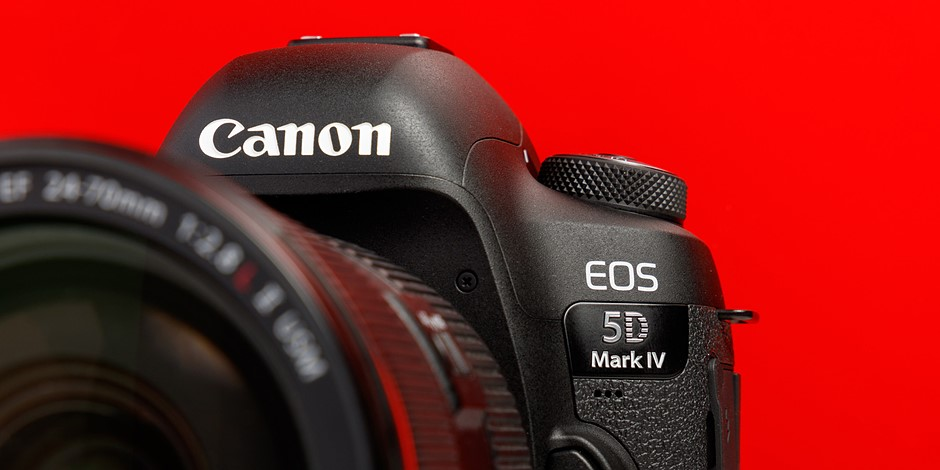
The EOS 5D Mark IV has a traditional DSLR body with a deep grip, optical viewfinder, top LCD, rear control dial and weather-sealed construction.
It weighs about 800g body-only, making it heavier than many modern mirrorless cameras but lighter than Canon’s 1D X flagship bodies.
The body is built for professional field use. It feels solid with EF L-series lenses and gives photographers direct physical controls for exposure, autofocus, playback and menu navigation.
Why DSLR Handling Still Appeals
Many photographers still prefer DSLR handling because of the optical viewfinder, battery life and physical controls.
An optical viewfinder gives a direct real-time view with no electronic lag. This can feel more natural for still photography, especially for weddings, portraits and events.
The 5D Mark IV also balances well with larger EF lenses, which can be an advantage over smaller mirrorless bodies.
Storage and Media
The Canon EOS 5D Mark IV uses dual card slots: one CompactFlash slot and one SD card slot.
This gives photographers backup and overflow options, although the card system is older compared with CFexpress-based cameras.
Because 4K Motion JPEG files are large, users should choose fast and reliable memory cards for video recording. For stills, dual-card recording remains useful for professional work where file safety matters.
Connectivity and Extra Features
The EOS 5D Mark IV includes Wi-Fi, NFC and GPS.
Wi-Fi allows image transfer and remote control through Canon apps. GPS helps location-tag images, which can be useful for travel, journalism, landscape photography and documentary work.
The camera also includes a touchscreen, which improves menu navigation, playback and live-view focus control.
Canon EOS 5D Mark IV Price and Availability
The Canon EOS 5D Mark IV launched as a premium professional DSLR and now sells at much lower prices depending on region, condition and stock.
Recent US retail listings show the body around $1,999 before tax, while European listings can vary by retailer and availability. Used prices may be lower depending on shutter count, body condition, battery health and included accessories.
Availability is now regional. Canon Japan has marked the model discontinued, but Canon USA has said it remains available in the United States, Canada and Latin America with support continuing.
That makes the 5D Mark IV a camera in transition. It is no longer the future of Canon’s system, but it still has real value for buyers invested in EF lenses.
Canon EOS 5D Mark IV vs Mirrorless Cameras
Newer Canon EOS R mirrorless cameras offer clear advantages over the 5D Mark IV.
They often provide better subject detection, stronger video options, in-body stabilization, electronic viewfinders, faster readout, higher burst speeds and RF lens support.
However, the 5D Mark IV still has advantages for some users. It offers an optical viewfinder, strong DSLR ergonomics, native EF lens support, dependable build quality and a proven professional workflow.
For photographers who mainly shoot stills and already own EF lenses, the 5D Mark IV can still be a smart purchase if the price is right.
Who Should Buy the Canon EOS 5D Mark IV?
The Canon EOS 5D Mark IV is best for photographers who want a professional full-frame DSLR rather than a mirrorless body.
It makes sense for:
Canon EF lens owners
Wedding photographers
Portrait photographers
Event photographers
Landscape shooters
Studio photographers
Travel photographers
Editorial photographers
Hybrid creators who only need occasional 4K video
It may not be ideal for users who need advanced mirrorless autofocus, 4K 60p, full-frame 4K video, internal 10-bit recording or a lighter travel body.
Key Takeaways
- Canon EOS 5D Mark IV was released in September 2016.
- It uses a 30.4MP full-frame sensor measuring 36 x 24 mm.
- The camera uses Canon’s EF lens mount.
- Maximum still resolution is 6720 x 4480.
- It records 4K DCI at 4096 x 2160.
- 4K recording uses Motion JPEG at about 496 Mb/s.
- The 4K mode records 4:2:2 8-bit internally.
- The camera supports Full HD and HD recording.
- It includes Dual Pixel CMOS AF for Live View and video.
- Viewfinder autofocus uses a 61-point AF system.
- Continuous shooting reaches up to 7fps.
- The body weighs about 800g.
- Dynamic range and rolling shutter were not tested in the pasted dataset.
- Availability now depends on region, stock and market status.
Frequently Asked Questions
What is the Canon EOS 5D Mark IV?
The Canon EOS 5D Mark IV is a full-frame DSLR camera designed for professional photography, hybrid shooting and Canon EF lens users.
When was the Canon EOS 5D Mark IV released?
Canon released the EOS 5D Mark IV in September 2016.
What sensor does the Canon EOS 5D Mark IV use?
It uses a 30.4MP full-frame CMOS sensor measuring 36 x 24 mm.
What lens mount does the Canon EOS 5D Mark IV use?
The camera uses Canon’s EF lens mount.
Can the Canon EOS 5D Mark IV shoot 4K video?
Yes. It records 4K DCI video at 4096 x 2160 up to 29.97p.
What codec does the 5D Mark IV use for 4K video?
The camera records 4K using Motion JPEG at about 496 Mb/s.
Does the Canon EOS 5D Mark IV have Dual Pixel autofocus?
Yes. It supports Dual Pixel CMOS AF in Live View and video mode.
Does the Canon EOS 5D Mark IV have in-body stabilization?
No. The 5D Mark IV does not have sensor-shift in-body image stabilization.
Is the Canon EOS 5D Mark IV discontinued?
Availability depends on region. Canon Japan has marked the model discontinued, while Canon USA has said it remains available in the United States, Canada and Latin America with service and support continuing.
Is the Canon EOS 5D Mark IV still worth buying?
Yes, it can still be worth buying for photographers who own EF lenses, prefer DSLR handling and mainly need a strong full-frame stills camera with occasional 4K video.
Conclusion
The Canon EOS 5D Mark IV remains one of Canon’s most important professional DSLRs.
It combines a 30.4MP full-frame sensor, EF lens support, Dual Pixel CMOS AF, 7fps shooting, 4K DCI video, weather-sealed construction and trusted Canon image quality. While newer mirrorless cameras now offer more advanced autofocus and video features, the 5D Mark IV still delivers dependable performance for photographers who value DSLR handling and native EF lens support.
For Canon users with EF lenses, it remains a practical full-frame workhorse and one of the last great cameras of the professional DSLR era.
Read Also: Canon EOS C700: Specs, Sensor, 4K RAW and Cinema Features