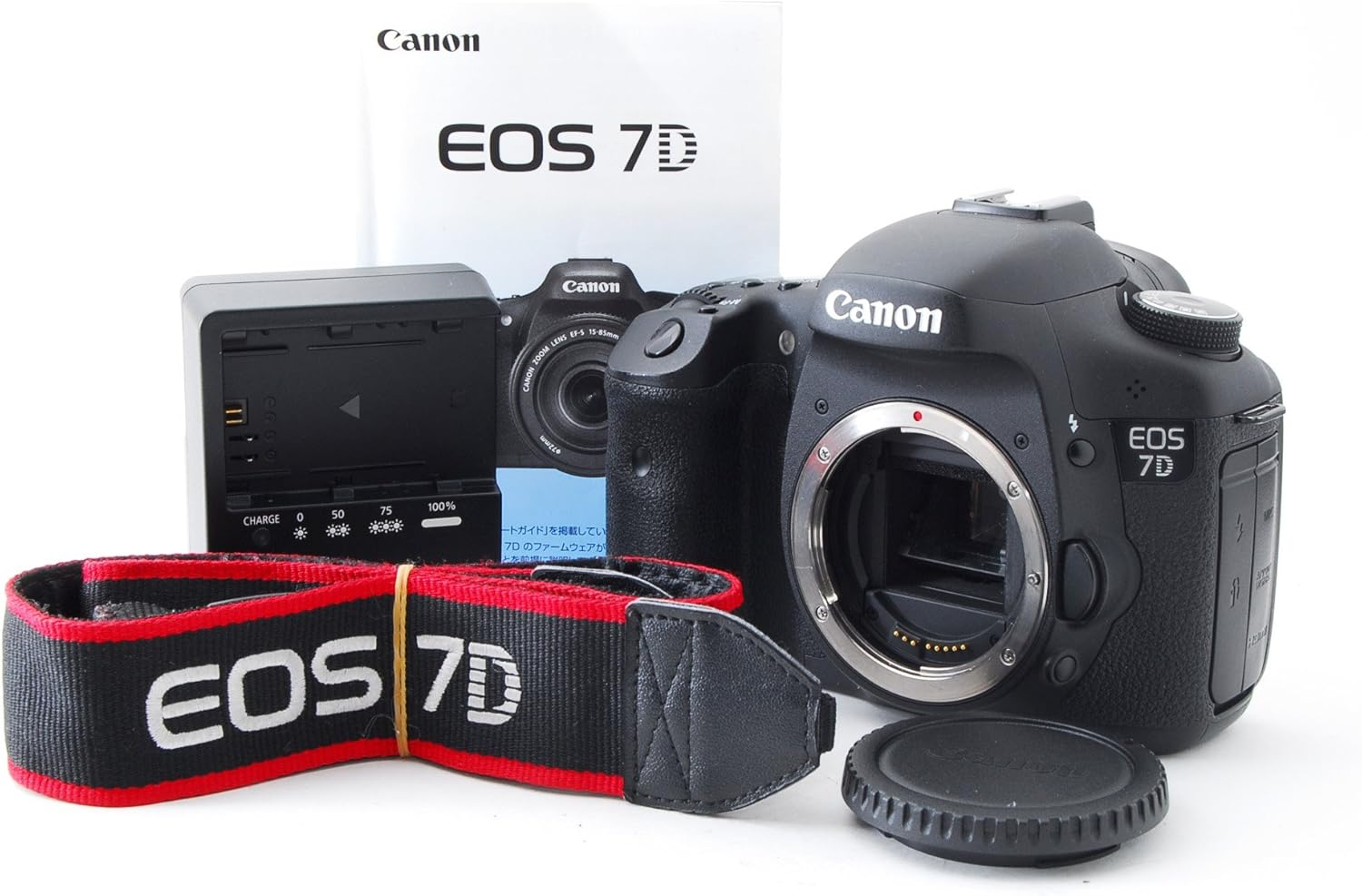
Canon EOS 7D is one of Canon’s most important APS-C DSLR cameras, built for advanced photographers who needed speed, durability, strong autofocus and Full HD video in a rugged body.
Released in October 2009, the Canon EOS 7D arrived as a serious enthusiast and semi-professional DSLR. It sat below Canon’s full-frame professional bodies but offered features that appealed to wildlife photographers, sports shooters, event creators and early DSLR filmmakers.
The camera uses an 18MP APS-C CMOS sensor measuring 22.3 x 14.9 mm. Some cinema databases compare this sensor area with Super 35-style coverage because the dimensions are close to motion-picture Super 35 formats, but Canon officially describes it as an APS-C sensor.
The EOS 7D records Full HD video at 1920 x 1080 and supports Canon EF and EF-S lenses. It does not offer 4K, modern autofocus in video, touchscreen controls or mirrorless-style subject tracking, but it remains historically important because it helped make DSLR video more accessible after the success of the EOS 5D Mark II.
Key Canon EOS 7D Specifications
The Canon EOS 7D was designed as a fast and durable APS-C DSLR for serious photography and basic video production.
| Feature | Canon EOS 7D |
|---|---|
| Release period | October 2009 |
| Camera type | APS-C DSLR |
| Sensor size | 22.3 x 14.9 mm |
| Effective resolution | About 18MP |
| Maximum photo resolution | 5184 x 3456 |
| Lens mount | Canon EF |
| EF-S lens support | Yes |
| Image processors | Dual DIGIC 4 |
| Base ISO | ISO 100 |
| Video formats | Full HD and HD |
| Maximum video resolution | 1920 x 1080 |
| Main video codec | MPEG-4 AVC/H.264 |
| Internal sampling | 4:2:0 |
| Internal bit depth | 8-bit |
| Highest listed Full HD bitrate | About 44 Mb/s |
| Continuous shooting | About 8fps |
| Recording media | CompactFlash Type I or II |
| Body weight | About 800g |
| Dimensions | About 148 x 111 x 74 mm |
| Dynamic range lab status | Not tested in the pasted dataset |
| Rolling shutter lab status | Not tested in the pasted dataset |
The EOS 7D was not built as a modern hybrid camera. It was built as a tough action-focused DSLR that also gave users Full HD video at a time when DSLR filmmaking was growing quickly.
APS-C Sensor and Image Quality
The Canon EOS 7D uses an 18MP APS-C CMOS sensor.
The 22.3 x 14.9 mm sensor gives the camera a 1.6x crop factor when compared with full-frame Canon cameras. This crop factor is useful for wildlife, sports and aviation photography because it gives telephoto lenses a tighter angle of view.
The maximum photo resolution is 5184 x 3456, which remains usable for web publishing, social media, school projects, portraits, travel photography and moderate prints.
Why the 18MP Sensor Was Important
In 2009, an 18MP APS-C sensor was a strong specification.
It gave photographers more detail than many earlier Canon APS-C cameras while still supporting fast shooting. Combined with Dual DIGIC 4 processors, the camera could shoot quickly and process large image files for its time.
Today, newer APS-C cameras offer higher resolution, cleaner high ISO and better dynamic range. Even so, the EOS 7D can still produce good images when used with quality lenses and careful exposure.
EF and EF-S Lens Support
The Canon EOS 7D uses Canon’s EF mount and supports both EF and EF-S lenses.
This is a major advantage for budget-conscious buyers because Canon EF and EF-S lenses remain widely available on the used market. Users can choose affordable zooms, fast primes, macro lenses, telephoto lenses and professional L-series glass.
EF-S lenses are designed for APS-C cameras and are often smaller, wider and more affordable than full-frame EF lenses. EF lenses also work well, especially telephoto lenses for sports and wildlife.
Best Lens Types for the EOS 7D
The Canon EOS 7D works well with:
Canon EF-S wide-angle zooms
Canon EF-S standard zooms
Canon EF 50mm primes
Canon EF 70-200mm lenses
Canon EF 100-400mm lenses
Canon macro lenses
Third-party EF and EF-S lenses from Sigma, Tamron and Tokina
For wildlife and sports, the crop factor gives telephoto lenses extra reach in framing.
Full HD Video Recording
The Canon EOS 7D records Full HD video at 1920 x 1080.
It supports frame rates including 29.97p, 25p and 23.98p in Full HD. It also records HD at 1280 x 720, which was useful for higher-frame-rate workflows and smaller files.
The camera records video using MPEG-4 AVC/H.264 compression with 8-bit 4:2:0 internal sampling. It does not record 4K, 10-bit video, RAW video or modern Log profiles.
Recording Modes and Bitrates
The Canon EOS 7D offers basic DSLR-era video recording modes.
| Recording Mode | Resolution | Codec | Frame Rates | Bitrate | Sampling | Bit Depth |
| Full HD | 1920 x 1080 | MPEG-4 AVC/H.264 | 23.98p, 25p, 29.97p | About 44 Mb/s | 4:2:0 | 8-bit |
| HD | 1280 x 720 | MPEG-4 AVC/H.264 | Selected frame rates | Varies | 4:2:0 | 8-bit |
The 44 Mb/s Full HD mode was useful for its era, but modern cameras offer cleaner codecs, higher bit depths and much better video autofocus.
Early DSLR Filmmaking Appeal
The Canon EOS 7D became popular with early DSLR filmmakers because it offered Full HD video in a smaller and cheaper body than full-frame models.
Its APS-C sensor size also worked well with many cinema-style lenses and rigs. Filmmakers used it for music videos, short films, wedding videos, web commercials and student projects.
The camera helped expand DSLR video beyond the full-frame EOS 5D Mark II by giving creators a more action-focused APS-C option.
Why Filmmakers Used the EOS 7D
The EOS 7D gave filmmakers:
Full HD video
Manual exposure control
Interchangeable lenses
A cinematic crop-sensor look
Compact DSLR size
Affordable used-market lens choices
A stronger body than entry-level DSLRs
It was not perfect, but it helped many creators enter video production at lower cost.
Video Limitations
The Canon EOS 7D has clear video limitations by modern standards.
It does not have continuous phase-detection autofocus during video recording. Users normally rely on manual focus or trigger focus before recording. It also lacks Canon Log, 10-bit recording, focus peaking, waveform monitoring, built-in ND filters and professional audio inputs.
Rolling shutter and moiré can also appear in some scenes, which was common for DSLR video cameras of the time.
For serious modern video work, newer Canon mirrorless and Cinema EOS cameras are much stronger. For learning basic filmmaking, the EOS 7D can still be useful if the user understands its limits.
Dynamic Range and Rolling Shutter
The pasted lab dataset lists dynamic range and rolling shutter as not tested for the Canon EOS 7D.
That means there is no ranking figure in that dataset for comparing the EOS 7D directly with tested cinema cameras or newer hybrid bodies.
In real use, the EOS 7D should be treated as an older 8-bit DSLR video camera. Users should expose carefully, avoid extreme highlight clipping and avoid pushing shadows too hard in post-production.
Fast pans and quick movement can show rolling shutter distortion, especially in video. Slow and controlled camera movement works better.
Autofocus System
The Canon EOS 7D introduced a strong autofocus system for its class.
It uses a 19-point all cross-type AF system for still photography. This made it much better for sports, wildlife and action than many earlier Canon enthusiast cameras.
The autofocus system is one of the biggest reasons the EOS 7D became popular with photographers. It gave users faster subject tracking, better composition flexibility and more confidence when photographing moving subjects.
Autofocus for Video
Video autofocus is much more limited.
Unlike modern Canon cameras with Dual Pixel CMOS AF, the original EOS 7D does not provide smooth continuous autofocus during video recording. Most serious video users focus manually.
This makes the camera better suited for planned shots, tripod work, controlled scenes and manual-focus learning.
Continuous Shooting and Action Photography
The Canon EOS 7D can shoot at about 8 frames per second.
That was a strong speed for an APS-C DSLR in 2009 and made the camera popular with action photographers. Wildlife shooters, sports photographers and aviation enthusiasts valued the combination of crop factor, fast burst shooting and solid autofocus.
The camera’s rugged body also helped it survive demanding field use.
Body Design and Handling
The Canon EOS 7D has a durable DSLR body with a solid grip, top LCD, rear control dial and weather-resistant construction.
At about 800g, it is heavier than many entry-level APS-C cameras but feels more professional in the hand. The body balances well with larger EF lenses and gives users direct physical controls for exposure, autofocus and shooting settings.
Why the Body Still Feels Professional
The EOS 7D was built for advanced users.
It has a strong magnesium-alloy-style body feel, a 100% viewfinder, fast controls and a more serious handling layout than beginner DSLRs. For photography students and hobbyists, it can still be a good camera for learning manual controls.
CompactFlash Storage
The Canon EOS 7D records to CompactFlash Type I or II cards.
This is an older storage format compared with SD and CFexpress cards. CompactFlash cards are still available, but users should buy reliable cards from trusted brands, especially for video recording.
Because the camera is older, card condition matters. Used cards may fail, so buyers should test media before important shoots.
Canon EOS 7D vs EOS 7D Mark II
The Canon EOS 7D Mark II is the stronger and newer camera.
The Mark II improved autofocus, frame rate, processing, metering, high ISO performance and video features. It also added better tracking and more modern handling.
However, the original EOS 7D remains cheaper on the used market. It is still useful for learners, hobbyists and photographers who want a rugged Canon APS-C DSLR at low cost.
Canon EOS 7D vs EOS 5D Mark II
The Canon EOS 7D and EOS 5D Mark II were both important DSLR video cameras, but they served different users.
The EOS 5D Mark II has a full-frame sensor and became famous for cinematic shallow depth of field. The EOS 7D has an APS-C sensor, faster burst shooting and better action features.
Choose the 5D Mark II for full-frame stills and shallow depth of field. Choose the 7D for budget action photography, crop-sensor reach and stronger autofocus for stills.
Price and Availability
The Canon EOS 7D is no longer a current new-production camera.
It is now mainly available used. Prices vary depending on condition, shutter count, included batteries, charger, CompactFlash cards and lens bundles.
Because the camera is old, buyers should inspect it carefully. Check the shutter count, sensor condition, card slot, buttons, LCD, viewfinder, battery door, hot shoe, ports and rubber seals.
A clean used EOS 7D can be a good low-cost DSLR for photography practice, but buyers should not expect modern video performance.
Who Should Buy the Canon EOS 7D?
The Canon EOS 7D is best for users who want an affordable used DSLR for photography learning, wildlife practice, sports shooting and basic Full HD video.
It makes sense for:
Photography students
Beginner wildlife photographers
Sports hobbyists
Canon EF or EF-S lens owners
Budget DSLR buyers
Creators learning manual video
Travel photographers who want a rugged body
Users who prefer optical viewfinders
It may not be ideal for creators who need 4K video, modern autofocus, silent shooting, in-body stabilization, touchscreen controls or strong low-light video.
Key Takeaways
- Canon EOS 7D was released in October 2009.
- It uses an 18MP APS-C CMOS sensor measuring 22.3 x 14.9 mm.
- The camera supports Canon EF and EF-S lenses.
- Maximum photo resolution is 5184 x 3456.
- It records Full HD video at 1920 x 1080.
- Full HD recording uses MPEG-4 AVC/H.264.
- Internal video is 8-bit 4:2:0.
- The listed Full HD bitrate is about 44 Mb/s.
- The camera shoots stills at about 8fps.
- It uses Dual DIGIC 4 processors.
- It has a 19-point all cross-type autofocus system for stills.
- Video autofocus is limited compared with modern Canon cameras.
- Recording media is CompactFlash Type I or II.
- Dynamic range and rolling shutter are listed as not tested in the pasted dataset.
- The EOS 7D is now mainly a used-market camera.
Frequently Asked Questions
What is the Canon EOS 7D?
The Canon EOS 7D is an APS-C DSLR camera designed for advanced photographers, action shooting and Full HD video recording.
When was the Canon EOS 7D released?
Canon released the EOS 7D in October 2009 after announcing it earlier that year.
What sensor does the Canon EOS 7D use?
It uses an 18MP APS-C CMOS sensor measuring 22.3 x 14.9 mm.
What lens mount does the Canon EOS 7D use?
The camera uses Canon’s EF mount and supports both EF and EF-S lenses.
Can the Canon EOS 7D record 4K video?
No. The Canon EOS 7D records up to Full HD at 1920 x 1080.
What codec does the Canon EOS 7D use?
It records MPEG-4 AVC/H.264 video internally.
What is the maximum photo resolution?
The maximum still-photo resolution is 5184 x 3456.
Does the Canon EOS 7D have Dual Pixel autofocus?
No. The original EOS 7D does not have Canon’s later Dual Pixel CMOS AF system.
What is the dynamic range of the Canon EOS 7D?
The pasted dataset lists dynamic range as not tested. In practical use, it should be treated as an older APS-C DSLR with limited video grading flexibility.
Is the Canon EOS 7D still worth buying?
Yes, it can still be worth buying for photography students, Canon EF/EF-S lens owners and budget users who want a rugged APS-C DSLR for still photography. Most video creators should consider newer cameras.
Conclusion
The Canon EOS 7D remains an important camera in Canon’s DSLR history.
It combined an 18MP APS-C sensor, fast 8fps shooting, Dual DIGIC 4 processing, a 19-point autofocus system, EF/EF-S lens support and Full HD video in a rugged body. It helped advanced amateurs and early DSLR filmmakers access stronger performance without moving to a full-frame or cinema camera system.
Today, the EOS 7D is outdated for serious video and lacks many modern features. Still, it remains a useful used-market DSLR for learning photography, shooting action on a budget and using Canon EF or EF-S lenses.
Read Also: Canon EOS C300: Specs, Sensor, Dynamic Range and Cinema Features