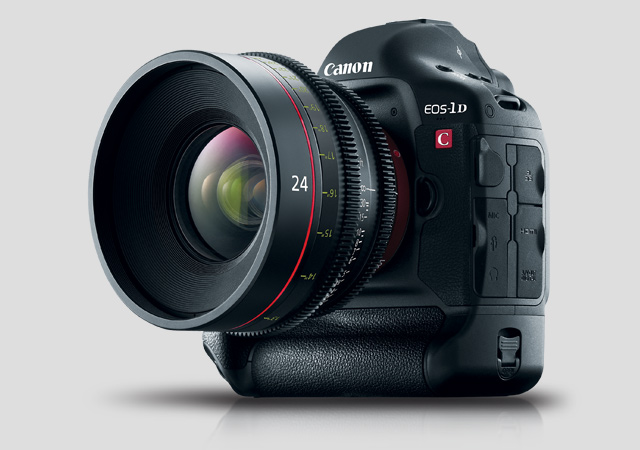
Canon EOS-1D C is one of Canon’s most unusual professional cameras because it combined the rugged body of a flagship EOS DSLR with cinema-focused 4K video features.
Marketed in December 2012, the EOS-1D C was designed for motion picture, television and high-resolution digital production. It shared much of its professional still-camera DNA with the EOS-1D X, but added 4K DCI video recording, Canon Log Gamma and cinema-oriented video workflows.
The camera uses an 18.1MP full-frame CMOS sensor measuring 36 x 24 mm, Canon’s EF lens mount and dual CompactFlash card slots. For video, its biggest headline feature is 4K DCI recording at 4096 x 2160 using 8-bit Motion JPEG.
The Canon EOS-1D C is now discontinued and mainly appears on the used market. Even so, it remains historically important because it was one of the first DSLR-style cameras to bring internal 4K recording to professional filmmakers.
Key Canon EOS-1D C Specifications
The Canon EOS-1D C is both a professional DSLR and a cinema-oriented hybrid camera. Its specifications show how Canon tried to serve still photographers and filmmakers with one rugged body.
| Feature | Canon EOS-1D C |
|---|---|
| Marketed period | December 2012 |
| Camera type | Professional cinema DSLR |
| Sensor size | 36 x 24 mm full-frame |
| Effective resolution | About 18.1MP |
| Maximum photo resolution | 5184 x 3456 |
| Lens mount | Canon EF |
| Base sensitivity for Canon Log testing | ISO 640 |
| Video formats | 4K DCI, Full HD, Super 35 HD, HD, SD |
| Main 4K codec | Motion JPEG |
| 4K colour sampling | 4:2:2 |
| 4K bit depth | 8-bit |
| Recording media | Dual CF card slots |
| Body weight | About 1,545g |
| Dimensions | About 158 x 164 x 83 mm |
| Current status | Discontinued, used-market camera |
The EOS-1D C is not a modern mirrorless hybrid. It is a rugged DSLR-era cinema camera built for professionals who wanted high-quality 4K in a familiar EOS-1D body.
Full-Frame Sensor and Still Photography
The Canon EOS-1D C uses an 18.1MP full-frame CMOS sensor.
For still photography, the camera behaves much like a professional EOS-1D series DSLR. It offers a strong body, fast performance, excellent durability and native support for Canon EF lenses.
The 18.1MP resolution may look low by current standards, but it was practical for professional news, sports, documentary, event and production stills. Smaller files were easier to manage, transfer and edit during fast-paced assignments.
Why the Full-Frame Sensor Matters
The full-frame sensor gives photographers strong low-light performance and a wide field of view with EF lenses.
It also allows shallow depth of field for portraits, behind-the-scenes stills, film set photography and cinematic hybrid work. For video, however, the camera does not use the full sensor width in 4K mode. Its 4K capture uses a cropped area.
Canon EF Mount
The Canon EOS-1D C uses the Canon EF mount.
That gives it access to Canon EF lenses and EF-mount Canon Cinema lenses. Canon’s EF system includes professional zooms, fast primes, super-telephoto lenses, macro lenses and cinema lenses.
The camera does not support EF-S or EF-M lenses. Some Canon EF Cinema zoom lenses are designed for Super 35-style coverage and are most suitable for crop-style movie modes.
Why EF Support Still Matters
EF lenses remain widely available on the used market.
For filmmakers and photographers who already own EF glass, the EOS-1D C can still fit into an older Canon production workflow. It is especially useful for users who want a rugged DSLR body and do not need Canon’s newer RF mount system.
4K DCI Video Recording
The Canon EOS-1D C records 4K DCI video at 4096 x 2160.
This was its defining feature. Canon designed the camera to record 4K internally to CompactFlash cards without requiring an external recorder for 4K capture.
The camera records 4K using Motion JPEG compression with 8-bit 4:2:2 colour sampling. The 4K mode uses a crop that gives an APS-H-style angle of view rather than full-frame width.
4K Recording Modes
| Recording Format | Resolution | Codec | Frame Rates | Sampling | Bit Depth |
| 4K DCI | 4096 x 2160 | Motion JPEG | 23.98p, 24p, 25p | 4:2:2 | 8-bit |
The 4K files are large. Canon lists 4K file sizes at about 3.76GB per minute, which means users need fast UDMA 7 CompactFlash cards and plenty of storage.
Why Motion JPEG Was Used
Motion JPEG stores video as a series of compressed frames.
This makes files large compared with modern codecs, but it can also make editing simpler because each frame is encoded separately. At the time, this was a practical way to record 4K internally in a DSLR-style body.
Today, the codec feels inefficient. Modern cameras use more advanced formats such as H.265, ProRes, XF-AVC or RAW-based workflows.
Canon Log Gamma
Canon Log Gamma is one of the EOS-1D C’s most important cinema features.
Canon Log gives filmmakers a flatter image profile designed for colour grading. It helps preserve highlight and shadow information compared with standard picture styles.
The pasted lab data lists the camera at a maximum of 11.2 stops at SNR=2 in 4K DCI Motion JPEG, ISO 640 and Canon Log. It also lists 10.8 stops in full-frame HD ALL-I and 11 stops in Super 35 HD ALL-I.
Why Canon Log Matters
Canon Log gives editors more flexibility in post-production.
It allows colourists to adjust contrast, saturation, highlight roll-off and shadow detail. For a DSLR-era video camera, Canon Log made the EOS-1D C more serious for professional filmmaking than standard photo-oriented video modes.
However, users must expose carefully because the camera records 8-bit video. Heavy grading can reveal banding or compression limits.
Dynamic Range Performance
The pasted lab data lists the Canon EOS-1D C at 11.2 stops of dynamic range at SNR=2 in 4K DCI Motion JPEG at ISO 640 with Canon Log.
That figure helps place the camera in context. It offers respectable dynamic range for an early 4K DSLR, but it does not match modern cinema cameras or newer mirrorless bodies with advanced sensors and 10-bit or RAW workflows.
For best results, users should protect highlights and avoid underexposing shadows too heavily. Canon Log helps, but the 8-bit codec limits how far footage can be pushed.
Rolling Shutter Performance
The pasted lab data lists the EOS-1D C with several rolling shutter results.
| Mode | Resolution | Codec | Frame Rate | Rolling Shutter |
| 4K DCI | 4096 x 2160 | Motion JPEG | 25p | 26.8ms |
| Full Frame HD | 1920 x 1080 | ALL-I | 25p | 15.3ms |
| Super 35 HD | 1920 x 1080 | ALL-I | 25p | 19.4ms |
The 4K rolling shutter figure is slower than the HD result, so fast pans and quick subject movement can show skew in 4K. HD modes handle motion better.
For interviews, landscapes, controlled scenes and slower camera moves, the 4K mode remains usable. For fast handheld work, sports-style shooting or whip pans, users should be careful.
Full HD and Super 35 HD Recording
The Canon EOS-1D C also records Full HD and Super 35 HD.
Full HD can be recorded using ALL-I or IPB compression, depending on the selected mode. The camera also supports Full HD 60p and 50p, which was useful for smoother motion and light slow-motion work.
Super 35 HD gives filmmakers an industry-standard crop option. This is useful when working with cinema lenses designed around Super 35 coverage.
Recording Formats
| Recording Format | Resolution |
| Full sensor photo mode | 5184 x 3456 |
| 4K DCI | 4096 x 2160 |
| Full HD | 1920 x 1080 |
| Super 35 HD | 1920 x 1080 |
| HD | 1280 x 720 |
| SD | 640 x 480 |
The EOS-1D C’s video formats reflect its hybrid design. It can serve as a stills camera, a 4K DCI capture body and a Full HD production camera.
Dual CF Card Workflow
The Canon EOS-1D C uses dual CompactFlash card slots.
This was important because 4K Motion JPEG files require fast and reliable media. Canon lists UDMA 7 card performance as necessary for 4K recording.
Dual CF slots also help professional still photographers by allowing backup, overflow or separate file recording.
Why Media Choice Matters
The EOS-1D C creates large video files.
Users need fast CF cards for 4K, and they also need enough storage for editing and backup. This makes the camera more demanding than newer cameras with efficient codecs, despite its older age.
HDMI Output
The EOS-1D C supports uncompressed Full HD output over HDMI.
This allows users to connect an external recorder or monitor for Full HD workflows. However, Canon’s official information notes that 4K output over HDMI is not part of that external recording workflow.
This means the camera’s 4K strength is internal recording to CF cards.
Autofocus and Video Operation
The Canon EOS-1D C is not built around modern continuous video autofocus.
Canon’s specifications note that autofocus is limited in some movie modes, and autofocus is not available when Canon Log Gamma is used. This makes the camera very different from newer Canon mirrorless and Cinema EOS bodies with Dual Pixel CMOS AF.
For serious video work, users should expect to focus manually or use traditional cinema focusing methods.
What This Means for Filmmakers
The EOS-1D C is better suited to controlled filming than casual autofocus-heavy shooting.
It works best when used with manual focus, external monitoring, careful exposure and planned camera movement. This fits narrative, commercial, documentary and production-style workflows more than modern vlogging.
Body Design and Build Quality
The Canon EOS-1D C uses a professional EOS-1D style body.
It is large, heavy and rugged, weighing about 1,545g. It includes an integrated vertical grip, strong weather sealing, dual card slots and professional still-camera controls.
This body design makes the camera durable but not lightweight. It balances well with large EF lenses, but it is much heavier than modern mirrorless cameras.
Why the Body Still Appeals
Some professionals still like EOS-1D bodies because they are tough, reliable and comfortable with large lenses.
The EOS-1D C is especially interesting for users who want a durable DSLR-style 4K camera for controlled filming, still photography and legacy EF lens workflows.
Canon EOS-1D C vs EOS-1D X
The EOS-1D C is closely related to the EOS-1D X, but it was designed for cinema users.
Both cameras share a rugged professional DSLR concept. The EOS-1D C adds 4K DCI video, Canon Log Gamma and cinema-focused recording features.
The EOS-1D X is better understood as a flagship sports and news DSLR. The EOS-1D C is the version aimed at filmmakers and hybrid production teams.
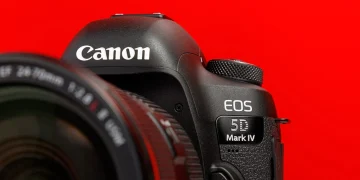
Canon EOS-1D C vs EOS 5D Mark III
The Canon EOS 5D Mark III and EOS-1D C both became important DSLR-era video cameras, but they serve different users.
The 5D Mark III is lighter, more affordable and records Full HD. It became popular with filmmakers, wedding shooters and photographers.
The EOS-1D C is heavier, more expensive and records 4K DCI. It is the stronger choice for users who specifically need internal 4K from a DSLR-era Canon body.
Price and Availability
The Canon EOS-1D C is discontinued.
It is now mainly available used. Current used prices vary depending on condition, shutter count, included batteries, charger, CF cards and overall wear. Some used listings show the body in the low-thousand-dollar range, but prices can change quickly depending on availability.
Before buying, users should inspect the sensor, card slots, HDMI port, buttons, rear screen, battery system, rubber seals, shutter count and video recording reliability.
Who Should Buy the Canon EOS-1D C?
The Canon EOS-1D C is best for collectors, Canon EF lens users and filmmakers who want a historic 4K DSLR with Canon Log.
It makes sense for:
Canon EF lens owners
Camera collectors
Filmmakers who want DSLR-era 4K
Documentary shooters using manual focus
Production teams needing a rugged 4K B-camera
Users who like Motion JPEG workflows
Buyers interested in Canon cinema history
It may not be ideal for creators who need modern autofocus, 10-bit internal recording, 4K 60p, compact size, in-body stabilization or efficient codecs.
Key Takeaways
- Canon EOS-1D C was marketed in December 2012.
- It uses an 18.1MP full-frame CMOS sensor measuring 36 x 24 mm.
- The camera uses Canon’s EF mount.
- Maximum still-photo resolution is 5184 x 3456.
- It records 4K DCI at 4096 x 2160.
- 4K recording uses Motion JPEG.
- 4K colour sampling is 8-bit 4:2:2.
- Canon Log Gamma is included for cinema-style grading.
- The 4K mode uses an APS-H-style crop.
- Full HD and Super 35 HD modes are also available.
- The pasted lab data lists 11.2 stops of dynamic range at SNR=2 in 4K Canon Log.
- The pasted lab data lists 26.8ms rolling shutter in 4K and 15.3ms in full-frame HD.
- Dual CF card slots support stills and video recording.
- The camera is now discontinued and mainly available used.
Frequently Asked Questions
What is the Canon EOS-1D C?
The Canon EOS-1D C is a professional cinema DSLR that combines EOS-1D still-camera build quality with 4K DCI video, Canon Log and EF lens support.
When was the Canon EOS-1D C released?
Canon Camera Museum lists the EOS-1D C as marketed in December 2012.
What sensor does the Canon EOS-1D C use?
It uses an 18.1MP full-frame CMOS sensor measuring 36 x 24 mm.
What lens mount does the EOS-1D C use?
The camera uses Canon’s EF mount and supports Canon EF and EF-mount Cinema lenses.
Can the Canon EOS-1D C record 4K?
Yes. It records 4K DCI at 4096 x 2160 using Motion JPEG.
Does the Canon EOS-1D C shoot 4K full-frame?
No. The 4K mode uses a cropped area with an APS-H-style angle of view.
Does the Canon EOS-1D C support Canon Log?
Yes. Canon Log Gamma is one of the key cinema features of the EOS-1D C.
What is the dynamic range of the Canon EOS-1D C?
The pasted lab data lists 11.2 stops at SNR=2 in 4K DCI Motion JPEG at ISO 640 using Canon Log.
What is the rolling shutter of the Canon EOS-1D C?
The pasted lab data lists 26.8ms in 4K DCI and 15.3ms in full-frame HD at 25p.
Is the Canon EOS-1D C still worth buying?
Yes, it can still be worth buying for collectors, EF lens users and filmmakers who specifically want a rugged DSLR-era Canon 4K camera. Most modern creators will be better served by newer Canon mirrorless or Cinema EOS cameras.
Conclusion
The Canon EOS-1D C remains one of Canon’s most important hybrid cinema cameras from the DSLR era.
It brought 4K DCI recording, Canon Log Gamma, EF lens support, dual CF cards and professional EOS-1D build quality into one rugged body. Its Motion JPEG codec, cropped 4K mode and limited autofocus feel dated today, but the camera still holds historical value as a serious early 4K DSLR.
For modern productions, newer Canon cameras offer better autofocus, codecs, stabilization and workflow efficiency. For Canon cinema history, however, the EOS-1D C remains a landmark camera that helped connect DSLR filmmaking with professional 4K production.
Read Also: Canon EOS 5D Mark III: Specs, Sensor, Full HD Video and DSLR Features