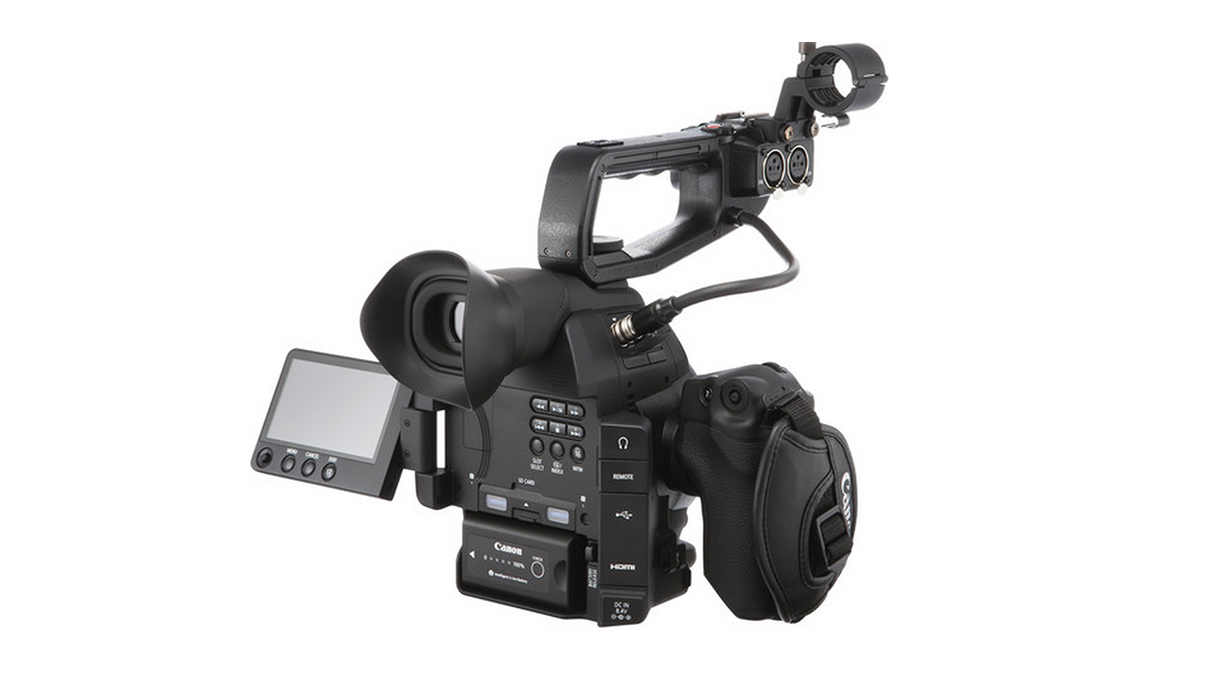
Canon EOS C100 Mark II is a compact Super 35 Cinema EOS camera designed for filmmakers, documentarians, event shooters, corporate video teams and solo operators who need reliable Full HD video in a professional camera body.
Released in December 2014, the C100 Mark II improved on the original EOS C100 by adding stronger autofocus, better monitoring, MP4 recording, higher frame-rate Full HD options and a more refined shooting experience. It kept the core strengths of the C100 line: Canon colour, EF lens support, built-in ND filters, professional audio and a lightweight cinema-camera design.
The camera uses a Super 35mm sensor measuring about 24.6 x 13.8 mm and records up to 1920 x 1080 Full HD. It does not record 4K internally, which makes it feel dated today, but it still has value for productions that deliver in HD or want an affordable used Cinema EOS body.
For interviews, documentaries, training videos, church productions, weddings, events and corporate work, the Canon EOS C100 Mark II remains a practical camera when 4K is not required.
Key Canon EOS C100 Mark II Specifications
The Canon EOS C100 Mark II is built as a video-first camera rather than a hybrid stills camera. Its strengths are ergonomics, autofocus, audio, ND filters and simple HD recording.
| Feature | Canon EOS C100 Mark II |
|---|---|
| Release period | December 2014 |
| Camera type | Super 35 Cinema EOS camera |
| Sensor size | About 24.6 x 13.8 mm |
| Sensor type | Super 35mm CMOS |
| Effective video resolution | About 8.3MP class |
| Lens mount | Canon EF |
| Base sensitivity | ISO 850 |
| Main recording formats | AVCHD and MP4 |
| Maximum video resolution | Full HD, 1920 x 1080 |
| Internal colour sampling | 4:2:0 |
| Internal bit depth | 8-bit |
| Highest MP4 bitrate | Up to 35 Mb/s |
| Highest AVCHD bitrate | Up to 28 Mb/s |
| Autofocus | Dual Pixel CMOS AF and Face Detection AF |
| Built-in ND filters | Yes |
| Body weight | About 1.1kg body class |
| Dynamic range lab status | Not tested in the pasted dataset |
| Rolling shutter lab status | Not tested in the pasted dataset |
The EOS C100 Mark II is not a modern high-resolution cinema camera. Its value comes from being simple, reliable and production-friendly.
Super 35mm Sensor and Image Quality
The Canon EOS C100 Mark II uses a Super 35mm CMOS sensor.
Super 35 is a traditional cinema format and remains useful because it works well with many professional lenses. The format gives filmmakers a familiar field of view, good subject separation and practical lens coverage without requiring full-frame glass.
The camera records Full HD from a sensor designed for video, not from a still-photo sensor adapted for video. This helps create a clean and natural image for interviews, documentaries and event coverage.
Why Super 35 Still Helps
Super 35 gives the C100 Mark II a more cinematic look than small-sensor camcorders.
When paired with fast EF lenses, the camera can create shallow depth of field, smooth background blur and strong subject separation. This made it popular with wedding filmmakers, documentary crews and corporate video teams that wanted a cinematic image without moving to a large cinema rig.
Full HD Recording
The Canon EOS C100 Mark II records Full HD video at 1920 x 1080.
It supports frame rates up to 59.94p and 50p, making it more flexible than the original C100 for smooth motion and moderate slow-motion work. It also supports standard cinema and broadcast frame rates such as 23.98p, 24p, 25p and 29.97p.
The camera does not support 4K recording. That is its biggest limitation today. However, for productions that still deliver in HD, the camera remains usable.
Recording Modes and Bitrates
The EOS C100 Mark II records in AVCHD and MP4 formats.
| Recording Format | Resolution | Frame Rates | Bitrate | Sampling | Bit Depth |
| MP4 | 1920 x 1080 | Up to 59.94p / 50p | Up to 35 Mb/s | 4:2:0 | 8-bit |
| AVCHD | 1920 x 1080 | Up to 59.94p / 50p | Up to 28 Mb/s | 4:2:0 | 8-bit |
| AVCHD | 1920 x 1080 | Interlaced and progressive modes | 17–24 Mb/s | 4:2:0 | 8-bit |
| Lower-resolution MP4 | 1280 x 720 and 640 x 360 | Selected modes | Varies | 4:2:0 | 8-bit |
The MP4 35 Mb/s mode is useful for easier editing and web delivery. AVCHD remains useful for long-form recording and compatibility with older broadcast or editing workflows.
AVCHD and MP4 Workflow
One advantage of the Canon EOS C100 Mark II is that it records to common SD cards.
This makes the camera cheaper to run than cameras that require CFast, CFexpress or external RAW systems. For long interviews, conferences, lectures and documentary work, SD-card recording helps keep costs low.
The camera can also record in both AVCHD and MP4 workflows, giving users flexibility depending on their editing system and delivery needs.
Why the Files Are Easy to Manage
The C100 Mark II creates much smaller files than modern 4K and RAW cameras.
That means easier backups, faster transfers and lighter editing. For small production teams, this can still be an advantage. Not every job needs 4K, 10-bit, RAW or heavy colour grading.
For fast delivery work, simple HD files can save time.
Dual Pixel CMOS AF
Dual Pixel CMOS AF is one of the biggest strengths of the Canon EOS C100 Mark II.
The system gives smoother and more reliable autofocus with compatible Canon EF lenses. It helps keep subjects in focus during interviews, documentary scenes, events and solo shooting.
The camera also supports Face Detection AF, which is useful when filming people. This makes the C100 Mark II easier to operate than many manual-focus cinema cameras, especially for small crews.
Why Autofocus Matters for Filmmakers
Cinema cameras are often used with manual focus, but autofocus can be valuable in real-world production.
Documentary shooters, wedding filmmakers and event videographers may not have time to pull focus perfectly during every moment. Dual Pixel CMOS AF helps reduce missed shots and makes the camera more practical for one-person operation.
This is one reason the C100 Mark II remained popular with small production teams.
Canon EF Mount
The Canon EOS C100 Mark II uses Canon’s EF lens mount.
This gives users access to a huge range of Canon EF lenses, including L-series zooms, fast primes, macro lenses, cinema lenses and third-party EF options.
Because EF lenses are widely available on the used market, the C100 Mark II can still be built into an affordable production kit.
Lens Options for the C100 Mark II
The camera works well with:
Canon EF L-series zoom lenses
Canon EF prime lenses
Canon CN-E cinema lenses
Sigma EF Art lenses
Tokina EF zooms
Tamron EF zooms
EF-S lenses that cover the Super 35-style image area
The EF mount is one of the reasons the camera remains attractive to Canon DSLR users moving into dedicated video production.
Built-In ND Filters
The Canon EOS C100 Mark II includes built-in ND filters.
This is a major advantage over many DSLR and mirrorless cameras. Built-in ND filters allow filmmakers to control exposure without changing shutter speed, aperture or ISO unnecessarily.
For outdoor interviews, weddings, documentaries and corporate shoots, built-in ND filters save time and help maintain a cinematic shutter speed.
Why ND Filters Matter
ND filters reduce light entering the camera.
This allows filmmakers to keep wider apertures in bright conditions while preserving natural motion blur. Without ND filters, users may need very fast shutter speeds or small apertures, which can make footage look less cinematic.
The built-in ND system is one of the strongest workflow advantages of the C100 Mark II.
Canon Log and Wide DR
The Canon EOS C100 Mark II supports Canon Log and Wide DR picture profiles.
Canon Log gives users a flatter image for colour grading. It helps preserve more highlight and shadow information than standard picture styles.
Wide DR is easier to use because it gives a more finished-looking image straight from the camera while still offering better highlight handling than a standard profile.
Which Profile Should You Use?
Canon Log is better when the footage will be graded carefully.
Wide DR is better for faster jobs where the editor wants a pleasing image with less post-production work. Many event shooters and corporate video teams prefer Wide DR because it saves time.
For interviews and controlled lighting, Canon Log can give more flexibility.
Dynamic Range and Rolling Shutter
The pasted dataset lists dynamic range and rolling shutter as not tested for the Canon EOS C100 Mark II.
That means the camera should not be ranked against lab-tested models using that specific source. Canon’s Cinema EOS cameras from this generation were known for good highlight handling and natural colour, but serious buyers should test the camera in their own lighting conditions.
Rolling shutter can appear during fast pans and quick movement, as with many CMOS cameras. For interviews, documentaries, corporate shoots and events, it is usually manageable when the camera is operated carefully.
Monitoring and Viewfinder Improvements
The C100 Mark II improved monitoring compared with the original C100.
It added a better electronic viewfinder and improved OLED display design, making it easier to shoot in different positions. This helped documentary and event shooters who often work handheld or in uncontrolled environments.
The camera body also includes professional video controls, making it easier to operate than a DSLR or mirrorless camera for long-form shooting.
Audio Features
The Canon EOS C100 Mark II includes professional audio support through its handle unit.
It supports XLR inputs, manual audio control and better audio handling than most hybrid cameras. This matters for interviews, documentaries, weddings, live events and corporate production.
Good audio is one of the main reasons creators choose a Cinema EOS camera over a basic mirrorless body. The C100 Mark II is designed to record usable picture and sound in one production package.
HDMI Output
The EOS C100 Mark II can output a cleaner signal over HDMI for external monitoring or recording workflows.
Its internal recording is 8-bit 4:2:0, but HDMI output can be useful when crews want larger monitors, external recorders or client monitoring. This makes the camera more flexible on set.
External recording can improve workflow in some situations, but many users still choose the internal files because they are simple and reliable.
Body Design and Handling
The Canon EOS C100 Mark II uses a compact cinema body with a removable handle, grip and practical controls.
At about 1.1kg body class, it is lighter than larger Cinema EOS models such as the C300 Mark II and C700. It is easier to carry for documentaries, weddings, events and travel production.
The camera is not as small as a mirrorless body, but it is much better suited to video operation because it includes built-in ND filters, XLR audio, longer recording support and proper video ergonomics.
Canon EOS C100 Mark II vs Original C100
The C100 Mark II improved on the original C100 in several important ways.
It added built-in Dual Pixel CMOS AF as a standard feature, improved the display and EVF, added MP4 recording, supported 1080/60p and improved usability for solo shooters.
The original C100 was already popular with documentary and event filmmakers. The Mark II made the camera more practical and modern for HD production.
Canon EOS C100 Mark II vs C200
The Canon EOS C200 is the stronger camera if 4K and RAW recording are needed.
The C200 records 4K Cinema RAW Light and offers a more advanced image pipeline. However, it also creates larger files and requires more storage.
The C100 Mark II is simpler. It is better for users who only need HD, want small file sizes and prefer fast turnaround. It is also usually cheaper on the used market.
Price and Availability
The Canon EOS C100 Mark II is no longer widely available as a new camera from major retailers.
Used-market availability is now the main option. Pricing depends on condition, included accessories, recording hours, batteries, charger, handle unit, top grip and SD cards.
Because the C100 Mark II is older, buyers should check the camera carefully before purchasing. Inspect the sensor, ND filters, buttons, LCD, EVF, HDMI port, XLR inputs, fan, SD card slots and overall body condition.
Who Should Buy the Canon EOS C100 Mark II?
The Canon EOS C100 Mark II is best for users who need a low-cost professional HD cinema camera.
It makes sense for:
Documentary filmmakers
Wedding videographers
Church media teams
Corporate video creators
Interview shooters
Event production teams
Film students
Canon EF lens owners
YouTube studios that deliver in HD
Training and education video teams
It may not be the right camera for creators who need 4K, 10-bit internal recording, RAW video, high-frame-rate slow motion or modern mirrorless autofocus features.
Key Takeaways
- Canon EOS C100 Mark II was released in December 2014.
- It uses a Super 35mm CMOS sensor measuring about 24.6 x 13.8 mm.
- The camera uses Canon’s EF lens mount.
- It records up to Full HD at 1920 x 1080.
- Recording formats include AVCHD and MP4.
- MP4 recording reaches up to 35 Mb/s.
- AVCHD recording reaches up to 28 Mb/s.
- Internal recording is 8-bit 4:2:0.
- The camera supports Dual Pixel CMOS AF.
- Face Detection AF helps when filming people.
- Built-in ND filters improve exposure control.
- Canon Log and Wide DR are available for different workflows.
- Dynamic range and rolling shutter are listed as not tested in the pasted dataset.
- The camera is now mainly a used-market option.
Frequently Asked Questions
What is the Canon EOS C100 Mark II?
The Canon EOS C100 Mark II is a Super 35 Cinema EOS camera designed for Full HD video production, documentary work, events, interviews and corporate filmmaking.
When was the Canon EOS C100 Mark II released?
The Canon EOS C100 Mark II was released in December 2014.
What sensor does the Canon EOS C100 Mark II use?
It uses a Super 35mm CMOS sensor measuring about 24.6 x 13.8 mm.
What lens mount does the Canon EOS C100 Mark II use?
The camera uses Canon’s EF lens mount.
Can the Canon EOS C100 Mark II record 4K?
No. The Canon EOS C100 Mark II records up to Full HD at 1920 x 1080.
What codecs does the C100 Mark II use?
The camera records in AVCHD and MP4 formats using H.264 compression.
Does the Canon EOS C100 Mark II have autofocus?
Yes. It supports Dual Pixel CMOS AF and Face Detection AF with compatible lenses.
Does the Canon EOS C100 Mark II have built-in ND filters?
Yes. Built-in ND filters are one of the camera’s most useful production features.
What is the dynamic range of the Canon EOS C100 Mark II?
The pasted dataset lists dynamic range as not tested. In practical use, Canon Log and Wide DR help improve highlight handling compared with standard picture profiles.
Is the Canon EOS C100 Mark II still worth buying?
Yes, it can still be worth buying for users who need an affordable Super 35 HD cinema camera with EF lens support, built-in ND filters, XLR audio and Dual Pixel autofocus.
Conclusion
The Canon EOS C100 Mark II remains a practical HD cinema camera for creators who value reliability, ergonomics and simple workflows over modern headline specs.
It does not record 4K, RAW or 10-bit internal video, but it offers a Super 35 sensor, Canon EF mount, Dual Pixel CMOS AF, built-in ND filters, professional audio and easy-to-manage HD files.
For filmmakers, churches, schools, event shooters and corporate teams working in Full HD, the C100 Mark II can still deliver dependable results at a lower used-market price. It stands as one of Canon’s most practical compact Cinema EOS cameras from the HD era.
Read Also: Canon EOS C300 Mark II: Specs, Sensor, 4K Recording and Cinema Features