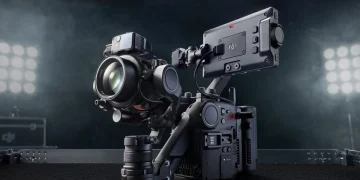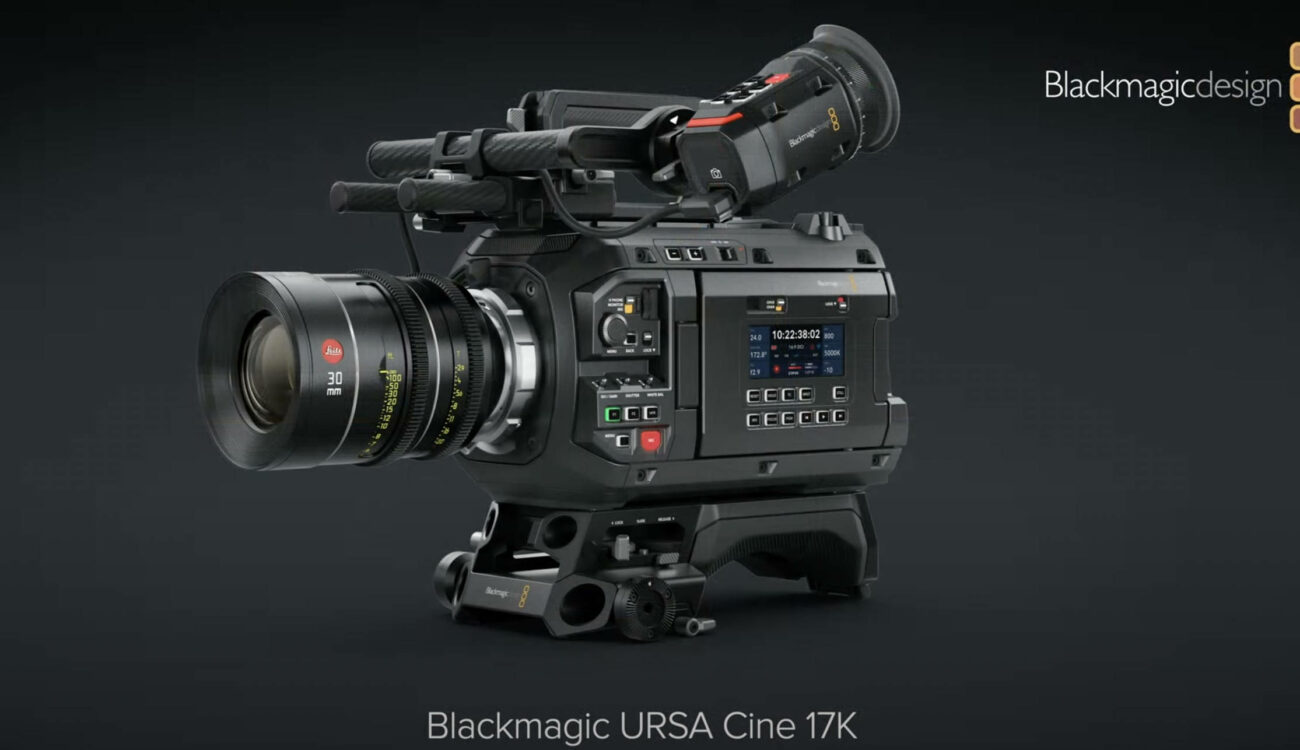
Blackmagic URSA Cine 17K 65 is an ultra-large-format digital cinema camera designed for filmmakers who need extreme resolution, 65mm-style capture and a professional Blackmagic RAW workflow.
Released in September 2024, the camera sits above the URSA Cine 12K LF and pushes Blackmagic’s cinema lineup into a much larger sensor class. Its headline feature is a 65mm RGBW sensor capable of recording up to 17,520 x 8,040 pixels.
That resolution makes the URSA Cine 17K 65 one of the most ambitious digital cinema cameras in its category. It is built for feature films, premium commercials, visual effects, large-screen productions, luxury advertising, high-end documentaries and projects that need a huge image canvas.
The camera is not designed for casual creators. It is a serious production tool that requires careful planning around lenses, storage, power, media, data management and post-production. However, for crews already working in Blackmagic RAW and DaVinci Resolve, it offers a powerful route into 65mm-style digital cinematography.
Key Camera Specifications
The Blackmagic URSA Cine 17K 65 uses a 65mm RGBW sensor with an active listed area of about 50.81 x 23.32 mm. Blackmagic describes the sensor as a 51 x 24mm class 65mm sensor.
| Feature | Blackmagic URSA Cine 17K 65 |
|---|---|
| Camera type | 65mm digital cinema camera |
| Release period | September 2024 |
| Sensor type | 65mm RGBW sensor |
| Effective sensor size | About 50.81 x 23.32 mm |
| Sensor class | 51 x 24mm class |
| Maximum resolution | 17,520 x 8,040 |
| Main codec | Blackmagic RAW |
| Proxy workflow | H.264 proxy support |
| Claimed dynamic range | 16 stops |
| Lens mount options | LPL and PL, with wider mount ecosystem support depending on kit |
| Body weight | About 3,960 g |
| Dimensions | About 280 mm x 154 mm x 153 mm |
| Listed European price | Around €19,849 before VAT, depending on retailer and configuration |
| Best use | Feature films, VFX, premium commercials and large-format production |
The camera’s main appeal is its combination of 65mm image scale, 17K capture and Blackmagic’s integrated post-production workflow.
65mm RGBW Sensor
The URSA Cine 17K 65 uses a very large RGBW sensor.
RGBW means the sensor design includes red, green, blue and white photosites. Blackmagic uses this architecture to support high resolution while also improving sensitivity and dynamic-range performance.
The sensor is much wider than full-frame 35mm and offers a large-format look that can feel more expansive than standard cinema cameras. It gives cinematographers more room for wide compositions, shallow depth, subject separation and large-screen presentation.
Why the 65mm Sensor Matters
A 65mm sensor changes the visual language of a production.
It gives filmmakers a larger canvas, wider field of view and a more immersive perspective. This can make landscapes feel grander, close-ups feel more dimensional and VFX plates more detailed.
For directors and cinematographers, the URSA Cine 17K 65 is not only about resolution. It is about the scale and texture of the image.
17K Recording Resolution
The headline specification is 17K recording at 17,520 x 8,040.
That is a massive image size, far beyond most current delivery formats. However, the benefit is not only final 17K delivery. Most productions will still finish in 4K or 8K, but the extra resolution gives editors and visual effects teams far more flexibility.
A 17K source can be cropped, stabilised, reframed, downsampled or used for multiple output formats without immediately losing image quality.
Why 17K Can Be Useful
17K capture is useful when a production needs maximum flexibility.
It helps with VFX plates, green screen work, large cinema screens, IMAX-style framing, reframing for trailers, vertical social media versions and oversampled 4K or 8K masters.
For commercial and high-end studio work, the ability to shoot once and create several deliverables later can be a major advantage.
Recording Formats
The Blackmagic URSA Cine 17K 65 supports several recording formats across 17K, 12K, 8K and 4K modes.
| Recording Format | Resolution |
| 17K 65 2.2:1 | 17,520 x 8,040 |
| 17K 65 2:1 | 16,128 x 8,040 |
| 17K 65 17:9 | 15,360 x 8,040 |
| 17K 65 16:9 | 14,304 x 8,040 |
| 17K 65 2.4:1 | 17,520 x 7,296 |
| 12K LF 3:2 | 12,288 x 8,040 |
| 12K LF 16:9 | 12,288 x 6,912 |
| 12K LF 17:9 | 12,288 x 6,480 |
| 12K LF 2.4:1 | 12,288 x 5,112 |
| 12K LF 6:5 | 9,648 x 8,040 |
| 8K 65 2.2:1 Open Gate | 11,680 x 5,360 |
| 8K 65 2:1 | 10,752 x 5,360 |
| 8K LF 3:2 | 8,192 x 5,360 |
| 8K LF 16:9 | 8,192 x 4,608 |
| 8K LF 17:9 | 8,192 x 4,320 |
| 8K LF 2.4:1 | 8,192 x 3,408 |
| 4K 65 2.2:1 Open Gate | 5,840 x 2,680 |
| 4K 65 2:1 | 5,376 x 2,680 |
| 4K LF 3:2 | 4,096 x 2,680 |
| 4K LF 16:9 | 4,096 x 2,304 |
| 4K LF 17:9 | 4,096 x 2,160 |
| 4K LF 2.4:1 | 4,096 x 1,704 |
This format range is one of the camera’s biggest strengths. It allows a production to choose between maximum sensor area, widescreen cinema, large-format 8K, 4K workflows and different delivery ratios.
Blackmagic RAW Workflow
The URSA Cine 17K 65 records in Blackmagic RAW.
Blackmagic RAW is designed to give filmmakers RAW flexibility with efficient post-production performance. It is deeply integrated with DaVinci Resolve, making it attractive for productions that already use Blackmagic’s colour grading and editing ecosystem.
The codec allows users to adjust key image settings in post, including ISO, white balance, tint and colour science controls. This gives colourists and editors more flexibility than standard compressed video files.
Why Blackmagic RAW Matters
Blackmagic RAW is one of the main reasons filmmakers choose Blackmagic cameras.
It gives smaller teams and professional crews a practical RAW workflow without the heavy complexity of some traditional cinema RAW formats. For high-resolution 17K work, this matters because media size and post-production speed become major production concerns.
The URSA Cine 17K 65 benefits from this workflow because 17K capture needs a codec that can balance quality, data rate and editing performance.
Dynamic Range
Blackmagic claims 16 stops of dynamic range for the URSA Cine 17K 65.
Independent lab tests were not included in the provided data, so the camera does not yet have a measured dynamic-range result in the same style as the URSA Cine 12K LF or PYXIS 12K. For now, the 16-stop figure should be treated as the manufacturer’s claim.
That claim still matters because dynamic range is a core part of cinema-camera performance. It affects how much detail the camera can hold between highlights and shadows.
What Dynamic Range Means in Real Production
Dynamic range helps protect bright skies, windows, practical lights, dark interiors and backlit scenes.
A camera with strong dynamic range gives cinematographers more room to expose creatively and gives colourists more flexibility in grading. However, real-world performance depends on exposure, codec settings, ISO, lighting and post-production choices.
Until detailed independent tests are widely available, productions should test the URSA Cine 17K 65 before major shoots.
Rolling Shutter
Rolling shutter was not tested in the provided camera data.
That means there is no measured figure here for fast-readout performance. This is important because rolling shutter affects fast pans, handheld movement, action scenes and moving subjects.
The URSA Cine 12K LF performs strongly in rolling-shutter tests, but the 17K 65 uses a larger and higher-resolution sensor area. Filmmakers should not assume identical performance without testing.
Why Rolling Shutter Testing Matters
Rolling shutter can make vertical lines bend or moving subjects look distorted.
This matters most in action, handheld work, car shots, sports-style footage and fast camera movement. For controlled drama, interviews, landscapes and studio work, rolling shutter may be less noticeable.
Because the URSA Cine 17K 65 is aimed at large-format premium production, camera tests should be part of pre-production.
Lens Mounts and Lens Coverage
The Blackmagic URSA Cine 17K 65 supports LPL and PL lens workflows.
This is important because the 65mm sensor needs lenses with a very large image circle. Many Super 35 lenses will not cover the full sensor area. Some full-frame lenses may also be too small for the widest 17K 65mm modes.
LPL is especially important for modern large-format cinema lenses, while PL remains widely used across professional cinema production.
Lens Coverage Is Critical
Lens coverage is one of the biggest practical issues with the URSA Cine 17K 65.
A lens that works well on full frame may still vignette on the 65mm sensor. Productions should test every lens at the intended recording mode before shooting.
The full 17K 65 2.2:1 mode requires the widest coverage. Cropped 12K LF, 8K LF and 4K LF modes may allow more lens options.
65mm Look and Cinematic Use
The URSA Cine 17K 65 is designed for large-format visual storytelling.
Its 65mm-style sensor gives cinematographers a distinctive look that can be useful for epic landscapes, luxury commercials, wide interiors, emotional close-ups and high-end visual effects.
The camera’s 17K resolution also makes it useful for productions that need very detailed imagery.
Best Visual Styles
The camera is especially suitable for:
Premium feature films
Large-format commercials
Luxury and fashion advertising
VFX-heavy productions
Green screen work
High-resolution landscape filming
Large-screen cinema
IMAX-style framing
Music videos with high-detail imagery
Studio product cinematography
It is not the best choice for every production, but it is highly attractive when the image needs scale and detail.
Body Design and Production Build
The URSA Cine 17K 65 uses the same body class as the URSA Cine 12K LF.
At about 3.96 kg, it is relatively compact for a 65mm cinema camera. It is much lighter than many older large-format production cameras, but it still needs a proper cinema build for serious shooting.
The body is designed for professional rigging, camera assistants, cinema lenses, power systems, monitoring, media management and controlled production workflows.
Why the Body Design Matters
A large-format cinema camera must work as part of a production system.
The URSA Cine 17K 65 is not just a sensor in a box. It is built to support professional accessories, on-set monitoring, assistant operation and high-resolution media workflows.
This makes it more practical for film sets than a small modular camera that needs more external accessories.
Internal Storage and Media Workflow
One of the major workflow advantages is built-in high-performance storage.
Blackmagic lists the URSA Cine 17K 65 with an 8TB media module. This helps manage the huge file sizes that come with 17K recording.
The camera also supports high-speed networking, including 10G Ethernet and Wi-Fi, for media upload and Blackmagic Cloud syncing.
Why 8TB Storage Matters
17K recording creates very large files.
A camera of this resolution needs serious media performance. Built-in high-capacity storage helps reduce immediate media limitations on set, although productions will still need strong backup systems and post-production storage.
For professional crews, data management remains one of the most important parts of using this camera.
Blackmagic Cloud and DaVinci Resolve Integration
The URSA Cine 17K 65 is designed to work closely with Blackmagic Cloud and DaVinci Resolve.
This can help productions move footage into collaborative workflows faster. Editors, colourists and post-production teams can begin working with media more efficiently, especially when proxy files are used.
For productions already built around DaVinci Resolve, this is a major advantage.
Why Cloud Workflow Helps
Modern productions often involve teams in different locations.
Cloud syncing and proxy workflows can speed up collaboration between set, editorial, colour and finishing teams. This is especially useful for commercials, streaming projects, documentaries and multi-location productions.
The URSA Cine 17K 65 fits into this kind of connected workflow better than older large-format cameras.
Blackmagic URSA Cine 17K 65 vs URSA Cine 12K LF
The URSA Cine 17K 65 and URSA Cine 12K LF are related, but they serve different production needs.
The 12K LF is a full-frame camera. The 17K 65 is an ultra-large-format 65mm camera with a much wider sensor and higher maximum resolution.
| Feature | URSA Cine 17K 65 | URSA Cine 12K LF |
| Sensor class | 65mm RGBW | Full-frame RGBW |
| Sensor size | About 50.81 x 23.32 mm | About 35.64 x 23.32 mm |
| Maximum resolution | 17,520 x 8,040 | 12,288 x 8,040 |
| Main codec | Blackmagic RAW | Blackmagic RAW |
| Lens coverage demand | Very high | Full-frame lenses are easier |
| Best use | 65mm large-format production | Full-frame cinema production |
| Main advantage | Extreme image scale | More practical full-frame workflow |
The 12K LF is easier to lens and manage. The 17K 65 is the more ambitious option when a production needs maximum scale.
Blackmagic URSA Cine 17K 65 vs ARRI ALEXA 65
The URSA Cine 17K 65 will naturally be compared with the ARRI ALEXA 65.
Both cameras target 65mm digital cinematography, but they come from different ecosystems and price categories.
| Feature | URSA Cine 17K 65 | ARRI ALEXA 65 |
| Sensor class | 65mm RGBW | 5-perf 65mm |
| Maximum resolution | 17,520 x 8,040 | 6,560 x 3,100 |
| Main codec | Blackmagic RAW | ARRIRAW |
| Availability | Commercial product | ARRI Rental system |
| Workflow | DaVinci Resolve and Blackmagic Cloud | ARRI Rental and ARRIRAW workflow |
| Main advantage | Extreme resolution and ownership access | Proven ARRI colour and legacy |
The ALEXA 65 remains legendary for its image character and film history. The URSA Cine 17K 65 is attractive because it offers extreme resolution and a more accessible ownership model.
Blackmagic URSA Cine 17K 65 vs ARRI ALEXA 265
The ARRI ALEXA 265 is a newer 65mm camera designed to make ARRI’s 65mm workflow smaller and lighter.
The URSA Cine 17K 65 focuses on extreme resolution and Blackmagic RAW workflow. The ALEXA 265 focuses on ARRI colour, 6.5K 65mm capture and a compact professional body.
| Feature | URSA Cine 17K 65 | ARRI ALEXA 265 |
| Sensor class | 65mm RGBW | 65mm ARRI sensor |
| Maximum resolution | 17,520 x 8,040 | 6,560 x 3,100 |
| Codec | Blackmagic RAW | ARRIRAW |
| Dynamic range claim | 16 stops | 15 stops |
| Best advantage | Extreme resolution | ARRI colour and 65mm workflow |
| Best for | High-resolution large-format work | Premium 65mm cinematography |
The better camera depends on the production. The Blackmagic model wins on resolution. The ARRI model wins for productions that prioritise ARRI colour science and established high-end rental workflows.
Best Uses for the Blackmagic URSA Cine 17K 65
The Blackmagic URSA Cine 17K 65 is best for productions that need extreme resolution, 65mm sensor scale and strong post-production flexibility.
It is ideal for:
Feature films
Luxury commercials
Fashion films
High-end music videos
Visual effects plates
Green screen work
Large-screen cinema
IMAX-style framing
Landscape cinematography
Premium documentaries
Studio product films
High-resolution stock footage
The camera is strongest when the production has enough crew, storage, lighting and post-production planning to support the workflow.
Who Should Buy or Rent It?
The URSA Cine 17K 65 is best for professional production companies, rental houses, studios, cinematographers and high-end owner-operators who can support a serious workflow.
Buying makes sense for companies that will use the camera regularly. Renting makes more sense for productions that only need 65mm capture for a specific film, commercial or visual effects sequence.
The camera’s listed price is far lower than many traditional 65mm cinema systems, but ownership still requires lenses, storage, batteries, support gear, monitoring and post-production capacity.
Key Takeaways
- Blackmagic URSA Cine 17K 65 was released in September 2024.
- It uses a 65mm RGBW sensor.
- The listed active sensor size is about 50.81 x 23.32 mm.
- Maximum resolution is 17,520 x 8,040.
- Blackmagic claims 16 stops of dynamic range.
- Independent dynamic-range and rolling-shutter lab results were not provided in the pasted data.
- The camera records Blackmagic RAW.
- Recording formats include 17K, 12K LF, 8K and 4K modes.
- Lens mount workflows include LPL and PL.
- The body weighs about 3.96 kg.
- Blackmagic lists an 8TB media module and high-speed networking support.
- It is designed for large-format cinema, VFX, premium commercials and high-resolution production.
- Compared with URSA Cine 12K LF, it offers a much larger sensor and higher resolution.
- Compared with ARRI ALEXA 65, it offers far more pixels and a different ownership model.
Frequently Asked Questions
What is the Blackmagic URSA Cine 17K 65?
The Blackmagic URSA Cine 17K 65 is a 65mm digital cinema camera with a 17K RGBW sensor, Blackmagic RAW recording and professional production workflow tools.
When was the Blackmagic URSA Cine 17K 65 released?
The camera was released in September 2024.
What is the maximum resolution?
The maximum recording resolution is 17,520 x 8,040 in 17K 65 2.2:1 mode.
What sensor does the camera use?
It uses a 65mm RGBW sensor with an active listed area of about 50.81 x 23.32 mm.
What is the claimed dynamic range?
Blackmagic claims 16 stops of dynamic range.
Has the dynamic range been independently tested?
The pasted data does not include independent dynamic-range test results for this model, so the 16-stop figure should be treated as a manufacturer claim until detailed lab data is available.
Has rolling shutter been tested?
The pasted data does not include rolling-shutter test results for the URSA Cine 17K 65.
What codec does the URSA Cine 17K 65 record?
The camera records Blackmagic RAW and supports proxy workflows for easier editing.
What lens mounts does it support?
The camera supports LPL and PL lens workflows, with broader mount ecosystem support depending on configuration.
How heavy is the camera?
The body weighs about 3.96 kg.
What makes the URSA Cine 17K 65 different from the URSA Cine 12K LF?
The 17K 65 has a larger 65mm sensor and higher maximum resolution, while the 12K LF uses a full-frame sensor and is easier to lens.
Who should use the Blackmagic URSA Cine 17K 65?
It is best for professional filmmakers, rental houses, VFX teams, commercial studios and productions that need 65mm image scale with extreme resolution.
Conclusion
Blackmagic URSA Cine 17K 65 is one of the boldest cinema cameras in Blackmagic Design’s lineup.
Its 65mm RGBW sensor, 17,520 x 8,040 maximum resolution, Blackmagic RAW workflow, 8TB media module and production-focused body make it a serious tool for filmmakers who need scale, detail and flexibility.
The camera is not for every production. It demands careful lens testing, strong data management and a post-production pipeline that can handle huge files. However, for crews ready to work at this level, the URSA Cine 17K 65 offers an unusually powerful path into 65mm digital cinematography.
It is a camera built for big images, large screens and ambitious productions.
Read Also: Blackmagic URSA Cine 12K LF: Specs, Sensor, Dynamic Range and Features