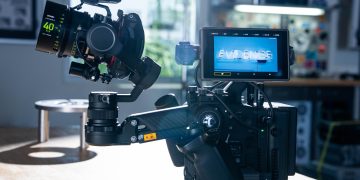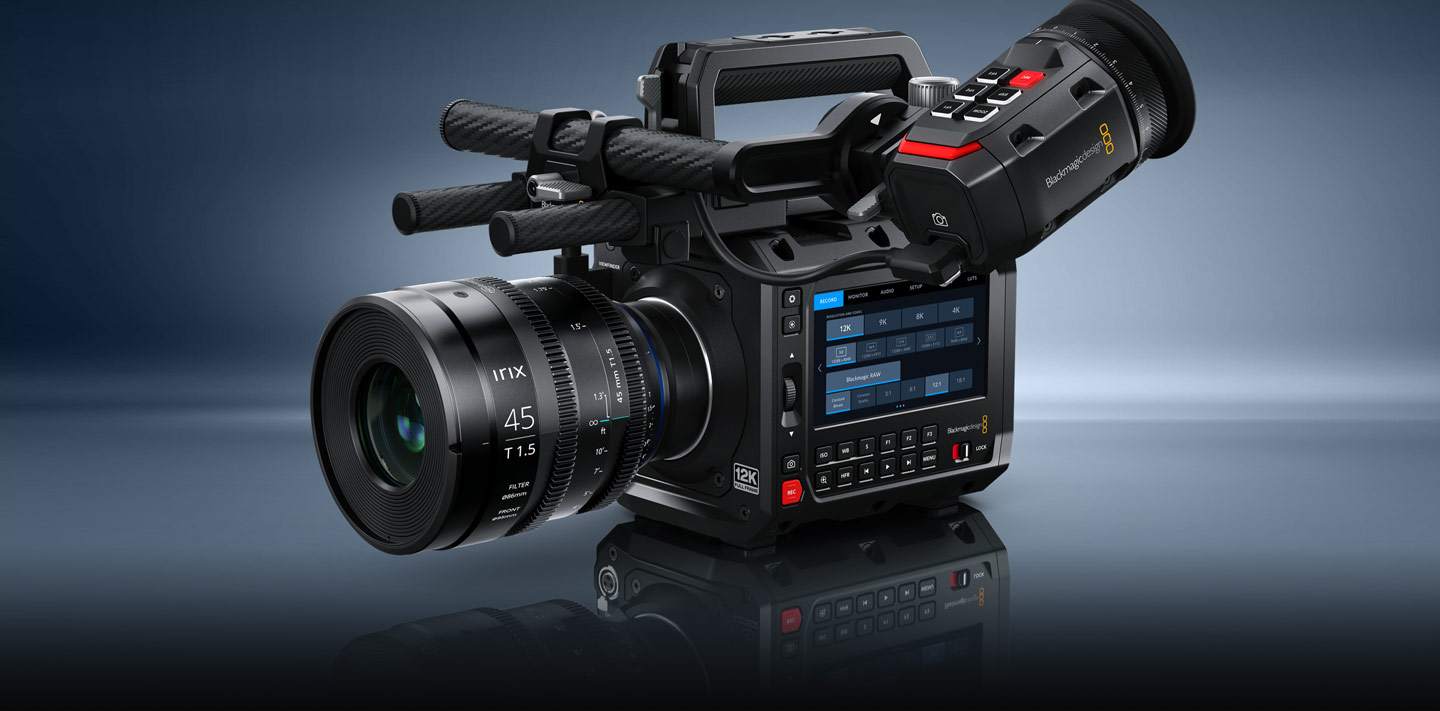
Blackmagic PYXIS 6K is a full-frame digital cinema camera designed for filmmakers who want Blackmagic RAW, modular rigging and a 6K Open Gate sensor in a compact box-style body.
Released in April 2024, the camera was created as a more customizable alternative to traditional handheld cinema cameras. Instead of using a camcorder-style shape, the PYXIS 6K uses a compact cube-like body that can be built for handheld work, studio production, shoulder rigs, gimbals, drones, car mounts and documentary setups.
The camera uses a full-frame 35mm sensor measuring about 35.93 x 23.95 mm. It records Blackmagic RAW, supports 6K Open Gate recording at 6048 x 4032, offers dual native ISO at 400 and 3200, and comes in EF, L-Mount and PL versions.
At around $3,379 for the EF model, it sits in a highly competitive price range for independent filmmakers, production companies, documentary shooters, YouTubers, music video creators and small commercial teams.
Key Camera Specifications
The Blackmagic PYXIS 6K combines a full-frame 6K sensor with Blackmagic’s familiar BRAW workflow and a modular design focused on rigging flexibility.
| Feature | Blackmagic PYXIS 6K |
|---|---|
| Camera type | Full-frame digital cinema camera |
| Release period | April 2024 |
| Sensor format | Full Frame 35mm |
| Sensor size | 35.93 x 23.95 mm |
| Maximum resolution | 6048 x 4032 |
| Open Gate aspect ratio | 3:2 |
| Base sensitivity | Dual native ISO 400 and 3200 |
| Lens mount options | EF, L-Mount and PL |
| Main codec | Blackmagic RAW |
| Proxy recording | H.264 proxies |
| Claimed dynamic range | 13 stops |
| Measured dynamic range | Up to 11.5 stops at SNR=2 in provided lab data |
| Best rolling-shutter result | 13.5ms in cropped 4K DCI, based on provided lab data |
| Body weight | About 1.5 kg |
| Dimensions | About 151 mm x 106 mm x 106 mm |
| Listed EF price | Around $3,379 before taxes |
The PYXIS 6K is not built to be the highest-resolution camera in Blackmagic’s lineup. Its strength is the balance between price, image quality, full-frame capture, modular body design and post-production workflow.
Full-Frame 6K Sensor
The Blackmagic PYXIS 6K uses a full-frame 6K sensor with a 6048 x 4032 Open Gate resolution.
This sensor size gives filmmakers a wider field of view than Super 35 cameras and allows for shallow depth of field when paired with fast full-frame lenses. It also supports flexible framing for different delivery formats.
The Open Gate 3:2 image is especially useful because it captures the full height and width of the sensor. This gives editors more room for cropping, stabilisation, vertical video versions, anamorphic extraction and reframing in post-production.
Why Full Frame Matters
Full frame gives cinematographers a different visual feel from Super 35.
It can create a wider perspective, smoother subject separation and a more spacious image. This is useful for interviews, travel films, music videos, fashion shoots, commercials, narrative work and branded content.
For small production teams, the full-frame sensor also gives access to many affordable lenses, especially in EF and L-Mount workflows.
Dynamic Range Performance
Blackmagic claims 13 stops of dynamic range for the PYXIS 6K.
In the lab figures provided, the camera measured 11.5 stops at SNR=2 in Full Sensor 6K Open Gate at ISO 400 and BMD Film. At ISO 3200, the same 6K Open Gate mode measured 10.2 stops at SNR=2. In cropped 4K DCI 17:9 mode, the result was 11.7 stops at SNR=2.
| Sensor Mode | Resolution | Codec | ISO | Gamma | Measured Dynamic Range |
| Full Sensor 6K Open Gate | 6048 x 4032 | BRAW | 400 | BMD Film | 11.5 stops at SNR=2 |
| Full Sensor 6K Open Gate | 6048 x 4032 | BRAW | 3200 | BMD Film | 10.2 stops at SNR=2 |
| 4K DCI 17:9 cropped | 4096 x 2160 | BRAW | 400 | BMD Film | 11.7 stops at SNR=2 |
These numbers show that the PYXIS 6K performs best at ISO 400 when maximum image latitude matters. ISO 3200 is useful in low light, but it gives up some measured dynamic range.
What Dynamic Range Means for Filmmakers
Dynamic range affects how much detail a camera can hold between bright highlights and dark shadows.
For filmmakers, this matters in scenes with windows, skies, practical lights, reflective surfaces and dark interiors. The PYXIS 6K gives creators useful flexibility, but it still needs careful exposure.
The best results will usually come from protecting highlights, avoiding heavy underexposure and using Blackmagic RAW controls carefully in DaVinci Resolve.
Rolling Shutter Performance
Rolling shutter is one of the main technical limits to understand with the Blackmagic PYXIS 6K.
In the provided lab data, the camera measured 25ms in Full Sensor 3:2 Open Gate, 19.8ms in Full Sensor 6K 17:9 DCI and 13.5ms in cropped 4K DCI.
| Sensor Mode | Resolution | Codec | Rolling Shutter |
| Full Sensor 3:2 Open Gate | 6048 x 4032 | BRAW | 25ms |
| Full Sensor 6K 17:9 DCI | 6048 x 3200 | BRAW | 19.8ms |
| 4K DCI cropped | 4096 x 2160 | BRAW | 13.5ms |
These figures mean the PYXIS 6K is better suited to controlled camera movement when shooting full sensor. Fast pans, quick handheld movement or action scenes may show more skew in Open Gate.
The cropped 4K DCI mode is better when movement matters because it reads faster.
Why Rolling Shutter Matters
Rolling shutter can make fast movement look distorted.
If the sensor reads slowly, vertical lines may bend during fast pans, and moving subjects may appear warped. This is more visible in action, sports, handheld work and whip pans.
For interviews, studio work, controlled commercial scenes and slow camera movement, the PYXIS 6K rolling shutter is easier to manage. For action-heavy work, cropped 4K DCI is the safer mode.
Blackmagic RAW Recording
The PYXIS 6K records Blackmagic RAW internally.
Blackmagic RAW is one of the camera’s strongest advantages because it gives filmmakers RAW flexibility while keeping post-production practical. It works especially well inside DaVinci Resolve, where users can adjust ISO, white balance, tint and other image settings after recording.
The camera also records H.264 proxies, making it easier to start editing quickly and share lighter files with editors or collaborators.
Why BRAW Matters
Blackmagic RAW gives creators more control than standard compressed video.
It helps preserve colour, exposure and detail in a way that supports grading. For independent filmmakers and small production teams, this is valuable because it gives a professional post-production workflow without the cost of more expensive cinema RAW systems.
The included DaVinci Resolve Studio workflow also strengthens the value of the camera.
Recording Modes and Formats
The Blackmagic PYXIS 6K supports several recording formats for full-frame, anamorphic, Super 35, Super 16 and HD workflows.
| Recording Format | Resolution |
| 6K Open Gate | 6048 x 4032 |
| 6:5 Anamorphic | 4832 x 4032 |
| 6K DCI | 6048 x 3200 |
| 6K 16:9 | 6048 x 3408 |
| 6K 2.4:1 | 6048 x 2520 |
| Super35 4:3 | 4096 x 3072 |
| 4K 16:9 | 4096 x 2304 |
| 4K DCI 17:9 | 4096 x 2160 |
| Super16 16:9 | 2112 x 1184 |
| HD | 1920 x 1080 |
This range gives the camera strong flexibility. A filmmaker can use full-frame Open Gate for maximum capture, 6:5 for anamorphic workflows, 4K DCI for faster readout and Super 16 for higher-speed work.
Frame Rates and Data Rates
The PYXIS 6K can record 6K Open Gate at up to 36fps.
In the provided data, 6K Open Gate at 29.97p reaches about 3 Gb/s in Blackmagic RAW 3:1, 1.8 Gb/s in 5:1, 1.1 Gb/s in 8:1 and 752 Mb/s in 12:1.
| Mode | Codec | Frame Rate | Approximate Data Rate |
| 6K Open Gate | BRAW 3:1 | 29.97p | 3 Gb/s |
| 6K Open Gate | BRAW 5:1 | 29.97p | 1.8 Gb/s |
| 6K Open Gate | BRAW 8:1 | 29.97p | 1.1 Gb/s |
| 6K Open Gate | BRAW 12:1 | 29.97p | 752 Mb/s |
Blackmagic also lists 4K DCI up to 60fps, Super 16 up to 100fps and HD up to 120fps.
Choosing the Right Codec Setting
The best Blackmagic RAW setting depends on the job.
BRAW 3:1 gives higher image quality but creates larger files. BRAW 8:1 and 12:1 are easier for longer shooting days, documentary work and budget-conscious productions.
For interviews, online content and corporate work, higher compression may be practical. For commercials, music videos and narrative scenes, lower compression gives more confidence in post-production.
Lens Mount Options
The Blackmagic PYXIS 6K is available in EF, L-Mount and PL versions.
The EF version is useful for filmmakers who already own Canon EF lenses. The L-Mount version works well with modern mirrorless lenses from Leica, Panasonic and Sigma, and it can also support adapted lenses. The PL version is aimed at professional cinema lens users.
| Mount | Best For |
| EF | Canon EF lenses, affordable full-frame glass, indie filmmakers |
| L-Mount | Mirrorless lenses, adapters, flexible modern lens workflows |
| PL | Professional cinema lenses and studio production |
This mount choice is one of the biggest strengths of the PYXIS 6K. It allows users to choose the version that matches their lens collection and production style.
Lens Coverage Considerations
Because the sensor is full frame, not every lens will cover the full Open Gate image.
Super 35 lenses may need cropped modes. Some vintage lenses may show vignetting or softness at the edges. Anamorphic lenses should be tested before production, especially in 6:5 mode.
Full-frame lenses are the safest option for using the full 6K Open Gate sensor area.
Modular Box-Style Body
The PYXIS 6K uses a compact modular body built for rigging.
At about 1.5 kg, the camera is light enough for many setups but still designed to be built out with accessories. It includes multiple mounting points and side-plate options, making it suitable for handles, monitors, microphones, wireless video, SSDs, cages and power systems.
This is different from Blackmagic’s Pocket Cinema Camera design. The PYXIS is meant to be a production hub that can adapt to different shooting styles.
Why Modular Design Matters
A modular camera gives filmmakers more control.
A documentary shooter may keep the camera small. A commercial crew may add a matte box, follow focus, top handle, monitor and V-mount battery. A music video team may build it for a gimbal or car rig.
This flexibility makes the PYXIS 6K attractive to creators who want one camera body that can serve many jobs.
Media and Connectivity
The PYXIS 6K includes dual CFexpress media recorders.
CFexpress media is fast enough for high-data-rate Blackmagic RAW recording. The camera also supports USB-C expansion for external flash media or SSD workflows, giving users more flexibility in how they capture and move footage.
The camera includes Ethernet support for network control and media workflows, plus Blackmagic Cloud features for collaboration.
Why CFexpress and Proxies Help
High-resolution RAW footage can be heavy.
Dual CFexpress slots help with reliability and continuous shooting, while proxy recording makes editing easier. A production can record high-quality BRAW masters and lighter proxy files at the same time.
For editors, this speeds up post-production and makes remote collaboration easier.
Monitoring and Controls
The PYXIS 6K includes a 4-inch HDR touchscreen.
The screen can be used for settings, menus, framing and focus checks. Blackmagic also offers PYXIS monitor accessories for larger viewing and easier camera control when the built-in display is blocked by rigs.
The camera includes physical controls, function buttons and Blackmagic OS, making it familiar to users coming from other Blackmagic cameras.
Why Controls Matter
Fast controls help on set.
A camera with good buttons, menus and monitoring tools lets operators adjust ISO, white balance, shutter, false colour, focus assist and recording settings quickly. This is especially important for documentary, event, commercial and small-crew work.
Autofocus and Small-Crew Shooting
Blackmagic supports autofocus features on the PYXIS 6K, including face and object detection.
This is useful for solo operators and small crews. Traditional cinema cameras often rely heavily on manual focus, but modern autofocus can help when filming interviews, walk-and-talks, YouTube content, documentaries and social video.
Why Autofocus Matters for Creators
Many PYXIS 6K users will not always have a dedicated focus puller.
Autofocus can help keep subjects sharp when filming alone or working quickly. It is not a replacement for a skilled focus puller on high-end productions, but it adds practical value for creators and small teams.
Best Uses for the Blackmagic PYXIS 6K
The Blackmagic PYXIS 6K is best for filmmakers who want a full-frame cinema camera with a flexible build and a strong RAW workflow.
It is ideal for:
Independent films
Documentaries
YouTube productions
Commercials
Music videos
Corporate films
Interviews
Branded content
Social media campaigns
Product videos
Small studio productions
Gimbal and rig-based shooting
The camera is strongest when productions can manage BRAW storage, build the camera properly and expose carefully.
Blackmagic PYXIS 6K vs PYXIS 12K
The PYXIS 6K and PYXIS 12K share the same family design, but they target different users.
The PYXIS 6K is more affordable, lighter on storage and easier for general production. The PYXIS 12K offers far more resolution, stronger claimed dynamic range and more flexibility for cropping and oversampling.
| Feature | PYXIS 6K | PYXIS 12K |
| Sensor | Full-frame 6K | Full-frame 12K RGBW |
| Maximum resolution | 6048 x 4032 | 12288 x 8040 |
| Claimed dynamic range | 13 stops | 16 stops |
| Open Gate frame rate | Up to 36fps | Up to 40fps |
| Main codec | Blackmagic RAW | Blackmagic RAW |
| Best advantage | Lower cost and simpler workflow | Resolution and post flexibility |
| Best use | Indie and general production | VFX, commercials and high-resolution work |
The PYXIS 6K is the better choice for most budget-conscious filmmakers. The PYXIS 12K is better when resolution and reframing matter more than storage demands.
Blackmagic PYXIS 6K vs Blackmagic Cinema Camera 6K
The PYXIS 6K shares many image ideas with Blackmagic’s full-frame Cinema Camera 6K, but the body design is very different.
The Cinema Camera 6K is a more traditional handheld camera body. The PYXIS 6K is a modular box camera built for rigging and production flexibility.
| Feature | PYXIS 6K | Cinema Camera 6K |
| Sensor class | Full frame 6K | Full frame 6K |
| Body design | Modular box camera | Handheld-style body |
| Lens mount options | EF, L and PL versions | L-Mount |
| Main workflow | BRAW and proxies | BRAW |
| Best advantage | Rigging flexibility | Lower-cost handheld operation |
| Best use | Production builds | Solo handheld shooting |
The PYXIS 6K is better for filmmakers who want to build a custom rig. The Cinema Camera 6K is better for simpler handheld setups.
Key Takeaways
- Blackmagic PYXIS 6K was released in April 2024.
- It uses a full-frame 6K sensor measuring about 35.93 x 23.95 mm.
- The maximum Open Gate resolution is 6048 x 4032.
- Lens mount options include EF, L-Mount and PL.
- It records Blackmagic RAW and H.264 proxy files.
- It has dual native ISO of 400 and 3200.
- Blackmagic claims 13 stops of dynamic range.
- The provided lab data shows up to 11.5 stops at SNR=2 in 6K Open Gate.
- Cropped 4K DCI measured 11.7 stops at SNR=2.
- Rolling shutter measured 25ms in Open Gate and 13.5ms in cropped 4K DCI.
- 6K Open Gate supports up to 36fps.
- 4K DCI supports up to 60fps.
- Super 16 supports up to 100fps and HD up to 120fps.
- The body weighs about 1.5 kg.
- The camera is best for indie films, documentaries, commercials, YouTube and small production teams.
Frequently Asked Questions
What is the Blackmagic PYXIS 6K?
The Blackmagic PYXIS 6K is a full-frame digital cinema box camera with 6K Open Gate recording, Blackmagic RAW, dual CFexpress slots and modular rigging support.
When was the Blackmagic PYXIS 6K released?
The camera was released in April 2024.
What sensor does the PYXIS 6K use?
It uses a full-frame 35mm sensor measuring about 35.93 x 23.95 mm.
What is the maximum resolution?
The maximum recording resolution is 6048 x 4032 in 6K Open Gate mode.
What lens mounts are available?
The PYXIS 6K is available in EF, L-Mount and PL versions.
What is the base ISO?
The camera has dual native ISO at 400 and 3200.
What codec does the PYXIS 6K record?
It records Blackmagic RAW and can also create H.264 proxy files.
What dynamic range does the PYXIS 6K offer?
Blackmagic claims 13 stops of dynamic range. The provided lab data shows 11.5 stops at SNR=2 in 6K Open Gate at ISO 400.
What is the rolling shutter performance?
The provided lab data shows 25ms in 6K Open Gate, 19.8ms in 6K 17:9 DCI and 13.5ms in cropped 4K DCI.
Can the PYXIS 6K shoot 6K Open Gate?
Yes. It can shoot 6K Open Gate at 6048 x 4032 up to 36fps.
Can the PYXIS 6K shoot 4K 60fps?
Yes. Blackmagic lists 4K DCI recording up to 60fps.
Who should use the Blackmagic PYXIS 6K?
It is best for independent filmmakers, documentary shooters, commercial creators, YouTubers, music video teams and production companies that want a modular full-frame BRAW camera.
Conclusion
Blackmagic PYXIS 6K is a strong full-frame cinema camera for creators who want Blackmagic RAW, 6K Open Gate recording and a rig-friendly body at a competitive price.
Its biggest strengths are flexibility, lens-mount choice, BRAW workflow, dual native ISO, CFexpress recording, proxy support and modular design. It is especially attractive for independent filmmakers and small production teams that want a professional camera body they can build around different jobs.
The camera does have limits. Rolling shutter is noticeable in full sensor modes, and measured dynamic range is lower than the 13-stop claim in the provided lab data. However, when used carefully, especially at ISO 400 and with proper exposure, the PYXIS 6K can deliver strong cinematic images.
For filmmakers who want a compact full-frame Blackmagic camera that fits into a serious production workflow, the PYXIS 6K remains one of the most practical options in its price class.
Read Also: Blackmagic URSA Cine 17K 65: Specs, Sensor, Recording Modes and Features