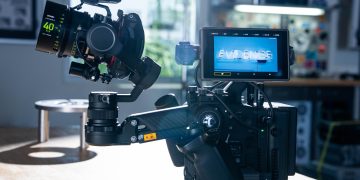
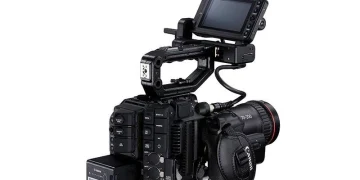
DJI Ronin 4D 6K is a full-frame cinema camera system designed for filmmakers who need camera movement, stabilization, focusing and professional recording in one integrated production body.
Released in the 2021 Ronin 4D launch cycle, the DJI Ronin 4D 6K introduced a different approach to cinema camera design. Instead of requiring a separate camera, gimbal, monitor, focus system and wireless video setup, DJI combined these tools into one modular filmmaking system.
The camera uses the Zenmuse X9-6K full-frame gimbal camera. It supports full-frame 6K capture, Super 35 crop modes, ProRes recording, H.264 recording, D-Gamut/D-Log colour, LiDAR-assisted focusing and DJI’s 4-axis stabilization system.
The DJI Ronin 4D 6K is not a simple mirrorless camera. It is a moving-camera system built for independent filmmakers, commercial crews, documentary shooters, music video teams, event filmmakers and production houses that want smooth movement without building a traditional rig from many separate parts.
Key DJI Ronin 4D 6K Specifications
| Feature | DJI Ronin 4D 6K |
|---|---|
| Release period | October 2021 announcement cycle |
| Camera type | Integrated full-frame cinema camera |
| Camera module | Zenmuse X9-6K |
| Sensor class | Full-frame 35mm |
| Active full-frame 6K DCI area | About 35.7 x 18.8 mm |
| Lens mount options | DL, E, M and L mount workflows |
| Base sensitivity | Dual native ISO 800 and 5000 |
| Maximum listed full-frame format | 6K DCI, 6008 x 3168 |
| 6K 2.39:1 format | 6008 x 2512 |
| Super 35 recording | 4K DCI and 2K DCI modes |
| Main codecs | ProRes RAW, ProRes XQ, ProRes HQ, ProRes LT and H.264 |
| Highest listed 6K 2.39:1 frame rate | 59.94p |
| Built-in ND filters | 9-stop physical ND system |
| Stabilization | 4-axis active stabilization |
| Focus system | LiDAR-assisted focusing |
| Supplied dynamic range result | Up to 12.4 stops at SNR=2 |
| Supplied rolling shutter result | 19.6ms in full-frame 6K |
| Body weight in supplied data | About 4,670g |
| Current price context | Around $4,999 before tax for the 6K Combo Kit |
The Ronin 4D 6K is best judged as a complete production system, not only as a camera body. Its main value is the combination of full-frame image quality, stabilized movement, LiDAR focus and fast setup.
Full-Frame Zenmuse X9-6K Sensor
The DJI Ronin 4D 6K uses the Zenmuse X9-6K full-frame camera.
The supplied lens coverage data lists full-frame 6K DCI at 6008 x 3168 with an active area of about 35.7 x 18.8 mm. This gives filmmakers a wide field of view and strong full-frame subject separation when using compatible lenses.
The camera also supports Super 35 crop modes. This is useful when working with lenses that do not fully cover the full-frame recording area or when a tighter field of view is needed.
Why Full Frame Matters
Full-frame capture gives filmmakers a wider look than Super 35 with the same focal length.
It also supports shallower depth of field when using fast lenses. This can help create a polished cinematic style for commercials, music videos, narrative films, wedding films and branded content.
For moving-camera work, full frame can also make small spaces look wider and more dramatic.
6K Recording Modes
The DJI Ronin 4D 6K records full-frame 6K video.
The supplied recording data lists full-frame 6K DCI at 6008 x 3168 and full-frame 6K 2.39:1 at 6008 x 2512. The 2.39:1 mode supports frame rates up to 59.94p in several professional codecs.
Recording Formats
| Recording Format | Resolution |
| Full Frame 6K DCI | 6008 x 3168 |
| Full Frame 6K 2.39:1 | 6008 x 2512 |
| Full Frame 4K DCI | 4096 x 2160 |
| Full Frame 4K 2.39:1 | 4096 x 1712 |
| Full Frame 2K DCI | 2048 x 1080 |
| Super 35 4K DCI | 4096 x 2160 |
| Super 35 4K 2.39:1 | 4096 x 1712 |
| Super 35 2K DCI | 2048 x 1080 |
This gives productions several choices. A high-end commercial may shoot 6K for reframing and grading. A smaller project may use 4K for easier storage and faster editing. Super 35 modes can help when using smaller image-circle lenses or faster readout.
ProRes RAW and ProRes Workflows
The DJI Ronin 4D 6K supports several professional recording formats.
The supplied camera data lists ProRes RAW, ProRes XQ, ProRes HQ and ProRes LT modes. DJI’s current specifications also list Apple ProRes RAW, Apple ProRes 4444 XQ, Apple ProRes 422 HQ, Apple ProRes 422 LT and 10-bit H.264 workflows.
ProRes RAW is the most flexible option for post-production, but buyers should check whether the RAW license and required media are included in their kit. Some workflows may require separate activation or specific recording media.
6K 2.39:1 Recording Examples
| Resolution | Codec | Frame Rate | Datarate | Sampling | Bit Depth |
| 6008 x 2512 | ProRes RAW | 59.94p | 3.5 Gb/s | RAW | 12-bit |
| 6008 x 2512 | ProRes XQ | 59.94p | 6.9 Gb/s | 4:4:4:4 | 12-bit |
| 6008 x 2512 | ProRes HQ | 59.94p | 3.1 Gb/s | 4:2:2 | 10-bit |
| 6008 x 2512 | ProRes LT | 59.94p | 1.5 Gb/s | 4:2:2 | 10-bit |
These modes show that the Ronin 4D 6K is aimed at serious workflows. Its best recording formats create large files, so users need strong media, fast storage and a proper backup plan.
Dynamic Range Performance
The supplied lab data lists the DJI Ronin 4D 6K with a maximum dynamic range of 12.4 stops at SNR=2.
That result was measured in full-frame 6K ProRes RAW at 25fps, ISO 800 and D-Gamut/D-Log. At ISO 5000, the supplied data lists 12 stops at SNR=2.
Dynamic Range Results
| Mode | Resolution | Codec | ISO | Gamma | SNR=2 Dynamic Range |
| Full Frame | 6008 x 3168 | ProRes RAW | ISO 800 | D-Gamut/D-Log | 12.4 stops |
| Full Frame | 6008 x 3168 | ProRes RAW | ISO 5000 | D-Gamut/D-Log | 12.0 stops |
| Full Frame | 6008 x 3168 | ProRes HQ | ISO 800 | D-Gamut/D-Log | 12.1 stops |
| Full Frame | 6008 x 3168 | ProRes HQ | ISO 5000 | D-Gamut/D-Log | 12.1 stops |
These results show that the Ronin 4D 6K performs well for a full-frame cinema camera with an integrated gimbal design. ProRes RAW gives the strongest result in the supplied test data, while ProRes HQ remains close enough for many professional workflows.
Rolling Shutter Performance
The supplied lab data lists a minimum full-frame 6K rolling shutter result of 19.6ms.
That result was measured in full-frame 6K ProRes RAW at 25fps. Super 35 crop modes are faster, with the supplied data listing 14.5ms in Super 35 4K ProRes RAW at 25fps and 13.4ms in Super 35 4K ProRes RAW at 60fps.
Rolling Shutter Results
| Mode | Resolution | Codec | Frame Rate | Rolling Shutter |
| Full Frame 6K | 6008 x 3168 | ProRes RAW | 25p | 19.6ms |
| Super 35 4K | 4096 x 2160 | ProRes RAW | 25p | 14.5ms |
| Super 35 4K | 4096 x 2160 | ProRes RAW | 60p | 13.4ms |
For a camera designed around movement, rolling shutter matters. The full-frame 6K result is usable, but fast pans and action scenes may show skew. Super 35 4K modes are better when faster sensor readout is important.
4-Axis Stabilization
The DJI Ronin 4D 6K includes 4-axis active stabilization.
Traditional gimbals stabilize pan, tilt and roll. The Ronin 4D adds a Z-axis system to help reduce vertical movement from walking. This makes handheld tracking shots smoother and reduces the bounce that can appear when an operator walks with a normal gimbal.
Why 4-Axis Stabilization Matters
The 4-axis system is the main reason the Ronin 4D feels different from a normal cinema camera.
It helps with:
Walk-and-talk scenes
Music video movement
Wedding cinema shots
Commercial tracking shots
Documentary movement
Action scenes
Handheld dolly-style shots
Solo-operator filming
It does not replace every dolly, Steadicam or crane shot, but it gives small crews a strong moving-camera tool in one package.
LiDAR Focusing System
The DJI Ronin 4D 6K supports LiDAR-assisted focusing.
LiDAR helps measure subject distance and supports DJI’s Automated Manual Focus system. This is useful when using manual lenses, moving subjects or shallow-depth-of-field full-frame shots.
For solo operators, LiDAR focus can be a major workflow advantage. It helps operators keep focus while also managing framing, movement and exposure.
Why LiDAR Focus Helps
Manual focusing on a stabilized moving camera is difficult.
LiDAR focus gives operators more confidence when subjects move toward or away from the camera. It can be especially useful for documentary work, music videos, weddings, commercials and fast-moving production environments.
The system still requires practice, calibration and compatible setups, but it is one of the Ronin 4D’s strongest features.
Built-In 9-Stop ND Filters
The DJI Ronin 4D 6K includes built-in physical ND filters.
The ND system ranges from clear through ND 512, giving up to 9 stops of exposure control. Built-in ND filters are essential for cinema work because they allow filmmakers to keep natural shutter speeds and wider apertures in bright light.
This matters even more on a stabilized camera. Adding external matte boxes and filters can affect balance, weight and handling. Built-in ND makes the Ronin 4D faster to operate.
Dual Native ISO
The DJI Ronin 4D 6K uses dual native ISO 800 and 5000.
This gives filmmakers more flexibility in different lighting conditions. ISO 800 is useful for normal daylight, studio and controlled-lighting work. ISO 5000 helps in low-light scenes, night exteriors, dim interiors and available-light documentary filming.
ISO Workflow Guide
Use ISO 800 when light is controlled or bright enough.
Use ISO 5000 when filming in darker scenes and when preserving exposure is more important than staying at the lower base ISO.
In both cases, D-Gamut/D-Log should be exposed carefully. Log footage gives grading flexibility, but underexposure can still create noise, especially in shadows.
D-Gamut and D-Log
The Ronin 4D 6K supports D-Gamut/D-Log recording.
D-Log gives a flatter image designed for grading, while D-Gamut provides a wide colour space for post-production. This helps the camera fit into professional workflows where footage needs to be matched, graded or delivered in a specific look.
For creators who want faster turnaround, ProRes HQ with a standard correction workflow may be easier. For maximum control, ProRes RAW and D-Gamut/D-Log provide more flexibility.
Lens Mount Options
The DJI Ronin 4D 6K supports multiple lens-mount options.
The supplied data lists DL, E, M and L mount workflows. DJI DL lenses are lightweight and optimized for the system. Sony E-mount, Leica M-mount and L-Mount options expand compatibility with many compact stills and cinema lenses.
Lens Choice Considerations
Lens weight matters on the Ronin 4D 6K.
Because the camera is built around a stabilized gimbal system, not every lens will balance or work well. Smaller lenses are usually better. Operators should check compatibility before using heavier zooms, matte boxes or unusual lens setups.
The best lenses for the Ronin 4D are often compact, lightweight and easy to balance.
Media and Storage
The Ronin 4D 6K supports demanding recording workflows.
High-end ProRes RAW, ProRes XQ and ProRes HQ modes can create very large files. The supplied data lists multi-gigabit-per-second datarates in 6K 2.39:1 modes.
This means users need fast recording media and reliable storage planning.
Storage Planning for 6K Shoots
Professional crews should plan for:
Fast recording media
Enough capacity for long takes
Checksum backups
High-speed offload drives
Proxy editing workflows
Large archive storage
Clear file naming
Reliable battery and media rotation
The camera’s best image quality comes with serious data demands.
Body Design and Handling
The DJI Ronin 4D 6K weighs about 4,670g in the supplied data.
That makes it much heavier than a mirrorless camera but more integrated than a traditional cinema camera plus gimbal rig. It includes a camera, gimbal, Z-axis stabilization, monitor, handgrips and focusing tools in a unified system.
The body is built from lightweight materials, but the full system still requires strength and stamina for long handheld shoots.
Who Will Like the Handling?
The Ronin 4D 6K is best for operators who want stabilized movement without building a rig from separate parts.
It is useful for filmmakers who often move with subjects, shoot handheld sequences, work quickly on location or need smooth shots without a full grip team.
It may feel awkward for crews who prefer shoulder-mounted cameras or traditional cinema rigs.
Price and Availability
The supplied price data lists the DJI Ronin 4D 6K Combo Kit at $4,999 and about €4,131.41 before tax or VAT.
Current retailer pricing can vary by region, package and stock. Buyers should check whether their package includes the high-bright monitor, LiDAR range finder, handles, battery, charging hub, lens mount, storage, RAW license and other required accessories.
The lower current price makes the Ronin 4D 6K more attractive than it was at launch, especially for creators who need movement and stabilization as part of the camera system.
DJI Ronin 4D 6K vs Ronin 4D 8K
The DJI Ronin 4D 8K is the higher-resolution version.
The 8K model offers a Zenmuse X9-8K camera module, higher-resolution recording and stronger future-proofing for productions that need 8K capture. It also has different ISO behaviour when Dynamic Range Expansion is used.
The 6K model remains cheaper and may be more practical for many filmmakers. It records full-frame 6K, supports strong ProRes workflows and offers the same core Ronin 4D movement advantages.
Choose the 8K model if resolution is the priority. Choose the 6K model if value, file size and practical production use matter more.
DJI Ronin 4D 6K vs Traditional Camera and Gimbal
The Ronin 4D 6K competes with a full camera-and-gimbal setup.
A traditional setup might include a mirrorless or cinema camera, gimbal, external monitor, wireless transmitter, focus motor, follow focus and extra rigging. The Ronin 4D combines many of those tools.
Ronin 4D Advantages
Faster setup
Integrated stabilization
LiDAR focusing
Built-in ND filters
Professional codecs
Full-frame sensor
Less rig-building time
Better solo-operator workflow
Traditional Rig Advantages
More camera choice
More lens flexibility
Easier shoulder work
Potentially lighter setups
Simpler upgrades
More familiar crew workflows
The better choice depends on the production style.
Who Should Buy the DJI Ronin 4D 6K?
The DJI Ronin 4D 6K is best for filmmakers who often need moving shots and want an integrated system.
It makes sense for:
Independent filmmakers
Commercial video teams
Music video creators
Wedding cinema teams
Documentary crews
Event filmmakers
Branded-content creators
Solo operators
Small production houses
Crews needing stabilized full-frame footage
It may not be ideal for creators who want a simple handheld camera, a lightweight travel setup, a shoulder-mounted cinema body or maximum lens flexibility.
Key Takeaways
- DJI Ronin 4D 6K was introduced in the 2021 Ronin 4D launch cycle.
- It uses the Zenmuse X9-6K full-frame gimbal camera.
- The camera records full-frame 6K DCI at 6008 x 3168.
- It also supports full-frame 4K, 2K and Super 35 crop modes.
- Supported workflows include ProRes RAW, ProRes XQ, ProRes HQ, ProRes LT and H.264.
- The supplied data lists 6K 2.39:1 ProRes RAW up to 59.94p.
- Dual native ISO is ISO 800 and ISO 5000.
- The supplied lab data lists up to 12.4 stops at SNR=2.
- The supplied rolling shutter result is 19.6ms in full-frame 6K.
- Super 35 4K modes improve rolling shutter to 14.5ms or 13.4ms.
- The camera includes 4-axis stabilization.
- LiDAR-assisted focusing is a major workflow feature.
- Built-in 9-stop ND filters help exposure control.
- Current 6K Combo Kit pricing is around $4,999 before tax.
- Buyers should check RAW license and media requirements before purchasing.
Frequently Asked Questions
What is the DJI Ronin 4D 6K?
DJI Ronin 4D 6K is an integrated full-frame cinema camera system with 6K recording, 4-axis stabilization, LiDAR focusing, built-in ND filters and professional ProRes workflows.
When was the DJI Ronin 4D 6K released?
DJI introduced the Ronin 4D 6K during its October 2021 launch cycle, with the 6K version scheduled for market availability later that year.
What sensor does the DJI Ronin 4D 6K use?
It uses the Zenmuse X9-6K full-frame gimbal camera. The supplied data lists the full-frame 6K DCI active area at about 35.7 x 18.8 mm.
What is the maximum recording resolution?
The camera records full-frame 6K DCI at 6008 x 3168 and full-frame 6K 2.39:1 at 6008 x 2512.
Does the DJI Ronin 4D 6K record ProRes RAW?
Yes, ProRes RAW workflows are supported, but buyers should check whether the RAW license and required media are included with their specific package.
What is the dynamic range of the DJI Ronin 4D 6K?
The supplied lab data lists a maximum of 12.4 stops at SNR=2 in full-frame 6K ProRes RAW at ISO 800 using D-Gamut/D-Log.
What is the rolling shutter of the DJI Ronin 4D 6K?
The supplied lab data lists 19.6ms in full-frame 6K ProRes RAW at 25p. Super 35 4K modes improve to 14.5ms at 25p and 13.4ms at 60p.
Does the Ronin 4D 6K have built-in ND filters?
Yes. It includes built-in physical ND filters with up to 9 stops of exposure control.
What lens mounts does the Ronin 4D 6K support?
The supplied data lists DL, E, M and L mount workflows, depending on the mount and setup.
Is the DJI Ronin 4D 6K worth buying?
Yes, it is worth considering for filmmakers who need full-frame 6K capture, integrated stabilization, LiDAR focus and professional recording formats in one system. It is less suitable for users who need a lightweight everyday camera or a traditional shoulder-mounted cinema body.
Conclusion
The DJI Ronin 4D 6K remains one of the most innovative cinema camera systems of its generation.
It combines a full-frame Zenmuse X9-6K camera, 6K recording, ProRes workflows, 4-axis stabilization, LiDAR focusing, built-in ND filters and modular lens-mount support in one integrated production tool.
Its strongest advantage is movement. The camera is built for filmmakers who want smooth handheld shots, fast setups and focus assistance without assembling a separate gimbal rig. Its trade-offs are weight, data demands, lens compatibility limits and a handling style that differs from traditional cinema cameras.
For creators who need stabilized full-frame 6K footage and a professional all-in-one workflow, the DJI Ronin 4D 6K remains a powerful and increasingly attractive cinema camera option.

Read Also: DJI Inspire 3 Zenmuse X9-8K Air: Specs, Price, Dynamic Range and Cinema Features