DJI Inspire 3 is a professional cinema drone designed for aerial filmmakers, production companies, documentary crews, commercial directors and high-end content creators who need full-frame 8K image quality from the air.
Announced in April 2023, the DJI Inspire 3 brought the Inspire series into a new era with the Zenmuse X9-8K Air camera. This camera system uses a full-frame sensor, DJI’s DL lens mount, internal RAW recording, ProRes workflows, D-Log, dual native ISO and cinema-focused colour tools.
The drone is not aimed at casual users. It is a high-end aerial production platform built for professional film sets, commercials, television, tourism campaigns, sports coverage, automotive shoots and large-budget creator work.
The DJI Inspire 3 combines an aircraft, a full-frame gimbal camera, dual-control operation, RTK positioning, waypoint tools, O3 Pro transmission and a camera system capable of 8.1K recording. That makes it one of DJI’s most serious aerial cinema systems.
Key DJI Inspire 3 Specifications
| Feature | DJI Inspire 3 Zenmuse X9-8K Air |
|---|---|
| Release period | April 2023 announcement cycle |
| Camera system | Zenmuse X9-8K Air |
| Camera type | Full-frame aerial cinema gimbal camera |
| Sensor size | Full-frame 35mm class, about 36 x 19 mm active 8K DCI area |
| Lens mount | DJI DL mount |
| Base sensitivity | Dual native ISO 800 and 4000 at lower frame rates |
| High-frame-rate ISO mode | ISO 320 and 1600 above 30fps workflows |
| Maximum listed video | 8.1K, 8192 x 4320 |
| RAW formats | ProRes RAW and CinemaDNG |
| Compressed format | ProRes 422 HQ and H.264 workflows |
| Main colour profile | D-Log |
| Recording media | DJI PROSSD 1TB |
| Flight time | Up to 28 minutes under DJI test conditions |
| Drone weight | About 3995g in supplied database |
| Price context | Around $16,499 before tax in the main package |
| Supplied dynamic range result | Up to 12.1 stops at SNR=2 |
| Supplied rolling shutter result | 31.3ms in full-frame 8K 25p ProRes 422 HQ |
The DJI Inspire 3 is best understood as a flying cinema camera rather than a normal consumer drone. Its value comes from camera quality, controlled movement, repeatable flight paths and professional workflow support.
Zenmuse X9-8K Air Camera
The Zenmuse X9-8K Air is the heart of the DJI Inspire 3.
It is a lightweight full-frame camera module built specifically for aerial cinematography. It gives the drone a much more serious image pipeline than smaller DJI camera drones that use compact fixed-lens camera modules.
The camera supports full-frame 8K capture, D-Log recording, RAW workflows and DJI’s Cinema Color System. It is designed to match professional ground cameras more closely than earlier drone cameras.
Why the X9-8K Air Matters
The X9-8K Air gives aerial cinematographers more flexibility in post-production.
Its high resolution allows reframing, cropping, stabilizing and VFX work. Its RAW and ProRes options give colourists stronger files for grading. Its DL mount allows lens choice rather than forcing users into one fixed focal length.
For high-end aerial work, those features matter more than basic resolution numbers.
Full-Frame Sensor and Image Quality
The DJI Inspire 3 uses a full-frame 8K sensor in the Zenmuse X9-8K Air camera.
The supplied database lists the active full-frame 8K DCI recording area as about 36 x 19 mm. This is wider than Super35 and helps create a more cinematic look with broader field of view, better depth control and stronger high-end image quality.
The camera records full-frame 8.1K at 8192 x 4320 and also supports 2.39:1 widescreen, 8K UHD, 4K, and Super35 crop modes.
Why Full Frame Helps Aerial Cinematography
Full frame is useful in aerial filmmaking because it gives wide coverage without relying only on ultra-wide lenses.
It also supports more cinematic lens choices and gives directors more control over perspective. For commercials, landscapes, city shots, car tracking and dramatic establishing shots, full-frame capture can create a more premium look.
DL Lens Mount
The DJI Inspire 3 uses DJI’s DL lens mount.
This mount is designed for lightweight aerial lenses. It supports DJI DL lenses such as the 18mm, 24mm, 35mm, 50mm and 75mm options. These lenses are compact enough for drone use while still offering professional focal-length choices.
DL Lens Options
| Lens | Common Use |
| DL 18mm F2.8 ASPH | Wide landscapes, architecture, establishing shots |
| DL 24mm F2.8 LS ASPH | General aerial scenes, travel, documentary |
| DL 35mm F2.8 LS ASPH | Natural perspective, commercials, people in landscapes |
| DL 50mm F2.8 LS ASPH | Compression, subject isolation, cinematic aerials |
| DL 75mm F1.8 | Long-lens aerials, distant subjects, dramatic compression |
The ability to change lenses gives the Inspire 3 more creative flexibility than drones with fixed camera modules.
8.1K Recording
The DJI Inspire 3 records up to 8.1K video at 8192 x 4320.
This resolution gives filmmakers more detail than standard 4K capture. It is useful for premium delivery, reframing in post, visual effects, stabilization, cropping and future-proof archiving.
The camera also supports multiple aspect ratios, including 17:9, 16:9 and 2.39:1-style cinematic formats.
Recording Formats
| Format | Resolution |
| Full-frame 8.1K 17:9 | 8192 x 4320 |
| Full-frame 8.1K 2.39:1 | 8192 x 3424 |
| Full-frame 8K UHD 16:9 | 7680 x 4320 |
| Full-frame 4.1K 17:9 | 4096 x 2160 |
| Full-frame 4K UHD 16:9 | 3840 x 2160 |
| Super35 5.5K 17:9 | 5568 x 2952 |
| Super35 5.2K 16:9 | 5248 x 2952 |
These recording modes make the Inspire 3 flexible for cinema, broadcast, commercial and streaming workflows.
ProRes RAW Recording
ProRes RAW is one of the DJI Inspire 3’s most important professional features.
The supplied data lists full-frame 8.1K ProRes RAW up to 59.94p, 50p, 48p, 29.97p, 25p, 24p and 23.98p. DJI also promotes 8K ProRes RAW up to 75fps in the 2.39:1 mode.
ProRes RAW gives editors and colourists more control over image data than normal compressed video. It is useful for high-end colour grading, exposure adjustments, VFX, HDR workflows and premium finishing.
ProRes RAW Recording Examples
| Resolution | Codec | Frame Rate | Bit Depth |
| 8192 x 4320 | ProRes RAW | Up to 59.94p | 12-bit |
| 8192 x 3424 | ProRes RAW | Up to 75p | 12-bit |
| 4096 x 2160 | ProRes RAW | High-frame-rate workflows | 12-bit |
ProRes RAW files are large, so productions need strong media, backup and editing systems.
CinemaDNG Recording
The DJI Inspire 3 also supports CinemaDNG recording.
The supplied data lists 8.1K CinemaDNG at 25p, 24p and 23.98p with 16-bit image data. This is a demanding but powerful format for high-end post-production.
CinemaDNG is useful when a production wants maximum frame-by-frame image flexibility. It can be helpful for visual effects, advanced grading and archival-quality workflows.
CinemaDNG Trade-Offs
CinemaDNG offers strong quality but creates very large files.
The supplied recording data lists CinemaDNG bitrates above 7 Gb/s in 8.1K. That means users need careful data planning before production.
For most jobs, ProRes RAW or ProRes 422 HQ may be more practical. CinemaDNG is best reserved for productions that truly need it.
ProRes 422 HQ Workflow
The DJI Inspire 3 supports ProRes 422 HQ recording.
This format is useful when crews want high-quality files without using RAW. ProRes 422 HQ gives editors a widely supported 10-bit 4:2:2 workflow that works well in professional post-production.
The supplied data lists full-frame 8.1K ProRes HQ at 29.97p, 25p, 24p and 23.98p. It also lists high data rates, including about 3.3 Gb/s at 25p and about 4 Gb/s at 29.97p.
Why ProRes 422 HQ Is Practical
ProRes 422 HQ is easier to manage than RAW for many productions.
It gives editors strong colour information, good image quality and broad software compatibility. It is a smart choice for commercials, documentary projects, tourism campaigns and high-end web delivery when RAW is not required.
Dynamic Range Performance
The supplied lab data lists the DJI Inspire 3 Zenmuse X9-8K Air at a maximum dynamic range of 12.1 stops at SNR=2.
That result was measured in full-frame 8.1K ProRes RAW at 25fps, ISO 800 and D-Log. At ISO 4000, the supplied data lists 11.7 stops at SNR=2. In ProRes 422 HQ at ISO 800, the supplied result is 12 stops at SNR=2.
| Mode | Resolution | Codec | ISO | Gamma | SNR=2 Dynamic Range |
| Full Frame | 8192 x 4320 | ProRes RAW | ISO 800 | D-Log | 12.1 stops |
| Full Frame | 8192 x 4320 | ProRes RAW | ISO 4000 | D-Log | 11.7 stops |
| Full Frame | 8192 x 4320 | ProRes 422 HQ | ISO 800 | D-Log | 12.0 stops |
These figures show that the X9-8K Air performs well for a drone camera, especially when shooting RAW or high-quality ProRes in D-Log.
Rolling Shutter Performance
Rolling shutter is an important issue for the DJI Inspire 3 because drones move through space, pan, track subjects and shoot fast aerial motion.
The supplied data lists 31.3ms rolling shutter in full-frame 8.1K 25p ProRes 422 HQ. That is slow and can show skew during fast tracking, quick yaw movements or high-speed passes.
However, the supplied data also lists much better results in other modes, including 16.3ms in full-frame 8K ProRes RAW at higher frame rates and 14.7ms in Super35 4K ProRes 422 HQ.
| Mode | Resolution | Codec | Frame Rate | Rolling Shutter |
| Full Frame | 8192 x 4320 | ProRes 422 HQ | 25p | 31.3ms |
| Full Frame | 8192 x 4320 | ProRes RAW | 60p | 16.3ms |
| Super35 | 4096 x 2160 | ProRes 422 HQ | 25p | 14.7ms |
| Super35 | 4096 x 2160 | ProRes 422 HQ | 50p | 14.7ms |
What This Means in Real Use
The Inspire 3 can produce excellent images, but operators should choose recording modes carefully.
For slow cinematic movement, full-frame 8K 25p can work well. For faster action, tracking shots or quick drone movement, higher-frame-rate ProRes RAW or Super35 4K modes may reduce rolling shutter problems.
Smooth piloting still matters. Even with a strong gimbal, rolling shutter can appear if the camera moves too aggressively.
D-Log and Colour Workflow
The Zenmuse X9-8K Air supports D-Log.
D-Log gives footage a flatter image profile designed for grading. It helps preserve more tonal information and gives colourists more room to shape contrast, saturation and highlight roll-off.
DJI also promotes its DJI Cinema Color System, which helps match aerial footage with other professional cinema workflows.
Why D-Log Matters
Aerial footage often includes bright skies, reflective water, city lights and high-contrast landscapes.
D-Log gives editors more flexibility in those scenes. It is especially useful for commercials, documentaries and films where aerial footage must match ground-camera footage.
Dual Native ISO
The DJI Inspire 3 Zenmuse X9-8K Air uses a dual native ISO system.
For 30fps and below, the camera works around EI 800 and EI 4000. Above 30fps, the key values shift to EI 320 and EI 1600.
This gives filmmakers more flexibility in daylight, golden hour, night exteriors and low-light city scenes.
ISO Workflow Guide
Use ISO 800 for controlled daylight and normal D-Log work.
Use ISO 4000 for low-light aerial scenes when shooting at 30fps or below.
Use ISO 320 or ISO 1600 when shooting higher-frame-rate modes above 30fps.
Exposure should still be tested before critical shoots because aerial scenes can change quickly as the drone moves.
RTK Positioning and Waypoint Pro
The DJI Inspire 3 includes RTK positioning and Waypoint Pro.
RTK helps deliver centimeter-level positioning accuracy when properly set up. This is valuable for repeatable flight paths, VFX plates, visual continuity, multi-take scenes and complex production planning.
Waypoint Pro allows pilots to program repeatable routes and camera moves. This is useful for commercials, architecture, automotive shots, virtual production plates and time-of-day comparisons.
Why Repeatability Matters
Film crews often need the same camera move more than once.
A director may need multiple takes. A VFX team may need a clean plate. A commercial shoot may need the same route at sunrise and sunset.
RTK and Waypoint Pro help make those shots more repeatable than manual flying alone.
O3 Pro Transmission
The DJI Inspire 3 uses DJI O3 Pro video transmission.
The system supports long-range, low-latency operation and dual-control workflows. This is important for professional sets where one operator may fly the drone while another controls the camera.
Dual-control operation allows better collaboration between pilot and camera operator. It also helps productions frame shots more precisely.
FPV Camera and Flight Safety
The Inspire 3 includes an ultra-wide FPV camera designed to help the pilot see during flight.
DJI promotes the FPV camera as useful for low-light awareness and flight control. The drone also includes omnidirectional sensing systems that support safer operation during complex filming.
These systems help, but they do not replace responsible piloting. Operators must still follow local aviation rules, avoid restricted airspace, maintain safe separation and fly within legal limits.
Drone Weight and Production Setup
The supplied database lists the DJI Inspire 3 at about 3995g.
This is a large professional drone. It is not a small travel drone or beginner aircraft. Its size, price, speed and camera quality place it in the professional aerial cinematography category.
The drone’s dimensions are listed as about 501 x 176 x 710 mm in the supplied database. Its design includes transforming arms that allow tilt-boost and 360-degree pan-style camera movement.
DJI PROSSD 1TB Workflow
The Inspire 3 uses DJI PROSSD 1TB media for high-bitrate recording.
This is necessary because 8K RAW, CinemaDNG and ProRes files generate huge data rates. The supplied data lists ProRes RAW and CinemaDNG recording in multi-gigabit-per-second workflows.
Storage Planning for Inspire 3 Shoots
Professional crews should plan for:
Large SSD capacity
Fast offload stations
Checksum backups
Multiple storage drives
Proxy editing workflows
Secure data handoff
Clear folder naming
Archive planning
The camera is powerful, but the best formats require serious data management.
Price and Availability
The main DJI Inspire 3 package is listed around $16,499 before tax.
That package is aimed at professional buyers and production companies. It typically includes the aircraft, Zenmuse X9-8K Air camera, RC Plus controller, batteries, charging system, PROSSD media, propellers, cases and accessories.
Prices can vary by country, taxes, kit contents, license options and retailer availability. RAW recording licenses, lenses, batteries, insurance, training and operating permissions can add to the total cost.
DJI Inspire 3 vs DJI Ronin 4D 8K
The DJI Inspire 3 and DJI Ronin 4D 8K both use DJI’s full-frame 8K cinema technology, but they serve different jobs.
The Inspire 3 is an aerial cinema drone. It is built for flying camera moves, tracking shots, high-end drone footage and repeatable aerial paths.
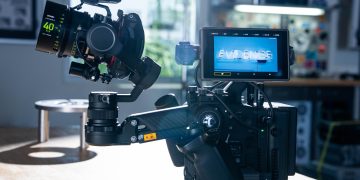
The Ronin 4D 8K is a ground-based integrated cinema camera with 4-axis stabilization and LiDAR focus. It is built for handheld and moving-camera production on land.
A production could use both systems together: Inspire 3 for aerial shots and Ronin 4D 8K for stabilized ground movement.
DJI Inspire 3 vs Mavic 4 Pro
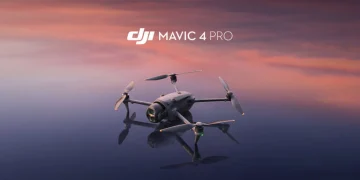
The DJI Mavic 4 Pro is smaller, cheaper and easier to carry.
The DJI Inspire 3 is a professional cinema drone with stronger RAW workflows, interchangeable DL lenses, RTK positioning, dual-control operation and a full-frame 8K aerial camera.
Choose the Mavic 4 Pro for premium creator work, travel, real estate, tourism and flexible lightweight shooting.
Choose the Inspire 3 for professional film production, high-end commercials, repeatable flight paths, RAW workflows and serious aerial cinematography.
Who Should Buy the DJI Inspire 3?
The DJI Inspire 3 is best for professionals who need cinema-grade aerial footage and can manage the cost, workflow and operating requirements.
It makes sense for:
Aerial cinematographers
Film production companies
Commercial directors
Tourism campaign teams
Automotive filmmakers
High-end real estate studios
Documentary crews
VFX plate teams
Broadcast production units
Rental houses
Drone teams with licensed operators
It may not be ideal for beginners, casual creators, small YouTube channels or buyers who only need basic 4K drone footage.
Key Takeaways
- DJI Inspire 3 was announced in April 2023.
- It uses the Zenmuse X9-8K Air full-frame camera.
- The camera records up to 8.1K at 8192 x 4320.
- It supports ProRes RAW, CinemaDNG, ProRes 422 HQ and H.264 workflows.
- CinemaDNG records up to 8K 25p.
- ProRes RAW supports high-frame-rate 8K workflows.
- The camera uses DJI’s DL lens mount.
- Dual native ISO supports ISO 800 and 4000 at lower frame rates.
- Higher-frame-rate modes use ISO 320 and 1600.
- The supplied lab data lists 12.1 stops at SNR=2 in 8K ProRes RAW ISO 800 D-Log.
- The supplied lab data lists 31.3ms rolling shutter in full-frame 8K 25p ProRes 422 HQ.
- Rolling shutter improves to 14.7ms in Super35 4K ProRes 422 HQ.
- The drone includes RTK positioning and Waypoint Pro.
- O3 Pro transmission supports professional dual-control operation.
- The main package price is around $16,499 before tax.
Frequently Asked Questions
What is the DJI Inspire 3?
DJI Inspire 3 is a professional cinema drone with the full-frame Zenmuse X9-8K Air camera, 8K RAW recording, RTK positioning and dual-control aerial filmmaking tools.
When was the DJI Inspire 3 released?
DJI announced the Inspire 3 in April 2023, with broader market availability following later in 2023.
What camera does the DJI Inspire 3 use?
It uses the Zenmuse X9-8K Air, a full-frame 8K aerial cinema camera with DJI DL lens mount support.
Can the DJI Inspire 3 record 8K video?
Yes. It records up to 8.1K at 8192 x 4320 and also supports 8K UHD, 4K and Super35 crop modes.
Does the DJI Inspire 3 record RAW?
Yes. It supports ProRes RAW and CinemaDNG recording, depending on mode, license and workflow.
What is the dynamic range of the DJI Inspire 3?
The supplied lab data lists a maximum of 12.1 stops at SNR=2 in full-frame 8.1K ProRes RAW at ISO 800 using D-Log.
What is the rolling shutter of the DJI Inspire 3?
The supplied lab data lists 31.3ms in full-frame 8.1K 25p ProRes 422 HQ, 16.3ms in full-frame 8K ProRes RAW at higher frame rates and 14.7ms in Super35 4K ProRes 422 HQ.
What lens mount does the Inspire 3 use?
The Zenmuse X9-8K Air uses DJI’s DL lens mount.
How much does the DJI Inspire 3 cost?
The main professional package is listed around $16,499 before tax, though pricing varies by region, package and availability.
Is the DJI Inspire 3 worth buying?
Yes, it is worth considering for professional aerial cinematographers and production companies that need full-frame 8K RAW, interchangeable DL lenses, repeatable flight paths, RTK positioning and dual-control operation. Casual users will usually be better served by smaller DJI drones.
Conclusion
The DJI Inspire 3 Zenmuse X9-8K Air is one of the strongest professional cinema drones DJI has produced.
It combines a full-frame 8K aerial camera, ProRes RAW, CinemaDNG, ProRes 422 HQ, D-Log, DL lenses, RTK positioning, Waypoint Pro and O3 Pro transmission in a platform built for serious film production.
Its image quality and workflow flexibility make it a major tool for commercials, documentaries, aerial cinematography, VFX plates and high-end branded content. Its trade-offs are cost, size, data demands, operating complexity and rolling shutter in some full-frame 8K modes.
For professionals who need repeatable, cinema-grade aerial footage, the DJI Inspire 3 remains a flagship drone built for demanding production work.

Read Also: DJI Ronin 4D 8K: Specs, Dynamic Range, Rolling Shutter and Cinema Features