Capacity: 30,038
Country: Indonesia
City: Kemanisan
Inauguration Date: May 9, 2022
Construction Period: July 2020 – May 2022
Cost: IDR 874 billion (approx. $60 million)
Contractor: PT PP (Persero) Tbk
Floodlights: 1500 lux
Address: Kemanisan, Banten, Indonesia
Introduction
Located in the province of Banten, Indonesia, the Banten International Stadium is a modern, multi-purpose sports venue designed to serve the growing sports culture of the region. The stadium’s inauguration in May 2022 marked a significant milestone in the development of sports infrastructure in West Java. With its capacity to host over 30,000 spectators, it stands as a symbol of the region’s commitment to enhancing athletic events, both national and international.
Construction and Funding
Construction of the Banten International Stadium began in July 2020, with PT PP (Persero) Tbk as the main contractor. The project was funded by the provincial government of Banten, with an estimated cost of IDR 874 billion ($60 million). Despite the initial plan for the stadium to be completed by the end of 2021, the project faced delays due to the COVID-19 pandemic and resulting financial challenges. However, the construction resumed, and the stadium was officially inaugurated on May 9, 2022 by the Banten provincial governor, Wahidin Halim. The opening day featured several cultural and sporting events, including a joint prayer, a bike ride from Serang to the stadium, and a football match between Selebritis FC and Banten All Star.
Stadium Features
Situated in a sparsely urbanized area south of the provincial capital Serang, in the village of Kemanisan, the stadium is designed to cater to the diverse sports needs of Banten’s population. The venue is equipped with both football and athletics facilities, making it a versatile location for various sporting events.
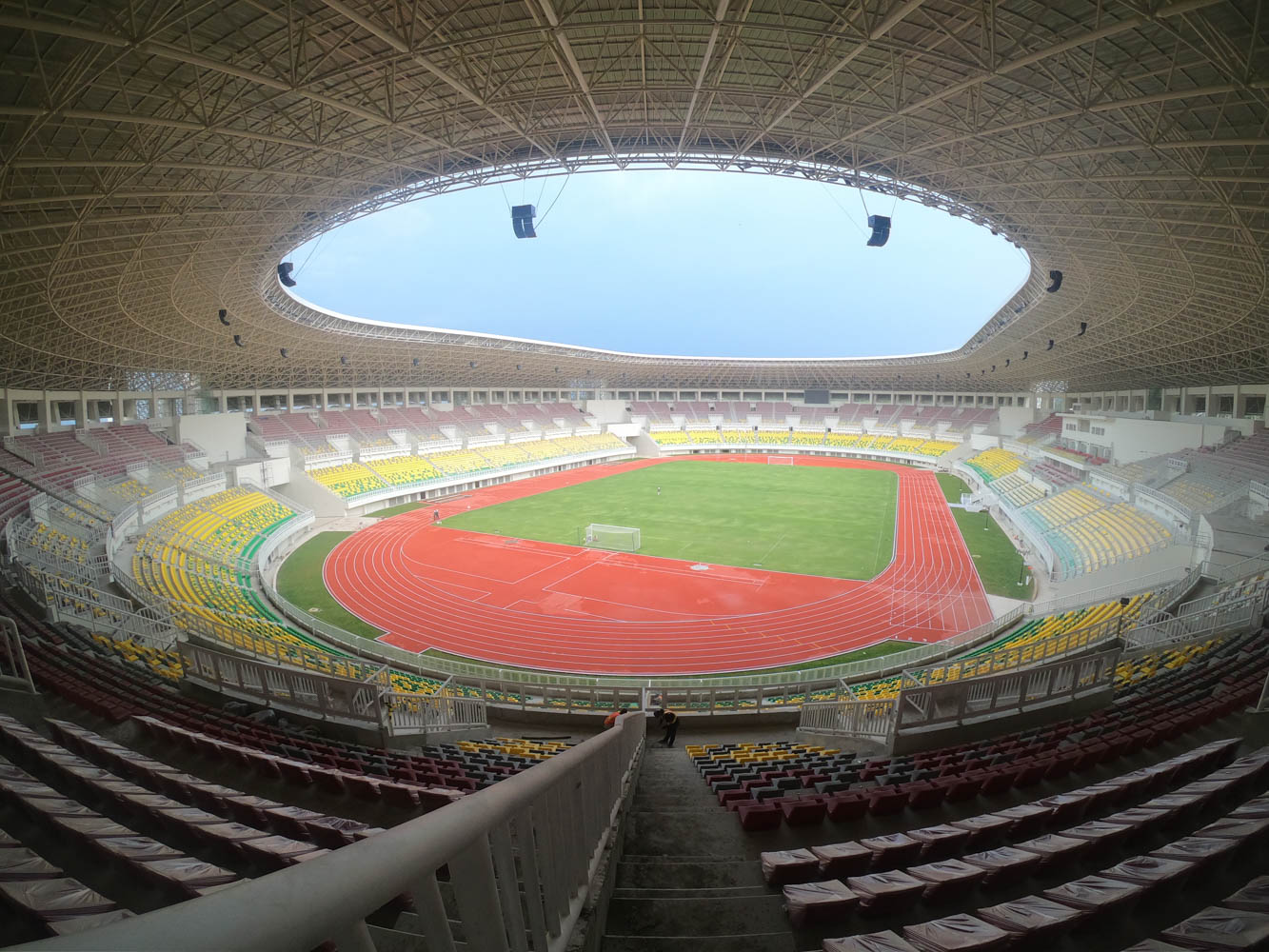
- Seating Capacity: The stadium can accommodate 30,038 spectators, with reinforced concrete stands forming a two-tiered structure that ensures ample seating. The seating arrangement is characterized by vibrant, plastic-backed seats in four colors: red, grey, yellow, and green.
- Main Stand: The west side of the stadium houses the main stand, featuring VIP seating, press facilities, and extensive backstage amenities. The stadium’s design allows for efficient crowd circulation with entrances at the four corner points, although seating is only available along the west and east sides.
- Roofing and Lighting: The stadium’s roof, made of reinforced concrete, provides full coverage to the seating areas, ensuring that fans are protected from the elements. The roof is supported by a trussed structure and features 172 floodlights, providing 1,500 lux of illumination for nighttime events. Additionally, the stadium boasts an LED screen for displaying match statistics and entertainment.
- Pitch and Athletics Track: The stadium’s pitch is equipped with drainage systems and Zoysia matrella grass, a turf variety known for its resilience. The surrounding athletics track is suitable for national and international competitions. The track, along with the stadium’s other facilities, was installed by PT. Datra Internusa.
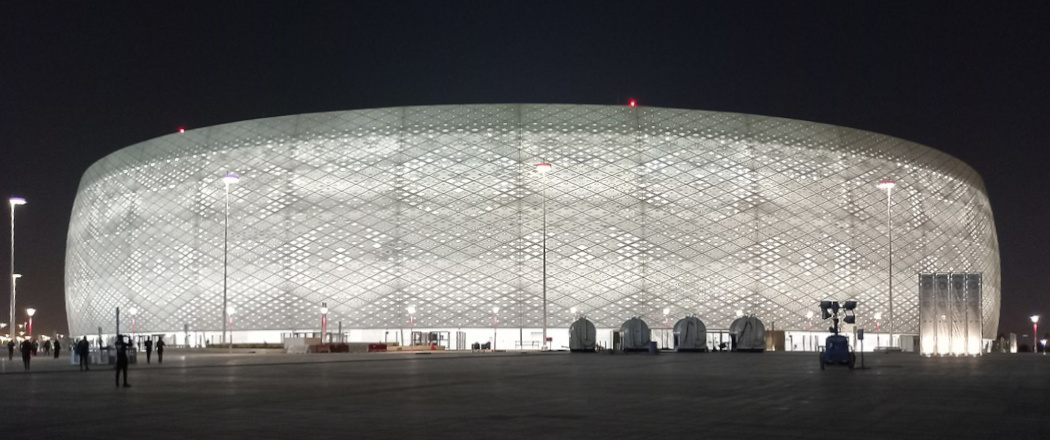
- Exterior Design: The stadium’s exterior façade is adorned with bamboo-inspired motifs, symbolizing the cultural traditions of the region. The four corner entrances feature ornamental decorations influenced by Baduy batik art, showcasing the local culture and craftsmanship.
Significance and Future Prospects
Banten International Stadium was built with the aim of serving not only as a football venue but also as a hub for various sports events in the region. Prior to its opening, RANS Cilegon FC, Dewa United, and Bhayangkara FC had shown interest in using the stadium for their matches. The stadium is also poised to host international events, as indicated by its name, which was chosen from eight proposals. The name “Banten International Stadium” aligns with the vision of creating a venue capable of hosting events of global significance, similar to the Jakarta International Stadium.
In addition to football, the stadium is designed to be a focal point for athletics, community events, and cultural exhibitions, contributing to the development of sports and tourism in Banten.
Conclusion
The Banten International Stadium stands as a modern sports venue with world-class facilities, designed to support the growing demand for sports infrastructure in Banten and the greater Jakarta area. With its state-of-the-art amenities, stunning architectural design, and strategic location, it is set to play a central role in Indonesia’s sports landscape. The stadium’s inauguration in May 2022 is just the beginning, as it is expected to host major sporting events, contribute to local tourism, and become a symbol of pride for the people of Banten.