Capacity: 31,000
Country: Indonesia
City: Cibinong
Clubs: Persikabo Bogor
Inauguration Date: December 3, 2016 (Indonesia vs. Vietnam, 2-1)
Construction Period: January 16, 2012 – November 2016
Cost: IDR 632 billion
Design: Penta Architecture
Contractor: PT PP (Persero)
Address: Jalan Pakansari, Pakansari, Cibinong, Bogor, Jawa Barat 16915, Indonesia
Stadion Pakansari, located in Cibinong, West Java, is a modern multi-purpose stadium designed to meet the growing sporting demands of the Jakarta metropolitan area. It stands as a significant venue not only for football but also for community sports, leisure, and entertainment, especially for the residents of Cibinong and the wider Bogor region, which is home to over 1.5 million people.
The Need for a Modern Stadium
Prior to the construction of Stadion Pakansari, the region lacked a large, modern stadium suitable for hosting major sports events. As part of the Jakarta metropolitan area’s development plan, the stadium was built to address this gap. The facility became the new home of Persikabo Bogor, providing them with a professional venue to play their Liga 1 matches.
The stadium’s location in Cibinong was strategically chosen, as it is well-connected to nearby highways, making it easily accessible for fans across the region. The venue’s proximity to major urban hubs in the Jakarta metropolitan area also positioned it as a key site for sporting events in the region.
Construction and Design
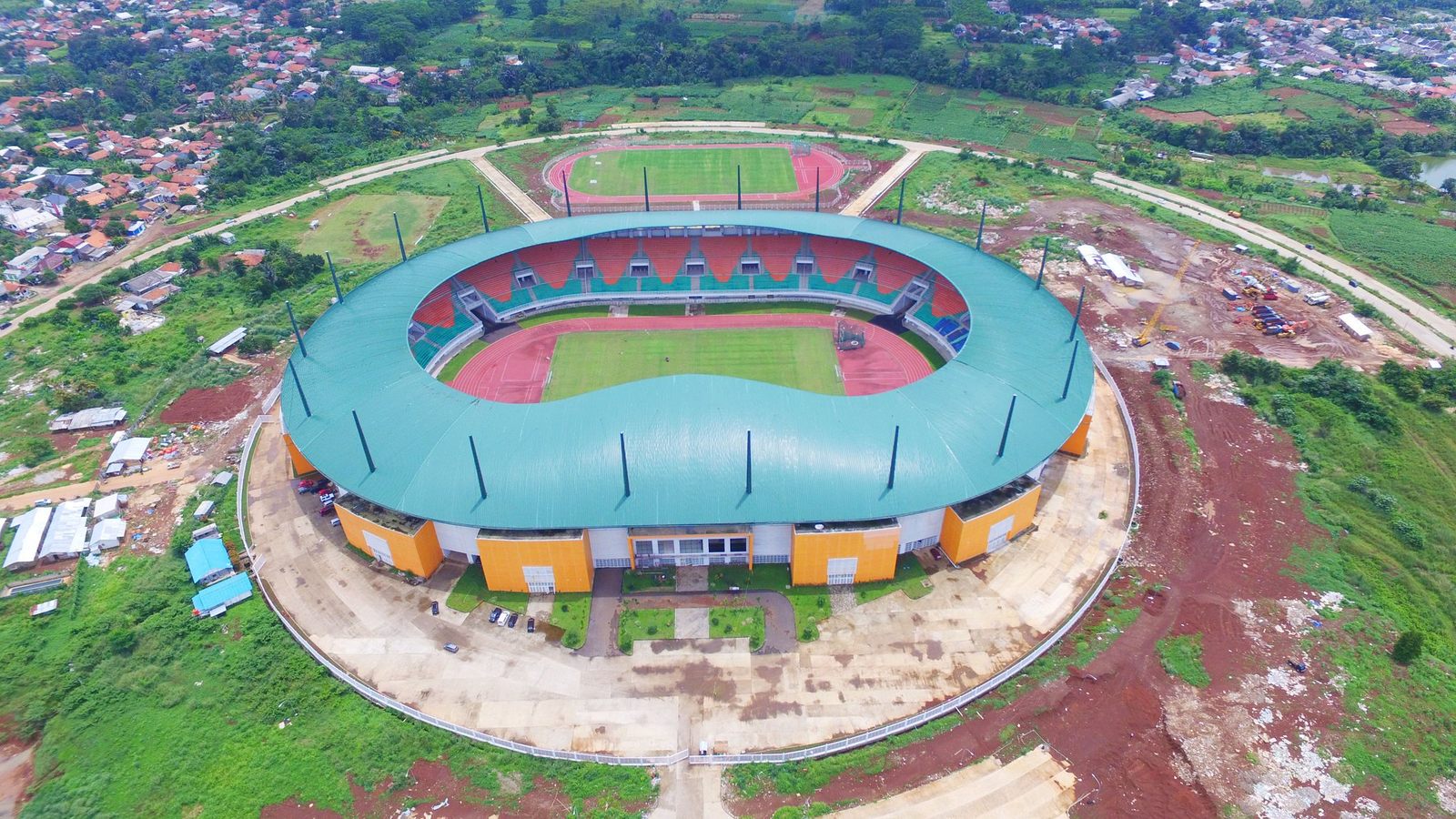
The construction of Stadion Pakansari began in January 2012, with the aim of completing the project for the 2016 season. The stadium’s design, by Penta Architecture, incorporates a distinctive combination of green and orange colors, inspired by the Arenga palm, a symbol deeply rooted in Indonesian culture.
The construction process was carried out in phases. The first phase involved the completion of the western and eastern grandstands, which were fully equipped with seating and covered roofs. These stands were built along the sides of the pitch. The north and south sections were gradually developed, adding more seating and functionality to the venue.
By the end of 2016, the stadium was ready to host important football matches, including the Indonesian national team’s games. The facility was also used for Persikabo Bogor’s home fixtures, contributing to the growth of professional football in the region.
Features and Capacity
Stadion Pakansari has a seating capacity of 31,000, making it one of the larger stadiums in the West Java region. The stadium is designed to cater to both sporting events and other large-scale functions. Apart from football, the stadium is also equipped for athletics and other community events, offering versatile spaces for leisure, entertainment, and public gatherings.
The facility is part of a broader sports complex in Cibinong that includes training fields, parking areas, and leisure zones. It was strategically developed on 28 hectares of land, providing ample room for the growing demand for sports infrastructure in the region. The venue also offers a range of modern amenities, including VIP areas, media facilities, and improved spectator services, ensuring a comfortable experience for visitors.
Notable Events
Stadion Pakansari’s inauguration in 2016 marked a significant moment for Indonesian football. The first official match played at the stadium was a friendly between Indonesia and Vietnam, which ended with a 2-1 victory for the host nation. Since then, the venue has hosted several important domestic and international events, including matches for Persikabo Bogor and the Indonesian national football team.
In addition to football, the stadium has also been used for various sports events and concerts, further cementing its status as a multi-purpose venue for the region.
Conclusion
Stadion Pakansari has become a cornerstone for sports and entertainment in Cibinong and West Java. With its modern design, ample seating capacity, and prime location, it stands as a symbol of the region’s commitment to fostering sports and community engagement. As a key home for Persikabo Bogor and a prominent venue for national sporting events, it continues to play an important role in shaping the future of football and sports culture in Indonesia.