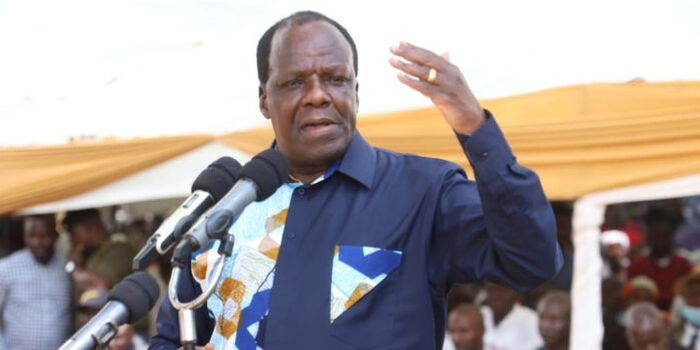
When Kenya adopted the 2010 Constitution and transitioned to devolved governance, Wycliffe Oparanya became the first Governor of Kakamega County in 2013. His leadership over two consecutive terms until 2022 left a lasting legacy on infrastructure, health, education, and political stability in Western Kenya. The story of Wycliffe Oparanya Kakamega Governor is not just about local administration—it’s about the maturation of devolution in one of Kenya’s most populous counties.
From Butere MP to County Governor
Before his gubernatorial run, Oparanya served as Member of Parliament for Butere and held the position of Minister for Planning, National Development, and Vision 2030 in the Grand Coalition Government. His reputation as a technocrat and development-focused leader positioned him well for the governor’s seat when devolution began in 2013.
Running on an ODM ticket, he won the election and assumed office as Kakamega’s inaugural county chief executive.
Building the Foundations of Devolved Governance
Oparanya’s first term was marked by the establishment of county systems and institutions:
- Formation of the County Executive Committee (CEC) and appointment of ministers.
- Development of the first County Integrated Development Plan (CIDP).
- Strengthening of service delivery in health, education, and agriculture.
He quickly earned praise for embracing public participation, setting up ward-based projects, and laying the groundwork for long-term planning.
Signature Achievements and Projects
During his ten years in office, Wycliffe Oparanya Kakamega Governor leadership oversaw major infrastructural and social projects:
- Kakamega Teaching and Referral Hospital – a flagship county health project.
- Bukhungu Stadium renovation – a symbol of sports and cultural revitalization.
- Road network upgrades – including opening rural roads and improving urban traffic systems.
- Early Childhood Development (ECD) centers and ECDE teacher hiring.
- Bursary programs for needy students and expansion of vocational training institutes.
Oparanya also prioritized agriculture, investing in dairy and poultry farming, and supporting farmers through subsidies and extension services.
Regional and National Political Influence
Oparanya’s success in Kakamega enhanced his national profile. He rose through the ranks in ODM, eventually becoming:
- ODM Deputy Party Leader.
- Chair of the Council of Governors (CoG) from 2019 to 2022.
As CoG Chair, he advocated for increased county funding, equitable revenue sharing, and protection of devolution. His calm demeanor and policy-based approach made him a respected bipartisan figure among governors.
In Western Kenya, he became a symbol of devolution’s success and a counterbalance to leaders focused on national ambitions without delivering locally.
Transition and Legacy
Oparanya stepped down in 2022 after serving the constitutional two terms. He left behind:
- A more functional and resourceful county government.
- Improved health and education indicators.
- A reputation for integrity, efficiency, and service delivery.
Despite criticism in some quarters over stalled mega projects and political over-centralization, his overall record stands as one of the most successful gubernatorial tenures in Kenya’s first generation of governors.
Conclusion
Wycliffe Oparanya Kakamega Governor tenure marked a new dawn in local governance. Through planning, execution, and diplomacy, he turned a theoretical model of devolution into a working system admired nationwide. As the first governor of Kakamega, he didn’t just govern—he defined what county leadership could achieve.
His legacy will shape Kakamega’s future for years, providing a benchmark for governors across Kenya.