Singapore Airlines (SIA) revealed a 67.8% year-on-year drop in net profit for the first half of its financial year ending September 30, 2025. Despite this significant earnings slump, the airline remains committed to rewarding shareholders with a special dividend. This announcement comes even as the airline grapples with challenges, including Air India’s losses and a fluctuating global air cargo market.
SIA’s first-half net profit fell to $239 million, a considerable drop from the same period last year. This decline was primarily attributed to reduced interest income and the airline’s share of Air India’s losses, which it began accounting for in December 2024 after the merger of Vistara into Air India.
Despite these financial challenges, SIA remains optimistic about its future, bolstered by strong demand for air travel and strategic plans to boost shareholder returns.
Special Dividend Announcement
In a move to reassure investors, SIA announced that it will distribute a special dividend of 10 cents per share annually for the next three financial years. This gesture will amount to around $900 million, reflecting the airline’s strong financial position despite the recent downturn in profits.
The first interim special dividend of three cents per share will be paid on December 23, 2025, to shareholders as of December 8, 2025. SIA also declared a five-cent interim dividend for the first half of the financial year, bringing the total dividend for the period to eight cents per share.
SIA has committed to paying the special dividend package in subsequent years, subject to shareholder approval. The airline has outlined that, barring unforeseen circumstances, the 10-cent annual dividend will continue for FY2025/26 and beyond.
Passenger Traffic and Cargo Performance
SIA’s passenger traffic remains resilient, with the airline and its low-cost carrier Scoot carrying 20.8 million passengers in the first half of FY2025/26, a 8% increase year on year. This growth reflects continued recovery in the global travel market, despite external challenges such as shifting trade policies.
However, the airline’s cargo operations faced a decline in revenue during the same period. Although cargo volumes grew by 1.2%, this was outpaced by the expansion in capacity, resulting in a drop in cargo yields. The airline remains cautious about the future of its air cargo business, citing ongoing challenges in the sector amid shifting trade dynamics and geopolitical tensions.
Fleet Expansion and Network Growth
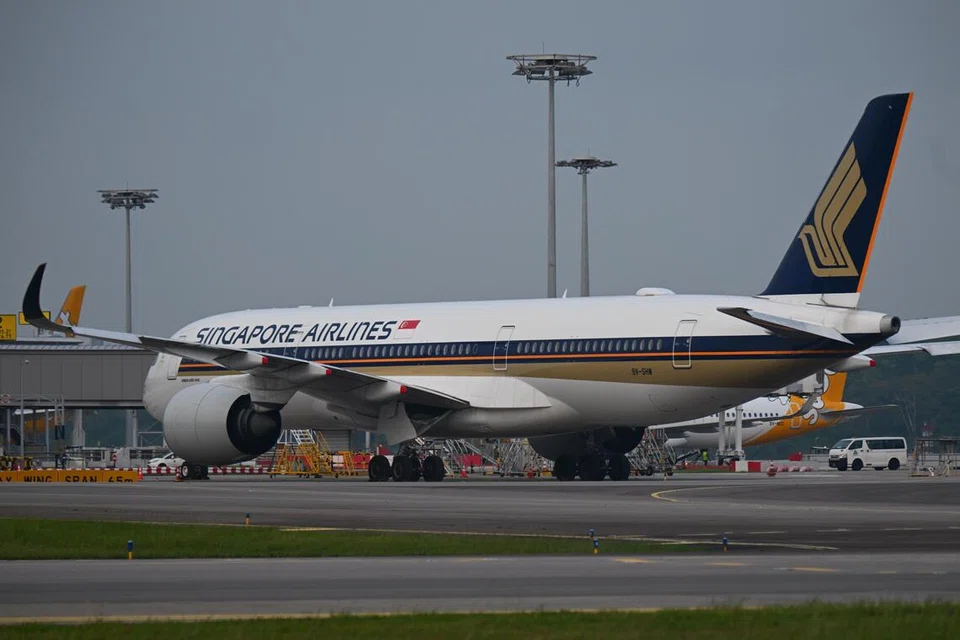
SIA’s commitment to expanding its fleet continues, with the group’s operating fleet comprising 208 aircraft, including passenger and freighter planes. In the second quarter of FY2025/26, the airline added three Boeing 737-8s and Scoot received new aircraft, including two Airbus A320neos and one Boeing 787-8.
The airline also plans to increase frequencies to select destinations in winter 2025, including routes to Auckland, Busan, Kathmandu, and Tokyo (Haneda). This move comes as SIA continues to meet the surge in travel demand during the year-end peak period.
Outlook and Challenges
Looking ahead, SIA remains optimistic about its growth prospects, even amid geopolitical tensions, inflationary pressures, and supply chain disruptions. The airline’s strong balance sheet, disciplined cost management, and digital innovations provide a solid foundation for navigating the current challenges in the global aviation industry.
Despite the short-term challenges in the air cargo segment, SIA continues to prioritize service excellence and network connectivity to enhance its competitiveness in the long run.
Conclusion
While Singapore Airlines faces hurdles, including a significant drop in earnings and challenges in the cargo sector, its plans to distribute a special dividend provide a silver lining for shareholders. With strong air travel demand and fleet expansion, SIA is poised to continue its recovery in the coming years.