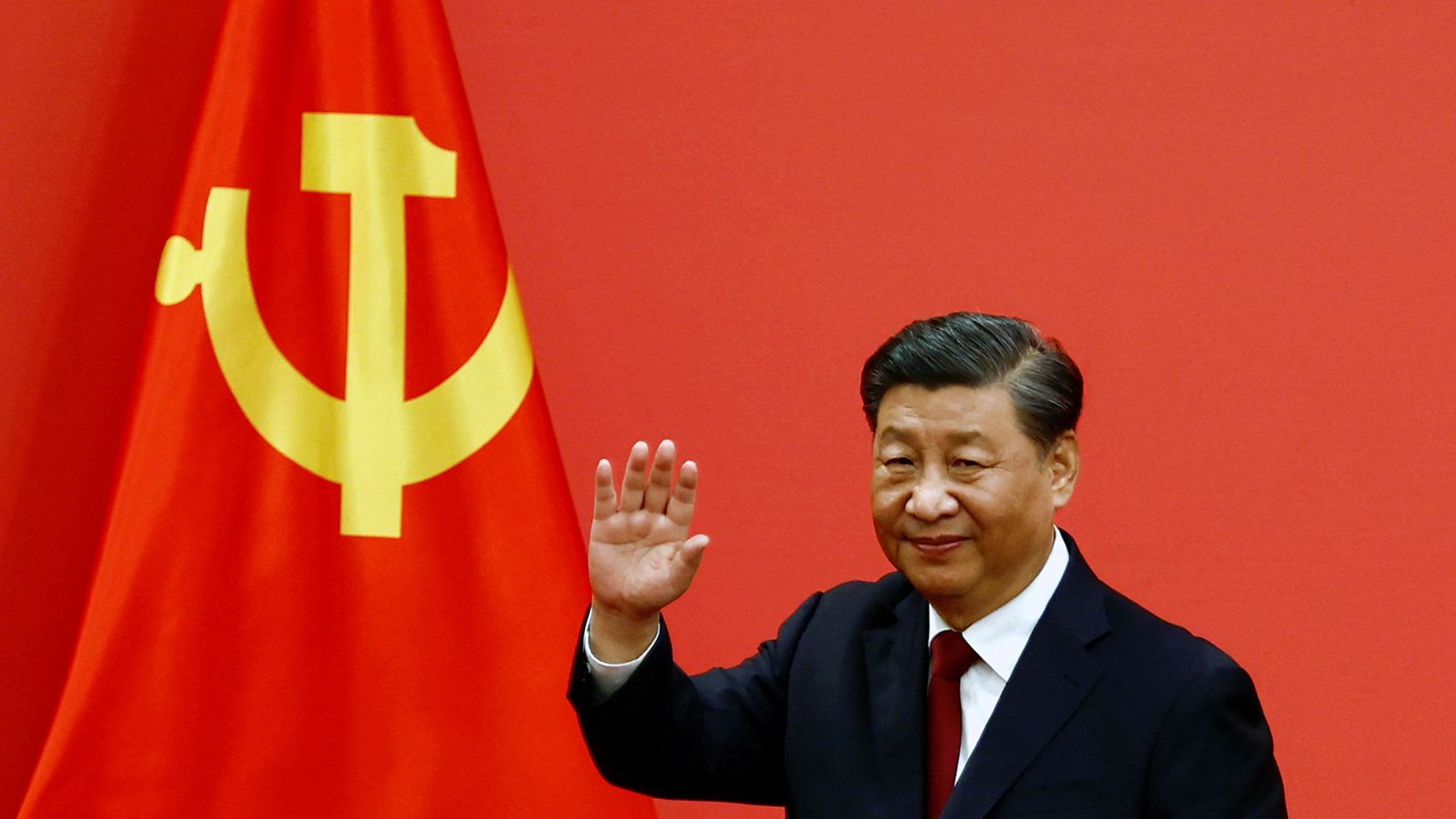
Xi Jinping, the current General Secretary of the Chinese Communist Party (CCP) and President of the People’s Republic of China, remains one of the most enigmatic figures in global politics. His political journey has been marked by secrecy, pragmatism, and a complex relationship with the revolutionary history of China.
In the book The Party’s Interests Come First: The Life of Xi Zhongxun, historian Joseph Torigian reveals the profound impact of Xi Jinping’s father, Xi Zhongxun, on his worldview. Xi Zhongxun was a key figure in China’s revolution, enduring purges and personal sacrifices. His life story provides essential context to understanding the political dynamics that shaped Xi Jinping’s rise to power.
A Childhood Shaped by Struggles
Xi Jinping’s childhood was marked by political upheaval, following the purge of his father in 1962. Xi Zhongxun, once a close ally of Mao Zedong, fell from grace after being accused of political wrongdoing. This event set the stage for the traumatic experiences that would shape Xi Jinping. As a child, he faced personal and public humiliation due to his father’s political downfall, including denunciations and the rejection of his application to join the Communist Youth League.
The Cultural Revolution (1966-1976) saw Xi Jinping sent to the countryside for forced labor, a period he later described as a “relief” compared to his father’s disgrace. Torigian draws a direct line from these experiences to Xi Jinping’s later political behavior—his desire for caution, secrecy, and a preference for control.
Surviving Political Purges and Revolution
In the midst of China’s revolution, Xi Zhongxun became a symbol of sacrifice, loyalty to the Communist Party, and the harsh price of ambition. His role in the Cultural Revolution was both constructive and destructive, as he oversaw intense ideological campaigns while also voicing doubts about the extreme tactics of Mao Zedong. The power struggles within the CCP, including Xi Zhongxun’s personal rise and fall, were formative experiences for Xi Jinping.
Despite the brutality he witnessed, Xi Jinping was influenced by his father’s resilience, and this connection to the party became his compass for survival and eventual success in Chinese politics. However, his relationship with Mao’s legacy was complicated. Despite enduring immense personal and family suffering under Mao’s policies, Xi Jinping would later become known for his loyalty to the Communist Party—a reflection of his father’s enduring commitment to the party’s ideals.
The Maoist Influence: Xi’s Unspoken Struggle
The personal trials faced by Xi Jinping throughout his youth helped him navigate the complexities of Chinese political life. Torigian asserts that Xi’s father’s ideological journey—initially embracing Marxism-Leninism and later struggling with Mao’s policies—offered a powerful lesson for the son. Despite the emotional damage caused by the Cultural Revolution, Xi Jinping embraced the party’s centralization of power and control, learning to downplay contradictions and maintain the party’s narrative.
At the same time, Xi’s rise to power cannot be viewed as merely the product of his father’s legacy. Instead, Xi Jinping utilized a careful blend of strategic pragmatism, maintaining a traditional Marxist outlook while adjusting his approach to align with the party’s current needs.
The Burden of Power: What Xi Inherited
In later years, Xi Jinping’s leadership has been marked by a strong commitment to maintaining party control while adhering to the principles established by Mao Zedong. Despite the progressive economic reforms led by his father in the 1980s, Xi Jinping’s reign has often been characterized by a reversion to orthodoxy—a movement away from the potential for reform that many had hoped for after Mao’s death.
According to Torigian, Xi Jinping’s commitment to the CCP was both a personal and political decision, forged in the harsh crucible of his father’s political trauma. His return to power following his father’s downfall exemplifies how history and personal survival are intertwined in China’s political system.
China’s Future and the Limits of Reform
As Xi Jinping consolidates his position as China’s supreme leader, the questions about his father’s impact become increasingly important. Torigian notes that Xi’s approach to governance may have been influenced not just by the external struggles of the CCP but also by the deep emotional scars left by his family’s political purges. Xi Jinping’s survival story, while an illustration of political acumen, raises important questions about the future of China, especially in light of his reluctance to confront the past.
Despite his successes, Xi Jinping’s unwillingness to reckon with China’s revolutionary history—and the suffering it caused—poses a significant challenge to his ability to navigate China’s place in the modern world. As Torigian concludes, China’s leadership is trapped by its own historical narrative, which limits its ability to evolve beyond the strictures of its past.