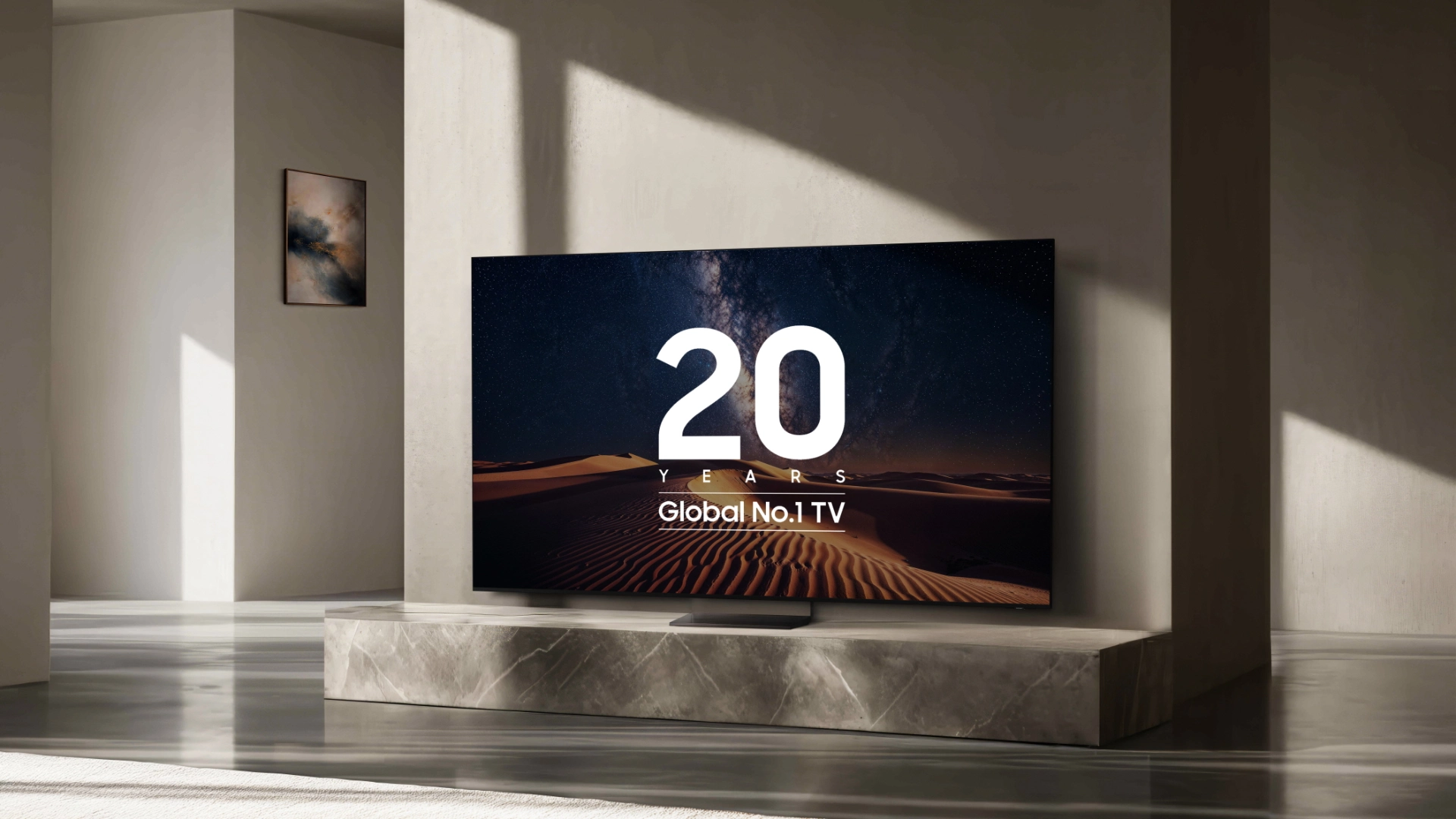
Samsung has reached a milestone few consumer electronics brands ever achieve. For 20 consecutive years, Samsung has remained the world’s top TV brand, holding the global sales crown since 2006.
According to Omdia’s latest market data, Samsung commanded 29.1 percent of the global TV market in 2025. That means nearly one in three televisions sold worldwide carried the Samsung logo. In a category defined by intense competition and thin margins, that level of consistency is remarkable.
Samsung Top TV Brand Status Backed by Premium Dominance
Samsung’s leadership is even stronger in the premium segment, where profits matter most.
In televisions priced above $2,500, Samsung holds a 54.3 percent market share. In other words, more than half of all premium TVs sold globally are Samsung models. At the $1,500-and-up tier, it controls 52.2 percent of the market.
These numbers matter because premium TVs drive revenue, brand perception and technological leadership. By dominating this tier, Samsung strengthens both its profitability and its innovation pipeline.
How Samsung Built 20 Years of TV Leadership
The company’s run began in 2006 with the Bordeaux TV. At a time when most televisions were basic black rectangles, the Bordeaux stood out for its design. That early focus on aesthetics signaled Samsung’s long-term strategy: combine technology leadership with lifestyle appeal.
Over the years, Samsung consistently moved first or fast on industry shifts:
In 2009, it mainstreamed LED backlighting. This shift made TVs thinner, more energy-efficient and brighter.
In 2011, it introduced Smart TVs. Televisions became connected platforms rather than passive screens. That move fundamentally changed how people consumed content.
By 2017, Samsung launched The Frame. The product doubled as a digital art display when not in use. As a result, Samsung created a new category that blended home décor and technology.
That same year, it introduced QLED technology, improving color volume and brightness through quantum dot enhancements.
From 8K to Micro LED
Samsung continued to push boundaries in resolution and display engineering.
In 2018, it brought 8K TVs to market, offering 33 million pixels. This quadrupled the pixel density of 4K and positioned Samsung at the forefront of ultra-high-definition displays.
In 2020, it unveiled Micro LED technology. Unlike traditional LED TVs, Micro LED panels use self-emissive pixels, eliminating the need for backlighting. The result is improved contrast, brightness and durability. These models primarily target ultra-large and ultra-premium buyers.
Looking ahead, Samsung plans to expand its Micro LED lineup, broaden Mini LED offerings and integrate AI-driven picture and sound optimization features. These AI enhancements will automatically adjust visuals and audio depending on content type.
Why 20 Years at the Top Matters
Staying at the top of any consumer electronics category for two decades is rare. TVs are high-value purchases that consumers keep for years. Brand loyalty is strong, and switching costs can be significant.
Therefore, sustained leadership reflects more than marketing power. It signals supply chain strength, design consistency, software evolution and global distribution scale.
Samsung competes across nearly every price tier, from mid-range living room sets to six-figure Micro LED walls. That range allows it to capture both volume and margin.
The Competitive Landscape
The global TV market includes major players such as LG, Sony and TCL. However, no brand has matched Samsung’s 20-year streak at the top.
Its strategy blends early adoption of new technologies, premium positioning and wide accessibility. As television continues evolving into a smart, AI-driven display hub, Samsung appears determined to extend its lead.
For now, the numbers are clear. Twenty years in a row, Samsung remains the top TV brand globally.