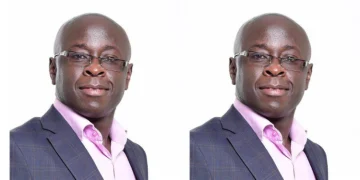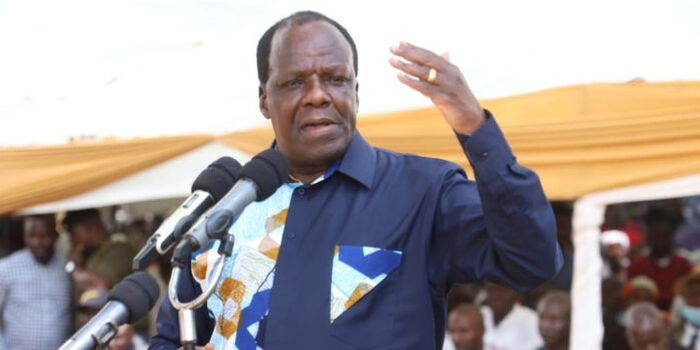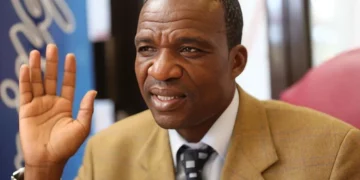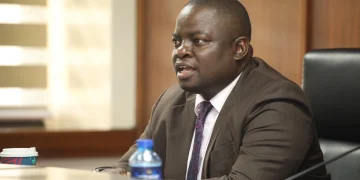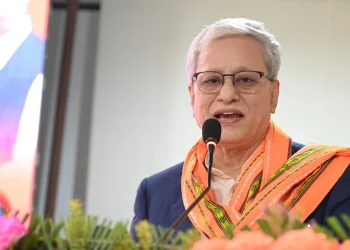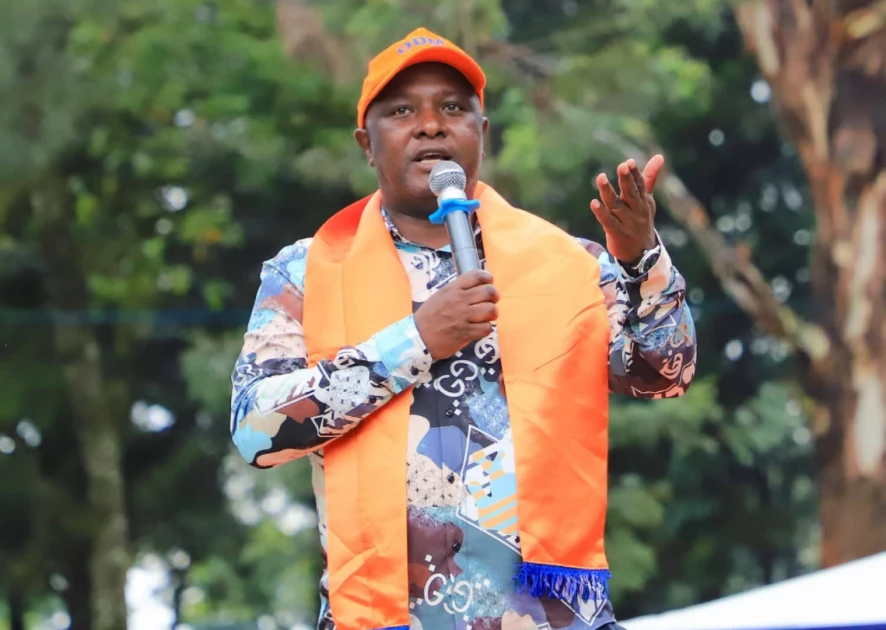
The ODM presidential candidate debate has taken center stage following strong remarks by Vihiga Senator Godfrey Osotsi, who insists that the Orange Democratic Movement must field its own presidential candidate in the upcoming general election. His position directly challenges growing calls within some political circles for ODM to shelve its ambitions and instead support President William Ruto. Osotsi’s remarks reflect rising internal debate about the party’s direction following the death of its long-time leader, Raila Odinga.
Speaking against the backdrop of uncertainty within ODM, Osotsi argued that the party remains one of Kenya’s most influential political movements. According to him, ODM’s strength lies in its national reach, ideological foundation, and the depth of leadership talent within its ranks. He maintained that abandoning the presidential race would undermine the party’s legacy and alienate supporters who have long viewed ODM as a vehicle for reform and accountability.
The senator framed the ODM presidential candidate question as not only a political strategy issue but also a matter of principle. In his view, ODM was founded to contest power, not to permanently align itself behind other political formations. He stressed that the party’s future credibility depends on staying true to its mission, even during moments of transition and uncertainty.
ODM Presidential Candidate Debate After Raila Odinga
Godfrey Osotsi anchored his argument in conversations held while Raila Odinga was still alive. He recalled a meeting of ODM Members of Parliament along Mombasa Road where the former prime minister firmly rejected claims that ODM would not field a candidate. According to Osotsi, Raila questioned who was pushing the narrative that the party would support another contender instead of presenting its own.
Osotsi said that Raila’s position on the ODM presidential candidate issue was clear and deliberate. He noted that honoring Raila’s vision means continuing to compete at the highest level, not retreating from the national stage. For Osotsi, Raila’s death should not be interpreted as the end of ODM’s presidential ambitions but rather as a moment to reaffirm them.
He dismissed claims that ODM lacks credible figures capable of mounting a serious presidential campaign. Instead, he pointed to several leaders within the party who, in his view, possess the experience and national profile required to contest the presidency. Among those mentioned were Siaya Governor James Orengo, Embakasi East MP Babu Owino, and Osotsi himself.
Internal Leadership and the Role of Oburu Oginga
The debate over an ODM presidential candidate has also brought party leadership under scrutiny. Osotsi addressed his remarks directly to ODM party leader Oburu Oginga, urging him to adopt a consultative approach reminiscent of Raila Odinga’s leadership style. While affirming that he has no personal issue with Oburu, Osotsi warned that ignoring grassroots voices could weaken the party.
According to Osotsi, Raila Odinga consistently brought party members together during moments of disagreement and listened to divergent views before making decisions. He argued that this culture of consultation is essential to ODM’s survival and growth. Without it, he cautioned, internal divisions could escalate and damage the party’s cohesion.
The senator framed consultation not as a sign of weakness but as a strength that previously allowed ODM to weather political storms. He urged Oburu to listen carefully to party members, elected leaders, and supporters as discussions about the ODM presidential candidate intensify.
10-Point Agenda and Conditions for Cooperation
Osotsi also tied the ODM presidential candidate debate to unresolved issues within the broad-based government arrangement between Raila Odinga and President William Ruto. He referenced the 10-point agenda signed during the formation of the coalition, arguing that key commitments remain unfulfilled.
Central to his concerns were issues of electoral justice and police accountability. Osotsi demanded that the truth about the last election be fully disclosed, insisting that transparency remains a core ODM value. He further called for compensation for families of young protesters killed by police and for the prosecution of officers implicated in the deaths.
In Osotsi’s view, these unresolved matters weaken the case for ODM to abandon its presidential ambitions. He argued that until such issues are addressed, the party must retain its independence and continue positioning itself as a reform-oriented alternative.
Building Alliances Without Losing Identity
Beyond leadership and policy issues, Osotsi emphasized the importance of unity among key voting blocs within ODM. He highlighted cooperation between the Luhya and Luo communities as vital to the party’s strength. According to him, such unity has historically given ODM national relevance and should be preserved going forward.
However, Osotsi was careful to frame this unity as inclusive rather than tribal. He argued that ODM’s appeal has always extended beyond ethnic lines and that fielding an ODM presidential candidate would reinforce the party’s national character. Retreating from the race, he suggested, could reduce ODM to a supporting role and erode its broad-based identity.
As discussions continue, the ODM presidential candidate question is likely to shape internal party dynamics in the months ahead. Osotsi’s remarks signal growing pressure on party leadership to clarify its direction and reaffirm ODM’s role as a major national contender rather than a junior partner in coalition politics.