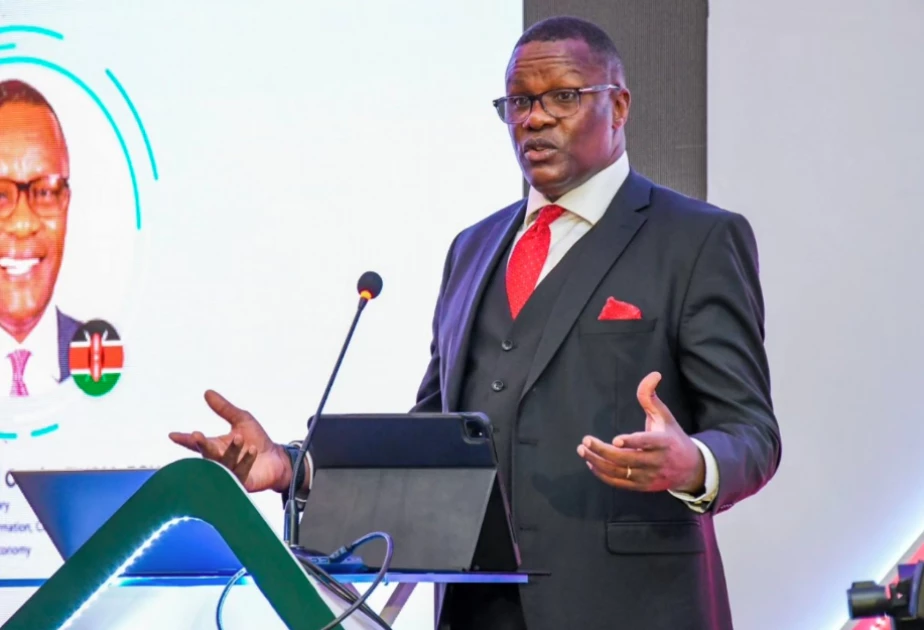
Eliud Owalo net worth has climbed to an estimated Ksh.1 billion, marking a significant increase from the Ksh.645 million he declared during his vetting for the ICT Cabinet Secretary position in 2022. The disclosure places Owalo among Kenya’s wealthier public figures and has sparked renewed public interest in the sources of his growing fortune.
The former Deputy Chief of Staff for Delivery and Government Efficiency made the revelation during an appearance on Citizen TV’s Sunday Live. During the interview, Owalo emphasized that his financial growth should be viewed through the lens of long-term private investments rather than his time in government. He argued that focusing solely on public office overlooks decades of involvement in business, institutions, and national life.
Eliud Owalo net worth, according to his explanation, reflects years of disciplined investment decisions rather than sudden accumulation. He reiterated that his rise in wealth predates many of the senior government roles he later assumed, insisting that transparency and consistency have guided his financial journey.
Eliud Owalo Net Worth Growth Explained
Eliud Owalo net worth rose sharply between 2022 and 2026, a period during which he remained in the public eye. When vetted by the National Assembly’s Committee on Appointments in October 2022, Owalo disclosed assets valued at Ksh.645 million. At the time, he attributed his wealth to land investments, ventures in the hospitality sector, and commercial tree farming.
According to Owalo, these investment areas continued to mature over time. Land holdings appreciated in value, hospitality projects expanded, and forestry initiatives generated steady returns. As a result, his overall asset base grew without reliance on government salaries or benefits.
He maintained that such growth is consistent with long-term investment cycles, especially in sectors tied to real assets. Therefore, Eliud Owalo net worth reflects cumulative gains rather than a sudden financial leap.
Owalo Separates Wealth From Public Office
During the interview, Owalo was keen to separate his financial status from the positions he has held in government. He stated that public service should not automatically be linked to personal enrichment, noting that his professional and economic life spans decades beyond state appointments.
He pointed to his long-standing involvement in national institutions, including sports, as part of his broader public identity. In particular, Owalo referenced his deep connection to Gor Mahia Football Club, one of Kenya’s most successful and popular teams.
“I’ve been part and parcel of the Gor Mahia journey for three decades,” Owalo said, stressing that his association with the club has been driven by loyalty rather than personal ambition. He added that his role as a patron was not motivated by politics or financial gain.
Gor Mahia and Owalo’s Public Image
Owalo explained that his relationship with Gor Mahia dates back to the 1980s, long before he rose to national prominence. According to him, supporting the club was a natural extension of lifelong fandom and patriotism.
He also clarified that he stepped into the role after the late Raila Odinga, who previously served as a key patron of the club. Owalo rejected suggestions that the transition was opportunistic, stating that it followed an established tradition of stewardship rather than political calculation.
By highlighting this history, Owalo sought to reinforce the idea that his public engagements, much like his investments, are rooted in long-term commitment. In his view, Eliud Owalo net worth and reputation should be assessed within this broader context.
Public Interest in Eliud Owalo Net Worth
The revelation of Eliud Owalo net worth has drawn attention as conversations around leadership, transparency, and wealth continue to shape Kenya’s political landscape. While public scrutiny remains high, Owalo insists that his financial disclosures demonstrate consistency rather than contradiction.
As a presidential aspirant and seasoned public figure, Owalo appears intent on framing his wealth as a product of private enterprise and sustained planning. He argues that this distinction matters, especially in a political environment where trust and accountability increasingly influence voter perception.