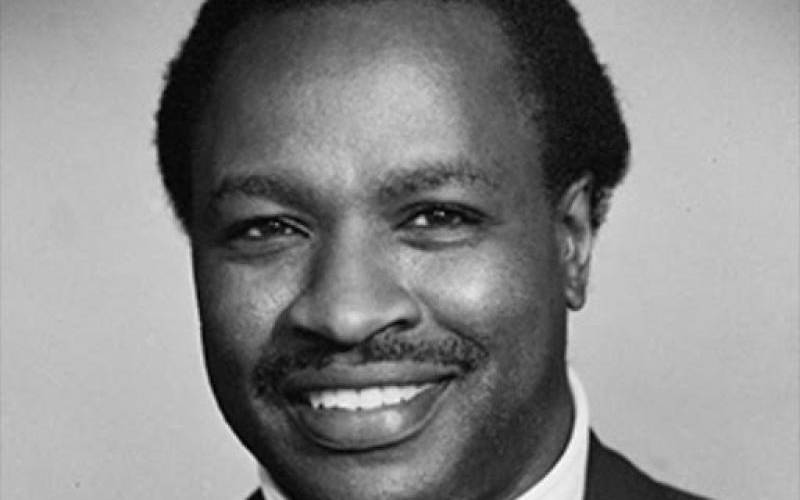
The JM Kariuki murder Western Kenya impact in 1975 sent shockwaves far beyond Nairobi. While Kariuki’s assassination outraged the entire nation, Western Kenya, particularly among Luhya communities, experienced a unique political tremor. The fallout reshaped opposition strategies, radicalized political discourse, and left a lasting legacy of mistrust toward the government under President Jomo Kenyatta.
JM Kariuki: The People’s Voice
Josiah Mwangi (JM) Kariuki had positioned himself as the voice of the oppressed. A former Mau Mau detainee turned parliamentary firebrand, he challenged the post-independence elite, exposed land injustices, and criticized the growing gap between the rich and the poor. His populist appeal and fearless criticism of corruption won him admiration across ethnic lines—including among youth and church leaders in Kakamega, Vihiga, and Butere.
By early 1975, JM Kariuki had become the symbol of moral opposition. For many in Western Kenya, his politics echoed the frustrations of a region that had long felt underrepresented and economically sidelined despite its prominent leaders like Masinde Muliro and Martin Shikuku.
The Assassination and National Outrage
When Kariuki disappeared in March 1975, suspicion immediately fell on the state. His mutilated body was discovered days later in the Ngong Hills, sparking nationwide protests. In Western Kenya, the reaction was particularly intense.
In Butere, Kakamega, and Busia, student and youth groups staged demonstrations. Church leaders condemned the murder in sermons. Local politicians feared speaking out too boldly but privately described the assassination as a government-orchestrated silencing of dissent. For many Luhya youth, Kariuki had represented the rare national figure who transcended tribalism and spoke for the marginalized.
Western Kenya’s Radicalization and Realignment
The JM Kariuki murder Western Kenya response exposed a growing generational rift in the region’s politics. While senior leaders remained cautious, younger activists began demanding a new opposition movement. Disillusioned with KANU’s authoritarianism, they looked for inspiration in Kariuki’s legacy.
Martin Shikuku, then MP for Butere, became one of the most vocal critics of the government. Though he was cautious in his language, his popularity surged as he positioned himself as a Kariuki-style watchdog within Parliament. Meanwhile, Masinde Muliro, then sidelined politically, was viewed as a potential future standard-bearer for reform.
The youth uprisings and political tension in Western Kenya foreshadowed future opposition waves, including the clashes of the 1980s and the second liberation struggle of the 1990s.
Legacy of the JM Kariuki Murder in Western Kenya
The JM Kariuki murder Western Kenya effects lingered well beyond 1975. His death radicalized a generation of Luhya youth, deepened regional mistrust of Nairobi’s elite, and exposed the limits of reform within KANU. While no clear opposition emerged immediately, the seeds were sown for future political realignments that would challenge single-party dominance.
Western Kenya would later become a stronghold of pro-democracy voices, from Shikuku and Muliro to future leaders like Moody Awori and Musalia Mudavadi. JM’s memory endured in student unions, churches, and political rhetoric—as a martyr whose blood became fuel for reformist politics in Kakamega, Vihiga, and beyond.
Conclusion
The JM Kariuki murder Western Kenya response stands as a powerful reminder of how a single political death can reshape an entire region’s consciousness. For Western Kenya, Kariuki was more than a central figure—he was a symbol of truth, justice, and national unity. His assassination awakened a bold political spirit that would ripple through the country’s history for decades.