Irrigation Companies in the United States are essential to agriculture, landscaping, golf courses, sports fields, nurseries, orchards, vineyards, municipalities, commercial properties, and water conservation. Their systems help farmers produce crops in dry regions, help landscapes survive heat and drought, and help property owners manage water more efficiently.
The U.S. irrigation market includes center pivot manufacturers, drip irrigation suppliers, landscape sprinkler brands, smart controller companies, pump providers, irrigation dealers, design firms, and local installation contractors. In agriculture, irrigation supports corn, soybeans, hay, cotton, potatoes, vegetables, orchards, vineyards, almonds, and specialty crops. In landscaping, irrigation supports homes, HOAs, parks, campuses, resorts, golf courses, and commercial sites.
Water pressure is rising because of drought, groundwater limits, higher energy costs, labor shortages, and stricter conservation rules. That has made precision irrigation more important. Valley Irrigation says its center pivots and advanced irrigation systems help growers conserve water, increase productivity, and meet food demand. Rain Bird describes itself as a leading global irrigation manufacturer serving agriculture, landscapes, golf, sports fields, and other markets.
This guide profiles leading Irrigation Companies in the United States and explains how farmers, landscapers, property owners, municipalities, golf managers, and contractors should choose the right provider.
Industry Overview: Irrigation Companies in the United States
The U.S. irrigation industry serves two major markets: agricultural irrigation and landscape irrigation. Agricultural systems include center pivots, lateral move systems, drip irrigation, micro-sprinklers, hose reels, pumps, filters, fertigation, chemigation, moisture sensors, and remote control platforms. Landscape systems include sprinklers, drip lines, valves, controllers, backflow prevention, rain sensors, soil sensors, pumps, and water-management software.
Major companies in the U.S. agricultural irrigation machinery market include Valmont Industries, Lindsay Corporation, The Toro Company, Nelson Irrigation, Netafim USA, Rivulis, Rain Bird, Deere & Company, T-L Irrigation, Reinke Manufacturing, Hunter Industries, Komet, Agri-Inject, and CropX.
Growth is driven by water scarcity, precision agriculture, smart controllers, drip adoption, labor efficiency, crop-value protection, and sustainability goals. Challenges include installation cost, pump energy use, water rights, groundwater depletion, maintenance, filtration, salinity, and local regulation.
Ranking Methodology
This directory evaluates companies based on U.S. market relevance, product range, agricultural and landscape capability, water-efficiency technology, dealer support, smart irrigation tools, project experience, geographic reach, and buyer usefulness.
Because irrigation includes farming, landscaping, golf, sports turf, and municipal water management, this ranking includes manufacturers, technology providers, distributors, and local installer networks.
Best Irrigation Companies in the United States
Valley Irrigation / Valmont Industries
Overview
Valley Irrigation, a Valmont company, is one of the most important irrigation companies in the United States and globally. Valley is best known for center pivots, linear irrigation systems, corner machines, and precision irrigation technology. Valmont says it engineers and manufactures center pivots, linears, and custom irrigation systems that help growers improve yields and manage water more efficiently.
Services Offered
Center pivots, linear irrigation systems, corner systems, precision irrigation, remote monitoring, control platforms, water management, parts, and dealer support.
Industries Served
Row-crop farms, hay farms, specialty crops, large growers, agribusinesses, irrigation dealers, and agricultural producers.
Notable Projects
Valmont says nearly 250,000 Valley center pivots operate around the world, showing the company’s scale in mechanized irrigation.
Competitive Advantages
Its advantage is center pivot leadership, precision irrigation technology, and strong dealer support.
Headquarters
Valley, Nebraska.
Website
valleyirrigation.com
Why It Stands Out
Valley stands out for large-scale farm irrigation, center pivots, remote control, and precision water management.
Lindsay Corporation / Zimmatic
Overview
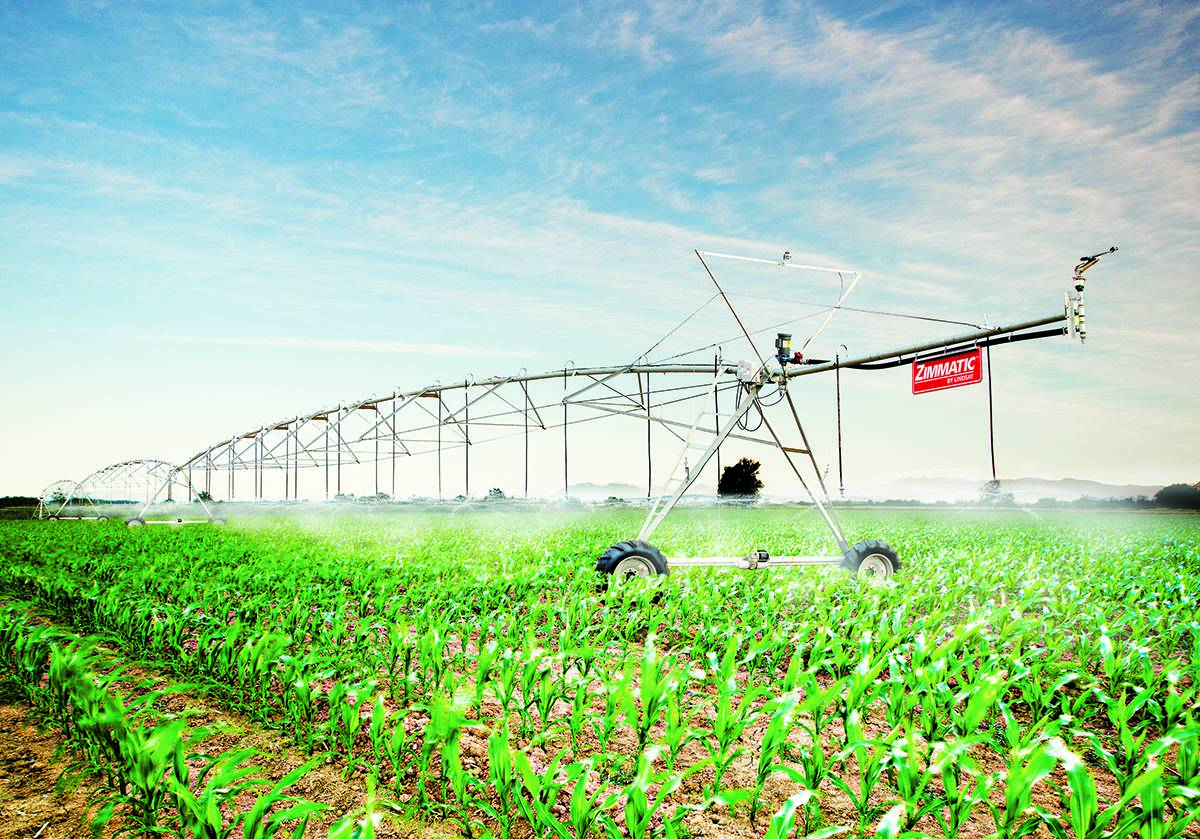
Lindsay Corporation is a major U.S. irrigation company known for Zimmatic center pivots and FieldNET smart water management technology. Lindsay says its irrigation solutions combine durable Zimmatic pivots with FieldNET to help growers save time and get more from every acre.
Services Offered
Center pivots, lateral irrigation systems, FieldNET remote management, irrigation controls, water management, parts, service, and dealer support.
Industries Served
Farmers, large growers, specialty crop producers, dealers, irrigation contractors, and agribusinesses.
Notable Projects
Zimmatic systems are used by growers needing full-field coverage, reduced labor, and smart irrigation control.
Competitive Advantages
Its advantage is integrated irrigation hardware and digital control.
Headquarters
Omaha, Nebraska.
Website
lindsay.com
Why It Stands Out
Lindsay stands out for Zimmatic pivots, FieldNET technology, and whole-farm irrigation management.
Rain Bird
Overview
Rain Bird is one of the most recognized irrigation brands in the United States. It supplies products for residential landscapes, commercial landscapes, agriculture, golf courses, and sports fields. Rain Bird describes itself as a leading global manufacturer and provider of irrigation products and services.
Services Offered
Sprinklers, drip irrigation, valves, controllers, rotors, nozzles, agricultural irrigation products, golf irrigation, sports turf irrigation, and water-saving systems.
Industries Served
Homeowners, landscape contractors, farms, golf courses, sports facilities, municipalities, commercial properties, and irrigation dealers.
Notable Projects
Rain Bird products are used across landscapes, farms, golf courses, sports venues, and commercial irrigation systems.
Competitive Advantages
Its advantage is broad product range and strong brand recognition across both landscape and agricultural irrigation.
Headquarters
Azusa, California.
Website
rainbird.com
Why It Stands Out
Rain Bird stands out for sprinklers, drip systems, controllers, landscape irrigation, golf irrigation, and water-efficient products.
Hunter Industries
Overview
Hunter Industries is a major irrigation and landscape technology company serving residential, commercial, municipal, sports turf, and golf markets. It is widely known for sprinklers, rotors, valves, controllers, sensors, and professional irrigation products.
Services Offered
Landscape irrigation, sprinklers, rotors, valves, controllers, smart irrigation systems, sensors, central control, golf irrigation, and contractor support.
Industries Served
Landscape contractors, homeowners, HOAs, municipalities, parks, sports fields, golf courses, commercial properties, and irrigation designers.
Notable Projects
Not publicly listed here.
Competitive Advantages
Hunter’s advantage is professional-grade landscape irrigation and smart control technology.
Headquarters
San Marcos, California.
Website
hunterindustries.com
Why It Stands Out
Hunter stands out for landscape irrigation, smart controllers, professional contractor support, and commercial irrigation systems.
The Toro Company
Overview
The Toro Company is a major U.S. equipment and irrigation company serving landscape, golf, agriculture, sports fields, municipalities, and residential markets. Toro is included among major U.S. agricultural irrigation machinery companies and is widely used in turf and landscape water management.
Services Offered
Irrigation products, drip irrigation, sprinklers, controllers, golf irrigation, landscape equipment, turf systems, agriculture irrigation, and water-management tools.
Industries Served
Golf courses, sports fields, municipalities, landscapers, homeowners, farms, contractors, and commercial properties.
Notable Projects
Toro systems are widely used in golf, turf, landscape, and agricultural applications.
Competitive Advantages
Its advantage is combining irrigation with broader turf, landscape, and grounds equipment.
Headquarters
Bloomington, Minnesota.
Website
toro.com
Why It Stands Out
Toro stands out for golf irrigation, landscape irrigation, turf systems, and professional grounds management.
Netafim USA
Overview
Netafim USA, part of Orbia, is a major drip and precision irrigation company. Netafim is especially important for growers using drip irrigation, micro-irrigation, fertigation, and advanced water management for high-value crops.
Services Offered
Drip irrigation, micro-irrigation, filters, valves, fertigation, crop-specific irrigation design, greenhouse irrigation, digital farming tools, and technical support.
Industries Served
Orchards, vineyards, vegetable farms, greenhouse growers, row crops, nurseries, and specialty crop producers.
Notable Projects
Netafim is listed among major U.S. agricultural irrigation machinery companies and global precision irrigation leaders.
Competitive Advantages
Its advantage is drip irrigation expertise, crop-specific water delivery, and fertigation support.
Headquarters
Fresno, California.
Website
netafimusa.com
Why It Stands Out
Netafim USA stands out for drip irrigation, micro-irrigation, water efficiency, and specialty crop systems.
Reinke Manufacturing
Overview
Reinke Manufacturing is a U.S. irrigation equipment company known for center pivots, lateral move systems, and mechanized irrigation products. It serves growers who need durable field irrigation systems and dealer-based support.
Services Offered
Center pivots, lateral move systems, control panels, remote irrigation management, parts, service, and dealer support.
Industries Served
Farmers, row-crop producers, hay growers, specialty crop producers, irrigation dealers, and agricultural operations.
Notable Projects
Reinke is listed among major U.S. agricultural irrigation machinery companies.
Competitive Advantages
Its advantage is mechanized irrigation experience and U.S. manufacturing.
Headquarters
Deshler, Nebraska.
Website
reinke.com
Why It Stands Out
Reinke stands out for center pivots, lateral systems, and agricultural irrigation equipment.
T-L Irrigation
Overview
T-L Irrigation is a Nebraska-based irrigation company known for hydrostatic-drive center pivots and linear irrigation systems. It serves agricultural producers who want mechanized irrigation with a distinctive drive system.
Services Offered
Center pivots, linear irrigation systems, hydrostatic drive systems, controls, parts, and dealer service.
Industries Served
Farmers, row-crop growers, hay producers, specialty crop farms, and irrigation dealers.
Notable Projects
T-L Irrigation is included among major U.S. agricultural irrigation machinery companies.
Competitive Advantages
Its advantage is hydrostatic-drive irrigation technology and specialized pivot design.
Headquarters
Hastings, Nebraska.
Website
tlirr.com
Why It Stands Out
T-L Irrigation stands out for hydrostatic-drive pivots and agricultural irrigation systems.
Nelson Irrigation
Overview
Nelson Irrigation is a major supplier of agricultural sprinklers, pressure regulators, valves, and irrigation components. It is especially important for pivot packages, solid-set systems, big gun sprinklers, and efficient water application.
Services Offered
Agricultural sprinklers, pressure regulators, control valves, pivot sprinklers, big gun sprinklers, irrigation accessories, and water-application products.
Industries Served
Farmers, pivot manufacturers, irrigation dealers, specialty crop growers, nurseries, and agricultural contractors.
Notable Projects
Nelson Irrigation is listed among major U.S. agricultural irrigation machinery companies.
Competitive Advantages
Its advantage is water-application technology and component specialization.
Headquarters
Walla Walla, Washington.
Website
nelsonirrigation.com
Why It Stands Out
Nelson stands out for sprinklers, regulators, valves, and efficient agricultural water application.
Local Licensed Irrigation Contractors
Overview
Many of the best Irrigation Companies in the United States are local licensed contractors serving farms, homes, HOAs, golf courses, commercial sites, parks, schools, and municipalities. Local contractors are especially important because irrigation depends on soil type, water source, climate, pressure, plant material, crop needs, and local rules.
Services Offered
Irrigation design, sprinkler installation, drip irrigation, pump installation, backflow prevention, repairs, winterization, controller programming, leak repair, audits, and maintenance.
Industries Served
Homeowners, farms, landscapers, commercial properties, schools, HOAs, municipalities, golf courses, nurseries, and property managers.
Notable Projects
Most local projects are not publicly listed, but nearby references and licensing records matter.
Competitive Advantages
Their advantage is local knowledge, service response, code awareness, and practical installation experience.
Headquarters
Varies by city and state.
Website
Varies by company.
Why It Stands Out
For homes, parks, farms, and commercial landscapes, a qualified local irrigation contractor is often the best installation and service partner.
Industry Trends Affecting Irrigation Companies
Smart Irrigation Controls
Growers and property managers increasingly use controllers, sensors, weather data, remote monitoring, and mobile apps to reduce water waste and labor.
Drip Irrigation Growth
Drip and micro-irrigation are growing in orchards, vineyards, vegetables, greenhouses, and specialty crops because they deliver water close to the root zone.
Groundwater Regulation
Farmers in several regions face groundwater limits, pumping restrictions, and conservation requirements, making irrigation efficiency more important.
Precision Agriculture Integration
Irrigation systems are increasingly connected to soil moisture sensors, crop models, satellite imagery, yield maps, and farm management software.
Landscape Water Conservation
Municipal water restrictions are pushing homeowners, HOAs, and commercial property owners toward smart controllers, pressure regulation, drip conversion, and drought-tolerant landscaping.
Pump Energy Efficiency
Irrigation uses both water and energy. Efficient pumps, variable frequency drives, correct pipe sizing, and pressure management can reduce operating costs.
Buyer’s Guide: How to Choose Irrigation Companies
Match the Company to the Use Case
A corn farm, vineyard, golf course, home lawn, municipal park, greenhouse, orchard, and commercial campus all need different irrigation expertise.
Start With Water Source and Pressure
Before buying equipment, confirm water source, flow rate, pressure, water quality, filtration needs, and pumping requirements.
Consider Crop or Landscape Needs
Different crops, soils, slopes, turf areas, shrubs, and trees need different application rates and schedules.
Ask About Smart Controls
Modern systems should support efficient scheduling, rain shutoff, soil moisture monitoring, pressure regulation, and leak detection where practical.
Review Maintenance Requirements
Irrigation systems require seasonal startup, winterization, filter cleaning, nozzle checks, pressure testing, leak repair, and controller updates.
Watch for Red Flags
Red flags include no site inspection, no water-pressure test, vague design, poor zoning, no backflow discussion, no maintenance plan, and unrealistic water-saving claims.
Why Irrigation Companies Matter in the United States
Irrigation companies help farmers produce food, protect landscapes, conserve water, reduce labor, and improve resilience during dry periods. Their systems support agriculture, property value, golf, parks, sports fields, nurseries, and municipal green spaces.
Good irrigation improves yields, plant health, water efficiency, and operating costs. Poor irrigation can waste water, damage crops, create runoff, increase disease, raise energy costs, and cause uneven growth.
As water becomes more valuable, Irrigation Companies in the United States will remain essential to agriculture, landscaping, and sustainable water management.
Conclusion
The leading Irrigation Companies in the United States include Valley Irrigation, Lindsay/Zimmatic, Rain Bird, Hunter Industries, The Toro Company, Netafim USA, Reinke Manufacturing, T-L Irrigation, Nelson Irrigation, and strong local licensed irrigation contractors. Valley, Lindsay, Reinke, and T-L are major center pivot and mechanized irrigation providers. Netafim is strong in drip and micro-irrigation. Rain Bird, Hunter, and Toro are highly relevant in landscape, golf, turf, and commercial irrigation. Nelson supports efficient agricultural water application.
For buyers, the best irrigation company is the one with the right system type, local support, water-efficiency expertise, design discipline, maintenance plan, and understanding of the crop or landscape being served.
Frequently Asked Questions
What are the best Irrigation Companies in the United States?
Some of the best-known Irrigation Companies in the United States include Valley Irrigation, Lindsay/Zimmatic, Rain Bird, Hunter Industries, The Toro Company, Netafim USA, Reinke Manufacturing, T-L Irrigation, Nelson Irrigation, and qualified local irrigation contractors. The best choice depends on whether the project involves center pivots, drip irrigation, sprinklers, golf irrigation, landscape irrigation, or farm water management.
Who makes the best center pivot irrigation systems?
Valley Irrigation, Lindsay/Zimmatic, Reinke Manufacturing, and T-L Irrigation are among the major center pivot irrigation companies in the United States. Valley is widely known for precision irrigation and center pivots, while Lindsay combines Zimmatic pivots with FieldNET smart water management.
What does an irrigation company do?
An irrigation company designs, supplies, installs, repairs, and maintains systems that deliver water to crops, lawns, landscapes, sports fields, golf courses, nurseries, and greenhouses. Services may include sprinklers, drip lines, pumps, filters, controllers, valves, sensors, pivots, fertigation, backflow prevention, and seasonal service.
How do I choose an irrigation company?
Choose an irrigation company based on project type, local experience, water-source analysis, design quality, equipment brands, service support, licensing, references, and maintenance plans. For farms, ask about crop experience and dealer support. For landscapes, ask about zoning, smart controllers, pressure regulation, and water conservation.
What is the difference between drip irrigation and sprinkler irrigation?
Drip irrigation delivers water slowly near the plant root zone through emitters or drip lines. Sprinkler irrigation sprays water through heads, rotors, nozzles, or pivots. Drip is often efficient for orchards, vineyards, vegetables, shrubs, and gardens. Sprinklers are common for turf, fields, and broad coverage.
Are smart irrigation controllers worth it?
Smart controllers can be worth it when they reduce watering during rain, adjust schedules based on weather, support soil moisture data, and prevent overwatering. Their value depends on system design, local water costs, landscape size, plant needs, and proper programming.
Which irrigation companies are best for farms?
Valley Irrigation, Lindsay/Zimmatic, Netafim USA, Reinke, T-L Irrigation, Nelson Irrigation, Toro, Rain Bird Agriculture, and strong local irrigation dealers are important options for farms. The best choice depends on crop, acreage, water source, soil, slope, labor, budget, and dealer service.
Which irrigation companies are best for landscapes?
Rain Bird, Hunter Industries, Toro, local irrigation contractors, and professional landscape irrigation designers are strong options for residential and commercial landscapes. Buyers should compare product quality, installation skill, controller features, pressure regulation, and maintenance support.
What are warning signs of a bad irrigation contractor?
Warning signs include no pressure test, no written design, no site inspection, poor zoning, no backflow prevention discussion, no license where required, no maintenance guidance, and promises of water savings without explaining how the system will achieve them.
Why are irrigation companies important?
Irrigation companies are important because they help manage water efficiently for food production, landscapes, parks, golf courses, sports fields, and commercial properties. Good irrigation protects plants, improves yields, reduces waste, saves labor, and supports long-term water conservation.
Read Also: Agriculture Companies in the United States