Tractor Dealers in the United States play a major role in American agriculture, construction, landscaping, rural property management, and equipment maintenance. They are more than sales outlets for new and used tractors. The best dealers provide financing, parts, service, precision agriculture support, rentals, trade-ins, warranty work, attachments, implements, and long-term equipment advice for farmers, ranchers, contractors, municipalities, and landowners.
The U.S. tractor market is closely tied to farm income, crop prices, interest rates, input costs, equipment availability, and rural credit conditions. When farmers are profitable, they are more likely to upgrade tractors, combines, planters, hay equipment, loaders, and precision technology. When margins tighten, buyers often delay purchases, repair older machines, or turn to used equipment. This makes dealer support especially important because downtime during planting, spraying, haying, harvest, or livestock operations can be expensive.
The industry is also changing. Large dealer groups have expanded across multiple states, while smaller family-owned dealerships remain important in local markets. John Deere, Case IH, New Holland, Kubota, Massey Ferguson, Fendt, Claas, Mahindra, Kioti, Yanmar, and other brands compete across different horsepower ranges and customer segments. Compact tractors serve acreage owners and landscapers, while high-horsepower row-crop tractors serve large farms.
This guide profiles leading Tractor Dealers in the United States, explains how the dealer market works, highlights major trends, and provides a practical buyer’s guide for choosing the right equipment partner.
Industry Overview: Tractor Dealers in the United States
The U.S. tractor dealer market is built around brand networks, regional coverage, service capability, parts availability, financing support, and local trust. A dealer’s value is not measured only by showroom inventory. The strongest dealers help customers keep machines running through seasonal pressure, repair emergencies, technology upgrades, and changing farm needs.
Dealers serve multiple customer groups. Row-crop farmers need high-horsepower tractors, precision guidance, planters, tillage tools, sprayers, and harvest support. Livestock farmers need utility tractors, loaders, hay tools, feed handling equipment, skid steers, and compact loaders. Specialty crop growers may need narrow tractors, orchard equipment, irrigation support, and spraying technology. Rural property owners often need compact tractors, mowers, loaders, blades, tillers, and trailers.
The sector is affected by consolidation. Many manufacturers prefer stronger dealer groups with multiple locations, larger service teams, better parts distribution, and stronger financial capacity. This has created large regional dealer networks such as Ag-Pro, United Ag & Turf, Titan Machinery, RDO Equipment, Papé Machinery Agriculture & Turf, 21st Century Equipment, and Hutson.
The market also faces challenges. Tractor sales can fall when farmers face weak commodity prices, high interest rates, expensive inputs, and uncertain policy conditions. Dealers must manage inventory carefully while supporting customers who may be repairing older machines instead of buying new ones.
The future of tractor dealerships will be shaped by precision agriculture, electric and autonomous equipment, right-to-repair debates, digital diagnostics, online used equipment marketplaces, rental demand, and the growing importance of after-sales service.
Ranking Methodology
This directory evaluates tractor dealers based on brand representation, geographic coverage, service capability, parts support, reputation, market relevance, equipment range, financing options, customer support, and usefulness to farmers and rural buyers.
The list includes large multi-state dealer groups and important regional networks. It does not rank every local dealership because the U.S. has hundreds of excellent independent and family-owned tractor dealers. For many buyers, the best dealer may be the one closest to their farm with the strongest service department.
This article is not a paid ranking. Buyers should verify local inventory, service response times, technician experience, financing terms, warranty support, and customer references before choosing a dealer.
Leading Tractor Dealers in the United States
Ag-Pro
Overview
Ag-Pro is one of the largest John Deere dealer groups in the United States. The company sells new and used agricultural, turf, compact construction, and consumer equipment across multiple states, including Georgia, Florida, South Carolina, North Carolina, Tennessee, Ohio, and Kentucky.
Ag-Pro is especially relevant for farmers, landscapers, rural property owners, contractors, and municipalities that want access to John Deere equipment with broad regional support. Its large footprint allows customers to access inventory, service, and parts across many locations.
Products and Services
Ag-Pro offers tractors, combines, hay equipment, compact tractors, utility vehicles, mowers, construction equipment, parts, service, financing, attachments, and used equipment.
Industries Served
The company serves row-crop farms, livestock operations, turf businesses, landscaping companies, construction users, municipalities, and rural homeowners.
Notable Brands
John Deere is the core brand.
Competitive Advantages
Ag-Pro’s main advantage is its large John Deere network across the Southeast and Midwest. Customers benefit from broad inventory, parts access, and multi-location support.
Headquarters
Boston, Georgia.
Website
agprocompanies.com
Why It Stands Out
Ag-Pro stands out because it combines strong John Deere brand representation with broad regional coverage and deep farm equipment service capacity.
United Ag & Turf
Overview
United Ag & Turf is a major John Deere dealer network serving customers across several U.S. regions. The company provides agricultural, turf, commercial, compact construction, and consumer equipment through a multi-location dealership model.
United Ag & Turf is important because many buyers want a dealer that can support both large farm equipment and smaller rural property machines. Its customer base includes farmers, homeowners, landscapers, golf courses, municipalities, and commercial users.
Products and Services
The company sells tractors, mowers, utility vehicles, hay equipment, compact construction equipment, parts, service, rentals, financing, and used machinery.
Industries Served
United Ag & Turf serves agriculture, landscaping, turf care, rural property management, municipalities, golf courses, and commercial equipment users.
Notable Brands
John Deere is the primary brand.
Competitive Advantages
Its advantage is regional reach and brand consistency. Customers can access service and parts from a wider network rather than relying on one single location.
Headquarters
United States; operating regions vary by division.
Website
unitedagandturf.com
Why It Stands Out
United Ag & Turf stands out as a strong John Deere dealer network for customers who need tractors, turf equipment, parts, and service across multiple locations.
Titan Machinery
Overview
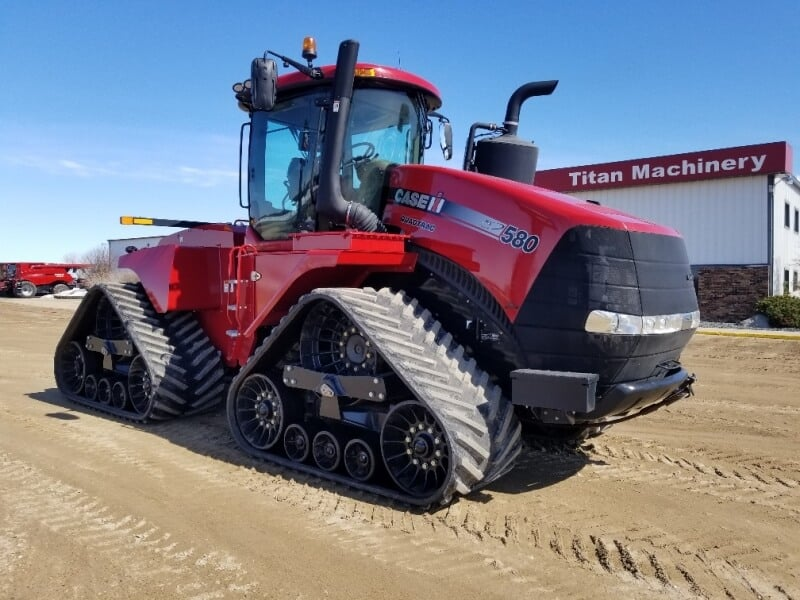
Titan Machinery is one of the largest Case IH and New Holland dealer groups in the United States. The company operates full-service dealerships across the U.S. and serves agriculture, construction, and application equipment customers.
Titan is especially important for buyers comparing John Deere alternatives. Case IH and New Holland remain major brands in tractors, combines, hay tools, sprayers, skid steers, loaders, and construction machinery. Titan’s large network gives farmers access to both new and used equipment, service, rentals, and parts.
Products and Services
Titan Machinery offers tractors, combines, planters, tillage tools, sprayers, hay equipment, skid steers, loaders, construction equipment, parts, service, rentals, and financing.
Industries Served
The company serves row-crop farmers, livestock producers, construction firms, contractors, municipalities, and rural businesses.
Notable Brands
Case IH, New Holland Agriculture, CASE Construction, and New Holland Construction.
Competitive Advantages
Titan’s advantage is scale and multi-brand coverage. It can serve both farm and construction customers with a large dealership footprint.
Headquarters
West Fargo, North Dakota.
Website
titanmachinery.com
Why It Stands Out
Titan Machinery stands out as one of the most important Case IH and New Holland dealer networks in the United States.
RDO Equipment Co.
Overview
RDO Equipment Co. is a major equipment dealer representing John Deere agriculture, construction, and technology products in several U.S. regions. The company is widely known in the Midwest, Plains, and Western markets.
RDO is especially strong for customers who need high-end equipment support, precision agriculture services, construction machinery, and large-scale fleet management. It serves both farm and construction sectors, making it useful for customers who operate across agriculture, earthmoving, land development, and infrastructure.
Products and Services
RDO offers tractors, combines, sprayers, planters, construction equipment, compact equipment, precision agriculture tools, parts, service, rentals, and financing.
Industries Served
The company serves agriculture, construction, infrastructure, landscaping, municipalities, and equipment fleet operators.
Notable Brands
John Deere is the central brand, with additional technology and equipment solutions depending on location.
Competitive Advantages
RDO’s strength is its professionalized service model, technology support, and ability to serve large agricultural and construction customers.
Headquarters
Fargo, North Dakota.
Website
rdoequipment.com
Why It Stands Out
RDO stands out for buyers who need advanced equipment, precision agriculture support, and multi-sector machinery expertise.
Papé Machinery Agriculture & Turf
Overview
Papé Machinery Agriculture & Turf is a major John Deere dealer in the western United States, serving customers across states such as Oregon, Washington, California, Idaho, and Nevada. The company is part of the broader Papé Group, a long-established equipment business.
Papé is especially relevant in Western agriculture, where customers may include specialty crop growers, hay producers, livestock operations, vineyards, orchards, turf managers, and rural property owners. Western farming often requires equipment adapted to irrigation, specialty crops, and varied terrain.
Products and Services
Papé offers tractors, hay equipment, mowers, utility vehicles, compact equipment, parts, service, financing, technology support, and used equipment.
Industries Served
The company serves agriculture, turf, landscaping, municipalities, vineyards, orchards, hay producers, and rural property owners.
Notable Brands
John Deere is the core agricultural and turf brand.
Competitive Advantages
Papé’s advantage is regional specialization in Western equipment markets and a strong service network.
Headquarters
Eugene, Oregon.
Website
papemachinery.com
Why It Stands Out
Papé stands out because it combines John Deere equipment with deep experience in Western U.S. agriculture and turf markets.
21st Century Equipment
Overview
21st Century Equipment is a John Deere dealer serving agricultural customers across the High Plains and Mountain West. The company is especially relevant for row-crop producers, livestock operations, and large-acreage farms in regions where equipment reliability is essential.
Farmers in the Plains often need high-horsepower tractors, planters, sprayers, combines, hay equipment, and precision agriculture support. A strong regional dealer can make a major difference during planting and harvest.
Products and Services
The company sells tractors, combines, sprayers, planters, hay equipment, compact tractors, parts, service, precision agriculture tools, and used machinery.
Industries Served
21st Century Equipment serves row-crop farmers, livestock producers, hay operations, rural landowners, and agricultural businesses.
Notable Brands
John Deere is the primary brand.
Competitive Advantages
Its advantage is regional focus in major agricultural states and strong support for production agriculture.
Headquarters
Scottsbluff, Nebraska.
Website
21stcenturyequipment.com
Why It Stands Out
21st Century Equipment stands out for farmers in the High Plains who need serious production equipment and responsive service support.
Hutson Inc.
Overview
Hutson Inc. is a John Deere dealer group serving customers across parts of Kentucky, Tennessee, Indiana, and Michigan. It supports agricultural, turf, commercial, and compact equipment buyers.
Hutson is important because it represents the modern regional dealer model: multiple locations, brand specialization, and broad customer support across farm and property equipment. It serves both production agriculture and rural lifestyle customers.
Products and Services
Hutson sells tractors, mowers, utility vehicles, hay tools, compact construction equipment, parts, service, financing, and used equipment.
Industries Served
The company serves farmers, ranchers, homeowners, landscapers, municipalities, commercial mowing businesses, and rural property owners.
Notable Brands
John Deere is the core brand.
Competitive Advantages
Its advantage is broad customer reach across agriculture, turf, compact equipment, and rural lifestyle markets.
Headquarters
Murray, Kentucky.
Website
hutsoninc.com
Why It Stands Out
Hutson stands out for buyers who need John Deere equipment, regional service coverage, and support across farm and turf categories.
Messick’s
Overview
Messick’s is a respected Pennsylvania-based equipment dealer known for serving agriculture, construction, landscaping, and rural equipment customers. It represents several major brands and has built a strong online presence for parts, equipment information, and customer education.
Messick’s is especially valuable for buyers who want brand comparison, parts access, and practical equipment guidance. Its online content and parts support make it more visible nationally than many regional dealers.
Products and Services
Messick’s sells tractors, skid steers, loaders, hay equipment, compact equipment, attachments, parts, service, used equipment, and online parts support.
Industries Served
The company serves farmers, landscapers, contractors, municipalities, rural homeowners, and equipment owners nationwide through parts support.
Notable Brands
Kubota, New Holland, Case IH, and other equipment brands depending on category.
Competitive Advantages
Its advantage is customer education and strong digital parts support.
Headquarters
Mount Joy, Pennsylvania.
Website
messicks.com
Why It Stands Out
Messick’s stands out because it combines dealership service with strong online support, parts access, and buyer education.
TractorHouse Dealer Network
Overview
TractorHouse is not a traditional dealership, but it is one of the most important online marketplaces for tractors and farm equipment in the United States. Buyers use it to compare dealer listings, used tractors, combines, hay tools, attachments, and equipment prices across the country.
For farmers and rural buyers, online marketplaces have become essential. A buyer may start locally but compare prices nationally before making a decision. TractorHouse helps buyers understand used equipment values, model availability, and dealer inventory.
Products and Services
TractorHouse provides online listings for tractors, combines, planting equipment, hay equipment, tillage tools, attachments, trucks, trailers, and farm machinery.
Industries Served
It serves farmers, equipment dealers, auction companies, rural businesses, contractors, and machinery buyers.
Notable Brands
Listings include John Deere, Case IH, New Holland, Kubota, Massey Ferguson, Fendt, Claas, Mahindra, Kioti, and many others.
Competitive Advantages
Its advantage is equipment search visibility and national used machinery comparison.
Headquarters
Lincoln, Nebraska, through Sandhills Global.
Website
tractorhouse.com
Why It Stands Out
TractorHouse stands out because it helps buyers compare dealer inventory across the United States before visiting or contacting a seller.
Industry Trends Affecting Tractor Dealers in the United States
Slower New Tractor Sales
Tractor sales can weaken when farmers face low commodity prices, high input costs, high interest rates, and uncertain margins. In slower periods, dealers must rely more on parts, service, used equipment, rentals, and repairs.
Used Equipment Demand
When new tractor prices rise, many buyers turn to used machines. This makes trade-in quality, equipment history, hours, service records, and inspection reports more important.
Precision Agriculture Support
Modern tractors increasingly depend on GPS guidance, displays, sensors, telematics, section control, variable-rate tools, and data systems. Dealers must support software and technology, not only engines and hydraulics.
Dealer Consolidation
Large dealer groups continue to expand because manufacturers want stronger service capacity, better parts coverage, and professionalized operations. However, local relationships still matter, especially in rural communities.
Financing and Interest Rates
Higher interest rates make equipment purchases more expensive. Dealers that offer flexible financing, leasing, seasonal payment structures, and used equipment options can be more attractive to buyers.
Right-to-Repair Pressure
Farmers increasingly want access to diagnostics, repair tools, and service options. Dealers must balance manufacturer systems with customer expectations for faster and more flexible repair access.
Buyer’s Guide: How to Choose Tractor Dealers
Match the Dealer to Your Equipment Needs
A compact tractor buyer does not need the same dealer as a 5,000-acre grain farmer. Choose a dealer that understands your machine size, crop or property type, attachments, and service needs.
Check Service Department Strength
The service department is often more important than the sales team. Ask about technician training, mobile service trucks, seasonal response times, diagnostic tools, and parts availability.
Compare Parts Support
A good dealer should have reliable parts access, especially during planting, haying, spraying, and harvest. Delayed parts can cost far more than a small difference in tractor price.
Review Financing Options
Ask about manufacturer financing, dealer financing, leasing, trade-ins, seasonal payments, and warranty extensions. Compare total cost, not just monthly payments.
Inspect Used Equipment Carefully
For used tractors, review hours, maintenance records, tires, hydraulics, transmission, PTO, loader condition, electronics, emissions system, and service history. Ask whether the dealer provides inspection reports.
Evaluate Brand Fit
John Deere, Case IH, New Holland, Kubota, Massey Ferguson, Fendt, Claas, Mahindra, Kioti, and Yanmar serve different needs and budgets. The best brand depends on horsepower, dealer support, attachments, technology, and resale value.
Watch for Red Flags
Red flags include weak service support, unclear warranty terms, poor communication, limited parts access, vague used equipment history, aggressive financing pressure, and no after-sales plan.
Why Tractor Dealers Matter in the United States
Tractor dealers matter because agriculture depends on reliable machinery. A tractor breakdown during planting, haying, spraying, feeding, or harvest can affect yields, livestock care, labor planning, and income.
Dealers also support rural economies. They employ technicians, parts staff, sales teams, precision agriculture specialists, delivery drivers, finance staff, and service managers. They also support farmers, contractors, municipalities, landscapers, and rural homeowners.
The best dealers help customers make long-term equipment decisions. They advise on horsepower, implements, financing, trade-ins, maintenance, technology, and resale value. In modern agriculture, a tractor dealer is not just a seller. It is a service partner.
Conclusion
Tractor Dealers in the United States serve one of the most important equipment markets in the agricultural economy. Ag-Pro, United Ag & Turf, Titan Machinery, RDO Equipment, Papé Machinery, 21st Century Equipment, Hutson, and Messick’s are among the notable dealer groups shaping the market. TractorHouse is also important as a national equipment marketplace that helps buyers compare options.
The best dealer depends on location, brand preference, service quality, parts availability, financing, and the type of work the tractor will perform. A row-crop farmer may prioritize high-horsepower service support and precision agriculture. A rancher may need loader tractors and hay equipment. A rural homeowner may need compact equipment and reliable maintenance help.
The strongest Tractor Dealers are those that combine inventory, service, parts, financing, technology support, and long-term customer relationships.
Frequently Asked Questions
What are the leading tractor dealers in the United States?
Leading tractor dealers in the United States include Ag-Pro, United Ag & Turf, Titan Machinery, RDO Equipment, Papé Machinery Agriculture & Turf, 21st Century Equipment, Hutson, and Messick’s. The best choice depends on location, brand preference, service quality, parts support, and the type of tractor needed.
Which tractor dealer sells John Deere equipment?
Major John Deere dealer groups include Ag-Pro, United Ag & Turf, RDO Equipment, Papé Machinery, 21st Century Equipment, and Hutson. John Deere dealers vary by territory, so buyers should search by ZIP code to find the authorized dealer responsible for their area.
Which tractor dealer sells Case IH and New Holland?
Titan Machinery is one of the most recognized Case IH and New Holland dealer groups in the United States. Messick’s also represents New Holland and Case IH in its region. Dealer availability depends on territory, so buyers should verify local authorized dealers.
How do I choose the best tractor dealer?
Choose a dealer based on service quality, parts availability, brand fit, financing options, local reputation, technician training, and response time. The best tractor price is not always the best deal if the dealer cannot support repairs, parts, warranty claims, or urgent seasonal service.
Is it better to buy a new or used tractor?
A new tractor offers warranty coverage, modern technology, financing incentives, and lower immediate repair risk. A used tractor may cost less and avoid new-equipment depreciation. The right choice depends on budget, workload, hours, service history, parts availability, and whether the machine will be used commercially or occasionally.
What should I check before buying a used tractor?
Check engine condition, hours, transmission, hydraulic system, PTO, tires, loader frame, 3-point hitch, electronics, emissions system, service records, leaks, and overall wear. Ask whether the dealer inspected the machine and whether any warranty or service plan is available.
Are compact tractors good for small farms?
Yes. Compact tractors are useful for small farms, rural homes, landscaping, livestock chores, mowing, snow removal, grading, gardening, and light loader work. Buyers should match horsepower, lift capacity, tire type, attachments, and transmission to the work they plan to do.
What tractor brands are popular in the United States?
Popular tractor brands in the United States include John Deere, Case IH, New Holland, Kubota, Massey Ferguson, Fendt, Claas, Mahindra, Kioti, Yanmar, and Deutz-Fahr. Brand choice depends on dealer support, horsepower needs, technology, price, attachments, and resale value.
Why is dealer service important?
Dealer service is important because tractors are working machines. A breakdown during a critical season can cost more than the repair itself. Strong service support includes trained technicians, mobile service, diagnostics, parts availability, warranty handling, and fast communication.
Do tractor dealers offer financing?
Yes. Most major tractor dealers offer financing through manufacturer programs, banks, leasing companies, or dealer-arranged lenders. Buyers should compare interest rates, down payments, seasonal payment options, loan length, fees, and total cost before signing.
Can tractor dealers help with attachments?
Yes. Good dealers help match tractors with loaders, mowers, balers, blades, tillers, box scrapers, seeders, sprayers, trailers, snow equipment, and other implements. Attachment compatibility is important because horsepower, hydraulics, PTO, hitch category, and lift capacity must match.
Should I buy from a local dealer or online marketplace?
For new tractors, a local authorized dealer is usually best because of warranty, service, parts, and setup support. Online marketplaces are useful for comparing used equipment and prices. If buying used from far away, arrange inspection, transport, and service planning before purchase.
What are warning signs of a bad tractor dealer?
Warning signs include poor communication, weak service reputation, unclear warranty terms, no inspection report on used equipment, limited parts support, pressure selling, vague financing details, and unwillingness to explain machine history. A good dealer should help you buy the right machine, not just close a sale.
What is the future of tractor dealerships?
The future of tractor dealerships will include more precision agriculture support, telematics, digital diagnostics, online equipment listings, larger dealer groups, stronger used equipment programs, and more pressure to improve repair access. Dealers that combine technology and reliable local service will remain the strongest.