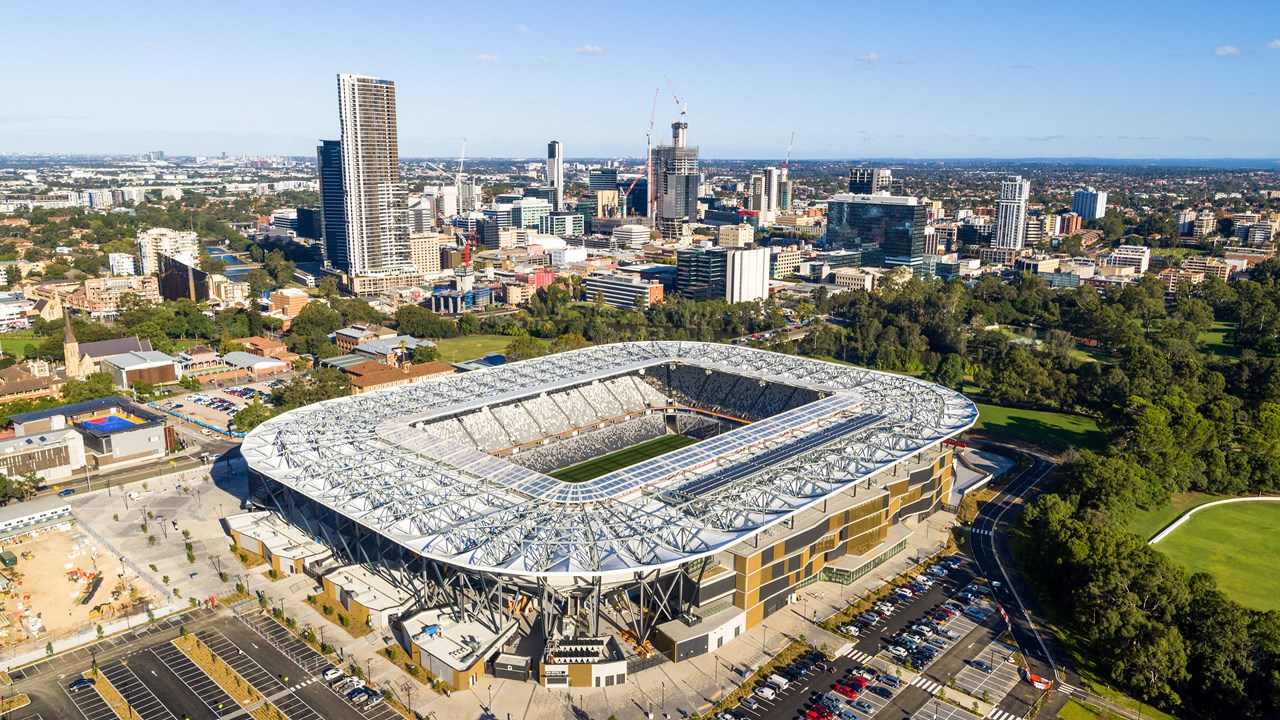
CommBank Stadium, located in Western Sydney, Australia, is one of the newest and most advanced stadiums in the region. With a seating capacity of 30,000 and a rich history, the venue has quickly become a cornerstone of Sydney’s sporting scene. Officially inaugurated on April 14, 2019, it serves as the home ground for Western Sydney Wanderers (A-League) and Parramatta Eels (NRL). The stadium’s modern design and outstanding amenities make it a premier destination for sports fans.
The History and Development of CommBank Stadium
The construction of CommBank Stadium was part of New South Wales’ major infrastructure reform that began in 2015. It replaced the aged Parramatta Stadium, but it wasn’t built on the same site. The new stadium was moved closer to the street, allowing for the removal of swimming pools and enabling a design that integrates well with the surrounding environment. The venue now covers an area of 80,000 square meters along the Parramatta River.
The project, initially estimated at AU$300 million, ended up costing AU$360 million. Despite some changes from the original plans, such as the omission of an LED-illuminated outer mesh and a different north stand design, CommBank Stadium’s construction was a major success.
- Inauguration Date: April 14, 2019
- Construction Period: September 24, 2017 – 2019
- Cost: AU$ 360 million
- Key Teams: Western Sydney Wanderers, Parramatta Eels
- Address: 11-13 O’Connell St, Parramatta NSW 2150, Australia
Design and Architecture of CommBank Stadium
Designed by Populous and built by Lendlease, CommBank Stadium is known for its innovative design, particularly its steep grandstands and cutting-edge roof. The lower tier is sunken below street level, allowing fans to access their seats easily without climbing stairs. The upper tier, however, rises sharply with 26 rows, creating one of the steepest grandstands ever built in Australia. This steep design enhances the atmosphere of the venue, making it feel intimate and energetic during events.
The stadium’s roof is another standout feature. Entirely covered with a membrane, the roof lets UV rays pass through, promoting healthy grass growth. The material used includes translucent PTFE and nearly transparent ETFE, which are both durable and efficient. The roof design, which places the membrane below the primary steel structure, contributes to the unique outer appearance of the stadium.
- Architectural Firm: Populous
- Contractor: Lendlease
- Key Features: Sunken lower tier, steep upper grandstand, membrane roof with PTFE and ETFE, 1,200 convertible seats
Sustainability Features of CommBank Stadium
CommBank Stadium was designed with sustainability in mind. It incorporates rainwater collection and solar power generation, with a 100kW solar power plant. These eco-friendly initiatives earned the stadium a LEED Gold certificate, making it one of the most sustainable sports venues in Australia. Additionally, the 1,200 seats in the lower north stand can be converted from seating to standing depending on the event, further enhancing the stadium’s versatility.
- Sustainability Features: Rainwater collection, 100kW solar power plant, LEED Gold certificate
CommBank Stadium as a Sporting Hub
Since its opening, CommBank Stadium has become a key venue for various sporting events. It is home to the Western Sydney Wanderers (A-League) and the Parramatta Eels (NRL), but it also hosts a range of other events, including rugby, soccer, and concerts. The stadium’s design makes it ideal for a variety of events, with its steep stands providing an excellent view of the action and enhancing the spectator experience.
- Home Teams: Western Sydney Wanderers (A-League), Parramatta Eels (NRL)
- Record Attendance: 29,942 (Australia vs New Zealand, Rugby, 2011)
The Future of CommBank Stadium
With its modern design and flexible seating arrangements, CommBank Stadium is well-equipped to host a wide range of events in the future. The stadium’s success has already helped secure a seven-year naming rights deal with Bankwest, and its state-of-the-art features continue to make it one of Sydney’s most popular venues. The stadium’s capacity could be expanded if needed, ensuring that it remains a top-tier sports destination.
- Expansion Potential: Capacity increase if required, potential for more events in the future
Conclusion
CommBank Stadium is a shining example of modern stadium design, blending functionality, sustainability, and fan experience. With its unique roof structure, steep grandstands, and eco-friendly features, it has become a beloved venue for Western Sydney’s sports fans. Whether hosting football, rugby, or concerts, CommBank Stadium continues to play a central role in the city’s sporting culture.