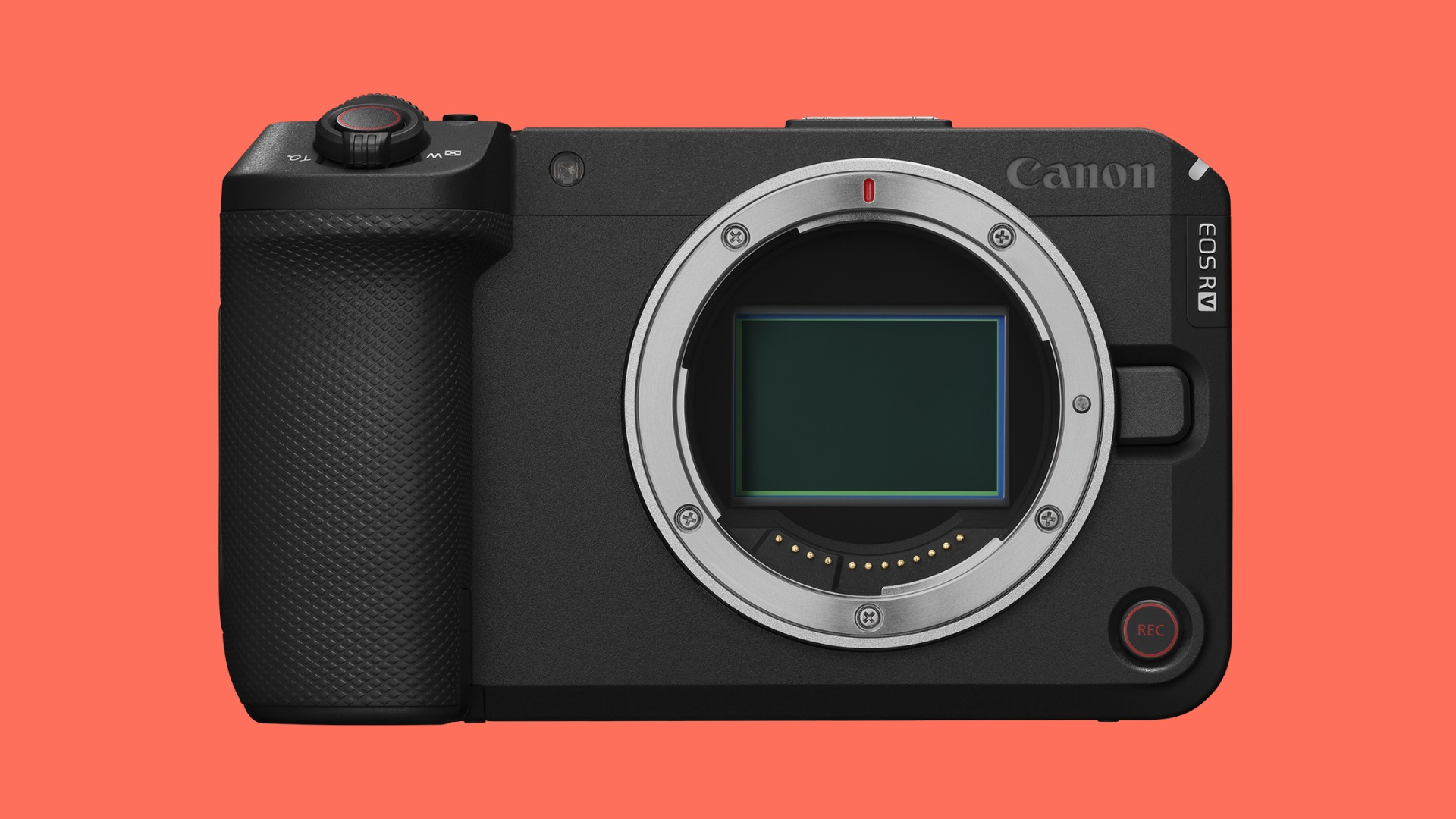
Canon EOS R6 V is a full-frame mirrorless camera designed for creators who shoot video first but still need strong still-photo capability.
Announced in May 2026, the EOS R6 V expands Canon’s EOS V-series into full-frame territory. It is aimed at advanced videographers, hybrid creators, production teams, vloggers, YouTubers, documentary shooters and social-first filmmakers who want a compact RF-mount camera with stronger video tools than a traditional stills-first body.
The camera uses a 35.9 x 23.9mm full-frame CMOS sensor with approximately 32.5 megapixels. It supports 7K RAW recording, 7K Open Gate capture, oversampled 4K, Canon Log 2, Canon Log 3, in-body image stabilisation and active cooling.
The EOS R6 V is not a normal EOS R6-series hybrid with a viewfinder. It is a video-first model with no electronic viewfinder and no mechanical shutter, making it more focused on motion capture than traditional photography.
Key Camera Specifications
| Feature | Canon EOS R6 V |
|---|---|
| Camera type | Full-frame video-first mirrorless camera |
| Announcement period | May 2026 |
| Sensor size | 35.9 x 23.9mm |
| Effective resolution | Approx. 32.5MP |
| Maximum listed sensor resolution | 6960 x 4640 |
| Lens mount | Canon RF |
| Processor | DIGIC X |
| Base sensitivity | ISO 800 for video workflows |
| Stabilisation | In-body image stabilisation with coordinated lens IS support |
| Main video headline | 7K RAW and 7K Open Gate |
| Dynamic range lab result | Not tested in provided data |
| Rolling shutter lab result | Not tested in provided data |
| Body weight | About 598 g body-only class, depending on measurement method |
| Dimensions | About 142 mm x 83 mm x 80 mm class |
| Launch price | Around $2,499 before taxes |
| Best use | Video creators, hybrid shooters, social content and compact production |
The camera is positioned as a creator-focused full-frame body rather than a traditional stills-first mirrorless camera.
Full-Frame 32.5MP Sensor
The Canon EOS R6 V uses a full-frame CMOS sensor measuring 35.9 x 23.9mm.
The sensor has approximately 32.5 effective megapixels, giving it enough resolution for high-quality stills and detailed video recording. The maximum listed image size is 6960 x 4640, which also supports the camera’s 7K capture modes.
Full frame gives creators a wider field of view than APS-C and Micro Four Thirds cameras. It also allows shallower depth of field when paired with fast RF lenses.
Why Full Frame Matters
Full frame is useful for cinematic video because it gives creators a larger image area, stronger subject separation and better wide-angle flexibility.
For interviews, documentaries, music videos, brand films and social video, full frame can help create a polished look with blurred backgrounds and wider compositions.
It also gives photographers enough resolution for portraits, events, travel, lifestyle work and online publishing.
7K RAW and Open Gate Recording
The biggest video feature of the Canon EOS R6 V is 7K recording.
Canon positions the camera around 7K RAW and 7K Open Gate capture. Open Gate means the camera can use the full 3:2 sensor area, which is valuable for creators who need both horizontal and vertical deliverables from the same footage.
| Video Feature | Canon EOS R6 V |
| 7K RAW | Supported |
| 7K Light RAW | Up to 60p in selected modes |
| 7K Open Gate | Supported up to 30p |
| Oversampled 4K | Supported |
| 4K high frame rate | Up to 120p class |
| 2K / Full HD high frame rate | Up to 180p class |
| Log profiles | Canon Log 2 and Canon Log 3 |
| HDR options | PQ and HLG workflows |
This makes the EOS R6 V more serious than a basic vlogging camera. It is designed for users who need grading flexibility, reframing space and a more professional video pipeline.
Why Open Gate Matters
Open Gate is one of the most important creator features on the Canon EOS R6 V.
It captures the full sensor height and width rather than only a 16:9 crop. This gives editors more room to create different versions of the same shot.
A single Open Gate clip can be reframed for YouTube, TikTok, Instagram Reels, Facebook, websites, vertical ads and traditional widescreen delivery.
Best Uses for Open Gate
Open Gate is useful for:
Vertical video cropping
Horizontal YouTube videos
Anamorphic workflows
Social media campaigns
Client deliverables in multiple ratios
Interview reframing
Stabilisation in post
Commercial edits with different aspect ratios
For creators working across many platforms, Open Gate can save time and improve production flexibility.
Canon Log 2 and Canon Log 3
The Canon EOS R6 V supports Canon Log 2 and Canon Log 3.
Canon Log 2 is useful when creators want maximum grading flexibility and highlight protection. Canon Log 3 is easier to grade and works well for faster production workflows.
This gives users two practical choices depending on the project.
| Profile | Best For |
| Canon Log 2 | Maximum grading flexibility |
| Canon Log 3 | Faster grading and easier workflow |
| PQ | HDR delivery |
| HLG | HDR broadcast-style workflows |
| Canon 709 | Faster standard-looking results |
For serious creators, Canon Log support is one of the biggest advantages over entry-level video cameras.
Dynamic Range
The provided camera-database data lists dynamic range as not tested for the Canon EOS R6 V.
Canon claims strong video latitude through Canon Log 2, but independent lab results were not included in the pasted data. For that reason, this article does not list a measured dynamic-range score.
Until full lab tests are available, creators should treat any dynamic-range number as a manufacturer or early-review claim rather than a verified camera-database result.
What Dynamic Range Means for Creators
Dynamic range affects how much detail a camera can hold in bright highlights and dark shadows.
This matters when filming skies, windows, dark rooms, outdoor interviews, stage lighting and backlit scenes. Canon Log 2 should help users preserve more image information, but careful exposure still matters.
The best approach is to expose properly, protect highlights and test the camera before important paid work.
Rolling Shutter
Rolling shutter was not tested in the provided data.
This means there is no confirmed measurement here for how the Canon EOS R6 V handles fast pans, handheld movement or quick subject motion.
Since the camera uses a high-resolution full-frame sensor and electronic shutter design, creators should test fast movement before action-heavy shoots.
Why Rolling Shutter Matters
Rolling shutter can make fast movement look distorted.
Vertical lines may bend during quick pans, and fast-moving subjects may show skew. This is less visible in interviews, studio shots, tripod work and controlled camera movement.
For sports, dance, action, vehicles and handheld documentary work, rolling-shutter testing is important.
RF Lens Mount
The Canon EOS R6 V uses the RF mount.
RF mount gives users access to Canon’s modern full-frame mirrorless lenses, including compact primes, professional zooms, hybrid video lenses and stabilised optics.
The camera can also use EF lenses through Canon EF-EOS R adapters.
| Lens Workflow | Best For |
| RF lenses | Native autofocus, stabilisation and modern optics |
| RF hybrid lenses | Video-focused creators |
| RF-S lenses | Cropped workflows |
| EF lenses with adapter | Existing Canon DSLR lens owners |
| Cine lenses | Manual-focus video and production work |
The RF mount makes the camera flexible for creators who already use Canon systems.
In-Body Image Stabilisation
The Canon EOS R6 V includes in-body image stabilisation.
IBIS helps reduce handheld shake and works with supported RF lenses for coordinated stabilisation. This is useful for handheld video, travel content, interviews, documentary work and light run-and-gun production.
Digital stabilisation can also help in selected video workflows, although it may introduce a crop.
Why IBIS Matters
Many creators shoot without a tripod or large rig.
IBIS helps make handheld footage smoother and gives solo creators more flexibility. It is not a replacement for a gimbal, tripod or proper shoulder rig, but it helps reduce small movements and makes compact shooting more practical.
For social video and documentary work, this is a major advantage.
Active Cooling
The Canon EOS R6 V includes active cooling.
A built-in fan helps the camera manage heat during long recording sessions. This is important because high-resolution video modes such as 7K RAW and oversampled 4K can generate heat in compact bodies.
Active cooling makes the EOS R6 V more suitable for long interviews, events, live content and extended production days than many small hybrid cameras.
Why Active Cooling Matters
Overheating can stop recording at the worst time.
A cooling fan helps the camera maintain longer recording performance, especially in demanding modes. This is useful for creators filming podcasts, classes, weddings, corporate videos, documentaries and long-form YouTube content.
For video-first users, active cooling is one of the clearest reasons to choose the EOS R6 V over a stills-first body.
Body Design and Controls
The EOS R6 V uses a compact video-first body.
It removes the traditional electronic viewfinder and focuses on screen-based video operation. This makes the body smaller and more streamlined for creators who mostly shoot through the rear monitor or an external display.
The camera also includes creator-focused controls such as a tally lamp, front-facing record button and vertical video support.
Who Will Like the Body
The body design is best for users who shoot video more than stills.
Vloggers, YouTubers, gimbal users and social creators may appreciate the compact shape. Traditional photographers who rely on a viewfinder may prefer a standard EOS R6-series or EOS R5-series camera.
The EOS R6 V is clearly built for video-first shooting.
Photo Capability
The camera database lists full-sensor photo capture at 6960 x 4640.
That makes the EOS R6 V capable of producing high-resolution still images. However, its design choices show that video is the main priority.
The lack of a mechanical shutter and electronic viewfinder may make it less appealing to photographers who shoot sports, flash work or traditional viewfinder-based stills.
Best Photo Uses
The EOS R6 V can still work well for:
Travel photos
Lifestyle images
Portraits
Behind-the-scenes stills
Content thumbnails
Social media images
Brand photography
Video production stills
It is not a pure photography camera, but it can support hybrid creators who need stills alongside video.
Recording Media
The Canon EOS R6 V uses dual card slots, including CFexpress Type B and SD UHS-II support.
This makes sense for a camera that records high-data-rate 7K RAW and proxy workflows. CFexpress is important for the most demanding recording modes, while SD can be useful for lighter files, backups or proxy recording.
Media Planning Tips
Use fast CFexpress cards for 7K RAW.
Use SD cards for lighter recording, proxies or backup workflows. For paid work, always test cards before production and carry enough storage for long takes.
High-resolution RAW video can fill cards quickly, so media planning is essential.
Best Uses for the Canon EOS R6 V
The Canon EOS R6 V is best for creators who want full-frame video features in a compact RF-mount body.
It is ideal for:
YouTube creators
Video-first photographers
Documentary shooters
Social media producers
Commercial creators
Travel filmmakers
Online educators
Interview setups
Gimbal operators
Brand films
Music videos
Corporate video
Hybrid photo-video work
The camera is strongest when video is the main job and stills are secondary.
Canon EOS R6 V vs EOS R6 Mark III
The EOS R6 V and EOS R6 Mark III share a similar full-frame resolution class, but they are aimed at different users.
| Feature | Canon EOS R6 V | Canon EOS R6 Mark III |
| Main audience | Video-first creators | Hybrid photographers |
| Viewfinder | No EVF | EVF-equipped body |
| Mechanical shutter | No | Yes |
| Video focus | Stronger creator-video design | Hybrid video and stills |
| Body style | Compact video-first body | Traditional EOS R body |
| Best use | Content creators and videographers | Photographers and hybrid shooters |
The R6 V is better for users who mainly shoot video. The R6 Mark III is better for users who need a traditional stills camera experience.
Canon EOS R6 V vs Canon EOS R50 V
The EOS R6 V is the higher-end full-frame model, while the EOS R50 V is a smaller APS-C creator camera.
| Feature | Canon EOS R6 V | Canon EOS R50 V |
| Sensor format | Full frame | APS-C |
| Resolution class | 32.5MP | 24MP class |
| Video level | 7K RAW and Open Gate | Entry creator video |
| Stabilisation | IBIS supported | More limited body features |
| Best advantage | Professional video power | Lower price and portability |
| Best use | Advanced creators | Beginner creators and vloggers |
The R50 V is better for budget users. The R6 V is better for serious video creators who need full-frame quality and advanced recording formats.
Canon EOS R6 V vs Canon EOS C50
The EOS R6 V and Canon EOS C50 share a video-first philosophy, but they serve different production styles.
| Feature | Canon EOS R6 V | Canon EOS C50 |
| Camera type | Mirrorless-style creator camera | Cinema EOS camera |
| Lens mount | RF | RF |
| Body style | Compact creator body | Cinema production body |
| Best advantage | Smaller and lighter | More cinema-focused operation |
| Best use | Solo creators and small crews | Professional production teams |
The EOS R6 V is more portable. The EOS C50 is better for users who need a dedicated Cinema EOS production workflow.
Key Takeaways
- Canon EOS R6 V was announced in May 2026.
- It uses a 35.9 x 23.9mm full-frame CMOS sensor.
- Effective resolution is approximately 32.5 megapixels.
- Maximum listed full-sensor resolution is 6960 x 4640.
- The camera uses the Canon RF mount.
- It supports EF lenses through adapters.
- The processor is DIGIC X.
- Video features include 7K RAW and 7K Open Gate.
- Canon Log 2 and Canon Log 3 are supported.
- In-body image stabilisation is included.
- Active cooling helps longer recording.
- The body is video-first and does not use a traditional EVF.
- Dynamic range was not tested in the provided data.
- Rolling shutter was not tested in the provided data.
- Launch pricing is around $2,499 before taxes.
- It is best for advanced creators, videographers and compact full-frame production.
Frequently Asked Questions
What is the Canon EOS R6 V?
Canon EOS R6 V is a full-frame video-first mirrorless camera in Canon’s EOS V-series, designed for advanced creators and videographers.
When was the Canon EOS R6 V announced?
The camera was announced in May 2026.
What sensor does the Canon EOS R6 V use?
It uses a 35.9 x 23.9mm full-frame CMOS sensor with approximately 32.5 effective megapixels.
What is the maximum photo resolution?
The listed full-sensor photo resolution is 6960 x 4640.
What lens mount does it use?
The Canon EOS R6 V uses the RF mount and can use EF lenses through Canon adapters.
Does the Canon EOS R6 V shoot 7K video?
Yes. The camera supports 7K RAW and 7K Open Gate recording.
Does it support Canon Log?
Yes. Canon Log 2 and Canon Log 3 are supported.
Does the Canon EOS R6 V have IBIS?
Yes. The camera includes in-body image stabilisation and can coordinate with supported lens stabilisation.
Does the Canon EOS R6 V have active cooling?
Yes. The camera includes active cooling for longer video recording sessions.
Was dynamic range tested?
The provided data lists dynamic range as not tested.
Was rolling shutter tested?
The provided data lists rolling shutter as not tested.
Who should buy the Canon EOS R6 V?
The camera is best for advanced video creators, YouTubers, documentary shooters, commercial creators, gimbal operators and hybrid users who prioritise video over traditional stills shooting.
Conclusion
Canon EOS R6 V is a major step for Canon’s video-first creator lineup.
Its full-frame 32.5MP sensor, 7K RAW recording, 7K Open Gate capture, RF mount, Canon Log 2, Canon Log 3, IBIS, active cooling and compact body make it a strong option for creators who need serious video tools without moving fully into a cinema camera body.
It is not the best choice for traditional photographers who rely on an EVF, mechanical shutter or flash workflows. It is also too new for full independent dynamic-range and rolling-shutter conclusions from the provided data.
However, for video-first creators who want a compact full-frame Canon camera built around modern content production, the Canon EOS R6 V is one of the most interesting RF-mount releases of 2026.
Read Also: Blackmagic Production Camera 4K: Specs, Sensor, Recording Modes and Features