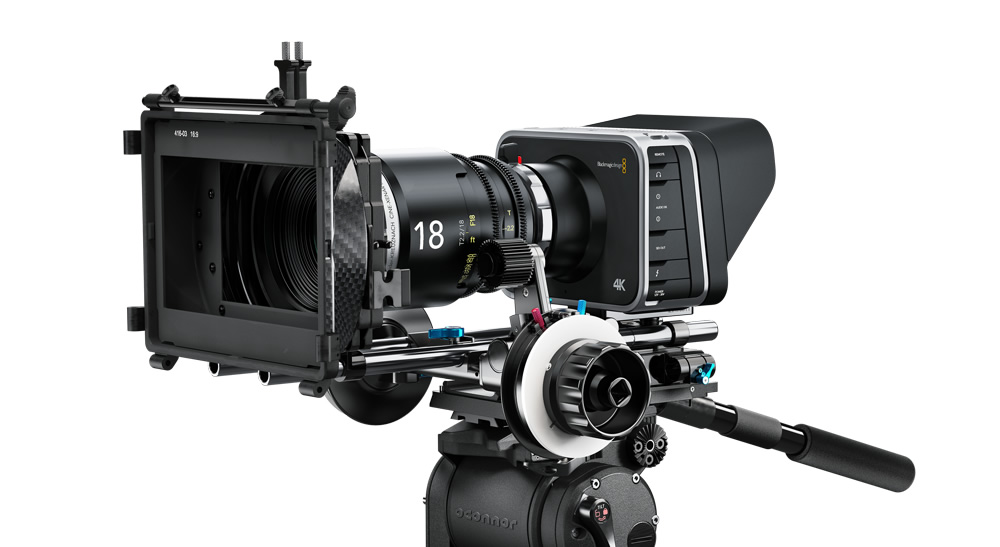
Production Camera 4K is one of Blackmagic Design’s early digital cinema cameras and an important model in the company’s move toward affordable 4K filmmaking.
Released in June 2013 after its NAB announcement, the Blackmagic Design Production Camera 4K was built for filmmakers who wanted a Super 35 sensor, 4K recording, RAW capture and a professional global shutter at a price far below many cinema cameras of that period.
The camera uses a Super 35mm sensor with a listed active area of about 21.12 x 11.88 mm. It records 4000 x 2160 CinemaDNG RAW and also supports Apple ProRes workflows. Lens mount options include EF and PL, giving filmmakers access to both still-photo lenses and professional cinema glass.
The Production Camera 4K is not a modern hybrid camera. It does not offer today’s autofocus tools, high frame rates, full-frame capture, in-body stabilisation, built-in ND filters or advanced low-light performance. However, it remains historically important because it gave independent filmmakers access to 4K Super 35 recording and global-shutter motion at a disruptive price.
Key Camera Specifications
The Blackmagic Production Camera 4K is built around a Super 35 sensor, ISO 800 base sensitivity and CinemaDNG RAW recording.
| Feature | Blackmagic Production Camera 4K |
|---|---|
| Camera type | Super 35 digital cinema camera |
| Release period | June 2013 |
| Sensor format | Super 35mm |
| Sensor size | 21.12 x 11.88 mm |
| Maximum recording resolution | 4000 x 2160 |
| Lens mount options | EF and PL |
| Base sensitivity | ISO 800 |
| Shutter type | Global shutter |
| Dynamic range | Not tested in provided data |
| Rolling shutter | Not applicable in the same way because of global shutter design |
| Main RAW codec | CinemaDNG |
| ProRes workflow | Supported |
| Body weight | About 1.7 kg |
| Dimensions | About 113 mm x 126 mm x 166 mm |
| Best use | 4K cinema, indie films, commercials and controlled production |
The camera’s biggest technical distinction is its global shutter. That separates it from many other affordable cinema cameras that use rolling-shutter sensors.
Super 35 Sensor
The Production Camera 4K uses a Super 35mm sensor measuring about 21.12 x 11.88 mm.
Super 35 is one of the most established formats in cinema. It gives filmmakers a familiar field of view, practical focus control and strong lens compatibility. It also works well with many EF and PL lenses, depending on the mount version.
The sensor is smaller than modern full-frame cameras, but Super 35 remains practical for narrative films, commercials, documentaries and controlled production work.
Why Super 35 Matters
Super 35 gives filmmakers a cinematic look without the extreme focus demands of full frame.
It works well with cinema zooms, vintage lenses, EF photo lenses and PL cinema lenses. It also keeps lens coverage easier than larger-sensor formats.
For a 2013 4K cinema camera, Super 35 was a strong selling point because many filmmakers already understood the format and had lenses that could support it.
4K Recording Resolution
The Blackmagic Production Camera 4K records up to 4000 x 2160 in CinemaDNG RAW.
This gave filmmakers a true high-resolution workflow at a time when many affordable cameras were still limited to HD. The camera’s 4K files offered more detail for cinema delivery, cropping, reframing and high-quality downsampling.
| Recording Format | Resolution |
| Full Sensor CinemaDNG | 4000 x 2160 |
| ProRes 4K workflow | 3840 x 2160 class |
| HD workflow | 1920 x 1080 class |
The camera was especially important for filmmakers who wanted to future-proof projects for 4K delivery or create sharper HD masters from higher-resolution source footage.
CinemaDNG RAW Recording
CinemaDNG RAW is one of the key features of the Production Camera 4K.
The camera records 12-bit CinemaDNG in 4K. RAW recording gives filmmakers more flexibility in post-production than standard compressed video. It preserves more image information for exposure, colour and contrast adjustments.
In the provided recording data, the camera supports CinemaDNG recording at 23.98p, 24p, 25p and 29.97p.
| Mode | Resolution | Codec | Frame Rate | Bit Depth |
| Full Sensor | 4000 x 2160 | CinemaDNG | 23.98p | 12-bit |
| Full Sensor | 4000 x 2160 | CinemaDNG | 24p | 12-bit |
| Full Sensor | 4000 x 2160 | CinemaDNG | 25p | 12-bit |
| Full Sensor | 4000 x 2160 | CinemaDNG | 29.97p | 12-bit |
CinemaDNG creates large files, but it gives colourists strong control over the final image.
ProRes Recording
The Production Camera 4K also supports Apple ProRes recording.
ProRes is easier to edit than CinemaDNG RAW and is more practical for many productions. It gives editors a high-quality file without the heavier storage and workflow demands of RAW.
For documentaries, commercials, corporate projects and quick-turnaround work, ProRes made the camera much easier to use.
Why ProRes Matters
ProRes helped make the Production Camera 4K usable outside high-end post-production environments.
CinemaDNG RAW is powerful, but it can slow down smaller teams because of file size and workflow complexity. ProRes gives creators a simpler way to capture strong images and edit quickly.
This codec flexibility made the camera more useful for real-world production.
Global Shutter
The global shutter is one of the most important features of the Blackmagic Production Camera 4K.
A global shutter captures the full image at once instead of scanning the sensor line by line. This reduces the skew and bending effects associated with rolling shutter.
For fast pans, handheld movement, flashes, moving vehicles and action scenes, global shutter can produce cleaner motion.
Why Global Shutter Matters
Rolling-shutter cameras can distort fast movement.
Vertical lines may bend during quick pans, and fast-moving subjects can appear skewed. A global shutter avoids those common rolling-shutter artifacts.
This made the Production Camera 4K especially attractive to filmmakers who wanted more natural motion from an affordable 4K cinema camera.
Dynamic Range
The provided camera data does not include an independent dynamic-range test result for the Blackmagic Production Camera 4K.
That means there is no measured SNR=2 result in the pasted database section. Blackmagic promoted the camera as having strong cinema-style latitude, but for this article, the safest approach is to mark dynamic range as not tested in the provided data.
What This Means for Filmmakers
Without a lab result in the provided data, buyers should judge the camera through real footage, exposure tests and project needs.
The Production Camera 4K can produce a filmic image, but it is not known as a modern high-dynamic-range powerhouse. Like many early Blackmagic cameras, it rewards careful exposure, controlled lighting and disciplined highlight management.
For best results, expose carefully and avoid relying on heavy shadow recovery.
Rolling Shutter
The provided database lists rolling shutter as not tested.
However, the Production Camera 4K uses a global shutter, so rolling-shutter skew is not a normal concern in the same way it is on rolling-shutter CMOS cameras.
What Global Shutter Changes
A global shutter does not eliminate every motion challenge, but it removes the classic rolling-shutter bending effect.
This is useful when filming fast camera movement, flashes, strobe lights, vehicles or handheld shots. It gives motion a more stable look than many rolling-shutter cameras from the same era.
For filmmakers who value motion rendering, this remains one of the camera’s most interesting features.
Lens Mount Options
The Blackmagic Production Camera 4K was available in EF and PL mount versions.
The EF version appealed to independent filmmakers who already owned Canon EF lenses. The PL version appealed to cinema crews using professional primes and zooms.
| Mount | Best For |
| EF | Canon EF lenses, Sigma EF lenses, owner-operators and indie filmmakers |
| PL | Cinema primes, cinema zooms, rental lenses and professional production |
This mount choice made the camera more flexible than a fixed-lens system and helped it serve different types of filmmakers.
Lens Coverage Considerations
Because the sensor is Super 35mm, lens coverage is easier than on full-frame cameras.
Most Super 35 PL cinema lenses can cover the sensor. Full-frame EF lenses also cover it easily. Some APS-C EF lenses may work depending on the lens and desired framing.
As always, filmmakers should test lenses before paid shoots.
ISO 800 Base Sensitivity
The Production Camera 4K has a base sensitivity of ISO 800.
ISO 800 is common in cinema workflows because it balances highlight protection and shadow detail. However, this camera is not known as a strong low-light performer by modern standards.
It works best when scenes are properly lit.
Best ISO Practice
Use ISO 800 as the main working point.
Avoid deep underexposure, especially in shadows. Add light where possible rather than pushing the image too far in post-production.
The camera can produce attractive footage, but it needs careful lighting and exposure.
SSD Recording
The Production Camera 4K records to SSD media.
SSD recording was important because 4K CinemaDNG RAW and ProRes require high data rates. SSDs gave users more capacity and speed than many card-based systems of that time.
Storage Planning Tips
4K CinemaDNG RAW creates heavy files.
A production should use approved SSDs, test media before shooting and back up footage carefully. RAW files need more storage and more disciplined data management than standard video.
For paid work, footage should be copied to at least two secure locations before drives are reused.
6G-SDI Output
The Production Camera 4K includes 6G-SDI output.
This is a professional connection for monitoring and output workflows. It made the camera more suitable for studio setups, external recorders and on-set monitoring than cameras that relied only on HDMI.
Why 6G-SDI Matters
SDI is more robust than HDMI for professional production.
It locks more securely, works better over longer cable runs and is common on cinema and broadcast sets. For a 2013 affordable 4K camera, 6G-SDI gave the Production Camera 4K a more professional workflow.
Body Design
The Production Camera 4K uses a compact cinema-style body that weighs about 1.7 kg.
It has a large touchscreen, SSD slot and a solid body design similar to Blackmagic’s earlier Cinema Camera models. It is not as ergonomic as later URSA Mini Pro models, but it can be rigged effectively.
Why Rigging Helps
The camera works best when built into a proper cinema rig.
A cage, rods, matte box, external monitor, V-mount battery, follow focus and shoulder support can make the camera much easier to use. Bare-body shooting is possible, but serious production benefits from accessories.
This was common for early Blackmagic cameras.
Strengths of the Production Camera 4K
The Blackmagic Production Camera 4K still has several strengths.
It offers 4K CinemaDNG RAW, ProRes recording, Super 35 imaging, EF or PL lens support and global-shutter motion. These features made it stand out in 2013 and still give it a unique identity today.
It is especially interesting for filmmakers who want a classic early-Blackmagic image and do not need modern autofocus or high frame rates.
Limitations of the Production Camera 4K
The camera also has clear limitations.
Dynamic range was not tested in the provided data. Low-light performance is limited by modern standards. The body needs rigging, battery planning and careful media management. There are no built-in ND filters, no modern autofocus tools and no high-frame-rate recording.
It is also limited to 4K frame rates up to 29.97p in the provided CinemaDNG data.
Who Should Be Careful
This camera is not ideal for fast documentary work, weddings, sports, solo autofocus shooting or low-light event coverage.
It is better suited to controlled filmmaking where lighting, exposure, lenses, storage and camera movement can be managed carefully.
Best Uses for the Production Camera 4K
The Blackmagic Production Camera 4K is best for filmmakers who want 4K RAW capture and global-shutter motion in a classic Blackmagic body.
It is ideal for:
Independent films
Short films
Music videos
Commercials
Product videos
Studio scenes
Controlled interviews
Green screen work
Experimental films
Film-school projects
Global-shutter motion tests
Classic digital cinema looks
The camera works best when used in controlled lighting and supported by a proper rig.
Production Camera 4K vs Pocket Cinema Camera
The original Pocket Cinema Camera is smaller and has a Super 16 sensor, while the Production Camera 4K offers 4K Super 35 capture.
| Feature | Production Camera 4K | Pocket Cinema Camera |
| Sensor format | Super 35 | Super 16 |
| Maximum resolution | 4000 x 2160 | 1920 x 1080 |
| Lens mount | EF or PL | MFT |
| RAW format | CinemaDNG | CinemaDNG |
| Shutter | Global shutter | Rolling shutter |
| Main advantage | 4K Super 35 image | Tiny Super 16 body |
The Production Camera 4K is better for higher-resolution controlled production. The Pocket Cinema Camera is better for compact Super 16-style shooting.
Production Camera 4K vs Pocket Cinema 4K
The Pocket Cinema 4K is newer, smaller and easier for many users, but the Production Camera 4K has a global shutter.
| Feature | Production Camera 4K | Pocket Cinema 4K |
| Sensor format | Super 35 | Micro Four Thirds |
| Maximum resolution | 4000 x 2160 | 4096 x 2160 |
| Lens mount | EF or PL | MFT |
| Shutter | Global shutter | Rolling shutter |
| Main codecs | CinemaDNG and ProRes | BRAW and ProRes |
| Main advantage | Global shutter | Modern workflow and MFT flexibility |
The Pocket Cinema 4K is more practical for most modern creators. The Production Camera 4K is more interesting for users who specifically want global-shutter motion and a Super 35 image.
Production Camera 4K vs URSA Mini Pro 4.6K
The URSA Mini Pro 4.6K is a more advanced production camera.
| Feature | Production Camera 4K | URSA Mini Pro 4.6K |
| Sensor format | Super 35 | Super 35 |
| Maximum resolution | 4000 x 2160 | 4608 x 2592 |
| Lens mounts | EF or PL | EF, PL, B4 and F workflows |
| Built-in ND filters | No | Yes |
| Body design | Early cinema body | Production/broadcast body |
| Main advantage | Global shutter | Better production features |
The URSA Mini Pro 4.6K is better for professional field work. The Production Camera 4K remains notable for its global-shutter sensor.
Key Takeaways
- Blackmagic Production Camera 4K was released in June 2013.
- It uses a Super 35 sensor measuring about 21.12 x 11.88 mm.
- Maximum CinemaDNG recording resolution is 4000 x 2160.
- Lens mount options include EF and PL.
- Base sensitivity is ISO 800.
- The camera uses a global shutter.
- The provided data does not include dynamic-range test results.
- Rolling shutter is not tested in the provided data.
- The camera records 12-bit CinemaDNG.
- ProRes recording is also part of the camera workflow.
- CinemaDNG supports 23.98p, 24p, 25p and 29.97p in the provided data.
- The body weighs about 1.7 kg.
- It records to SSD media.
- It is best for controlled 4K cinema, music videos, commercials and global-shutter workflows.
Frequently Asked Questions
What is the Blackmagic Production Camera 4K?
The Blackmagic Production Camera 4K is a Super 35 digital cinema camera with 4K CinemaDNG RAW, ProRes recording, EF or PL mount options and a global shutter.
When was the Blackmagic Production Camera 4K released?
The camera was released in June 2013 after being announced at NAB 2013.
What sensor does it use?
It uses a Super 35mm sensor with a listed active area of about 21.12 x 11.88 mm.
What is the maximum resolution?
The maximum CinemaDNG recording resolution in the provided data is 4000 x 2160.
What lens mounts are available?
The camera was available in EF and PL mount versions.
What is the base ISO?
The base sensitivity is ISO 800.
Does the Production Camera 4K have a global shutter?
Yes. One of its key features is a professional global shutter, which helps avoid rolling-shutter skew.
Does it record RAW?
Yes. It records 12-bit CinemaDNG RAW.
Does it record ProRes?
Yes. The camera supports Apple ProRes recording workflows.
Was dynamic range tested?
The provided data lists dynamic range as not tested for this model.
Was rolling shutter tested?
The provided data lists rolling shutter as not tested. Since the camera uses a global shutter, normal rolling-shutter skew is not the same concern.
Who should use the Production Camera 4K?
It is best for filmmakers who want a classic Blackmagic 4K Super 35 image, CinemaDNG RAW, ProRes workflow and global-shutter motion in controlled production settings.
Conclusion
Blackmagic Production Camera 4K remains an important early model in Blackmagic Design’s cinema camera history.
Its Super 35 sensor, 4K CinemaDNG RAW recording, ProRes workflow, EF and PL mount options, ISO 800 base sensitivity, SSD recording and global shutter made it stand out when affordable 4K cinema cameras were still rare.
It is not the easiest camera to use today. It needs careful exposure, good lighting, proper SSD media, external ND filters and a thoughtful rig. It lacks many modern conveniences found in newer Blackmagic cameras.
Even so, the Production Camera 4K still has a clear identity. It is a controlled-production camera for filmmakers who value Super 35 4K capture and global-shutter motion over modern automation.
For creators who understand its limits, it remains a historically important and visually distinctive Blackmagic camera.
Read Also: Blackmagic Pocket Cinema Camera: Specs, Dynamic Range, Recording Modes and Features