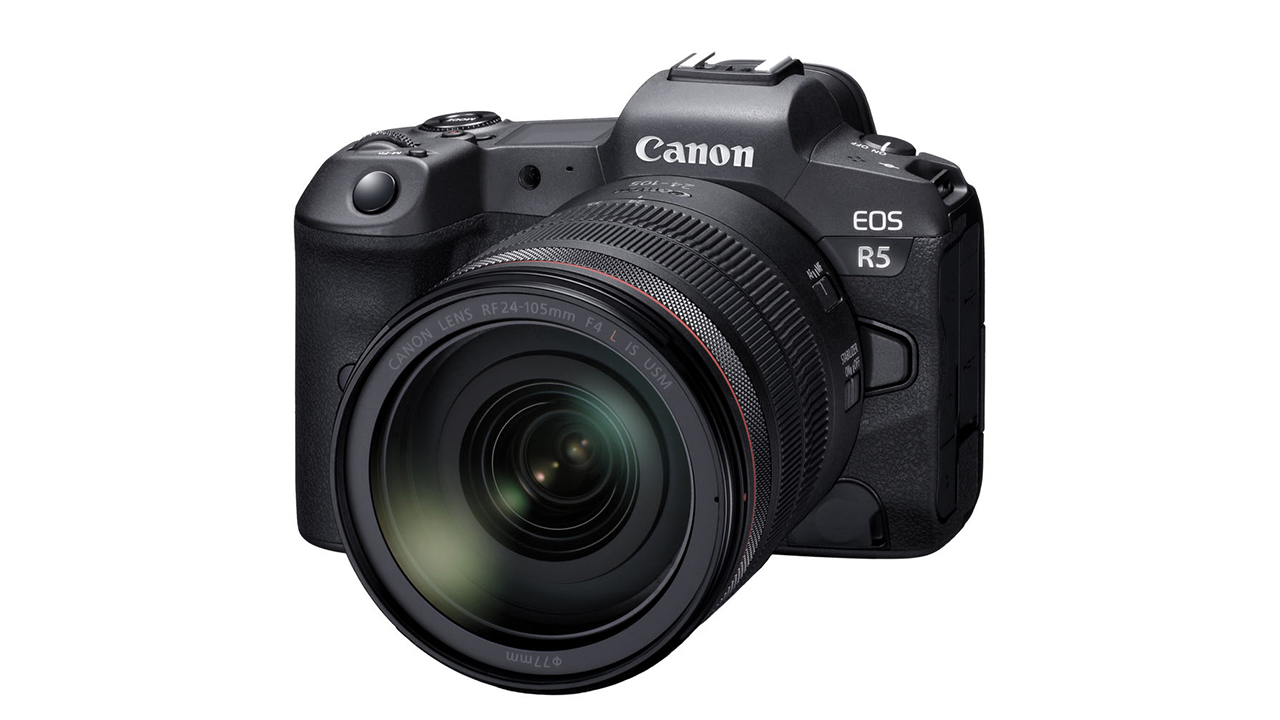
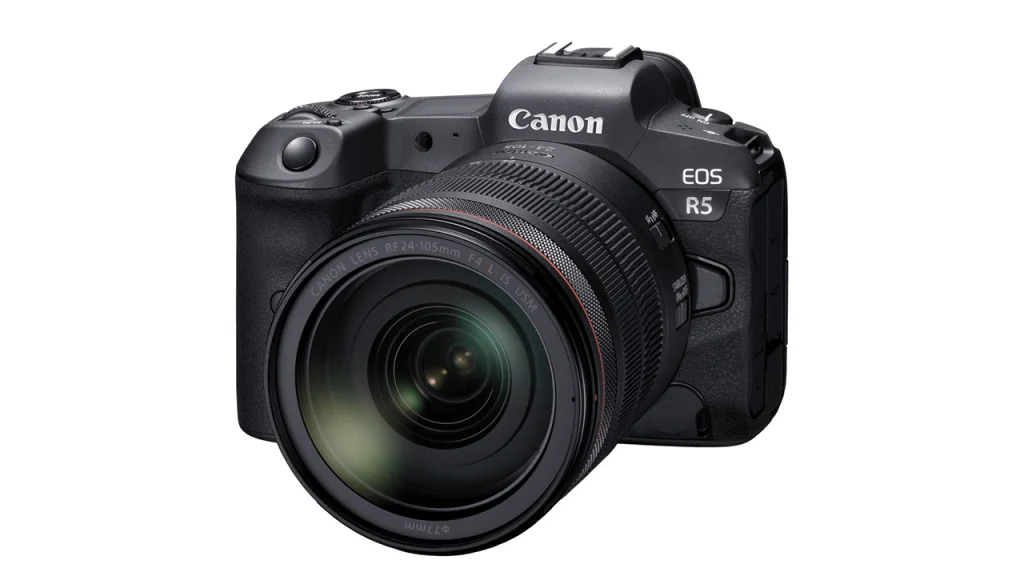
Canon EOS R5 remains one of Canon’s most important full-frame mirrorless cameras because it helped push hybrid camera expectations forward with 45MP stills, 8K video recording and strong professional autofocus.
Released in July 2020, the EOS R5 arrived as a major statement for Canon’s RF mount system. It was built for photographers who needed high-resolution still images and filmmakers who wanted advanced video options in one compact body.
The camera features a full-frame 35mm sensor measuring 35.9 x 23.9 mm, an RF lens mount, 8K DCI recording, 4K DCI and UHD options, Canon Log support and 5-axis in-body image stabilization. It is not a dedicated cinema camera, but it sits in an important middle ground between high-end photography bodies and video-focused production tools.
For creators, wedding shooters, wildlife photographers, commercial photographers and independent filmmakers, the Canon EOS R5 still offers a strong mix of resolution, speed and video flexibility.
Key Canon EOS R5 Specifications
The Canon EOS R5 is built around a high-resolution full-frame sensor and Canon’s RF mount system. Its main strength is versatility.
| Feature | Canon EOS R5 |
|---|---|
| Release period | July 2020 |
| Camera type | Full-frame mirrorless hybrid camera |
| Sensor size | 35.9 x 23.9 mm |
| Effective resolution | About 45MP |
| Maximum photo resolution | 8192 x 5464 |
| Lens mount | Canon RF |
| Video formats | 8K DCI, 8K UHD, 4K DCI, 4K UHD, HD |
| External RAW option | ProRes RAW with compatible external recorder |
| Internal video codecs | H.265, H.264 and Canon RAW options depending on mode |
| Canon Log support | Canon Log and Canon Log 3 depending on firmware and mode |
| Base sensitivity in Canon Log lab testing | ISO 400 |
| Body weight | About 650g body-only class |
| Typical body weight with battery/card | About 738g class |
| Approximate dimensions | 138 x 98 x 88 mm class |
| Current listed body price | Around $2,999 before tax, depending on retailer |
The EOS R5 is best understood as a premium hybrid camera. It can shoot high-resolution stills, record advanced video and work across many professional jobs.
Full-Frame Sensor and Image Quality
The Canon EOS R5 uses a full-frame CMOS sensor with a 35.9 x 23.9 mm imaging area.
Its 45MP resolution gives photographers enough detail for large prints, cropping, commercial work, landscapes, portraits, weddings and wildlife photography. The 8192 x 5464 full sensor photo resolution also gives editors strong flexibility in post-production.
For still photography, the EOS R5 remains a strong performer because it combines high resolution with fast autofocus and high-speed burst shooting. Canon designed it for users who do not want to choose between image detail and speed.
Why the 45MP Sensor Matters
A 45MP sensor gives creators more room to crop without losing too much detail.
That is useful for wildlife, sports, weddings and event photography, where the subject may not always fill the frame. It also helps commercial photographers who need clean images for advertising, print and digital campaigns.
The full-frame sensor also supports stronger low-light performance than smaller formats, especially when paired with fast RF lenses.
Canon RF Mount and Lens Support
The EOS R5 uses Canon’s RF mount.
The RF mount gives the camera access to Canon’s modern mirrorless lens lineup, including fast primes, professional zooms, macro lenses, telephoto lenses and compact everyday options.
With an EF-EOS R adapter, many Canon EF lenses can also be used. This makes the EOS R5 attractive for photographers who already own Canon DSLR lenses and want to move into the mirrorless system without replacing every lens immediately.
Lens Coverage
Because the Canon EOS R5 uses a full-frame sensor, RF full-frame lenses cover the entire sensor area. RF-S or EF-S lenses can also be used in crop mode, but they do not use the full imaging area.
For video users, lens choice affects field of view, depth of field, stabilization and focusing performance. Canon’s RF lenses often pair well with the EOS R5 because many support fast autofocus and strong optical performance.
8K Video Recording
The biggest headline feature of the Canon EOS R5 at launch was 8K video.
The camera supports 8K DCI recording at 8192 x 4320 and 8K UHD recording at 7680 x 4320. It also supports 4K DCI, 4K UHD and HD options.
For filmmakers, 8K gives more flexibility in post-production. Editors can crop, stabilize, reframe or downsample footage to 4K while retaining detail.
The EOS R5 can also output ProRes RAW to compatible external recorders in supported workflows. That gives advanced users more flexibility in colour grading and editing.
Recording Formats
The Canon EOS R5 supports a broad set of recording formats for hybrid creators.
| Recording Format | Resolution |
| Full sensor photo mode | 8192 x 5464 |
| 8K DCI | 8192 x 4320 |
| 8K UHD | 7680 x 4320 |
| 4K DCI | 4096 x 2160 |
| 4K UHD | 3840 x 2160 |
| HD | 1920 x 1080 |
| 4K DCI Super 35 crop | 4096 x 2160 |
| 4K UHD Super 35 crop | 3840 x 2160 |
| HD Super 35 crop | 1920 x 1080 |
| 4K DCI HQ mode | 4096 x 2160 |
| 4K UHD HQ mode | 3840 x 2160 |
The 4K HQ modes are especially useful because they use oversampled data for sharper results. This makes the EOS R5 attractive for creators who want strong 4K output rather than simply shooting everything in 8K.
Dynamic Range Performance
CineD’s lab testing measured the Canon EOS R5 at up to 10.8 stops of dynamic range at SNR=2 in 4K H.265 HQ, Canon Log, ISO 400.
The same testing showed different results depending on recording mode, codec, ISO and gamma setting. In RAW and ProRes RAW workflows, the camera can preserve more information, although some of that detail may sit deeper in the noise floor.
For practical use, this means exposure control matters. The EOS R5 can produce strong images, but users should protect highlights carefully and avoid underexposing Log footage too heavily.
What Dynamic Range Means for Creators
Dynamic range describes how much detail a camera can hold from shadows to highlights.
A higher dynamic range helps when shooting bright skies, high-contrast interiors, sunsets, weddings, stage events and outdoor scenes. For video, it also gives colourists more flexibility when grading Canon Log footage.
The EOS R5 performs well for a hybrid mirrorless camera, but it is not in the same dynamic range class as dedicated cinema cameras such as ARRI ALEXA models.
Rolling Shutter Performance
Rolling shutter is another important video measurement.
CineD measured the Canon EOS R5 at 15.5ms rolling shutter in full-frame 8K RAW HQ mode at 25fps. It also measured a faster 9.6ms result in 4K H.265 at 50fps in lower-quality readout mode.
Rolling shutter affects how moving subjects and fast camera pans appear. If the readout is slow, vertical lines may bend during quick motion.
For most controlled video work, the EOS R5 performs well. However, fast handheld pans, sports action or whip movements still require careful shooting technique.
Autofocus and Stabilization
The Canon EOS R5 is also known for its autofocus system.
Canon’s Dual Pixel CMOS AF technology gives the camera strong subject tracking for people, animals and moving subjects. This makes it useful for weddings, portraits, wildlife, sports, interviews and solo creator work.
The camera also includes in-body image stabilization. When paired with compatible RF lenses, stabilization can become even more effective. This helps photographers shoot at slower shutter speeds and helps video users capture smoother handheld footage.
Why Stabilization Helps
In-body stabilization is valuable because it works with many lenses.
For photography, it reduces blur from small hand movements. For video, it helps reduce shake when shooting handheld. It does not replace a gimbal for professional movement, but it can make casual handheld clips and documentary-style footage more usable.
Canon Log and Colour Grading
The Canon EOS R5 supports Canon Log workflows.
Canon Log helps preserve more tonal information for colour grading. It gives editors more room to adjust contrast, highlights, shadows and saturation after shooting.
Canon Log is useful for filmmakers who want a more cinematic look, especially when shooting interviews, short films, commercials, travel videos and event content.
Canon Log 3 support also gives users another option for grading and matching with other Canon cameras.
Photography Performance
Although the EOS R5 received major attention for 8K video, it is also a powerful stills camera.
The 45MP sensor gives high detail, while fast burst shooting makes it useful for action and wildlife. Canon’s autofocus system helps track moving subjects, and the RF mount gives access to sharp modern lenses.
The camera is especially strong for:
Wedding photography
Portrait photography
Commercial shoots
Wildlife photography
Landscape photography
Event coverage
Hybrid photo and video assignments
For professionals who need one camera to handle both stills and video, the EOS R5 remains a serious option.
Canon EOS R5 Price
The Canon EOS R5 currently appears around the $2,999 body-only range at major retailers, excluding tax and depending on stock, region and promotions.
That is lower than its original launch price, partly because the camera has been on the market for several years and Canon has since introduced newer models, including the EOS R5 Mark II.
At this price, the original EOS R5 can still appeal to buyers who want a premium full-frame Canon body without paying for the newest generation.
Who Should Buy the Canon EOS R5?
The Canon EOS R5 is best for creators who need strong stills and advanced video in one body.
It makes sense for:
Professional photographers who also shoot video
Wedding and event creators
YouTubers and filmmakers who want 8K or oversampled 4K
Wildlife photographers who need resolution and autofocus
Commercial photographers using Canon RF lenses
Hybrid creators upgrading from DSLR systems
It may not be the best choice for users who mainly shoot long-form video in hot environments, because 8K and high-quality 4K modes can create heat and workflow demands. For pure cinema production, a dedicated cinema camera may be better.
Key Takeaways
- Canon EOS R5 launched in July 2020.
- It uses a 45MP full-frame sensor measuring 35.9 x 23.9 mm.
- The camera supports Canon RF lenses.
- Maximum photo resolution is 8192 x 5464.
- Video options include 8K DCI, 8K UHD, 4K DCI, 4K UHD and HD.
- CineD measured 10.8 stops of dynamic range at SNR=2 in 4K H.265 HQ Canon Log.
- Rolling shutter was measured at 15.5ms in 8K RAW HQ mode.
- The camera supports Canon Log and Canon Log 3 workflows.
- It offers in-body image stabilization and strong autofocus.
- Current body-only pricing is around $2,999 before tax, depending on retailer.
Frequently Asked Questions
What is the Canon EOS R5?
The Canon EOS R5 is a full-frame mirrorless hybrid camera built for high-resolution photography and advanced video recording.
When was the Canon EOS R5 released?
Canon released the EOS R5 in July 2020.
What sensor does the Canon EOS R5 use?
It uses a full-frame sensor measuring 35.9 x 23.9 mm with about 45MP resolution.
What lens mount does the EOS R5 use?
The EOS R5 uses Canon’s RF mount.
Can the Canon EOS R5 shoot 8K video?
Yes. The Canon EOS R5 can record 8K DCI and 8K UHD video.
What is the maximum photo resolution?
The maximum full-sensor photo resolution is 8192 x 5464.
What is the dynamic range of the Canon EOS R5?
CineD measured up to 10.8 stops at SNR=2 in 4K H.265 HQ Canon Log at ISO 400.
What is the rolling shutter performance?
CineD measured 15.5ms rolling shutter in full-frame 8K RAW HQ mode at 25fps.
Is the Canon EOS R5 good for video?
Yes. It is strong for hybrid video work, especially 8K, oversampled 4K, Canon Log and external RAW workflows. Dedicated cinema cameras may still be better for long-form production.
Is the Canon EOS R5 still worth buying?
Yes, it can still be worth buying for photographers and hybrid creators who want 45MP stills, RF lenses, strong autofocus and advanced video at a lower price than newer flagship models.
Conclusion
The Canon EOS R5 remains a landmark camera in Canon’s mirrorless lineup.
It brought 45MP full-frame stills, 8K video, advanced autofocus, in-body stabilization and Canon Log workflows into one professional hybrid body. While newer cameras now offer improvements, the original EOS R5 still delivers a strong mix of image quality, speed and creative flexibility.
For photographers, filmmakers and creators who want a powerful Canon RF camera at a reduced price, the EOS R5 remains a serious option in the full-frame mirrorless market.
Read Also: Canon EOS C300 Mark III: Specs, Dynamic Range, Rolling Shutter and Video Features