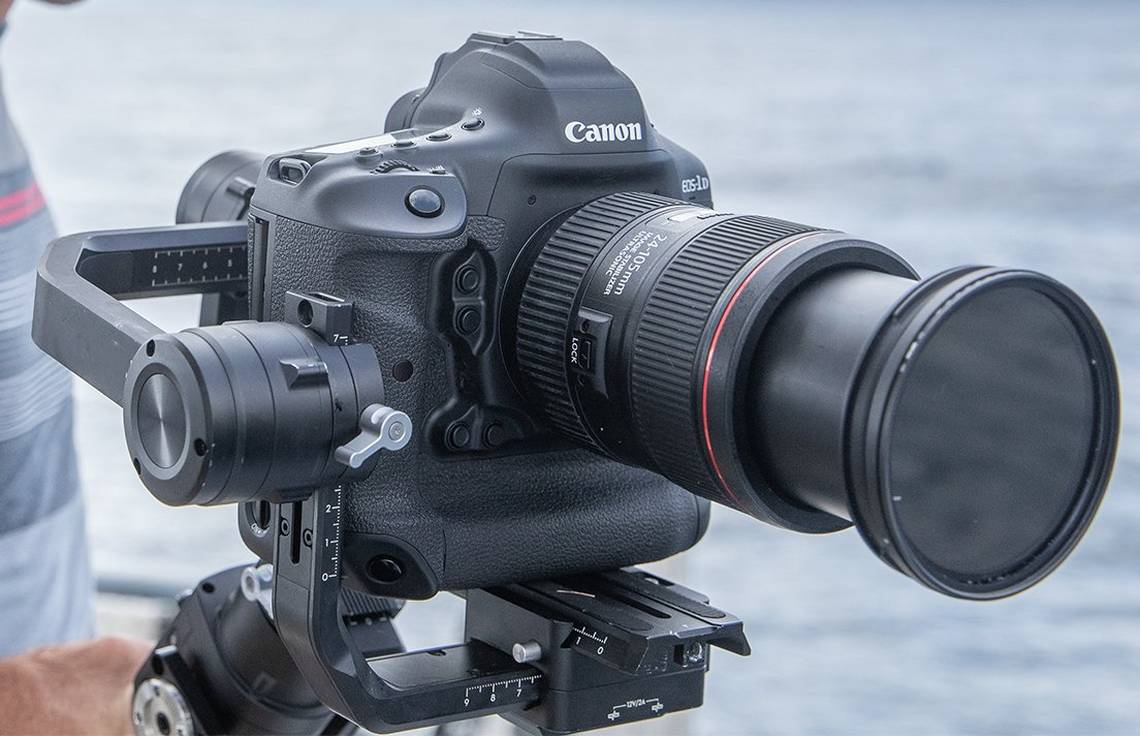
Canon EOS-1D X Mark III is one of the most important professional DSLR cameras Canon ever released. Launched in January 2020, it arrived as the final evolution of Canon’s flagship EOS-1D DSLR line and combined full-frame still photography, professional autofocus, rugged construction and advanced video features in one body.
The camera was built for sports photographers, wildlife shooters, photojournalists, agencies and professionals who needed speed, durability and reliable performance in demanding environments.
Unlike Canon’s newer mirrorless EOS R flagship cameras, the EOS-1D X Mark III uses an optical viewfinder and Canon’s EF lens mount. That makes it especially attractive to photographers with large EF lens collections who still prefer DSLR handling.
It also stands out because of its video capabilities. Canon gave the camera 5.5K RAW internal recording, 4K 60p, Canon Log and 10-bit 4:2:2 options, making it more advanced for video than many expected from a DSLR.
Key Canon EOS-1D X Mark III Specifications
The Canon EOS-1D X Mark III is a full-frame professional DSLR designed around speed, strength and image quality.
| Feature | Canon EOS-1D X Mark III |
|---|---|
| Release period | January 2020 |
| Camera type | Professional full-frame DSLR |
| Sensor size | 36 x 24 mm |
| Effective resolution | About 20.1MP |
| Maximum photo resolution | 5472 x 3648 |
| Lens mount | Canon EF |
| Image processor | DIGIC X |
| Base sensitivity for Canon Log video | ISO 400 |
| Video formats | 5.5K RAW, 4K DCI, 4K UHD, Full HD |
| Highest internal RAW video | 5.5K, 5472 x 2886 |
| Maximum RAW frame rate | Up to 59.94p |
| Memory cards | Dual CFexpress slots |
| Body weight | About 1,250g body only |
| Dimensions | About 158 x 167.6 x 82.6 mm |
| Body construction | Magnesium alloy, dust and weather resistant |
The EOS-1D X Mark III is not a lightweight camera. It was made for professionals who value reliability, battery life, ergonomics and rugged handling more than compact size.
Full-Frame Sensor and Image Quality
The Canon EOS-1D X Mark III uses a 20.1MP full-frame CMOS sensor measuring 36 x 24 mm.
That resolution may look modest compared with modern 45MP or 60MP cameras, but Canon chose it for speed, low-light performance and fast workflow. Sports and news photographers often need to send images quickly, and 20MP files are easier to transfer and edit than very large high-resolution files.
The camera’s maximum still-image resolution is 5472 x 3648. That is enough for professional news publishing, sports coverage, agency work, online media, magazine layouts and moderate print production.
Why 20MP Still Makes Sense
A 20MP sensor can still deliver professional results when paired with strong autofocus, high-speed shooting and good lenses.
For sports, wildlife and press photography, capturing the decisive moment matters more than extreme resolution. The EOS-1D X Mark III was built for that type of work.
It also gives photographers more manageable file sizes during long events where thousands of frames may be captured in one day.
Canon EF Mount and Lens Support
The Canon EOS-1D X Mark III uses the Canon EF mount.
That makes it compatible with a huge range of Canon EF lenses, including professional telephoto lenses, fast primes, macro lenses and L-series zooms. It does not support EF-S or EF-M lenses.
For many working professionals, the EF mount is one of the camera’s biggest strengths. Canon’s EF lens ecosystem has been used for decades in sports, wildlife, journalism and commercial photography.
Why EF Lenses Still Matter
Many photographers still own expensive EF lenses, especially large telephoto lenses such as 300mm, 400mm, 500mm and 600mm options.
The EOS-1D X Mark III lets those users keep working with native DSLR lenses without adapters. For fast-moving jobs, that can be valuable because it preserves familiar handling and trusted autofocus performance.
Autofocus and Speed
Autofocus is one of the main reasons professionals still respect the Canon EOS-1D X Mark III.
Through the optical viewfinder, the camera uses a 191-point AF system with 155 cross-type points depending on the lens. It also supports subject tracking and head-detection technology designed for sports and action.
In Live View, the camera uses Dual Pixel CMOS AF, giving wider focus coverage and smooth autofocus for stills and video.
The EOS-1D X Mark III can shoot up to 16fps with the optical viewfinder and up to 20fps in Live View with AF and AE tracking. That level of speed made it one of the strongest DSLRs ever built for action photography.
5.5K RAW Video Recording
The Canon EOS-1D X Mark III is not only a stills camera. It is also one of the most video-capable DSLRs Canon ever produced.
Its headline video feature is internal 5.5K RAW recording at 5472 x 2886. The camera supports 12-bit Canon RAW recording at frame rates up to 59.94p, depending on mode.
This was a major feature for a DSLR in 2020. It allowed filmmakers and hybrid shooters to capture high-quality video with strong post-production flexibility.
5.5K RAW Recording Modes
| Resolution | Aspect Ratio | Codec | Frame Rates | Bit Depth |
| 5.5K, 5472 x 2886 | 17:9 | Canon RAW | 23.98p to 59.94p | 12-bit |
| 5.5K, 5472 x 2886 | 17:9 | Canon RAW Light | 23.98p to 59.94p | 12-bit |
Canon RAW gives users more flexibility in colour grading, exposure adjustment and professional post-production. RAW Light helps reduce data load compared with heavier RAW options, although storage requirements remain high.
4K Video and Canon Log
The EOS-1D X Mark III also records 4K DCI, 4K UHD and Full HD video.
Its 4K options include 4K 17:9, 4K 17:9 crop, 4K 16:9 and HD. The camera also supports Canon Log for users who want a flatter image profile that can be graded later.
Canon Log helps preserve shadow and highlight detail, making it useful for filmmakers, documentary shooters and hybrid creators who need more control over the final look.
The camera can record 10-bit 4:2:2 video in supported modes, which gives colourists more information than standard 8-bit files.
Recording Formats
The Canon EOS-1D X Mark III supports several still and video formats.
| Recording Format | Resolution |
| Full sensor photo mode | 5472 x 3648 |
| 5.5K 17:9 | 5472 x 2886 |
| 4K 17:9 | 4096 x 2160 |
| 4K 17:9 crop | 4096 x 2160 |
| 4K 16:9 | 3840 x 2160 |
| HD | 1920 x 1080 |
The 5.5K RAW mode is best for high-end video work where post-production flexibility matters. The 4K options are more practical for general production, faster editing and smaller file sizes.
CFexpress Storage
The Canon EOS-1D X Mark III uses dual CFexpress card slots.
That choice supports the camera’s high-speed stills shooting and demanding video modes. 5.5K RAW recording creates heavy data rates, so slower card formats would not be suitable.
Dual slots also help professionals manage backups, overflow recording and separate file workflows. For press and sports photographers, storage reliability is critical because missed files can mean missed assignments.
Dynamic Range and Rolling Shutter
The pasted lab data lists dynamic range and rolling shutter as not tested for this camera.
That means buyers should not rely on a single independent lab figure from that dataset when comparing the EOS-1D X Mark III against cinema cameras or newer mirrorless bodies.
In practical use, the camera is known more for speed, autofocus, rugged build and professional reliability than for class-leading cinema-camera dynamic range.
For video shooters, 5.5K RAW and Canon Log provide strong flexibility, but users should still test exposure, highlight retention and motion performance before major projects.
Design, Weight and Durability
The Canon EOS-1D X Mark III is built like a professional workhorse.
Its magnesium alloy body, integrated vertical grip, weather sealing and large battery make it suitable for harsh field conditions. The body weighs about 1,250g without accessories, which is heavy compared with modern mirrorless cameras but normal for a flagship DSLR.
The size also brings advantages. The camera balances well with large EF telephoto lenses, offers strong battery life and provides a deep grip for long shooting days.
Why the Large Body Helps Professionals
A large camera body may look outdated in the mirrorless era, but it can be useful for demanding jobs.
Sports and wildlife photographers often use heavy lenses for hours. A larger body improves balance, handling and comfort. It also provides space for more physical controls, a larger battery and stronger heat management.
Who Should Buy the Canon EOS-1D X Mark III?
The Canon EOS-1D X Mark III is best suited for professionals who still want a DSLR body and already own EF lenses.
It makes sense for:
Sports photographers
Wildlife photographers
Photojournalists
News agencies
Event photographers
Canon EF lens owners
Hybrid creators who want 5.5K RAW video
Professionals who prefer optical viewfinders
It may not be ideal for users who want a lightweight camera, RF lenses, electronic viewfinder previews, subject-recognition mirrorless autofocus or the newest Canon video tools.
Canon EOS-1D X Mark III in the Mirrorless Era
The EOS-1D X Mark III now sits in an unusual position.
It is one of the most advanced DSLRs ever made, but it arrived just before the professional market shifted heavily toward mirrorless cameras. Canon’s EOS R3 and EOS R1 now represent the company’s newer direction for professional action photography.
Even so, the EOS-1D X Mark III remains valuable for photographers who prefer DSLR reliability and the optical viewfinder experience.
It is also historically important because it represents the end of Canon’s professional flagship DSLR era.
Key Takeaways
- Canon EOS-1D X Mark III launched in January 2020.
- It uses a 20.1MP full-frame sensor measuring 36 x 24 mm.
- The camera uses Canon’s EF lens mount.
- It is powered by the DIGIC X processor.
- Maximum photo resolution is 5472 x 3648.
- It shoots up to 16fps with the optical viewfinder.
- It shoots up to 20fps in Live View.
- It records 5.5K Canon RAW video up to 59.94p.
- It supports 4K 60p and Canon Log.
- The camera uses dual CFexpress card slots.
- Body-only weight is about 1,250g.
- Dynamic range and rolling shutter were not tested in the pasted lab dataset.
- It remains important as Canon’s final professional flagship DSLR.
Frequently Asked Questions
What is the Canon EOS-1D X Mark III?
The Canon EOS-1D X Mark III is a professional full-frame DSLR designed for sports, wildlife, news, action photography and advanced hybrid video shooting.
When was the Canon EOS-1D X Mark III released?
Canon released the EOS-1D X Mark III in January 2020.
What sensor does the Canon EOS-1D X Mark III use?
It uses a 20.1MP full-frame CMOS sensor measuring 36 x 24 mm.
What lens mount does the EOS-1D X Mark III use?
The camera uses Canon’s EF mount and does not support EF-S or EF-M lenses.
Can the Canon EOS-1D X Mark III shoot RAW video?
Yes. It can record 5.5K Canon RAW and Canon RAW Light video internally.
What is the maximum RAW video resolution?
The maximum RAW video resolution is 5472 x 2886 in 5.5K 17:9 mode.
Can the EOS-1D X Mark III shoot 4K 60p?
Yes. It supports 4K 60p recording, including Canon Log options in supported modes.
Does the Canon EOS-1D X Mark III use SD cards?
No. It uses dual CFexpress card slots.
How fast can the EOS-1D X Mark III shoot still photos?
It can shoot up to 16fps through the optical viewfinder and up to 20fps in Live View.
Is the Canon EOS-1D X Mark III still worth buying?
Yes, it can still be worth buying for professionals who need a rugged DSLR, own EF lenses and want strong sports, wildlife or news performance. Buyers who want the newest autofocus and mirrorless features should compare it with Canon EOS R-series bodies.
Conclusion
The Canon EOS-1D X Mark III remains one of the most powerful professional DSLRs ever built.
It combines a 20.1MP full-frame sensor, EF lens support, high-speed shooting, rugged construction, dual CFexpress storage and advanced video features such as 5.5K RAW and 4K 60p Canon Log.
While mirrorless cameras now lead Canon’s professional future, the EOS-1D X Mark III still has a strong place in camera history. For many sports, wildlife and news photographers, it remains a dependable workhorse and a fitting final chapter for Canon’s flagship DSLR era.
Read Also: Canon EOS R6: Specs, Price, Dynamic Range and Video Features